Budget 2027: Fewer queues, simpler payments — what Malaysia’s digital government push means for you2027年财政预算案:更少的排队,更便捷的支付——马来西亚的数字化政府举措对您意味着什么
KUALA LUMPUR, Nov 3 — Fewer trips to government offices, less paperwork and simpler online payments could be on the cards for Malaysians as the government pushes ahead with a...
KUALA LUMPUR, Nov 3 — Fewer trips to government offices, less paperwork and simpler online payments could be on the cards for Malaysians as the government pushes ahead with a five-year plan to bring more public services online.
From applying for financial assistance to verifying identities and paying government fees, the aim is to make everyday transactions faster and easier, without having to navigate multiple systems or repeatedly submit the same information.
The Rancangan Pendigitalan Sektor Awam (RPSA) 2026–2030, or Public Sector Digitalisation Plan, launched on September 28, sets out how federal and state governments, statutory bodies and local authorities are expected to make that happen.
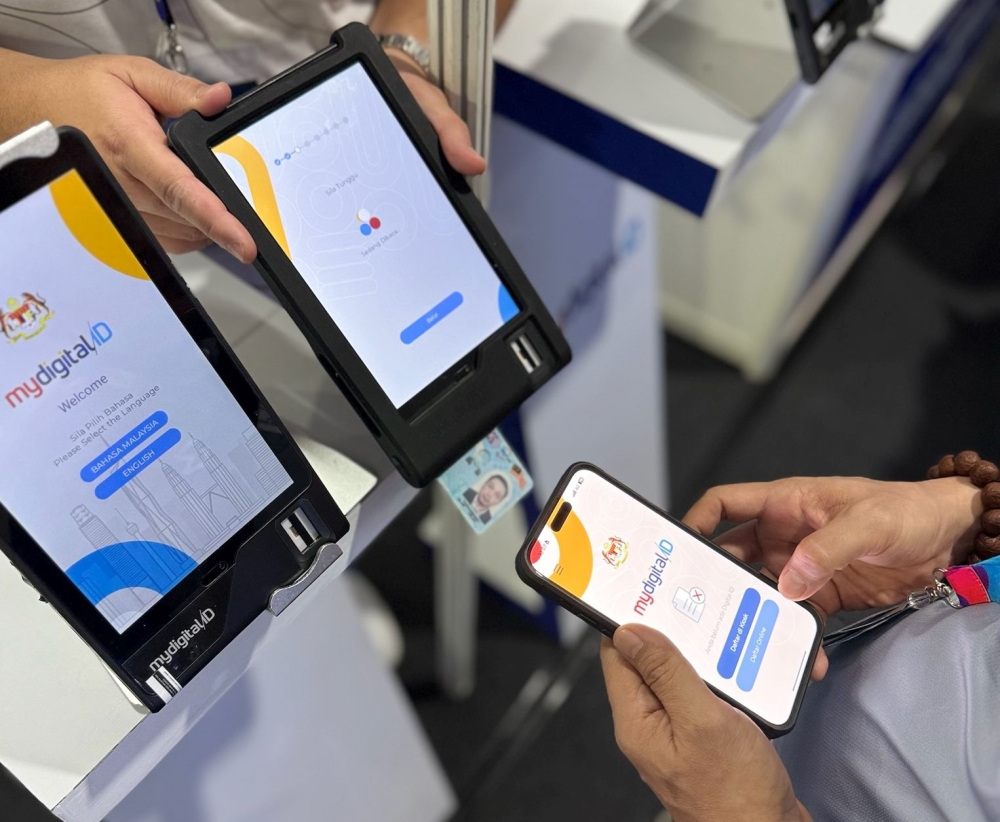
Budget 2027 reinforces the push through initiatives including wider use of MyDigital ID, integrated government services and plans for a Sovereign AI Cloud.
Here is what could change for Malaysians, what is already in place and when the improvements might be felt.
Will government services become easier to use?
The RPSA aims to make government services more integrated, reducing the need for people to navigate separate systems or repeatedly submit information to different agencies.
One of its major targets, Mainstreaming GovTech, covers services in areas including healthcare, education, employment, business, transport, public safety and local government.
The plan targets standardised processes across 19 federal service clusters, eight state service clusters and 13 local authority service clusters.
It also aims to increase by 20 per cent over five years the number of services accessible without face-to-face visits, while making 90 per cent of major agency services available through digital channels.
If implemented effectively, the changes could mean fewer trips to government offices, simpler online applications and better coordination between agencies.
What role will MyDigital ID play?
Digital identity is one of the tools the government intends to use to improve access to public services.
The RPSA envisages wider use of MyDigital ID to authenticate users across participating services, potentially reducing the need for separate identity verification across different systems.
In his Budget 2027 speech on October 9, Prime Minister Datuk Seri Anwar Ibrahim said MyDigital ID had recorded more than 14 million registered users, with logins across 203 public and private services.
For users, the intended benefit is a more consistent way to verify their identity. How much easier this makes applications and transactions will depend on how widely agencies adopt the system and how well it integrates with their existing platforms.
Will cashless payments become the norm?
The RPSA targets a 20 per cent increase in cashless transactions involving government services over five years.
One part of this effort is the wider integration of iPayment across government counters and systems.
Developed by the Accountant General’s Department of Malaysia (JANM), iPayment is the Federal Government Electronic Collection System.
Officially launched in February 2025, it provides a common electronic payment platform for federal agencies that do not already have their own collection systems.
The public can use available electronic payment channels to pay for services registered on the platform.
The RPSA calls for wider integration of iPayment across government counters and systems as part of its push to increase cashless transactions.
The target is to increase cashless transactions, not to abolish cash payments across the public sector.
Will government websites be easier to navigate?
The RPSA includes plans to establish a public-sector user interface and user experience (UI/UX) standard by 2028.
This is intended to make government websites and applications more user-friendly, with clearer menus, more consistent layouts and simpler navigation.
The plan also promotes paperless processes and services that can be completed without face-to-face contact.
Rather than necessarily creating new applications, the aim is to make existing government platforms easier to use.
How will AI and data sharing help?
The RPSA targets at least 125 new open-data datasets by 2030 and 60 per cent implementation of a government Data Marketplace.
It also aims for at least 80 per cent of agencies to adopt AI in a planned manner, with at least three high-impact AI solutions for each major government sector by 2030.
Better data sharing could reduce the need for people to submit the same information repeatedly to different agencies, while AI could help with routine administrative work and responding to enquiries.
Budget 2027 also reiterated plans for a Sovereign AI Cloud, first announced under Budget 2026, intended to keep Malaysians’ data and the country’s strategic information under Malaysian control.
Unlike a public-facing application, the cloud would provide infrastructure for AI applications and data processing.
What changes are happening behind the scenes?
Not all RPSA programmes will directly affect the public.
Some focus on the skills, systems and infrastructure needed to keep digital services running.
The plan aims to increase the number of highly digitally skilled civil servants and improve digital competency among public-sector digital leaders and ICT officers by 2030.
It also targets high-speed, secure and resilient digital access in at least 90 per cent of populated areas and at all government premises by 2030.
Other measures include expanding the Jendela initiative, extending 5G coverage in strategic areas and developing Points of Presence infrastructure in rural and interior areas.
When will Malaysians see the changes?
The RPSA runs from 2026 to 2030, with its targets requiring implementation by individual ministries, agencies, state governments and local authorities.
Some initiatives, such as iPayment and MyDigital ID, are already in place.
The plan seeks to expand or better integrate these systems alongside programmes involving data sharing, AI and digital infrastructure.
According to the Ministry of Digital, implementation of end-to-end (E2E) digitalisation across government agencies had reached 80 per cent as of 2025.
While the RPSA sets the direction for digital government through 2030, Malaysians are likely to see changes gradually over the five-year period.
What will matter most to ordinary Malaysians?
The most direct potential benefits are likely to be simpler online applications, fewer visits to government offices, more consistent identity verification through MyDigital ID and greater access to cashless payment options.
Better-connected government systems could also mean less paperwork and fewer requests for the same information from different agencies.
The most direct potential effects are likely to come from:
However, these remain intended outcomes of the RPSA, rather than guarantees that every government service will be available in a new form by a particular date.
How much Malaysians benefit will ultimately depend on how effectively the changes are implemented across government agencies.
Orang Asli village near KL still struggles with electricity despite solar projects
Pakatan files police report against BN’s Rim candidate over alleged use of govt assets in Melaka campaign, evidence to go to EC
Police free two on bail, track more suspects with Indonesia’s help in tanker ketamine case
吉隆坡,11月3日讯——随着政府推进一项为期五年的计划,将更多公共服务转移到线上,马来西亚民众有望减少前往政府部门的次数,减少文书工作,并享受更便捷的在线支付。
从申请财政援助到验证身份和缴纳政府费用,其目标是让日常交易更快更便捷,无需操作多个系统或反复提交相同的信息。
9 月 28 日发布的《2026-2030 年公共部门数字化计划》(RPSA) 阐述了联邦和州政府、法定机构和地方当局应如何实现这一目标。
2027 年预算案通过一系列举措加强了推进力度,包括更广泛地使用 MyDigital ID、整合政府服务以及建立主权人工智能云的计划。
以下是马来西亚人可能面临的变化、已经实施的措施以及何时能感受到这些改善。
政府服务会变得更易于使用吗?
RPSA 旨在使政府服务更加一体化,减少人们需要使用不同的系统或反复向不同机构提交信息的需要。
其主要目标之一是推动政府科技主流化,涵盖医疗保健、教育、就业、商业、交通、公共安全和地方政府等领域的服务。
该计划旨在规范 19 个联邦服务集群、8 个州服务集群和 13 个地方政府服务集群的流程。
该计划还旨在五年内将无需面对面访问即可获得的服务数量增加 20%,同时使 90% 的主要机构服务通过数字渠道提供。
如果有效实施,这些变革将意味着减少前往政府部门的次数、简化在线申请流程以及改善各机构之间的协调。
MyDigital ID将发挥什么作用?
数字身份是政府计划用来改善公共服务获取途径的工具之一。
RPSA 设想更广泛地使用 MyDigital ID 来验证参与服务中的用户身份,从而可能减少在不同系统之间进行单独身份验证的需求。
首相拿督斯里安华·易卜拉欣在 10 月 9 日发表的 2027 年财政预算案演讲中表示,MyDigital ID 已记录了超过 1400 万注册用户,这些用户登录了 203 项公共和私人服务。
对用户而言,其预期益处在于提供一种更一致的身份验证方式。该系统能为申请和交易带来多大的便利,将取决于各机构采用该系统的普及程度以及它与现有平台的集成效果。
无现金支付会成为常态吗?
RPSA 的目标是在五年内将涉及政府服务的无现金交易增加 20%。
这项工作的一部分是将 iPayment 更广泛地整合到政府柜台和系统中。
iPayment 由马来西亚会计总署 (JANM) 开发,是联邦政府电子收款系统。
该系统于 2025 年 2 月正式推出,为尚未拥有自己收款系统的联邦机构提供了一个通用的电子支付平台。
公众可以使用现有的电子支付渠道支付在平台上注册的服务费用。
RPSA 呼吁在政府柜台和系统中更广泛地整合 iPayment,以此推动无现金交易的增加。
目标是增加无现金交易,而不是在公共部门全面取消现金支付。
政府网站会更容易浏览吗?
RPSA 包括到 2028 年建立公共部门用户界面和用户体验 (UI/UX) 标准的计划。
此举旨在使政府网站和应用程序更加用户友好,拥有更清晰的菜单、更一致的布局和更简单的导航。
该计划还提倡无纸化流程和服务,这些流程和服务无需面对面接触即可完成。
其目标并非创建新的应用程序,而是让现有的政府平台更容易使用。
人工智能和数据共享将如何发挥作用?
RPSA 的目标是到 2030 年至少新增 125 个开放数据集,并实现政府数据市场 60% 的实施。
该计划还旨在让至少 80% 的机构有计划地采用人工智能,到 2030 年,每个主要政府部门至少拥有三个具有重大影响的人工智能解决方案。
更好的数据共享可以减少人们反复向不同机构提交相同信息的需要,而人工智能可以帮助处理日常行政工作和回复问询。
2027 年财政预算案还重申了主权人工智能云计划,该计划最初在 2026 年财政预算案中宣布,旨在将马来西亚人的数据和国家战略信息置于马来西亚的控制之下。
与面向公众的应用程序不同,云将为人工智能应用程序和数据处理提供基础设施。
幕后正在发生哪些变化?
并非所有RPSA项目都会直接影响公众。
一些研究侧重于维持数字服务运行所需的技能、系统和基础设施。
该计划旨在到 2030 年增加具备高数字技能的公务员人数,并提高公共部门数字领导者和信息通信技术官员的数字能力。
该计划还旨在到 2030 年,在至少 90% 的人口密集地区和所有政府场所实现高速、安全和有弹性的数字访问。
其他措施包括扩大 Jendela 计划,扩大战略区域的 5G 覆盖范围,以及在农村和内陆地区发展接入点基础设施。
马来西亚人何时才能看到这些变化?
RPSA 的实施时间为 2026 年至 2030 年,其目标需要各个部委、机构、州政府和地方当局执行。
一些举措,例如 iPayment 和 MyDigital ID,已经到位。
该计划旨在扩展或更好地整合这些系统,并与涉及数据共享、人工智能和数字基础设施的项目相结合。
据数字部称,到 2025 年,政府机构的端到端 (E2E) 数字化实施率已达到 80%。
虽然《区域政策与战略》为马来西亚到 2030 年的数字政府发展指明了方向,但马来西亚人可能会在五年内逐步看到变化。
对普通马来西亚人来说,什么最重要?
最直接的潜在好处可能是:更简单的在线申请流程、更少的政府部门访问次数、通过 MyDigital ID 实现更一致的身份验证以及更容易获得无现金支付选项。
政府系统互联互通程度的提高,也意味着更少的文书工作和更少的来自不同机构的相同信息请求。
最直接的潜在影响可能来自:
然而,这些仍然是 RPSA 的预期结果,而不是保证每项政府服务都会在特定日期以新的形式提供。
马来西亚民众最终能从中受益多少,将取决于各政府机构如何有效地落实这些改革措施。
尽管有太阳能项目,吉隆坡附近的原住民村庄仍然面临电力短缺问题。
希望联盟就国阵候选人涉嫌在马六甲竞选活动中使用政府资产一事向警方报案,证据将提交选举委员会。
警方在油轮氯胺酮案中,在印尼的协助下释放两名嫌疑人并追捕更多嫌疑人。