UN top court to hold election for 5 seats; Singapore fields candidate for first time联合国最高法院将举行5个席位的选举;新加坡首次推出候选人
The Republic is fielding ambassador Rena Lee for the ICJ polls on Nov 3, where five seats will be filled. Read more at straitstimes.com.
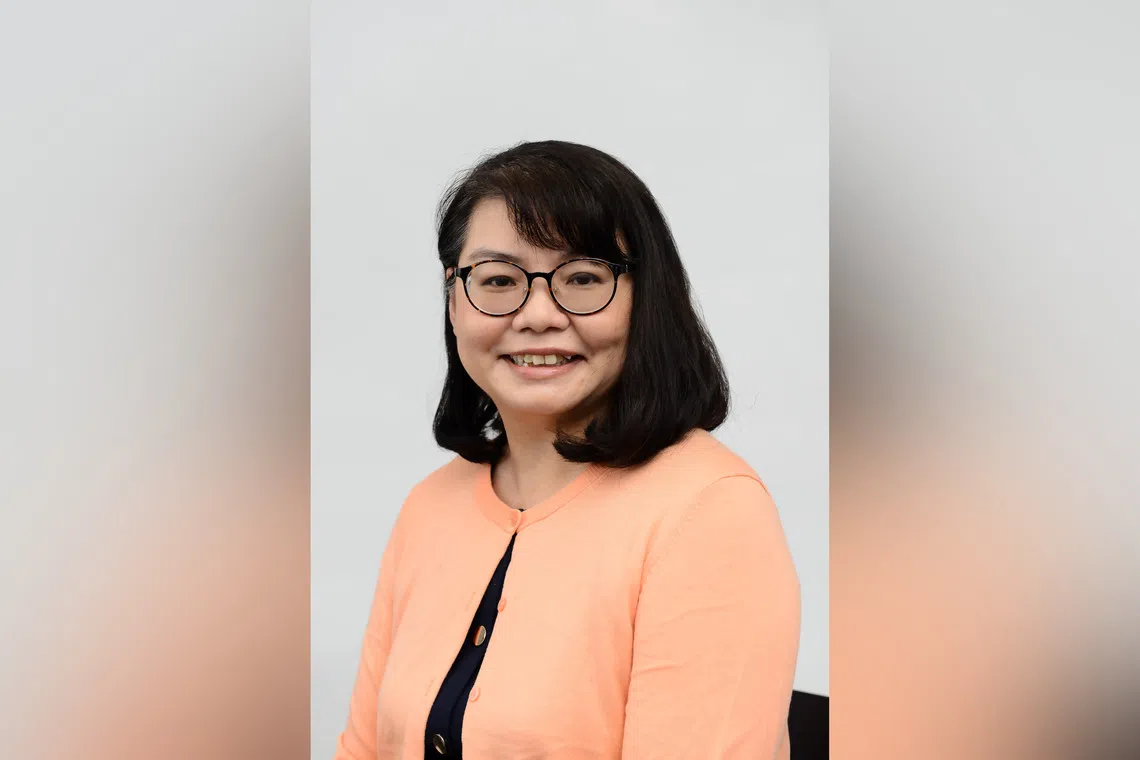
Ambassador for International Law Rena Lee is Singapore’s candidate for the International Court of Justice’s 15-member bench.
Published Nov 03, 2026, 09:00 AM
Updated Nov 03, 2026, 09:00 AM
The ICJ will elect five judges on 3 November. Singapore is fielding a candidate for the first time, ambassador Rena Lee. She has 33 nominations, or third highest of the 10 candidates.
The world court settles state disputes under international law. Recent rulings covered climate harm, Gaza aid, and Israel’s occupation of the Palestinian territories.
The vote may be close because regional blocs often back their own candidates. If elected, Lee would be the first female ICJ judge from South-east Asia and small states.
SINGAPORE – The United Nations’ highest judicial body, the International Court of Justice (ICJ), will hold its election on Nov 3 to fill five of its seats.
This year’s contest consists of 10 candidates from Africa, Asia, Europe and Latin America, with Singapore fielding a candidate for the first time.
Ambassador for International Law Rena Lee, 57, is Singapore’s candidate for the ICJ’s 15-member bench .
An international law practitioner, government legal adviser and diplomat, Lee has experience in areas including the law of the sea, climate and environmental law, international humanitarian law and human rights law.
Here is what to know about the ICJ and its election:
Known as the world court, the ICJ in the Hague, Netherlands, plays a critical role in helping states resolve disputes through international law.
It was established by the founding charter of the United Nations in 1945 as the global body’s principal judicial organ, and marks the 80th anniversary of its inaugural sitting this year.
The court was set up mainly to provide nations with a legal way to resolve disputes, instead of resorting to war or violence. Over the years, it has heard cases on sovereignty, maritime and territorial boundaries as well as human rights violations, among other issues, from across the globe.
The UN’s 193 member states, and other states which accept the ICJ’s jurisdiction under specific conditions, can bring cases to the court. Besides adjudicating legal disputes, the court also issues advisory opinions on legal questions submitted by other UN organs and specialised agencies.
Singapore has been involved in one case before the court, in a territorial dispute with Malaysia over Pedra Branca. Both countries mutually agreed to bring the case to the ICJ.
In 2008, the court awarded sovereignty of Pedra Branca to Singapore and Middle Rocks to Malaysia. It also ruled that sovereignty over South Ledge belongs to whoever owns the territorial waters it sits in.
What are some of its recent rulings?
The court has addressed some of the most pressing issues of the day in its rulings.
In a landmark decision in July 2025 , it declared that governments are responsible under international law for the harms inflicted by their carbon emissions on the planet and vulnerable nations.
In the unanimous opinion, the court affirmed that a clean, healthy and sustainable environment is a prerequisite for the enjoyment of fundamental rights such as life, health, food, water and adequate housing.
As such, international human rights law applies to climate matters, and states have a legal duty to prevent climate catastrophe and transboundary environmental harm that could impinge on these foundational rights.
The court also ruled that this duty is not contingent on a country’s ratification or membership of formal treaties such as the Paris Agreement. The advisory has been held up as a game changer for climate justice and accountability.
In the same year, the court ordered Israel to lift its restrictions and to allow humanitarian aid into Gaza.
The court found that Israel had a duty not to impede the supply of aid by UN organisations.
This followed an earlier advisory in 2024 in which the court had asked Israel to end its occupation of the Palestinian territories as rapidly as possible .
The non-binding opinion was provided in response to a request from the UN General Assembly in 2022 on Israeli practices affecting Palestinian human rights in those territories. The request preceded the current Gaza conflict.
How are the judges elected?
The ICJ holds an election every three years to fill five seats on its 15-judge panel. Judges are elected in secret ballots by the UN General Assembly and the UN Security Council.
Voting is conducted separately in the General Assembly and Security Council, and takes place simultaneously.
To be elected, a candidate must obtain at least an absolute majority of 97 votes in the General Assembly and eight votes in the Security Council.
Once five names have received the required majority in both the General Assembly and the Security Council, the lists are compared, and only candidates who have received the majority in both organs will be considered elected.
Voting continues until both lists have the same five names, and the process may require several rounds before all five seats are filled.
In the past, voting has taken anywhere from a single day to more than a week, with the 2017 election one of the longest and most heavily contested, going into 11 rounds of simultaneous voting over 11 days.
The elected judges in this election will serve a nine-year term from 2027 to 2036.
Who is contesting this election?
The contest this time around features 10 candidates who come from Europe, Asia, Latin America and Africa.
Candidates are nominated by their countries’ “national groups”, made up of four people who are senior jurists or legal experts.
Each national group can nominate up to four candidates. These include candidates from other countries, with such nominations referred to as co-nominations.
While co-nominations do not guarantee votes in the election, they are seen as an indication of support for candidates.
Singapore announced Ambassador for International Law Rena Lee’s candidacy in 2024. She has received 33 nominations so far.
The other candidates are Dapo Akande, from the United Kingdom, with 43 nominations; Francois Alabrune, France, 40 nominations; Phoebe N. Okawa, Kenya, 26 nominations; Jin-Hyun Paik, Republic of Korea, 21 nominations; Mahmoud Daifallah Hmoud, Jordan, 15 nominations; Charles Chernor Jalloh, Sierra Leone, 13 nominations; Marcelo Vazquez-Bermudez, Ecuador, 10 nominations; Luz del Carmen Ibanez Carranza, Peru, two nominations; and Taoheed Olufemi Elias, Nigeria, two nominations.
Why is this an election worth watching?
The election is not a foregone conclusion, no matter how many nominations a candidate has secured. While ICJ statutes do not mandate formal regional quotas, the court’s 15 seats have by informal multilateral convention historically matched the composition of the Security Council.
This has meant five seats for the Western Europe and Others Group; three seats each for the African Group and the Asia-Pacific Group, and two seats each for the Group of Latin American and Caribbean States and for the Eastern European Group.
This arrangement means that countries are incentivised to preserve the regional representation by voting in their bloc’s interests.
In 2017, the conventional allocation was broken when the candidate from India prevailed over the candidate from the United Kingdom after several rounds of voting.
The loss of the UK’s seat also upended the tradition where the five permanent members of the Security Council each had one judge on the ICJ’s bench.
The Nov 3 election will therefore be closely watched to see if the new distribution becomes normalised, or if the ICJ bench’s historic allocation is restored.
If elected, Lee will be the first female ICJ judge from South-east Asia and from small states, Minister for Law Edwin Tong said in a speech at the UN on Oct 29 .
The last time a candidate from this region was elected to the ICJ was more than five decades ago, when Judge Cesar Bengzon from the Philippines was on the bench.
Lee was president of the UN Intergovernmental Conference on Marine Biodiversity of Areas Beyond National Jurisdiction (BBNJ) and successfully concluded the negotiations for the high seas treaty under the United Nations Convention on the Law of the Sea, which is also known as the BBNJ agreement.
She has also previously held stints at the Attorney-General’s Chambers, Ministry of Defence, and the Intellectual Property Office of Singapore, where she was chief executive, across more than three decades working for the public service.
ICJ/International Court of Justice
国际法大使李丽娜是新加坡推选的国际法院15名法官之一。
发布于2026年11月3日上午9:00
更新于2026年11月3日上午9:00
国际法院将于11月3日选举五名法官。新加坡首次推选候选人,即新加坡大使李丽娜。她获得了33项提名,在10名候选人中排名第三。
世界法院依据国际法解决国家间争端。近期裁决涉及气候损害、加沙援助以及以色列对巴勒斯坦领土的占领等问题。
由于区域集团通常支持本地区候选人,因此投票结果可能非常接近。如果当选,李将成为首位来自东南亚和小国的国际法院女性法官。
新加坡——联合国最高司法机构国际法院(ICJ)将于11月3日举行选举,填补其五个席位。
今年的比赛共有来自非洲、亚洲、欧洲和拉丁美洲的 10 名候选人,新加坡首次派出候选人参赛。
新加坡国际法大使李丽娜(57岁)是新加坡派往国际法院15名法官组成的法官席位的候选人。
李是一位国际法从业者、政府法律顾问和外交官,在海洋法、气候和环境法、国际人道主义法和人权法等领域拥有丰富的经验。
以下是关于国际法院及其选举需要了解的内容:
位于荷兰海牙的国际法院(ICJ)被称为世界法院,在帮助各国通过国际法解决争端方面发挥着至关重要的作用。
它根据1945年联合国创始宪章设立,是该全球机构的主要司法机关,今年是其首次会议召开80周年。
该法院设立的主要目的是为各国提供合法解决争端的途径,避免诉诸战争或暴力。多年来,它审理了来自世界各地涉及主权、海洋和领土边界以及人权侵犯等问题的案件。
联合国193个成员国以及在特定条件下接受国际法院管辖权的其他国家,均可向国际法院提起诉讼。除裁决法律纠纷外,国际法院还就其他联合国机构和专门机构提交的法律问题发表咨询意见。
新加坡曾卷入一起国际法院审理的案件,即与马来西亚就白礁岛(Pedra Branca)的领土争端。两国均同意将此案提交国际法院。
2008年,法院裁定白礁岛主权归新加坡所有,中礁岛主权归马来西亚所有。法院还裁定,南礁岛的主权归其所在领海的拥有者所有。
它最近有哪些裁决?
法院在其判决中处理了一些当今最紧迫的问题。
在 2025 年 7 月的一项具有里程碑意义的决定中,它宣布,根据国际法,各国政府应对其碳排放对地球和脆弱国家造成的损害负责。
法院一致认为,清洁、健康和可持续的环境是享有生命、健康、食物、水和适足住房等基本权利的先决条件。
因此,国际人权法适用于气候问题,各国负有防止气候灾难和可能侵犯这些基本权利的跨界环境损害的法律义务。
法院还裁定,这项义务并不取决于一国是否批准或加入《巴黎协定》等正式条约。该咨询意见被誉为气候正义和问责制方面的一项变革性举措。
同年,法院命令以色列解除对加沙的限制,并允许人道主义援助进入加沙。
法院裁定,以色列有义务不阻碍联合国机构提供援助。
此前,法院曾在 2024 年发布过一份咨询意见,要求以色列尽快结束对巴勒斯坦领土的占领。
这份不具约束力的意见书是应联合国大会2022年提出的请求而提供的,该请求涉及以色列在巴勒斯坦领土上影响巴勒斯坦人人权的做法。该请求早于当前的加沙冲突。
法官是如何选举产生的?
国际法院每三年举行一次选举,填补其15名法官中的5个席位。法官由联合国大会和联合国安全理事会以秘密投票方式选举产生。
大会和安全理事会分别进行表决,但同时进行。
候选人若要当选,必须在大会中获得至少 97 票的绝对多数,并在安全理事会中获得至少 8 票。
当五个候选人的名字在大会和安全理事会都获得所需的多数票后,将对这两个名单进行比较,只有在两个机构都获得多数票的候选人才会被视为当选。
投票将持续进行,直到两个名单上的五个人相同为止,这个过程可能需要几轮才能填满所有五个席位。
过去,投票时间从一天到一周多不等,2017 年的选举是历时最长、竞争最激烈的选举之一,在 11 天内进行了 11 轮同时投票。
本次选举产生的法官任期为九年,从2027年至2036年。
谁在参加这次选举?
本次比赛共有 10 名候选人,他们分别来自欧洲、亚洲、拉丁美洲和非洲。
候选人由其所在国家的“国家团体”提名,每个国家团体由四名资深法学家或法律专家组成。
每个国家团体最多可以提名四名候选人。这些候选人包括来自其他国家的候选人,这种提名被称为联合提名。
虽然共同提名并不能保证在选举中获得选票,但它被视为对候选人的支持信号。
新加坡宣布提名李丽娜为2024年国际法大使候选人。目前她已收到33份提名。
其他候选人包括:来自英国的达波·阿坎德(Dapo Akande),获得 43 项提名;来自法国的弗朗索瓦·阿拉布鲁内(Francois Alabrune),获得 40 项提名;来自肯尼亚的菲比·N·奥卡瓦(Phoebe N. Okawa),获得 26 项提名;来自韩国的白镇铉(Jin-Hyun Paik),获得 21 项提名;来自约旦的马哈茂德·戴法拉赫·赫穆德(Mahmoud Daifallah Hmoud),获得 15 项提名;来自塞拉利昂的查尔斯·切尔诺·贾洛(Charles Chernor Jalloh),获得 13 项提名;来自厄瓜多尔的马塞洛·巴斯克斯-贝穆德斯(Marcelo Vazquez-Bermudez),获得 10 项提名;来自秘鲁的卢兹·德尔·卡门·伊巴涅斯·卡兰萨(Luz del Carmen Ibanez Carranza),获得两项提名;以及来自尼日利亚的陶希德·奥卢费米·埃利亚斯(Taoheed Olufemi Elias),获得两项提名。
为什么这场选举值得关注?
无论候选人获得多少提名,选举结果都并非板上钉钉。虽然国际法院规约没有规定正式的区域配额,但根据非正式的多边惯例,该法院的15个席位历来与安全理事会的组成相符。
这意味着西欧和其他国家集团获得五个席位;非洲集团和亚太集团各获得三个席位;拉丁美洲和加勒比国家集团和东欧集团各获得两个席位。
这种安排意味着各国有动力通过投票维护其所在集团的利益来保住区域代表权。
2017 年,传统的分配方式被打破,经过几轮投票,印度候选人战胜了英国候选人。
英国失去席位也打破了安理会五个常任理事国各自在国际法院拥有一名法官的传统。
因此,11 月 3 日的选举将受到密切关注,以观察新的分配方案是否能够正常化,或者国际法院法官席的历史性分配方案是否能够恢复。
律政部长唐振辉在10月29日于联合国发表讲话时表示,如果李当选,她将成为东南亚和小国首位女性国际法院法官。
上一次该地区有候选人当选国际法院法官还是五十多年前,当时菲律宾的塞萨尔·本松法官担任该职位。
李曾担任联合国国家管辖范围以外区域海洋生物多样性政府间会议(BBNJ)主席,并成功完成了根据《联合国海洋法公约》制定的公海条约的谈判,该条约也被称为BBNJ协定。
在长达三十多年的公共服务生涯中,她还曾在新加坡总检察署、国防部和知识产权局任职,并在知识产权局担任首席执行官。
国际法院