Pentagon assures safe passage through Strait of Hormuz despite presence of mines五角大楼保证,尽管霍尔木兹海峡布满水雷,但仍能安全通行。
The guarantee follows a security warning from U.S. Naval Forces Central Command to vessels on Monday about the presence of mines in the strait.
Defense Secretary Pete Hegseth told reporters Tuesday in the Pentagon that vessels transiting the Strait of Hormuz currently have access to a secure lane, as the U.S. seeks to restore freedom of navigation through the embattled sea passage .
The guarantee comes a day after U.S. Naval Forces Central Command issued a security warning regarding maritime explosive devices to vessels passing through the strait.
“Transit via or in close proximity to the traffic separation scheme should be considered extremely hazardous due the presence of mines that have not been fully surveyed and mitigated,” a memo with the warning read.
The U.S. instructed vessels to travel through an enhanced security area south of the traffic separation scheme in Oman territorial waters and coordinate with Oman authorities to ensure safe passage amid anticipated heavy traffic.
The traffic separation scheme refers to two lanes in the Strait of Hormuz that were previously deemed safe.
“Any follow-on effort if there are mines identified, would be something that some of our units could undertake or the world could undertake,” Hegseth said. “But right now we know we have a lane of safe passage that commercial shipping can flow through.”
Iranian naval mines have proven a constant threat throughout the Iran war.
While the U.S. military has destroyed a number of Iran’s mine-laying boats and storage bunkers for naval mines, the country has been previously assessed to have a stockpile of around 6,000 as recently as 2025, according to Congress.
CENTCOM announced April 11 that it had began “setting conditions for clearing mines” with the assistance of Arleigh Burke-class guided-missile destroyers USS Frank E. Peterson and USS Michael Murphy.
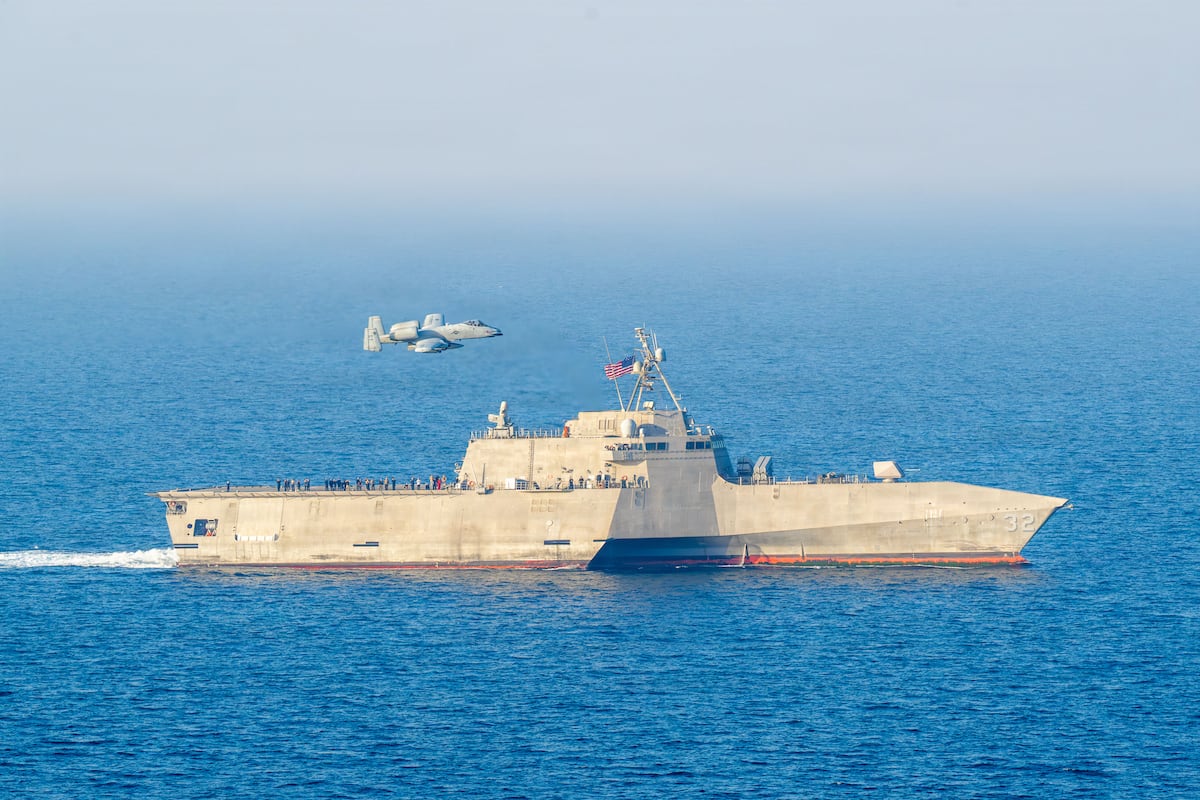
The U.S. Navy currently has several options to identify and neutralize mines, including Avenger-class minesweepers and lndependence-class littoral combat ships with a mine countermeasures mission package.
The Navy retired all four minesweepers home-ported in Bahrain, the only in the Middle East, in 2025.
The remaining four Avenger-class minesweepers are home-ported in Japan, with two on their way toward the U.S. Central Command area of responsibility as of April 20, according to Chief of Naval Operations Adm. Daryl Caudle, who confirmed the transport to reporters at the 2026 Sea-Air-Space exposition.
All three of the LCS with the MCM mission package are home-ported in Bahrain, but two of them — the USS Santa Barbara and USS Tulsa — left the CENTCOM area of responsibility and arrived in Singapore for scheduled maintenance in March.
U.S. Central Command began supporting Project Freedom on Monday, a military operation aiming to shepherd commercial shipping vessels attempting to pass through the Strait of Hormuz.
The U.S. Navy instituted a blockade of the Strait of Hormuz on April 12 after President Trump announced on Truth Social that the U.S. would intercept vessels that paid a toll to Iran for passage and begin destroying mines.
The nearly four-week-old ceasefire between the U.S. and Iran remains in effect, despite an exchange of artillery fire that saw the U.S. military destroy six Iranian small boats, as well as cruise missiles and drones.
Riley Ceder is a Navy reporter at Military Times, where he covers issues directly affecting service members and their families, as well as breaking news.
美国国防部长皮特·赫格塞斯周二在五角大楼告诉记者,目前通过霍尔木兹海峡的船只可以使用安全航道,因为美国正在寻求恢复这条饱受争议的海上通道的航行自由。
就在美国海军中央司令部向途经海峡的船只发出有关海上爆炸装置的安全警告的第二天,该保证就已出台。
一份发出警告的备忘录写道:“由于存在尚未完全勘测和消除的地雷,通过或靠近交通分离方案的交通应被视为极其危险。”
美国指示船只通过阿曼领海交通分离方案以南的加强安全区航行,并与阿曼当局协调,以确保在预计交通繁忙的情况下安全通行。
交通分离方案指的是霍尔木兹海峡中先前被认为安全的两条航道。
“如果发现水雷,后续的清理工作可以由我们的一些部队或全世界共同完成,”赫格塞斯说。“但目前我们知道,我们有一条安全的航道,商船可以畅通无阻地通过。”
在整个两伊战争期间,伊朗海军水雷一直构成持续的威胁。
虽然美国军方摧毁了伊朗的一些布雷船和水雷储存库,但据国会评估,截至2025年,伊朗仍有约6000艘水雷库存。
美国中央司令部于 4 月 11 日宣布,在阿利·伯克级导弹驱逐舰“弗兰克·E·彼得森”号和“迈克尔·墨菲”号的协助下,已开始“创造清除水雷的条件”。
美国海军目前有多种方法可以识别和清除水雷,包括复仇者级扫雷舰和配备水雷对抗任务包的独立级濒海战斗舰。
海军于 2025 年退役了全部四艘以巴林为母港的扫雷舰,这四艘扫雷舰是中东地区唯一的此类舰艇。
据美国海军作战部长达里尔·考德尔海军上将称,剩余的四艘复仇者级扫雷舰均以日本为母港,其中两艘已于 4 月 20 日驶往美国中央司令部责任区。考德尔上将在 2026 年海空航天博览会上向记者证实了这一消息。
所有三艘配备水雷对抗任务包的濒海战斗舰都以巴林为母港,但其中两艘——圣巴巴拉号和塔尔萨号——于 3 月离开中央司令部责任区,抵达新加坡进行定期维护。
美国中央司令部于周一开始支持“自由行动”,这是一项旨在引导商船通过霍尔木兹海峡的军事行动。
4月12日,特朗普总统在Truth Social上宣布,美国将拦截向伊朗支付通行费的船只,并开始清除水雷。随后,美国海军封锁了霍尔木兹海峡。
尽管美伊双方交火,美军摧毁了六艘伊朗小型船只以及巡航导弹和无人机,但美伊之间持续近四周的停火协议仍然有效。
Riley Ceder 是《军事时报》的海军记者,他负责报道直接影响军人及其家属的问题以及突发新闻。