Policies needed to share AI-generated intel across NATO countries, official says一位官员表示,需要制定政策在北约国家之间共享人工智能生成的情报。
Currently, the 32 countries that make up the alliance share commercial data through exceptions and workarounds, the NATO official said.
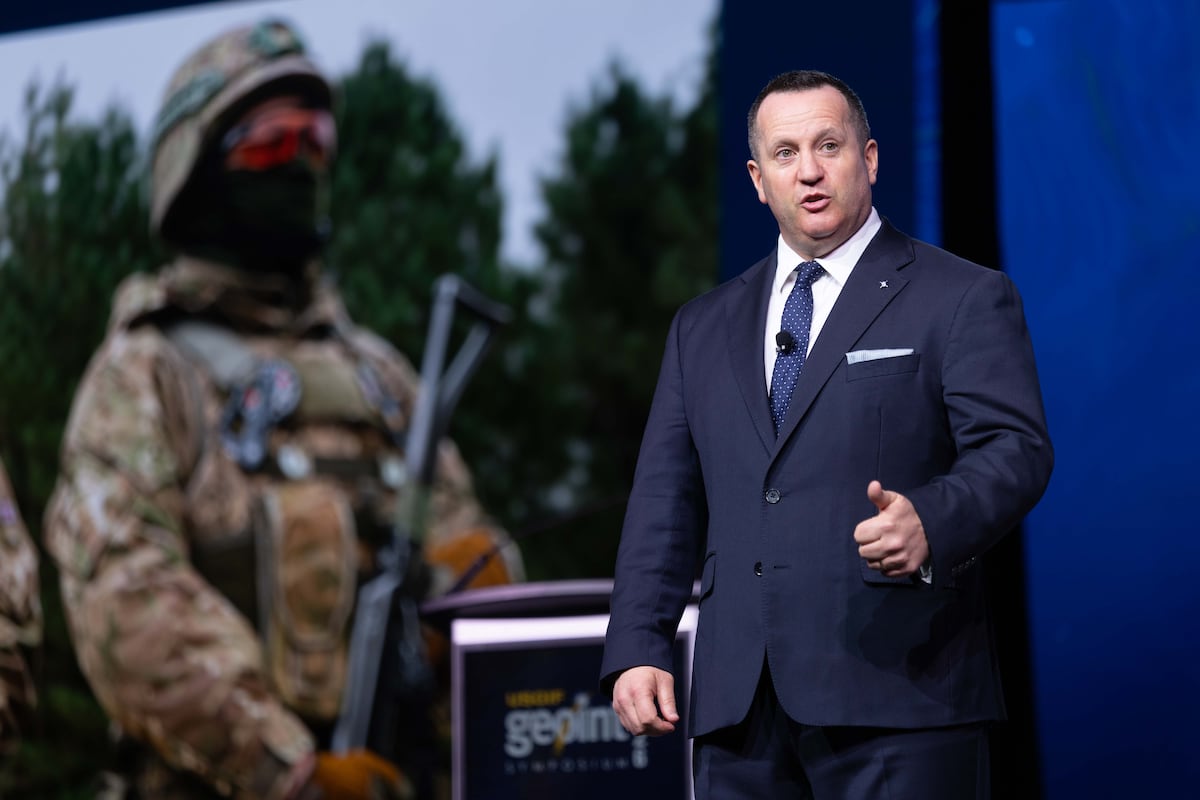
Aurora, Colo. — An increasingly contested global order is pushing demand for commercially-generated intelligence, but NATO needs to replace outdated policies to share that intelligence quickly and without barriers, said Maj. Gen. Paul Lynch, a British Royal Marine and NATO leader.
Currently, the 32 countries that make up the alliance share commercial data through exceptions and workarounds, said Lynch, NATO deputy assistant secretary general for intelligence.
NATO needs new data-use policies, security classification guides, contract frameworks and releasability rules — “unglamorous work” that would have a big impact on military decision-making, he said.
“This past year has made one thing crystal clear: The security environment remains contested, and the advantage belong to those who combine unity of purpose with the speed of action,” Lynch said Monday at the annual GEOINT Symposium, hosted by the U.S. Geospatial Intelligence Foundation.
The symposium attracted companies, many of the U.S. military vendors, that among other things track Russian military activity in the Bering Strait, monitor China’s military exercises and last year provided the technology to determine the extent of the damage to Iranian nuclear facilities following Operation Midnight Hammer .
Lynch urged the intelligence professionals present Monday to help NATO update its framework for data-sharing.
Governing commercial intelligence becomes “significantly more complex” when it comes to data processed by artificial intelligence , he said.
“Then, it’s not simply asking who can share what, it’s asking whose model to use on what training data with what documented assumptions with what confidence threshold in what context,” Lynch said, adding that there needs to be one common AI model and interface to be used by commercial and national partners across NATO.
NATO has previously established hundreds of standardization agreements creating common standards for things like air defense, maritime awareness and data formats.
“NATO is quite good at governance,” Lynch said. “The question is whether we apply that same rigor to AI before the technology outpaces the frameworks or after, and the answer will be decided in the next few years.”
Last year, under pressure from President Donald Trump, European NATO members and Canada hit their goal of spending 2% of gross domestic product on defense. It marked a 20% increase in overall defense spending, Lynch said, and was the first time the members had met the goal since it was established in 2014.
At the NATO summit in The Hague last year, allies pledged to spend 5% of GDP on defense by 2035.
“Three years ago, that would’ve been considered science fiction,” Lynch said of the spending goal. “The alliance is now actively investing in its own security at a pace and scale we have not seen in a generation.”
However, investing in defense without also putting more money toward intelligence is “capability without awareness,” he said. “More is useless unless information generated gets to the right person in the right form at the right time.”
Nikki Wentling is a senior editor at Military Times. She's reported on veterans and military communities for over a decade and has also covered technology, politics, health care and crime. Her work has earned multiple honors from the National Coalition for Homeless Veterans, the Arkansas Associated Press Managing Editors and others.
科罗拉多州奥罗拉——英国皇家海军陆战队少将、北约领导人保罗·林奇表示,日益受到挑战的全球秩序正在推动对商业情报的需求,但北约需要摒弃过时的政策,以便快速、无障碍地共享这些情报。
北约负责情报的副助理秘书长林奇表示,目前组成该联盟的 32 个国家通过例外和变通办法共享商业数据。
他表示,北约需要新的数据使用政策、安全分类指南、合同框架和发布规则——这些“枯燥乏味的工作”将对军事决策产生重大影响。
“过去一年已经清楚地表明了一件事:安全环境仍然充满竞争,而优势属于那些目标一致且行动迅速的人,”林奇周一在美国地理空间情报基金会主办的年度地理空间情报研讨会上说道。
此次研讨会吸引了众多公司,其中许多是美国军火供应商,这些公司负责跟踪俄罗斯在白令海峡的军事活动、监测中国的军事演习,并在去年提供了技术,以确定“午夜铁锤行动”后伊朗核设施的受损程度。
林奇周一敦促在场的情报专业人员帮助北约更新其数据共享框架。
他表示,当涉及到人工智能处理的数据时,商业情报的管理就变得“复杂得多”。
林奇表示:“那么,问题就不仅仅是谁可以分享什么,而是在什么情况下,使用谁的模型来训练什么数据,并遵循什么已记录的假设和置信度阈值。”他还补充说,北约各商业和国家合作伙伴需要一个通用的AI模型和接口来使用。
北约此前已制定数百项标准化协议,为防空、海上感知和数据格式等领域创建通用标准。
林奇说:“北约在治理方面做得相当出色。问题在于,我们是在人工智能技术超越现有框架之前,还是之后,将同样的严谨性应用于人工智能领域。答案将在未来几年内揭晓。”
去年,在唐纳德·特朗普总统的压力下,欧洲北约成员国和加拿大实现了国防开支占国内生产总值2%的目标。林奇表示,这标志着国防总支出增长了20%,也是自2014年该目标设立以来,成员国首次达到这一目标。
去年在海牙举行的北约峰会上,盟国承诺到 2035 年将国内生产总值的 5% 用于国防开支。
林奇谈到这项支出目标时说:“三年前,这还被认为是科幻小说里的情节。如今,北约正以前所未有的速度和规模积极投资于自身安全。”
然而,他表示,如果只投资国防而不增加情报投入,那就是“只有能力而没有意识”。“如果生成的信息不能在正确的时间以正确的形式传递给正确的人,那么更多的投入就毫无意义。”
妮基·温特林是《军事时报》的高级编辑。她从事退伍军人和军人社区报道十余年,也曾涉猎科技、政治、医疗保健和犯罪等领域。她的作品曾多次荣获全国无家可归退伍军人联盟、阿肯色州美联社执行编辑协会等机构颁发的奖项。