NATO sends warships to patrol Arctic waters北约派遣军舰巡逻北极水域
The alliance’s maritime forces assigned to the Standing Maritime Group 1, or SNMG1, have been operating in the strategic waters since this week.
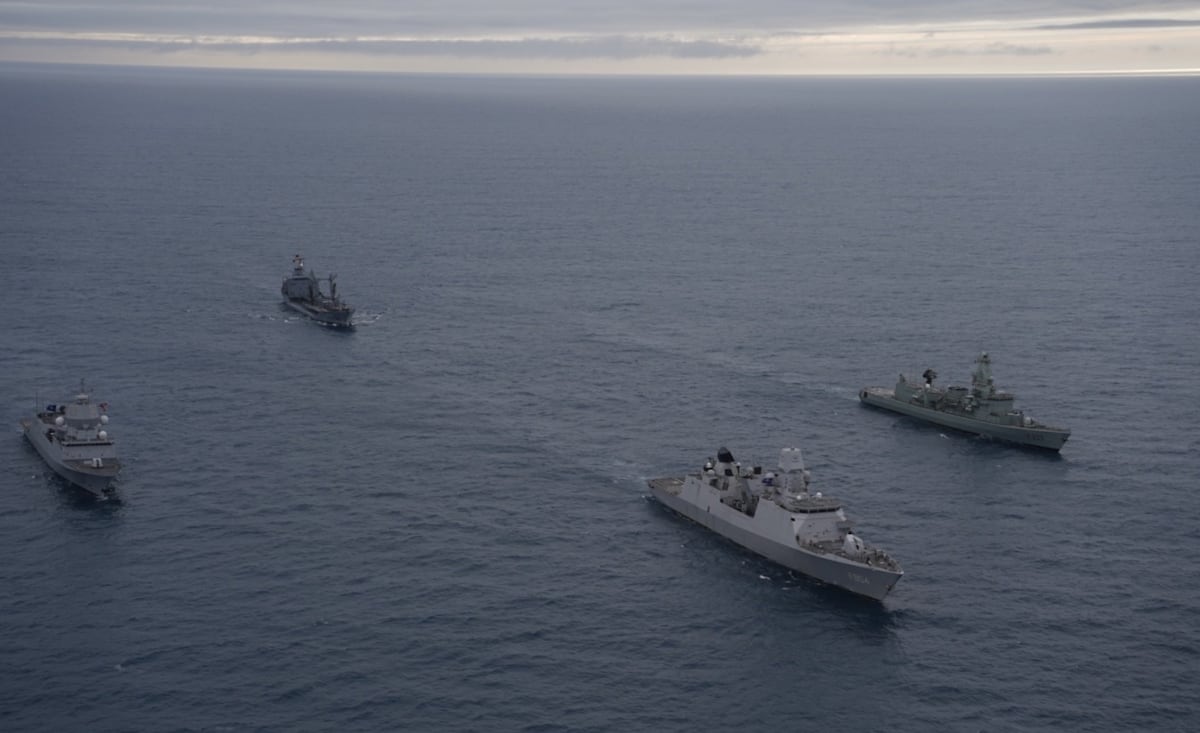
MILAN — NATO has deployed a maritime task group made up of Dutch, Norwegian, Portuguese, and German vessels to boost its maritime presence in the Arctic and High North.
The alliance’s maritime forces assigned to the Standing Maritime Group 1, or SNMG1, have been operating in the strategic waters since this week.
These include the flagship vessel De Ruyter from the Netherlands, the Thor Heyerdahl from Norway, the Bartolomeu Dias from Portugal, and the Rhön from Germany. Additional maritime patrol aircraft have been complementing the ships’ activities.
The NATO task group will conduct anti-submarine activities designed to protect critical sea lines of communication and ensure freedom of navigation in the region as well as routine patrols.
“[They will also carry out] integrated operations involving the coordination of various surface ships and air assets to increase the alliance’s understanding of the maritime environment, enhance information sharing and rehearse navigational maneuvers,” Commander Arlo Abrahamson, spokesperson for NATO’s Allied Maritime Command, told Defense News.
He added that it will provide NATO maritime forces with “valuable” opportunities to enhance their knowledge of the polar regions and their ability to sustain operations in these waters.
The deployment comes a few days after Russia launched a major naval exercise in the Pacific, Arctic, Baltic and Caspian seas, according to the Russian defense ministry. The “July Storm” drill, which took place from July 23-27, was reported to have involved 150 warships and 15,000 military personnel.
Over the last few years, experts have signaled an Arctic rapprochement between China and Russia displayed by organized joint military drills near the Arctic region as well as naval and air patrols over the East China Sea and Sea of Japan.
A recent report published by the Center for European Policy Analysis warned that both countries also share a willingness to disrupt critical undersea infrastructure, which could affect the interests of NATO states.
“The disruption of critical undersea infrastructure (CUI) and seabed warfare activities represents another form of nefarious relations that Russia and China might further in the Arctic – both have a clear interest in disrupting CUI as part of a continued subthreshold operations against Western interests,” the report said.
Seven NATO countries have territories located within the Arctic circle: Denmark, Canada, the United States, Norway, Sweden, Finland and Iceland.
Elisabeth Gosselin-Malo was a Europe correspondent for Defense News. She covers a wide range of topics related to military procurement and international security, and specializes in reporting on the aviation sector. She is based in Milan, Italy.
米兰——北约已部署一支由荷兰、挪威、葡萄牙和德国舰艇组成的海上特遣队,以加强其在北极和高北地区的海上存在。
本周以来,隶属于常设海上部队 1(SNMG1)的联盟海上力量一直在战略水域开展行动。
其中包括荷兰的旗舰“德鲁伊特”号、挪威的“托尔·海尔达尔”号、葡萄牙的“巴托洛梅乌·迪亚斯”号和德国的“罗恩”号。此外,还有海上巡逻机为这些舰艇的行动提供辅助。
北约特遣部队将开展反潜活动,旨在保护重要的海上交通线,确保该地区的航行自由,并进行例行巡逻。
北约盟军海上司令部发言人阿洛·亚伯拉罕森指挥官告诉《防务新闻》:“(他们还将开展)涉及协调各种水面舰艇和空中力量的综合行动,以增进联盟对海上环境的了解,加强信息共享,并演练航行机动。”
他还补充说,这将为北约海上部队提供“宝贵的”机会,以增强他们对极地地区的了解以及在这些水域维持行动的能力。
据俄罗斯国防部消息,此次部署发生在俄罗斯在太平洋、北冰洋、波罗的海和里海举行大规模海上演习几天之后。此次代号为“七月风暴”的演习于7月23日至27日举行,据报道,共有150艘军舰和15000名军事人员参与。
过去几年,专家们指出,中国和俄罗斯在北极地区的关系正在走近,这体现在两国在北极地区附近举行的联合军事演习,以及在东海和日本海上进行的海空巡逻。
欧洲政策分析中心最近发布的一份报告警告说,这两个国家都有破坏关键海底基础设施的意愿,这可能会影响北约国家的利益。
报告称:“破坏关键海底基础设施(CUI)和海底战争活动代表了俄罗斯和中国可能在北极地区进一步推进的另一种邪恶关系——两国都对破坏CUI有着明显的利益,这是他们持续针对西方利益的潜规则行动的一部分。”
北约有七个国家的领土位于北极圈内:丹麦、加拿大、美国、挪威、瑞典、芬兰和冰岛。
伊丽莎白·戈斯林-马洛曾任《防务新闻》欧洲通讯员。她的报道涵盖军事采购和国际安全等广泛领域,尤其擅长航空领域的报道。她常驻意大利米兰。