Road ban stays on e-scooters, but trial findings will shape upcoming laws, says MOT交通部表示,电动滑板车的道路禁令仍然有效,但试验结果将影响即将出台的法律。
KUALA LUMPUR, Nov 3 — Micromobility vehicles such as e-scooters remain strictly prohibited on all public roads for now, but findings from controlled sandbox trials will shape an...
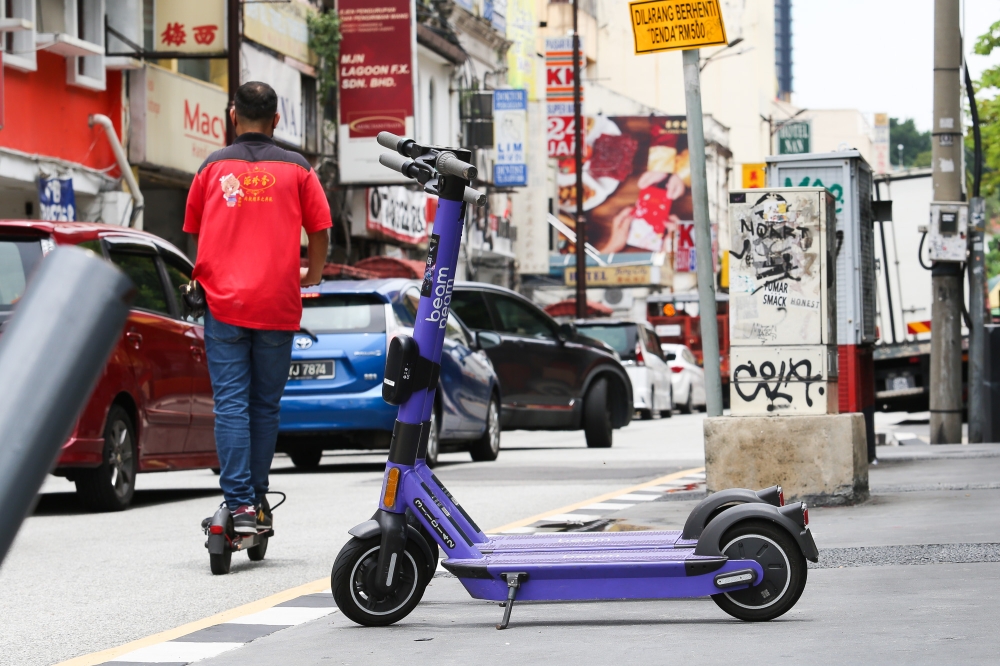
KUALA LUMPUR, Nov 3 — Micromobility vehicles such as e-scooters remain strictly prohibited on all public roads for now, but findings from controlled sandbox trials will shape an upcoming comprehensive regulatory framework, the Transport Ministry told Parliament.
Responding to a Dewan Rakyat query from Kampar MP Chong Zhemin on whether controlled use would eventually be permitted along village routes and residential estates, the ministry acknowledged that micromobility devices offer practical solutions for “first and last mile” transit connections over short distances.
“However, their use must be implemented in a controlled manner, taking into account road conditions, traffic speeds, user safety and the suitability of infrastructure,” the ministry said.
Under the Road Traffic Rules (Prohibition of Use of Certain Micromobility Vehicles) 2021, mopeds, Personal Mobility Devices (PMDs), and Personal Mobility Aids (PMAs) face a blanket ban across public roads nationwide.
The statutory framework nevertheless empowers the Transport Minister to grant targeted exemptions for trial zones, primarily through the Micromobility Sandbox pilot programme.
The sandbox initiative currently operates across seven designated pilot areas, covering municipal jurisdictions under the Shah Alam, Subang Jaya, and Penang city councils and Kuala Lumpur City Hall, alongside university campuses at Universiti Malaya, Universiti Teknologi PETRONAS, and UiTM Perak.
The Malaysian Institute of Road Safety Research (MIROS) has drawn up operational guidelines for these pilot runs, covering infrastructure design, rider safety, device roadworthiness, and fleet operator responsibilities.
Data gathered from the trials will evaluate how micromobility operates under real-world traffic dynamics to guide future legislation governing vehicle classification, mechanical safety standards, permitted corridors, and enforcement protocols.
“The approach also takes into account international practices and experiences, including those of China, Singapore and Japan, which regulate micromobility by setting vehicle categories, safety specifications, speed limits and usage rules according to the type of route and suitable areas.
“This is important to ensure the national micromobility ecosystem is developed in a phased, safe, controlled and evidence-based manner,” the ministry said.
On the infrastructure front, the ministry stressed that micromobility routes should ideally feature dedicated lanes physically separated from motorized traffic. Where road space is constrained, shared corridors could be considered, provided local councils install adequate traffic-calming features and enforce strict vehicle speed limits. Complementing these trials, urban planning agency PLANMalaysia has circulated route planning guidelines to state governments and local authorities to integrate micromobility paths into wider transit infrastructure.
However, the parliamentary reply provided no definitive timeline for legalising micromobility across housing estates or village roads, leaving speed limits and operational parameters for suburban residential neighbourhoods unaddressed.
Home Ministry: Putrajaya open to RCI on ‘corporate mafia’ claims if solid grounds established
No new extradition request received for Zakir Naik, Home Ministry confirms
Johor’s data centre surge unsettles Iskandar Puteri residents, some consider selling homes
吉隆坡,11月3日讯——交通部向国会表示,目前电动滑板车等微型交通工具仍被严格禁止在所有公共道路上行驶,但受控沙箱试验的结果将影响即将出台的全面监管框架。
针对金宝国会议员张哲民在下议院提出的关于是否最终允许在乡村道路和住宅区进行有控制使用的问题,交通部承认,微型交通工具为短距离的“最后一公里”交通连接提供了切实可行的解决方案。
“但是,必须以可控的方式实施这些措施,同时要考虑到道路状况、交通速度、用户安全和基础设施的适用性,”该部表示。
根据 2021 年道路交通规则(禁止使用某些微型交通工具),轻便摩托车、个人移动设备 (PMD) 和个人移动辅助设备 (PMA) 在全国公共道路上全面禁止使用。
尽管如此,法律框架赋予交通部长权力,可以对试验区给予有针对性的豁免,主要通过微型出行沙盒试点计划来实现。
该沙盒计划目前在七个指定试点地区运作,涵盖莎阿南、梳邦再也、槟城市议会和吉隆坡市政厅下属的市政管辖区,以及马来亚大学、马来西亚理工大学和霹雳理工大学的大学校园。
马来西亚道路安全研究所 (MIROS) 为这些试点运行制定了操作指南,涵盖基础设施设计、骑手安全、设备道路适航性和车队运营商的责任。
从试验中收集的数据将评估微型交通工具在真实交通动态下的运行情况,以指导未来有关车辆分类、机械安全标准、允许通行道路和执法协议的立法。
“该方法还考虑了国际惯例和经验,包括中国、新加坡和日本的惯例和经验,这些国家根据路线类型和适宜区域,通过设定车辆类别、安全规格、速度限制和使用规则来规范微型出行。
该部表示:“这对于确保国家微型出行生态系统以分阶段、安全、可控和基于证据的方式发展至关重要。”
在基础设施方面,交通部强调,理想的微型交通路线应设有专用车道,与机动车交通物理隔离。在道路空间有限的情况下,可以考虑共享走廊,但前提是地方政府必须安装足够的交通缓行设施并严格执行车辆限速规定。为了配合这些试点项目,城市规划机构PLANMalaysia已向州政府和地方当局分发了路线规划指南,以将微型交通路线整合到更广泛的公共交通基础设施中。
然而,议会答复并未给出在住宅区或乡村道路上合法化微型交通工具的明确时间表,也没有解决郊区住宅区的速度限制和运营参数等问题。
内政部:布城对“企业黑手党”指控持开放态度,前提是证据确凿。
内政部证实,未收到针对扎基尔·奈克的新引渡请求。
柔佛州数据中心激增令依斯干达公主城居民感到不安,一些人考虑出售房屋。