NATO eyes Swedish-Canadian jet for AWACS role in shift away from Boeing北约考虑采用瑞典-加拿大联合研制的喷气式飞机担任预警机角色,逐步减少对波音飞机的依赖。
The political momentum behind the GlobalEye had been building for a while.
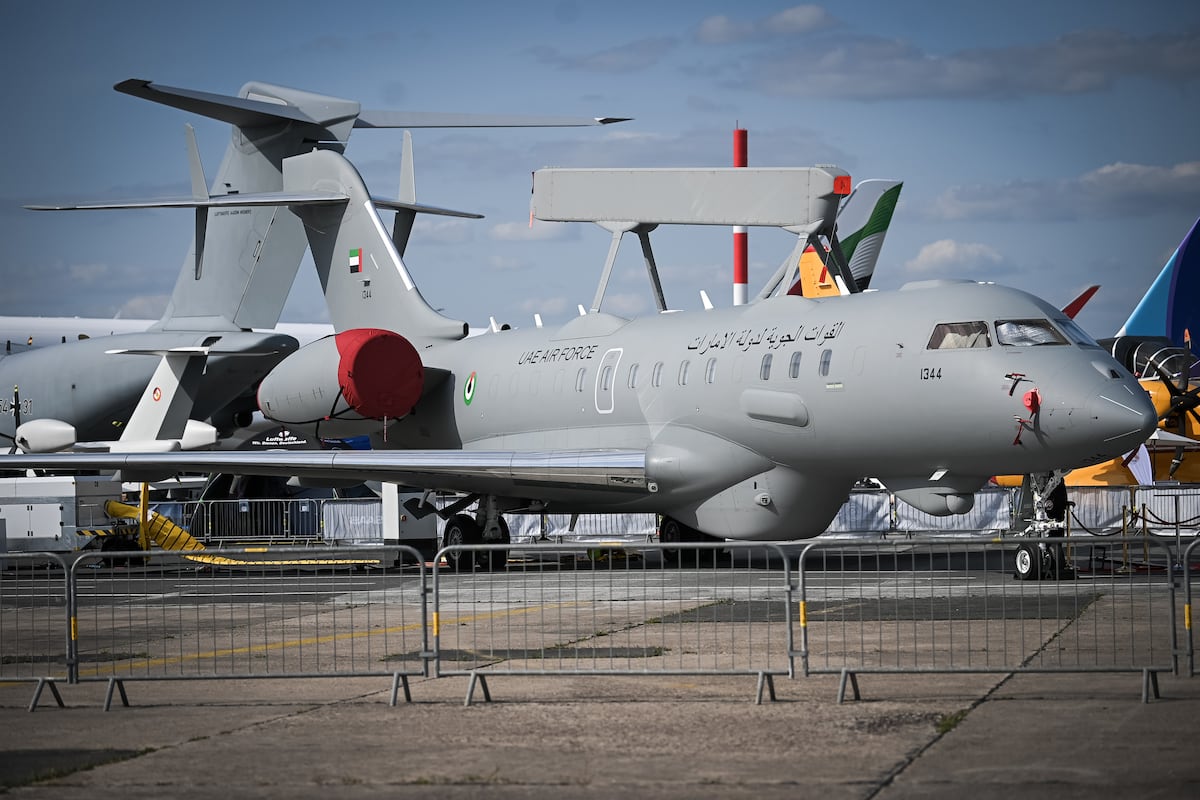
VIENNA — NATO’s Support and Procurement Agency has selected Sweden’s Saab and Canada’s Bombardier to replace the alliance’s aging fleet of Boeing E-3A Sentry airborne warning and control system aircraft with the GlobalEye platform, according to French defense publication La Lettre and confirmed independently by the German press agency DPA.
The decision, if formally announced, marks the first time since 1982 that a non-Boeing aircraft will serve as NATO’s common airborne surveillance backbone, and caps a procurement saga defined by American industrial dysfunction and growing European appetite for strategic autonomy.
The outcome was far from inevitable. As recently as November 2023, NATO had awarded the replacement contract to Boeing’s E-7A Wedgetail − without a competitive tender − on the grounds that it was the only available system meeting operational requirements in time. Saab CEO Micael Johansson publicly complained that the process had been “rushed” and that the alliance had already made up its mind before the GlobalEye offer even landed on NATO desks.
Washington’s own disengagement unraveled those plans. The U.S. Air Force dropped the E-7 from its fiscal 2026 spending plan in June 2025, citing delays, cost overruns, and survivability doubts in contested environments, and opting instead for space-based surveillance and additional E-2D Hawkeye aircraft. By November 2025, the Netherlands and the remaining European partners announced they were scrapping the six-aircraft Wedgetail buy, with Dutch State Secretary for Defense Gijs Tuinman explicitly noting that the U.S. withdrawal underscored “the importance of investing as much as possible in European industry.”
The GlobalEye, built around Saab’s Erieye Extended Range active electronically scanned array radar mounted on a Bombardier Global 6000 or 6500 airframe, offers detection ranges exceeding 550 kilometers across air, sea, and land domains. NATO’s NSPA is reported to be eyeing between 10 and 12 aircraft at roughly €550 million ($643 million) per unit, a total acquisition value likely exceeding €5 billion ($5.84 billion) before sustainment, training, and infrastructure costs. Saab has claimed the platform can meet NATO’s 2031 operational target, or earlier.
The political momentum behind the GlobalEye had been building for a while. France signed a contract for two aircraft with options for two more in December 2025, and Johansson reported strong interest from Poland and Germany during Saab’s first-quarter 2026 earnings call. Canada is also weighing up to six GlobalEyes.
Still, the deal is not yet signed. Saab’s head of media relations, Mattias Rådström, told AeroTime that no contract had been formally concluded and that the award remained NATO’s to announce. Whether that changes the outcome at this stage seems unlikely.
Rudy Ruitenberg in Paris contributed to this report.
Linus Höller is Defense News' Europe correspondent and OSINT investigator. He reports on the arms deals, sanctions, and geopolitics shaping Europe and the world. He holds master’s degrees in WMD nonproliferation, terrorism studies, and international relations, and works in four languages: English, German, Russian, and Spanish.
维也纳——据法国国防出版物《La Lettre》报道,北约支援与采购局已选择瑞典萨博公司和加拿大庞巴迪公司,用GlobalEye平台替换北约老旧的波音E-3A“哨兵”空中预警和控制系统飞机机队。德国新闻社DPA也独立证实了这一消息。
如果正式宣布这一决定,这将是自 1982 年以来首次由非波音飞机担任北约通用空中监视主干,也标志着一场以美国工业功能失调和欧洲日益增长的战略自主需求为特征的采购闹剧的结束。
结果远非必然。就在2023年11月,北约在没有进行公开招标的情况下,将替换合同授予了波音公司的E-7A“楔尾”预警机,理由是它是唯一能够及时满足作战要求的系统。萨博公司首席执行官迈克尔·约翰逊公开抱怨这一过程“过于仓促”,并称在GlobalEye的方案提交到北约之前,北约就已经做出了决定。
华盛顿自身的撤军行动破坏了这些计划。美国空军于2025年6月从其2026财年预算中取消了E-7预警机项目,理由是该项目存在延误、成本超支以及在对抗环境中生存能力存疑等问题,转而选择天基监视和增购E-2D“鹰眼”预警机。到2025年11月,荷兰和其他欧洲伙伴国宣布取消购买六架“楔尾”预警机的计划。荷兰国防国务秘书吉斯·图因曼明确指出,美国的退出凸显了“尽可能多地投资欧洲工业的重要性”。
GlobalEye系统以萨博公司Erieye增程型有源相控阵雷达为基础,安装在庞巴迪Global 6000或6500型飞机机身上,其在空中、海上和陆地领域的探测距离超过550公里。据报道,北约国家战略规划署(NSPA)计划采购10至12架该系统,单价约为5.5亿欧元(6.43亿美元),总采购金额可能超过50亿欧元(58.4亿美元),这还不包括维护、培训和基础设施成本。萨博公司声称,该平台能够满足北约2031年的作战目标,甚至可能更早。
GlobalEye项目的政治推动势头已酝酿一段时间。法国于2025年12月签署了两架飞机的合同,并保留了增购两架的选择权。约翰逊在萨博公司2026年第一季度财报电话会议上透露,波兰和德国也表现出了浓厚的兴趣。加拿大也在考虑采购至多六架GlobalEye。
不过,该协议尚未正式签署。萨博公司媒体关系主管马蒂亚斯·拉德斯特伦告诉《航空时报》,合同尚未正式签订,最终授予合同的决定权仍归北约所有。现阶段来看,这不太可能改变最终结果。
巴黎的鲁迪·鲁伊滕贝格对本报道亦有贡献。
林努斯·霍勒是《防务新闻》的欧洲记者和开源情报调查员。他报道影响欧洲乃至全球的军火交易、制裁和地缘政治。他拥有大规模杀伤性武器不扩散、恐怖主义研究和国际关系三个硕士学位,并精通英语、德语、俄语和西班牙语四种语言。