Singapore drops UNESCO World Heritage bid for Padang, surrounding historic buildings over potential development restrictions新加坡因潜在的开发限制,放弃了对巴东及其周边历史建筑群的联合国教科文组织世界遗产申报。
A larger buffer zone and additional planning requirements could affect private commercial buildings and future redevelopment in the Civic District, says the National Heritage Board.
A larger buffer zone and additional planning requirements could affect private commercial buildings and future redevelopment in the Civic District, says the National Heritage Board.
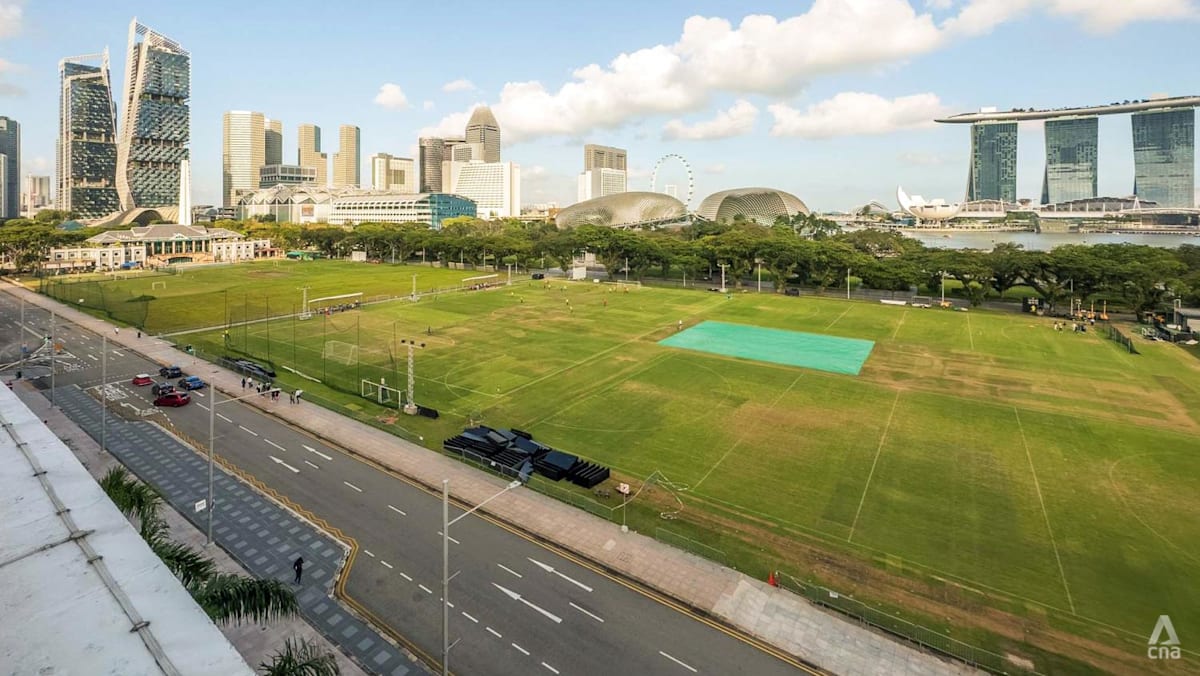
The Padang and its surrounding buildings, collectively known as the Padang Civic Ensemble, will no longer be nominated for inscription on UNESCO's World Heritage List after a preliminary assessment was made. (File photo: TODAY/Leonard Leong)
This audio is generated by an AI tool.
SINGAPORE: Singapore will not proceed with plans to nominate the Padang and its surrounding historic buildings as a UNESCO World Heritage Site, after an assessment found that additional planning measures could affect future development in the wider Civic District.
The National Heritage Board (NHB) on Tuesday (Nov 3) said a preliminary assessment of the site, named The Padang Civic Ensemble, by UNESCO’s World Heritage Centre and the advisory bodies revealed “significant challenges” to the nomination.
The preliminary assessment report had recommended establishing a larger buffer zone than Singapore had proposed, protection of important views to and from the site, and controls on future developments to preserve its heritage significance.
But implementing these measures “would introduce additional consideration and consultation requirements for future planning and development” across the wider Civic District, including areas well beyond the Padang, said NHB.
Singapore would, for instance, have to consult the United Nations Educational, Scientific and Cultural Organization (UNESCO) on future developments that could impact the site's historical and heritage significance, including modifications to existing buildings or new plans in the surrounding areas that could affect important views to and from the Padang.
“Following the preliminary assessment, we have deliberated over the additional measures recommended for the site which may affect future plans for the Civic District, including the impact on the many existing buildings in the district, beyond the protected national monuments,” said Ms Jean Wee, director of the preservation of sites and monuments division at NHB.
"After consideration, we have decided not to proceed with pursuing the nomination of the Padang Civic Ensemble as Singapore’s next World Heritage Site.”
Singapore's decision “reflects the need to strike a careful balance between safeguarding the heritage significance of The Padang Civic Ensemble and retaining sufficient flexibility for any future plans in the larger Civic District”, said NHB.
At a media briefing on Tuesday, it said UNESCO's requirements could span decades and change over time, raising concerns that the long-term implications could be quite substantial even if Singapore went ahead with the nomination and succeeded.
The board had initial reservations about the potential implications of the nomination, but voluntarily undertook the preliminary assessment to obtain official inputs from UNESCO's experts.
NHB saw this as an opportunity to get formal advice on the potential nomination in an efficient, low-cost manner, the board said in the briefing on Tuesday.
The preliminary assessment allows countries to receive early guidance from UNESCO's advisory bodies before submitting a full nomination. The process will become mandatory for all World Heritage Site nominations from 2027.
The Padang Civic Ensemble was placed on Singapore’s tentative list for UNESCO World Heritage status in March 2023, given its historical significance. It began a voluntary preliminary assessment process in September that year.
The preliminary assessment report recognised the heritage significance of The Padang Civic Ensemble , including its role in Singapore’s transition from colonial rule to nationhood and its significance as an example of a British colonial civic square in the tropics.
It also acknowledged the site’s potential for a World Heritage Site nomination.
The report was completed by end 2024 and various government agencies and stakeholders were engaged to discuss the findings, said NHB.
CNA Games Guess Word Crack the word, one row at a time Buzzword Create words using the given letters Mini Sudoku Tiny puzzle, mighty brain teaser Mini Crossword Small grid, big challenge Word Search Spot as many words as you can Show More Show Less
LARGER BUFFER ZONE NEEDED
Responding to CNA’s queries on why UNESCO’s advisory bodies recommended a larger buffer zone than Singapore had initially proposed, NHB said the recommendation reflected UNESCO's emphasis on stronger protection for World Heritage Sites.
NHB said it had hoped the evaluators would take into account Singapore's unique circumstances as a small, densely developed city-state.
The board also hoped that the preliminary assessment would be a good way to see how Singapore could balance heritage preservation versus urban development, given that these are issues confronting many global cities around the world, and potentially set an example for others to follow.
NHB said a larger buffer zone would be challenging given the high-rise buildings in the vicinity, including new constructions along River Valley and Beach Road. The expanded zone could potentially subject private commercial buildings to additional planning restrictions.
A World Heritage Site generally comprises a legally protected area containing features of outstanding universal value that justify its designation.
Surrounding the site is a buffer zone, where complementary legal restrictions on land use and development provide protection for the site, its immediate surroundings, important views and other areas supporting its heritage significance.
NHB also pointed to overseas examples illustrating the potential long-term implications of UNESCO's conservation requirements.
Liverpool Maritime Mercantile City in the United Kingdom was stripped of its World Heritage status in 2021 following developments that UNESCO considered detrimental to the site's heritage significance.
In Seoul, South Korea, UNESCO issued a letter last year urging authorities to suspend approval of a high-rise complex outside the buffer zone of the World Heritage-listed Jongmyo Shrine, citing concerns about its potential impact on the shrine’s surrounding landscape.
On whether alternatives had been considered before Singapore decided not to proceed with the nomination, NHB said that it engaged in a clarification call with UNESCO after receiving the preliminary assessment report, but did not engage in back and forth with the organisation.
NHB also consulted several government agencies and stakeholders on the findings, including those it had engaged in 2023 before Singapore decided to explore the nomination.
"NHB has engaged relevant stakeholders on the proposed nomination and informed them of the preliminary assessment's findings and the decision,” said the board.
“We will continue to engage stakeholders and consider their feedback, as part of our ongoing efforts to safeguard the Padang’s heritage significance.”
Despite the decision, NHB said it remains committed to protecting the heritage of the Padang and surrounding National Monuments.
The Padang and key buildings within the Civic Ensemble – such as the Asian Civilisations Museum, Former Supreme Court, Former City Hall, Fullerton Hotel, Old Parliament House, Victoria Theatre and Concert Hall, and St Andrew’s Cathedral – are already accorded the highest status of preservation and protection in Singapore as national monuments.
Singapore's first and only UNESCO World Heritage Site is the Singapore Botanic Gardens, which was inscribed on the World Heritage list in 2015 .
NHB said that together with NParks, it remains focused on the continued protection and promotion of the Singapore Botanic Gardens as a UNESCO World Heritage Site and a "green lung in the heart of the city loved by Singaporeans and visitors from around the world."
"Singapore will also continue efforts to protect and pass on our living heritage, including hawker culture and the kebaya , which are inscribed on UNESCO’s Representative List of the Intangible Cultural Heritage of Humanity, alongside ongoing multinational nominations for Chingay and zapin ," said NHB.
Get our pick of top stories and thought-provoking articles in your inbox
Stay updated with notifications for breaking news and our best stories
Join our channel for the top reads for the day on your preferred chat app
国家文物局表示,更大的缓冲区和额外的规划要求可能会影响市政区的私人商业建筑和未来的重建。
经过初步评估,巴东及其周边建筑群(统称为巴东市民建筑群)将不再被提名列入联合国教科文组织世界遗产名录。(资料图片:TODAY/Leonard Leong)
这段音频由人工智能工具生成。
新加坡:新加坡将不会继续推进将政府大厦草场及其周边历史建筑申报为联合国教科文组织世界遗产的计划,此前一项评估发现,额外的规划措施可能会影响更广泛的市政区的未来发展。
国家文物局(NHB)周二(11月3日)表示,联合国教科文组织世界遗产中心和咨询机构对名为“巴东市民建筑群”的遗址进行了初步评估,结果显示该提名面临“重大挑战”。
初步评估报告建议设立比新加坡提议的更大的缓冲区,保护通往该遗址的重要景观,并对未来的开发进行控制,以保护其遗产意义。
国家文物局表示,实施这些措施“将对整个市政区(包括巴东以外的地区)的未来规划和发展引入额外的考虑和磋商要求”。
例如,新加坡需要就可能影响该遗址历史和遗产意义的未来发展项目咨询联合国教科文组织(UNESCO),包括对现有建筑物的改造或周边地区的新规划,这些项目可能会影响从巴东广场望向和离开巴东广场的重要景观。
“在初步评估之后,我们仔细考虑了为该地点建议的额外措施,这些措施可能会影响市政区的未来规划,包括对该地区众多现有建筑物(受保护的国家古迹除外)的影响,”国家文物局遗址和古迹保护部门主管Jean Wee女士说。
“经过考虑,我们决定不再继续推进将巴东市民建筑群申报为新加坡下一个世界遗产的进程。”
新加坡国家文物局表示,新加坡的决定“体现了在保护巴东市政建筑群的历史意义和为更大的市政区未来的任何规划保留足够的灵活性之间,需要谨慎地取得平衡”。
周二的新闻发布会上,联合国教科文组织表示,联合国教科文组织的要求可能会持续数十年,并且会随着时间的推移而改变,这引发了人们的担忧,即即使新加坡继续推进提名并最终成功,其长期影响也可能相当巨大。
理事会最初对提名可能产生的影响有所保留,但自愿进行初步评估,以获取联合国教科文组织专家的官方意见。
国家住房银行董事会在周二的简报会上表示,他们认为这是一个以高效、低成本的方式获得有关潜在提名正式建议的机会。
初步评估使各国能够在正式提交提名之前,尽早获得联合国教科文组织咨询机构的指导。自2027年起,所有世界遗产提名都必须经过这一程序。
鉴于其历史意义,巴东市民建筑群于2023年3月被列入新加坡联合国教科文组织世界遗产预备名单。同年9月,该建筑群启动了自愿初步评估程序。
初步评估报告认可了巴东市民广场的遗产意义,包括其在新加坡从殖民统治向建国过渡中所发挥的作用,以及其作为热带地区英国殖民时期市民广场的典范的意义。
报告还指出,该遗址具有被提名为世界遗产的潜力。
国家住房局表示,该报告已于 2024 年底完成,并已与各政府机构和利益相关者就调查结果进行了讨论。
CNA游戏 猜词游戏 逐行破解单词 流行词游戏 用给定的字母组成单词 迷你数独 小小谜题,挑战你的大脑 迷你填字游戏 小方格,大挑战 单词搜索 尽可能多地找出单词 显示更多 显示更少
需要更大的缓冲区
针对亚洲新闻台(CNA)关于联合国教科文组织咨询机构为何建议设立比新加坡最初提议的更大的缓冲区这一问题,国家文物局表示,该建议反映了联合国教科文组织对加强世界遗产地保护的重视。
新加坡国家文物局表示,他们希望评估人员能够考虑到新加坡作为一个小型、高度发达的城市国家的特殊情况。
董事会还希望,初步评估能够很好地展现新加坡如何在遗产保护与城市发展之间取得平衡,因为这些问题是世界各地许多国际城市面临的,并有可能为其他国家树立榜样。
NHB表示,鉴于附近高层建筑林立,包括沿河谷路和海滩路的新建建筑,扩大缓冲区将面临挑战。扩大后的缓冲区可能会使私人商业建筑受到额外的规划限制。
世界遗产地通常是指受法律保护的区域,其中包含具有突出普遍价值的特征,足以证明其被列入世界遗产名录的合理性。
该遗址周围设有缓冲区,其中对土地使用和开发施加了相应的法律限制,以保护该遗址、其周边环境、重要景观以及其他有助于体现其遗产意义的区域。
NHB 还列举了海外案例,说明联合国教科文组织保护要求可能产生的长期影响。
英国利物浦海事商业城于 2021 年被剥夺了世界遗产地位,原因是联合国教科文组织认为该遗址的一些发展损害了其遗产意义。
去年,联合国教科文组织在韩国首尔发出了一封信函,敦促有关部门暂停批准在世界遗产名录上的宗庙缓冲区外建造一座高层建筑群,理由是担心该建筑群可能会对宗庙周围的景观造成影响。
关于新加坡在决定不继续提名之前是否考虑过其他方案,国家文物局表示,在收到初步评估报告后,他们曾与联合国教科文组织进行过一次澄清电话,但没有与该组织进行反复沟通。
国家文物局还就调查结果咨询了多个政府机构和利益相关者,包括新加坡在 2023 年决定考虑提名之前曾接触过的机构和利益相关者。
“NHB已就拟议的提名与相关利益攸关方进行了沟通,并告知了他们初步评估结果和决定,”董事会表示。
“我们将继续与利益相关者沟通并考虑他们的反馈意见,作为我们持续努力保护巴东文化遗产意义的一部分。”
尽管做出了这一决定,但国家文物局表示,它仍致力于保护巴东及其周边国家古迹的遗产。
市政建筑群内的政府大厦和主要建筑——如亚洲文明博物馆、前最高法院、前市政厅、富丽敦酒店、旧国会大厦、维多利亚剧院和音乐厅以及圣安德烈大教堂——已被新加坡列为国家古迹,享有最高的保护和保存地位。
新加坡第一个也是唯一一个联合国教科文组织世界遗产是新加坡植物园,它于 2015 年被列入世界遗产名录。
新加坡国家文物局表示,它将与国家公园局一起,继续致力于保护和推广新加坡植物园,使其成为联合国教科文组织世界遗产,以及“深受新加坡人和世界各地游客喜爱的城市中心绿肺”。
“新加坡还将继续努力保护和传承我们的活态遗产,包括小贩文化和可巴雅,它们已被列入联合国教科文组织人类非物质文化遗产代表作名录,同时,妆艺和扎宾也正在进行多国提名,”国家文物局表示。
订阅我们的邮件,即可获取精选热点新闻和引人深思的文章。
订阅通知,第一时间获取突发新闻和精彩报道。
加入我们的频道,即可在您常用的聊天应用上获取当日热门文章。