Safran, MBDA see delivery of French rocket artillery in 2029 as feasible赛峰集团和MBDA认为,2029年交付法国火箭炮是可行的。
The companies said Thundart is fully designed and produced in France.
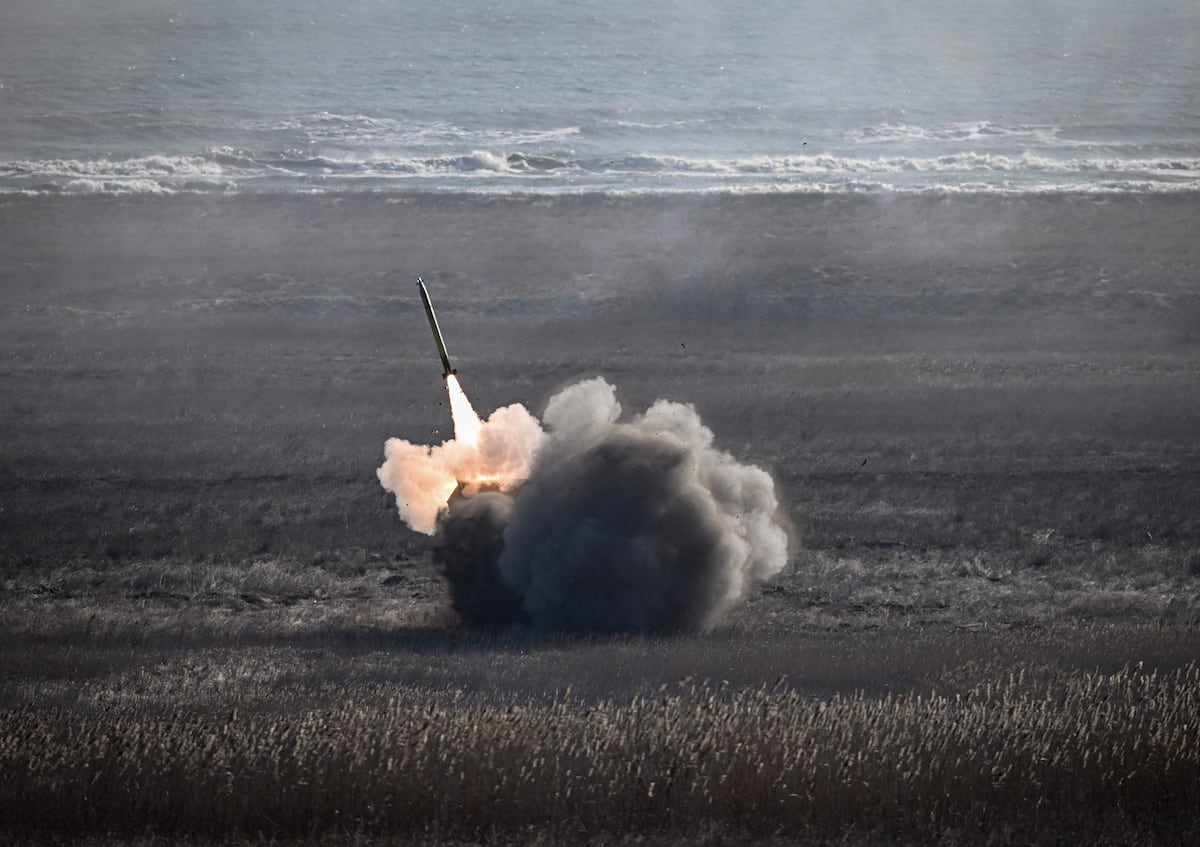
PARIS – French defense firm Safran and missile maker MBDA successfully test-fired their jointly developed rocket-artillery munition this month, and expect to be able to deliver the first multiple-launch rocket systems in 2029 should their offer be picked by the French armed forces.
Safran and MBDA fired the first Thundart munition developed for France’s Long-Range Land Strike program at the Île du Levant test range in the Mediterranean on April 14, the companies said in a statement on Wednesday. The ground-to-ground rocket has a 150 kilometer range, and the companies are considering the development of longer-range munitions.
France aims to replace nine aging Lance-Roquettes Unitaire systems with at least 13 new rocket-artillery systems in 2030, according to an update of its defense budget. In addition to domestic offers from Safran and MBDA as well as Thales with ArianeGroup, the country is evaluating off-the-shelf solutions, according to Armed Forces Minister Catherine Vautrin.
“Lessons learned from recent conflicts with regards to high-intensity combat demonstrate the need for the ability to fire effectively at long range,” Vautrin said in a senate hearing on Tuesday. “The successor to the LRU, this is a priority capability and let’s be clear, one that is indispensable for the Army.”
Safran and MBDA can meet the time table for an operational capability in 2030, the companies said. If asked by France’s Directorate General for Armament, the companies are ready to supply operational systems as early as 2029, Safran told Defense News in response to questions.
Safran and MBDA are considering setting up a joint venture to continue the development of Thundart, including in the area of longer-range rockets. Around 100 employees across both companies have been working on the system, according to the firms.
The companies said Thundart is fully designed and produced in France, and is currently the only sovereign system in Europe that has demonstrated a strike range beyond that of the LRU system now in service with the French Army. The system is not subject to any restrictions regarding the United States International Traffic in Arms Regulations, according to Safran.
“The idea, as far as I’m concerned, is obviously to do everything possible to find a sovereign solution,” Vautrin said in the senate on Tuesday, though she said that sovereign system will be evaluated on effectiveness, price and ability to deliver. The minister said she has asked the DGA to evaluate off-the-shelf solutions to make a “clear comparison” of pros and cons of each option, including Asian systems.
Several European forces have acquired the Chunmoo rocket artillery system produced by South Korea’s Hanwha Aerospace, while other systems in service include the PULS system from Israel’s Elbit Systems and Lockheed Martin’s HIMARS. France has reportedly also been considering India’s Pinaka rocket system.
France aims to buy a total of 26 rocket-artillery systems with 300 munitions by 2035 at the latest, and gradually equip a rocket artillery battalion by 2030, according to Patrick Pailloux, the head of the DGA.
The launcher will be mounted on an eight-wheel truck produced by Scania France, loaded with as many as eight rockets per launcher, according to Safran. The launcher will have “shoot and scoot” capability, being able to quickly fire and then leave its firing position rapidly, Safran said.
The Thundart rocket is powered by propulsion developed by MBDA’s rocket-engine unit Roxel, and is fitted with an adapted version of the AASM guidance kit developed by Safran for glide bombs. The munition has a high supersonic speed with a 100-kilogram payload, and is resistant to electronic warfare, according to the companies.
Safran in March tested a new AASM seeker combining inertial navigation, laser and infra-red guidance, with delivery of the new seeker to start in 2027.
Thundart is easy to scale up for mass production, with both companies are “fully prepared” to ramp up production, according to MBDA and Safran. MBDA has said it plans to increase missile production by 40% in 2026 from a year earlier, while Safran says it increased production of AASM guidance kits fourfold in 2025 compared to 2022.
Rudy Ruitenberg is a Europe correspondent for Defense News. He started his career at Bloomberg News and has experience reporting on technology, commodity markets and politics.
巴黎——法国国防公司赛峰集团和导弹制造商MBDA本月成功试射了他们联合开发的火箭炮弹药,并预计如果他们的方案被法国武装部队采纳,他们将于2029年交付首批多管火箭发射系统。
赛峰集团和MBDA公司周三在一份声明中表示,4月14日,两家公司在地中海的黎凡特岛试验场试射了为法国远程陆基打击计划研发的首枚“雷霆”(Thundart)导弹。这枚地对地导弹射程为150公里,两家公司正在考虑研发射程更远的导弹。
根据法国国防预算的最新情况,法国计划在2030年前用至少13套新型火箭炮系统替换现有的9套老旧的Lance-Roquettes Unitaire系统。法国武装部队部长凯瑟琳·沃特兰表示,除了赛峰集团、MBDA以及泰雷兹集团旗下阿丽亚娜集团的国产方案外,法国还在评估现成的解决方案。
“从近期高强度战斗的冲突中吸取的教训表明,我们需要具备有效的远程射击能力,”沃特林周二在参议院听证会上说。“远程可更换单元(LRU)的后续型号是一项优先发展的能力,而且必须明确指出,这项能力对陆军来说不可或缺。”
赛峰集团和MBDA公司表示,两家公司均能按时在2030年实现作战能力。赛峰集团在回复《防务新闻》的提问时表示,如果法国军备总局提出要求,两家公司也准备最早在2029年提供作战系统。
赛峰集团和MBDA公司正在考虑成立一家合资企业,以继续开发“雷霆”火箭系统,包括远程火箭领域。据两家公司透露,两家公司约有100名员工参与了该系统的研发工作。
这些公司表示,“雷霆”导弹系统完全在法国设计和生产,是目前欧洲唯一一款自主研发且打击范围超过法国陆军现役远程可更换单元(LRU)系统的导弹防御系统。赛峰集团称,该系统不受美国《国际武器贸易条例》的任何限制。
“就我而言,显然,我们的目标是尽一切可能找到一个自主解决方案,”沃特林周二在参议院表示。不过她也指出,该自主系统将从有效性、价格和交付能力等方面进行评估。沃特林部长表示,她已要求国防总局(DGA)评估现有的解决方案,以便对每种方案的优缺点进行“清晰的比较”,其中包括亚洲的系统。
一些欧洲国家已采购了韩国韩华航天公司生产的“天武”(Chunmoo)火箭炮系统,其他在役系统还包括以色列埃尔比特系统公司的“脉冲”(PULS)系统和洛克希德·马丁公司的“高马斯”(HIMARS)系统。据报道,法国也一直在考虑采购印度的“皮纳卡”(Pinaka)火箭炮系统。
据法国国防采购局局长帕特里克·帕尤克斯称,法国的目标是最迟在 2035 年前购买 26 套火箭炮系统和 300 枚弹药,并在 2030 年前逐步装备一个火箭炮营。
据赛峰集团称,该发射器将安装在法国斯堪尼亚公司生产的八轮卡车上,每个发射器最多可装载八枚火箭弹。赛峰集团表示,该发射器将具备“发射后迅速撤离”的能力,能够快速发射后立即离开发射阵地。
“雷霆”火箭采用MBDA公司旗下火箭发动机部门Roxel开发的推进系统,并配备了由赛峰集团为滑翔炸弹开发的AASM制导套件的改进版本。据两家公司称,该弹药具有极高的超音速飞行速度,有效载荷达100公斤,并且能够抵抗电子战干扰。
赛峰集团于 3 月测试了一种新型 AASM 导引头,该导引头结合了惯性导航、激光和红外制导,新型导引头将于 2027 年开始交付。
据MBDA和赛峰集团称,雷霆导弹易于大规模生产,两家公司均已“做好充分准备”提高产量。MBDA表示,计划在2026年将导弹产量比上年提高40%,而赛峰集团则表示,其AASM制导组件的产量在2025年比2022年提高了四倍。
鲁迪·鲁伊滕贝格是《防务新闻》的欧洲记者。他的职业生涯始于彭博新闻社,拥有报道科技、大宗商品市场和政治方面的经验。