Eating less, exercising more but still gaining belly fat – menopause may be the reason吃得少了,运动量增加了,但腹部脂肪仍然增加——更年期可能是原因所在。
The “menopause belly” isn’t just a cosmetic concern. Hormonal changes, muscle loss and poor sleep can contribute to it while Asian women may be more prone to visceral fat and its health risks. Here’s what women can do about it.
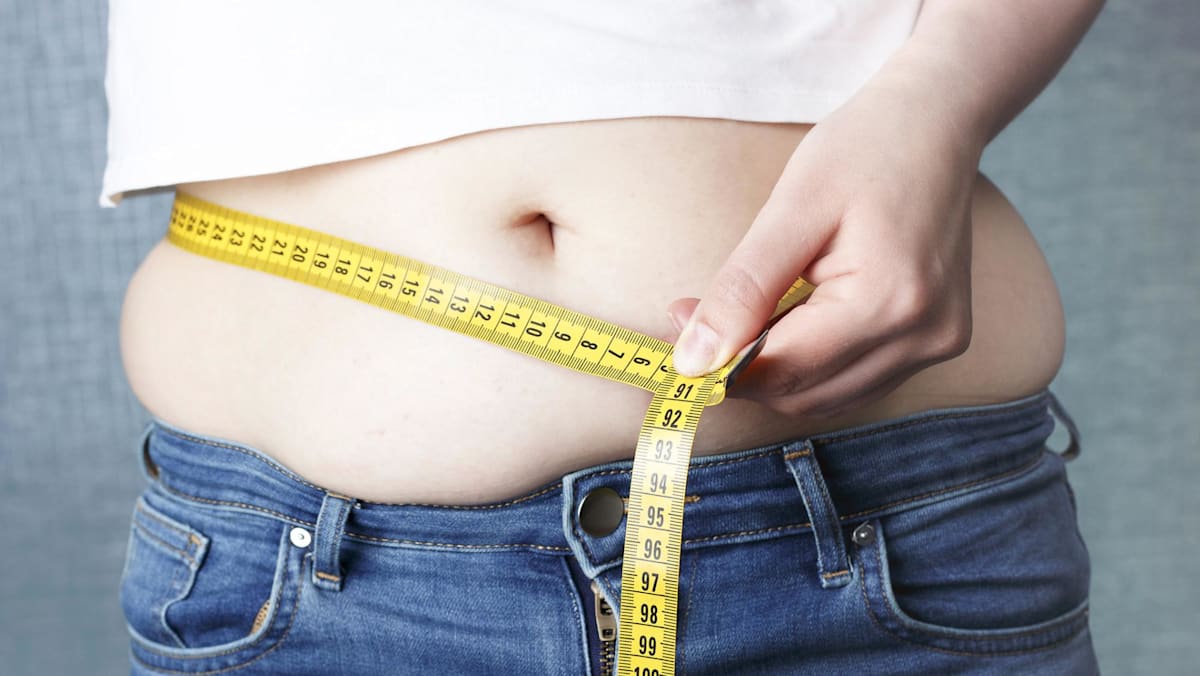
The “menopause belly” isn’t just a cosmetic concern. Hormonal changes, muscle loss and poor sleep can contribute to it while Asian women may be more prone to visceral fat and its health risks. Here’s what women can do about it.
Fluctuating hormones, declining muscle mass and poor sleep can contribute to abdominal weight gain during perimenopause and menopause. (Photo: iStock/Tatiana)
This audio is generated by an AI tool.
Putting on weight seems to be inevitable as you get older. What’s more frustrating for midlife women is that exercising more and eating less has little effect on that weight, which – more frustratingly – tends to accumulate around the mid-section.
There’s a name for it: menopause belly, or meno belly.
“Menopause belly refers to the accumulation of excess fat around the abdomen, particularly visceral fat , which surrounds the internal organs,” explained Professor Yong Eu Leong, emeritus consultant at the division of Benign Gynaecology, department of Obstetrics & Gynaecology at National University Hospital (NUH).
He added: “During the menopausal transition, many women experience a shift from a pre-menopausal pear-shaped body, where fat is stored around the hips, thighs and buttocks, to a more apple-shaped body, where fat is concentrated around the waist.” On average, women gain about 2-3kg during this period, he added.
WHY MENOPAUSE BELLY HAPPENS
Declining oestrogen levels are associated with a shift in where the body stores fat, said Associate Professor Rukshini Puvanendran, co-director of KK Menopause Centre at KK Women’s and Children’s Hospital (KKH). These changes can begin during perimenopause .
Age-related muscle loss is another factor. Because muscle burns more calories than fat, even at rest, having less muscle slows metabolism, making it easier to gain fat and harder to lose weight, said Assoc Prof Rukshini.
Declining oestrogen levels are linked to a shift in where the body stores fat, hence, the menopause belly. (Photo: iStock/ArtistGNDphotography)
Hormonal fluctuations can also disrupt sleep, creating a “vicious cycle where poor sleep drives weight gain and weight gain drives poorer sleep”, said Assoc Prof Rukshini.
“When sleep is disrupted, key hormones fall out of balance – ghrelin (the hunger hormone) rises, leptin (the hormone that keeps you full) drops, cortisol (the stress hormone) stays high and melatonin (the hormone that regulates sleep) is thrown off,” explained Assoc Prof Rukshini.
These hormonal changes can make the body less responsive to insulin, affecting blood sugar regulation and making it easier for the body to store excess fat around the abdomen, she added.
Poor sleep can also increase cravings for sugary and fatty foods, while fatigue can make exercising harder, said Assoc Prof Rukshini.
ASIAN WOMEN AND MENO BELLY
Asian women may be particularly susceptible to carrying visceral fat even when they appear slim or have a healthy body mass index (BMI).
“As Asian women naturally store less fat just under the skin, they can potentially appear slim and register a healthy BMI, while quietly accumulating visceral fat around their organs,” said Assoc Prof Rukshini.
Asian women tend to store less fat under the skin but are more susceptible to accumulating visceral fat around the organs. (Photo: iStock/lielos)
A 2021 National University of Singapore study comparing post-menopausal Chinese women in Singapore with German Caucasian women found that, among women with similar BMI, Chinese women tended to have higher levels of abdominal fat.
Similar findings emerged from the Integrated Women’s Health Programme by NUH and NUS Medicine. The study of 1,201 Chinese, Malay and Indian women in Singapore found increased visceral fat, along with loss of muscle and strength, lower energy expenditure and reduced fat-burning capacity.
These findings place Asian women at “greater risk” of gaining fat around the abdomen and upper body during perimenopause and menopause, as well as metabolic complications such as diabetes, hypertension and cardiovascular disease, said Assoc Prof Yong.
A long-term American study, the Study of Women’s Health Across the Nation, found that women gained fat while losing lean mass as they went through perimenopause and menopause.
The study of 1,246 women found a 3.6 per cent cumulative increase in fat mass and a 1.9 per cent decline in lean mass.
That means a woman may weigh roughly the same before and after menopause but have a higher proportion of body fat and less lean muscle.
In the years around menopause, a woman’s fat mass can increase while her lean muscle mass decreases – even if her weight remains the same. (Photo: iStock/Pranithan Chorruangsak)
The study discovered that the rate of fat gain doubled and lean mass started to decline about two years before the women’s final menstrual period . These changes stabilised about two years after the final period.
“However, the tendency to store fat around the abdomen may still persist due to continued low oestrogen levels and age-related metabolic changes,” said Prof Yong.
“So, while the rapid phase of body re-composition may slow, maintaining muscle mass and controlling abdominal fat gain remain important after menopause,” he added.
THE DANGERS OF MENOPAUSE BELLY
“Abdominal or visceral fat is not merely a cosmetic concern,” said Prof Yong.
Unlike pinchable fat just under the skin, visceral fat lies deep inside the abdomen, surrounding the internal organs, explained Assoc Prof Rukshini. It is biologically active and functions almost like a hormone-producing organ.
“As visceral fat increases, it releases chemical signals that promote low-grade inflammation throughout the body,” she added.
This inflammation can make the body’s cells less responsive to insulin, the hormone that helps regulate blood sugar levels, resulting in insulin resistance.
“Thus, the body needs to produce more insulin to keep blood sugar levels under control. In turn, this can make it easier to store additional fat, particularly around the abdomen, creating a cycle in which increased visceral fat and insulin resistance reinforce one another,” added Assoc Prof Rukshini.
Excess visceral fat is associated with a higher risk of conditions such as Type 2 diabetes, hypertension and cardiovascular disease.
STRENGTH TRAINING TO COMBAT A MENOPAUSE BELLY
Strength training can help counter the effects of declining oestrogen on bone density and muscle mass. (Photo: iStock/pain au chocolat)
“You can’t burn fat from one spot, so crunches alone won’t flatten your belly,” said Danielle van der Leest, founder of Active Women SG and a menopause fitness coach.
Instead, “strength training, complemented with mobility, flexibility and aerobic exercises, offers the most effective results”, advised Derlinder Kaur, clinical exercise physiologist at Singapore Sport and Exercise Medicine Centre at KKH.
Strength training is important around menopause because declining oestrogen affects bone density and muscle mass.
“Oestrogen helps protect our bones, and as it declines, bone density drops faster, especially in the years around menopause. Strength training … puts healthy stress on our bones, signalling them to stay strong. It also builds muscle, which helps the body burn more energy, even at rest,” said van der Leest.
Strength training can also help make muscles more responsive to insulin, she added.
To build muscle mass and increase bone density, do compound exercises such as squats or overhead presses where multiple joints and muscle groups work together. (Photo: iStock/Valeria Blanc)
Kaur recommends strength training two to three times a week, focusing on compound movements that work multiple joints and muscle groups.
Van der Leest suggested barbell or dumbbell squats, deadlifts, chest and overhead presses, and cable or dumbbell rows, aiming for two to three sets of six to 12 repetitions.
To complement strength training, she also suggested daily walks. A short 10- to 15-minute walk after a meal can help the body use glucose for energy.
As blood sugar typically peaks within an hour to 90 minutes of eating, walking after a meal can help “soften the blood sugar spike”, she said.
“The goal isn’t to shrink yourself. It’s to stay strong for the next 40 years,” said van der Leest.
WHAT TO EAT TO MANAGE MENOPAUSE WEIGHT GAIN
As the increase in abdominal fat during perimenopause and menopause is largely driven by hormonal changes, no single food can specifically target the menopause belly, said Hazel Koh, dietitian at KKH’s department of Nutrition & Dietetics.
A balanced diet can help women manage weight gain, preserve muscle mass and keep blood sugar levels stable during perimenopause and menopause. (Photo: iStock/Perawit Boonchu)
However, women can curb excess weight gain by choosing foods that “support satiety, preserve lean muscle mass and stabilise blood sugar levels”. Koh recommended:
Whole grains such as wholewheat bread or pasta, quinoa, brown rice and oats. The fibre content slows digestion, promotes fullness and helps stabilise blood sugar levels.
Protein-rich foods, which help preserve lean muscle mass while promoting fullness. These include fish, poultry, lean meat, eggs and dairy, as well as plant proteins such as beans, lentils and soya.
Non-starchy vegetables, which are high in fibre and nutrients but relatively low in calories. Examples include spinach, kale, arugula, kai lan, broccoli, bok choy, zucchini, celery and asparagus.
Fibre-rich, low-glycaemic whole fruits such as apples, pears, berries and oranges.
Foods rich in unsaturated fats. These support insulin sensitivity and include fatty fish, nuts and seeds. But keep in mind portion size as these foods are also high in calories.
Prof Yong said that managing weight during perimenopause and menopause should focus not only on reducing abdominal fat. Preserving muscle mass and strength also contribute to long-term health and healthy ageing.
CNA Women is a section on CNA Lifestyle that seeks to inform, empower and inspire the modern woman. If you have women-related news, issues and ideas to share with us, email CNAWomen [at] mediacorp.com.sg .
A single handpicked story that we think you shouldn't miss. Just one a day.
“更年期腹部脂肪堆积”不仅仅是外观问题。激素变化、肌肉流失和睡眠不足都会导致这种情况,而亚洲女性可能更容易出现内脏脂肪堆积及其带来的健康风险。以下是女性可以采取的一些措施。
更年期前后,激素波动、肌肉量减少和睡眠不足都可能导致腹部脂肪堆积。(图片:iStock/Tatiana)
这段音频由人工智能工具生成。
随着年龄增长,体重增加似乎难以避免。更令中年女性沮丧的是,增加运动量和减少饮食对减轻体重几乎没有效果,而且更令人沮丧的是,这些脂肪往往会堆积在腹部。
它有个名字:更年期腹痛,或更年期肚。
“更年期腹胀是指腹部周围,特别是围绕内脏器官的内脏脂肪的过度堆积,”新加坡国立大学医院(NUH)妇产科良性妇科名誉顾问杨有良教授解释道。
他补充道:“在更年期过渡阶段,许多女性的体型会从更年期前的梨形身材(脂肪堆积在臀部、大腿和臀部周围)转变为苹果形身材(脂肪集中在腰部)。”他还补充说,女性在此期间平均体重会增加2-3公斤。
为什么更年期会出现腹部肿胀
KK妇女儿童医院(KKH)KK更年期中心联合主任、副教授Rukshini Puvanendran表示,雌激素水平下降与体内脂肪储存位置的改变有关。这些变化可能在围绝经期开始。
年龄相关的肌肉流失是另一个因素。鲁克希尼副教授表示,由于肌肉即使在休息时燃烧的热量也比脂肪多,因此肌肉减少会减慢新陈代谢,使人更容易长胖,更难减肥。
雌激素水平下降与体内脂肪储存位置的改变有关,因此会出现更年期腹部脂肪堆积。(图片:iStock/ArtistGNDphotography)
副教授鲁克希尼表示,荷尔蒙波动也会扰乱睡眠,从而形成“恶性循环,睡眠不足导致体重增加,而体重增加又导致睡眠更差”。
“睡眠受到干扰时,关键激素就会失去平衡——饥饿激素(胃饥饿素)升高,饱腹激素(瘦素)下降,压力激素(皮质醇)保持高水平,而调节睡眠的激素(褪黑激素)则被打乱,”副教授鲁克希尼解释说。
她补充说,这些激素变化会降低身体对胰岛素的反应,影响血糖调节,并使身体更容易在腹部周围储存过多的脂肪。
副教授鲁克希尼表示,睡眠不足还会增加对含糖和高脂肪食物的渴望,而疲劳则会使锻炼更加困难。
亚洲女性和更年期腹部
亚洲女性即使看起来很苗条或拥有健康的体重指数(BMI),也可能特别容易携带内脏脂肪。
“由于亚洲女性皮下脂肪自然储存较少,她们可能会看起来很苗条,BMI 指数也很健康,但同时内脏脂肪却会在器官周围悄悄积累,”副教授鲁克希尼说。
亚洲女性皮下脂肪较少,但更容易在内脏器官周围堆积内脏脂肪。(图片:iStock/lielos)
2021 年新加坡国立大学的一项研究比较了新加坡的绝经后华裔女性和德国白人女性,发现 BMI 相似的女性中,华裔女性的腹部脂肪含量往往更高。
新加坡国立大学医院和新加坡国立大学医学院联合开展的“女性综合健康计划”也得出了类似的结论。这项针对新加坡1201名华裔、马来裔和印度裔女性的研究发现,她们的内脏脂肪增加,同时肌肉和力量下降,能量消耗降低,脂肪燃烧能力减弱。
副教授杨表示,这些研究结果表明,亚洲女性在围绝经期和绝经期更容易出现腹部和上身脂肪堆积,以及糖尿病、高血压和心血管疾病等代谢并发症。
美国一项长期研究——《全国女性健康研究》发现,女性在围绝经期和绝经期期间,脂肪增加,而瘦体重减少。
对 1246 名女性的研究发现,脂肪量累计增加了 3.6%,瘦体重下降了 1.9%。
这意味着女性在更年期前后体重可能大致相同,但体脂比例会更高,瘦肌肉量会更少。
在更年期前后,女性的脂肪量可能会增加,而瘦肌肉量则会减少——即使体重保持不变。(图片:iStock/Pranithan Chorruangsak)
研究发现,女性末次月经前约两年,脂肪增长速度翻倍,瘦体重开始下降。这些变化在末次月经后约两年趋于稳定。
“然而,由于雌激素水平持续偏低以及与年龄相关的代谢变化,腹部周围储存脂肪的倾向可能仍然会持续存在,”Yong教授说。
“因此,虽然身体成分快速重塑的阶段可能会减缓,但更年期后保持肌肉质量和控制腹部脂肪增加仍然很重要,”他补充道。
更年期腹部疼痛的危害
“腹部或内脏脂肪不仅仅是美容问题,”杨教授说。
鲁克希尼副教授解释说,与皮下可捏起的脂肪不同,内脏脂肪位于腹部深处,包裹着内脏器官。它具有生物活性,功能几乎就像一个激素分泌器官。
她补充说:“随着内脏脂肪的增加,它会释放化学信号,促进全身低度炎症。”
这种炎症会使身体细胞对胰岛素(一种帮助调节血糖水平的激素)的反应性降低,从而导致胰岛素抵抗。
“因此,身体需要产生更多胰岛素来控制血糖水平。反过来,这又会使脂肪更容易储存,尤其是在腹部周围,从而形成一个恶性循环,内脏脂肪增加和胰岛素抵抗相互加剧,”副教授鲁克希尼补充道。
内脏脂肪过多与 2 型糖尿病、高血压和心血管疾病等疾病的风险较高有关。
力量训练对抗更年期腹部赘肉
力量训练有助于抵消雌激素水平下降对骨密度和肌肉量的影响。(图片:iStock/pain au chocolat)
“你不可能只从一个地方燃烧脂肪,所以单靠仰卧起坐是无法让你的肚子变平坦的,”Active Women SG 的创始人兼更年期健身教练 Danielle van der Leest 说。
相反,“力量训练,辅以灵活性、柔韧性和有氧运动,才能取得最有效的效果”,新加坡竹脚妇幼医院运动与锻炼医学中心的临床运动生理学家德林德·考尔建议道。
更年期前后进行力量训练很重要,因为雌激素水平下降会影响骨密度和肌肉质量。
“雌激素有助于保护我们的骨骼,随着雌激素水平下降,骨密度下降速度也会加快,尤其是在更年期前后。力量训练……能给骨骼带来健康的压力,促使它们保持强健。它还能增强肌肉,帮助身体即使在休息时也能燃烧更多能量,”范德莱斯特说道。
她还补充说,力量训练还可以帮助提高肌肉对胰岛素的反应能力。
想要增加肌肉量和骨密度,可以进行复合运动,例如深蹲或过头推举,这些运动需要多个关节和肌肉群协同工作。(图片:iStock/Valeria Blanc)
Kaur建议每周进行两到三次力量训练,重点是锻炼多个关节和肌肉群的复合动作。
范德莱斯特建议进行杠铃或哑铃深蹲、硬拉、胸部和过头推举以及绳索或哑铃划船,目标是做两到三组,每组六到十二次。
为了配合力量训练,她还建议每天散步。饭后进行10到15分钟的短途散步可以帮助身体利用葡萄糖产生能量。
她说,由于血糖通常在进食后 1 小时到 90 分钟内达到峰值,饭后散步可以帮助“缓和血糖飙升”。
“我们的目标不是让自己萎缩,而是要在接下来的40年里保持强劲势头,”范德莱斯特说道。
如何通过饮食控制更年期体重增加
KKH营养与膳食科的营养师Hazel Koh表示,由于围绝经期和绝经期腹部脂肪的增加主要是由激素变化引起的,因此没有一种食物可以专门针对更年期腹部脂肪。
均衡的饮食有助于女性在围绝经期和绝经期控制体重增加、保持肌肉量并维持血糖水平稳定。(图片:iStock/Perawit Boonchu)
然而,女性可以通过选择“能够增强饱腹感、保持肌肉量和稳定血糖水平”的食物来控制体重过度增长。Koh建议:
全谷物,例如全麦面包或意面、藜麦、糙米和燕麦。其中的膳食纤维可以减缓消化速度,增加饱腹感,并有助于稳定血糖水平。
富含蛋白质的食物有助于保持肌肉质量,同时还能增强饱腹感。这些食物包括鱼类、家禽、瘦肉、鸡蛋和乳制品,以及植物蛋白,例如豆类、扁豆和大豆制品。
非淀粉类蔬菜富含纤维和营养物质,但热量相对较低。例如菠菜、羽衣甘蓝、芝麻菜、芥蓝、西兰花、小白菜、西葫芦、芹菜和芦笋。
富含纤维、低升糖指数的完整水果,例如苹果、梨、浆果和橙子。
富含不饱和脂肪的食物有助于提高胰岛素敏感性,包括脂肪含量高的鱼类、坚果和种子。但要注意控制份量,因为这些食物的热量也很高。
杨教授指出,围绝经期和绝经期体重管理不应只关注减少腹部脂肪,保持肌肉量和力量也有助于长期健康和健康老龄化。
CNA Women是CNA Lifestyle旗下的一个版块,旨在为现代女性提供信息、赋能和灵感。如果您有与女性相关的新闻、议题或想法想要与我们分享,请发送电子邮件至CNAWomen[at]mediacorp.com.sg。
每天一篇,我们精心挑选一篇您不容错过的精彩故事。