As Iran saps US focus, the troop math for monitoring a Ukraine peace deal looks grim由于伊朗问题分散了美国的注意力,用于监督乌克兰和平协议的兵力部署形势看起来十分严峻。
The coalition has also not resolved the question of what any of its forces would be authorized to do once a ceasefire takes hold.
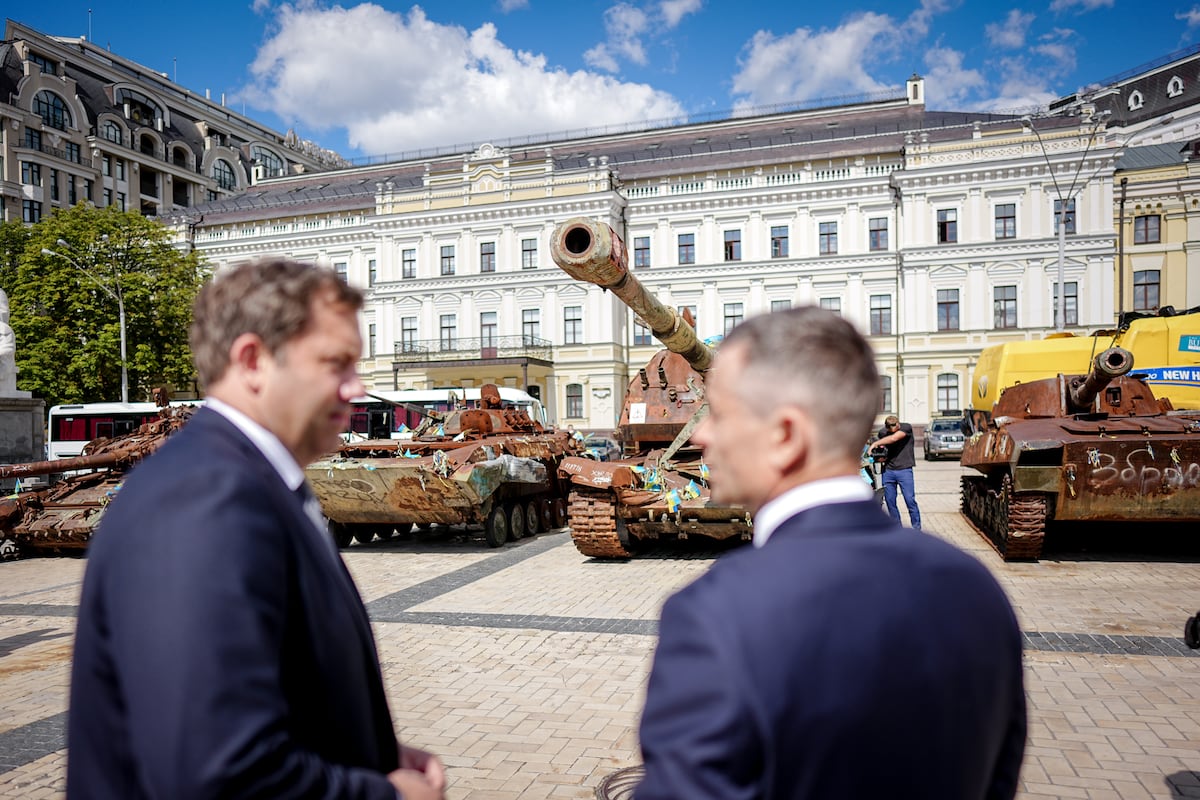
KYIV, Ukraine — The Pentagon has surged tens of thousands of service members to the Middle East since the war with Iran began, raising questions here about how involved the Trump administration could get in securing a peace agreement in Ukraine when the time comes – even if it wanted to.
The war has consumed American stockpiles of key weaponry, including the Patriot interceptor batteries that have become key to protecting the skies over the U.S., NATO countries, and allies like Ukraine for years.
As Kyiv watches the defenses it needs get expended in a new war in the Middle East, long-term plans for a U.S. troop commitment to Ukraine — once seen as foundational to any lasting peace in the region — have become less and less likely.
Since taking office, Trump administration leaders in Washington have kept their counterparts in Kyiv at arm’s length, backtracking from their original proposals to lead an eventual peacekeeping mission in Ukraine, all while telegraphing sympathy for many of Russia’s war aims.
Progress in the US-brokered peace talks between Kyiv and Moscow has been virtually stalled since the Middle East heated up on Feb. 28, taking Washington’s focus away from ending Russia’s four-year full-scale invasion with Moscow in favor of securing an elusive victory in Iran and maintaining control over multiple military arenas.
Ukraine needs a multinational peacekeeping force of at least 10,000-25,000 troops for a minimal “tripwire” presence, and potentially more than 100,000 for a true defense-in-depth, on top of more than 100 national brigades, the Center for Strategic and International Studies assessed last year.
Military force-generation math could further drive up that number, said Ed Arnold, a senior research fellow at the Royal United Services Institute and a former British military officer, referring to the logic that only one-third of forces is actually frontline-ready at any given time, with the rest rotating through recovery and preparation phases.
“That means if you’re going to provide 25,000, you actually need 75,000,” Arnold told Military Times.
U.S. special envoy Steve Witkoff and Jared Kushner attend a press conference during the "Coalition Of The Willing" meeting at Elysee Palace on Jan. 6, 2026, in Paris. (Tom Nicholson/Getty Images)
Britain and France, the co-leads of a nascent Coalition of the Willing, have said they are prepared to send roughly 10,000 troops between them — about 5,000 each, or one brigade apiece — under a declaration of intent they signed in Paris on Jan. 6, if a peace deal and ceasefire take hold.
That would translate to just over 3,000 foreign troops on Ukrainian soil, manning over 1,200 kilometers of active front line.
Every comparable deployment in recent history has been several times larger: During the 1990s, NATO sent 60,000 troops to patrol about 1,000 kilometers of the ceasefire boundary in Bosnia, and nearly 50,000 to monitor a 300-kilometer border in Kosovo.
Although the U.S. was expected to play a central role in ceasefire monitoring in any Washington-brokered peace deal, “that doesn’t mean we could not contribute to this too, as Europeans and members of the Coalition of the Willing,” Gaël Veyssière, Ambassador of France to Ukraine, told Military Times on Tuesday.
“But it would be a different task from that of the multinational force, whose aim is different in nature because it is meant to support the Ukrainian army in its ability to be beefed up,” he said.
Other countries have signaled openness to commit troops — particularly among Nordic, Baltic and Western European partners — but none have offered a firm deployment pledge or any public troop numbers, keeping commitments conditional on a ceasefire and the mission’s rules, per German news outlet DW .
Britain, France and Germany would inevitably anchor any coalition mission — yet each of the three is operating well below the force size required to comprehensively protect its own borders, let alone Ukraine’s. And all three governments would have to find consensus for a Ukraine peacekeeping mission from voters, a political hurdle that hasn’t even been on the table.
European NATO allies field roughly 1.86 million active-duty personnel combined, according to a CSIS assessment — spread across nearly 30 separate national armies, most of them structured for homeland defense rather than long-range deployments.
CSIS analysts concluded that a credible force in Ukraine still requires an American backstop — the air-defense umbrella, intelligence sharing and rapid-reaction capacity only Washington can provide.
Arnold agreed: “I really don’t think that the Europeans would be able to put a military mission together without a lot of US support,” he said.
Retired Lt. Gen. Ben Hodges, former commanding general of U.S. Army Europe, told Military Times that recent events mean Europe will have to carry more responsibility for its own defenses and that of its eastern flank in Ukraine.
“Ultimately, this is where Germany and other European countries have got to fill that gap, both in terms of capability, but also economic pressure,” Hodges said.
The coalition has also not resolved the question of what any of its peacekeeping forces would be authorized to do once a ceasefire takes place.
Washington has been tasked with leading ceasefire monitoring under the Paris Declaration, although the U.S. has not yet committed monitoring personnel to the cause.
The mechanism the Americans have so far proposed would run on “drones, sensors and satellites, not U.S. troops,” Reuters reported.
In a Dec. 15 statement, European leaders defined the mission as “the regeneration of Ukraine’s forces, securing Ukraine’s skies, and supporting safer seas, including through operating inside Ukraine,” according to the European Council .
French President Emmanuel Macron said at the March 2025 Coalition of the Willing summit in Paris that the troops would be stationed at “strategic locations” away from the front line and were “not intended to be peacekeeping forces,” nor would they replace Ukrainian forces.
US. .President Donald Trump and his Russian counterpart, Vladimir Putin, begin talks in Alaska aimed at bringing an end to the Kremlin's over-three-year war on Ukraine in Anchorage, Alaska, on Aug. 15, 2025. (Kremlin Press Office/Anadolu via Getty Images)
The UK frames the mission as peacekeeping across land, sea and air.
Prime Minister Keir Starmer, during a January 2025 visit to Kyiv to sign a 100-year partnership agreement with Ukraine, said Britain is “ready to play a leading role in accelerating work on security guarantees.”
His Defense Secretary John Healey followed up with a stronger statement in February that he wanted to be “the defence secretary who deploys British troops to Ukraine — because this will mean that this war is finally over,” according to the Sunday Telegraph .
The thousands of European troops on the table are pledged for monitoring, training and infrastructure protection — but none for shooting back at Russia.
Hodges stressed that to maintain peace, any credible deterrent depends on the authority to fire.
“If there’s any expectation that Russia will respect some sort of a zone of separation or demilitarized area, there will have to be Europeans and Canadians in there with real capability that have the authority to shoot back immediately when Russia violates it or to inflict consequences on Russia immediately,” he said.
“Right now, I don’t know that they’re willing to do that,” Hodges said. “But that’s what it’s going to take.”
The Kremlin’s take has been clear. A draft peace memorandum explicitly rules out foreign troops in Ukraine, and Russian President Vladimir Putin has called any deployed Western force “legitimate combat targets.”
For now, European governments are sending weapons and money to help sustain Ukraine’s fight.
On April 13, London unveiled its biggest drone package yet for Ukraine: at least 120,000 systems spanning long-range strike, ISR, logistics and maritime roles, alongside a joint declaration pledging to “accelerate” security guarantees under the Coalition of the Willing framework.
On Thursday, Europe released a roughly $106 billion (€90 billion) loan for Ukraine after months of deadlock over frozen Russian assets in a politically hard-fought compromise that Brussels framed as essential to keeping Kyiv afloat, both economically and militarily, through 2027.
The package is a big win for Ukraine’s finances, but it still does not address the deeper problems at the heart of current negotiations to end Russia’s full-scale invasion, now stretching into its fifth year.
With Ukraine peace talks stalled and future meetings yet to be scheduled, hard-to-resolve questions on issues like foreign troop deployment remain challenges for later.
”Of course, nothing is agreed until everything is agreed,” the French ambassador said.
乌克兰基辅——自伊朗战争爆发以来,五角大楼已向中东增派了数万名军人,这引发了人们的疑问:即便特朗普政府有意促成乌克兰和平协议,它又能在多大程度上参与其中呢?
这场战争消耗了美国的关键武器储备,包括多年来一直用于保护美国、北约国家和乌克兰等盟国领空的“爱国者”拦截导弹系统。
随着基辅眼睁睁地看着自己所需的防御力量在中东的新战争中被消耗殆尽,美国对乌克兰的长期驻军计划——曾经被视为该地区持久和平的基础——变得越来越不可能。
自上任以来,华盛顿的特朗普政府领导人一直与基辅的同行保持距离,放弃了最初提出的领导最终在乌克兰执行维和任务的提议,同时还对俄罗斯的许多战争目标表示同情。
自2月28日中东局势升温以来,由美国斡旋的基辅和莫斯科之间的和平谈判实际上陷入停滞,这使得华盛顿的注意力从结束俄罗斯与莫斯科长达四年的全面入侵转移到确保在伊朗取得难以实现的胜利以及维持对多个军事领域的控制。
战略与国际研究中心去年评估认为,乌克兰需要至少 10,000 至 25,000 名士兵的多国维和部队,以建立最低限度的“警戒线”存在;而要真正实现纵深防御,则可能需要超过 100,000 名士兵,此外还有 100 多个国家旅。
英国皇家联合军种研究所高级研究员、前英国军官埃德·阿诺德表示,军事力量生成计算可能会进一步推高这个数字,他指的是,在任何特定时间,只有三分之一的部队真正处于一线作战状态,其余部队则轮流处于恢复和准备阶段。
“这意味着,如果你要提供 25,000,你实际上需要 75,000,”阿诺德告诉《军事时报》。
2026年1月6日,美国特使史蒂夫·威特科夫和贾里德·库什纳在巴黎爱丽舍宫出席“自愿联盟”会议期间的新闻发布会。(汤姆·尼科尔森/盖蒂图片社)
英国和法国是新成立的“自愿联盟”的共同领导国,两国表示,如果和平协议和停火生效,他们准备根据1月6日在巴黎签署的意向声明,共同派遣约10000名士兵——每国约5000人,或每国一个旅。
这意味着将有 3000 多名外国军队驻扎在乌克兰领土上,控制着超过 1200 公里的作战前线。
近代史上所有类似的部署规模都比这大好几倍:上世纪 90 年代,北约向波斯尼亚派遣了 6 万名士兵巡逻约 1000 公里的停火边界,并向科索沃派遣了近 5 万名士兵监控 300 公里的边界。
尽管预计美国将在华盛顿斡旋的任何和平协议中发挥停火监督的核心作用,但法国驻乌克兰大使盖尔·韦西埃周二告诉《军事时报》:“这并不意味着我们作为欧洲人和‘自愿联盟’的成员就不能为此做出贡献。”
“但这与多国部队的任务不同,多国部队的目标性质不同,因为它的目的是支持乌克兰军队增强实力,”他说。
据德国新闻媒体 DW 报道,其他国家已表示愿意派遣军队——特别是北欧、波罗的海和西欧伙伴国——但没有一个国家做出明确的部署承诺或公开任何兵力数字,所有承诺都以停火和任务规则为前提条件。
英国、法国和德国必然是任何联合维和行动的核心力量——然而,这三个国家目前的兵力规模都远低于全面保护自身边境所需的水平,更遑论乌克兰边境。而且,这三个国家的政府还必须就乌克兰维和行动达成选民共识,而这一政治障碍甚至尚未被提上议程。
根据战略与国际研究中心 (CSIS) 的评估,欧洲北约盟国共部署了约 186 万现役人员,分布在近 30 个不同的国家军队中,其中大多数军队的结构是为了保卫国土,而不是为了远程部署。
战略与国际研究中心 (CSIS) 的分析人士得出结论,在乌克兰建立一支可信的力量仍然需要美国的后盾——只有华盛顿才能提供的防空保护伞、情报共享和快速反应能力。
阿诺德表示赞同:“我真的不认为如果没有美国的大力支持,欧洲人能够组织起一次军事行动。”
美国陆军欧洲司令部前司令、退役中将本·霍奇斯告诉《军事时报》,最近发生的事件意味着欧洲将不得不承担更多自身防御以及乌克兰东部防务的责任。
霍奇斯说:“归根结底,德国和其他欧洲国家必须填补这一差距,无论是在能力方面,还是在经济压力方面。”
联军也尚未解决一旦停火,其维和部队将被授权执行哪些任务的问题。
根据《巴黎宣言》,华盛顿被赋予了领导停火监督工作的任务,尽管美国尚未为此派遣监督人员。
路透社报道称,美国人目前提出的机制将依靠“无人机、传感器和卫星,而不是美国军队”。
据欧洲理事会称,欧洲领导人在 12 月 15 日的一份声明中将此次行动定义为“重建乌克兰军队,确保乌克兰领空安全,并支持更安全的海域,包括在乌克兰境内开展行动”。
法国总统埃马纽埃尔·马克龙在 2025 年 3 月于巴黎举行的“自愿联盟”峰会上表示,这些部队将驻扎在远离前线的“战略要地”,并且“并非旨在成为维和部队”,也不会取代乌克兰军队。
2025年8月15日,美国总统唐纳德·特朗普和俄罗斯总统弗拉基米尔·普京在阿拉斯加州安克雷奇开始会谈,旨在结束克里姆林宫对乌克兰长达三年多的战争。(克里姆林宫新闻办公室/Anadolu via Getty Images)
英国将此次任务定义为在陆地、海洋和空中执行维和任务。
英国首相基尔·斯塔默在2025年1月访问基辅,与乌克兰签署一项为期100年的伙伴关系协议时表示,英国“准备在加快安全保障工作方面发挥领导作用”。
据《星期日电讯报》报道,他的国防大臣约翰·希利在二月份发表了一份措辞更强硬的声明,称他希望成为“向乌克兰部署英国军队的国防大臣——因为这意味着这场战争终于结束了”。
摆在桌面上的数千名欧洲士兵承诺用于监视、训练和基础设施保护——但没有一人会向俄罗斯开火还击。
霍奇斯强调,要维护和平,任何可信的威慑都取决于开火的权力。
他说:“如果指望俄罗斯尊重某种隔离区或非军事区,那么那里就必须有具备真正能力的欧洲人和加拿大人,他们有权在俄罗斯违反隔离区或非军事区时立即予以反击,或立即对俄罗斯施加惩罚。”
“目前,我不知道他们是否愿意这样做,”霍奇斯说。“但这是必须采取的措施。”
克里姆林宫的立场很明确。一份和平备忘录草案明确排除了外国军队进驻乌克兰的可能性,俄罗斯总统弗拉基米尔·普京也称任何部署的西方部队都是“合法的作战目标”。
目前,欧洲各国政府正在向乌克兰提供武器和资金,以帮助其维持战斗。
4月13日,伦敦公布了迄今为止对乌克兰最大的无人机援助计划:至少12万套系统,涵盖远程打击、情报、监视与侦察、后勤和海上作战等任务,同时还发表了一份联合声明,承诺在“自愿联盟”框架下“加快”安全保障。
周四,欧洲向乌克兰发放了约 1060 亿美元(900 亿欧元)的贷款。此前,双方因冻结俄罗斯资产而陷入数月僵局。布鲁塞尔方面表示,这是一项经过政治斗争才达成的妥协,对于维持基辅在经济和军事上到 2027 年的稳定至关重要。
该方案对乌克兰的财政来说是一大胜利,但它仍然没有解决当前结束俄罗斯全面入侵(现在已经持续了五年)的谈判的核心深层问题。
由于乌克兰和平谈判陷入僵局,未来的会议尚未安排,外国军队部署等难以解决的问题仍将留待以后解决。
“当然,在所有事情都达成一致之前,任何事情都不能算作最终协议,”法国大使说道。