Furious House Speaker Sophon says opposition’s ‘lackey’ jibes crossed a line and threatens legal action众议院议长索蓬怒斥反对派的“走狗”式嘲讽,称其越界,并威胁要采取法律行动。
Parliament in uproar as Speaker Sophon Saram defies opposition fury over new rules for 35 House committees. He rejects claims of protecting Anutin’s government, dares… Read More ›
新闻视频
November 4, 2026 at 12:44 pm
in Living , Media , Politics , Thailand
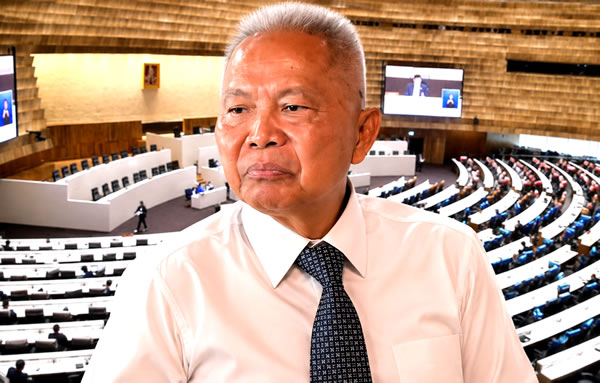
Thailand’s parliamentary power struggle intensified on Tuesday as House of Representatives Speaker and Parliament President Sophon Saram threatened opposition politicians with court action. Accused of protecting Prime Minister Anutin Charnvirakul’s government, Sophon fiercely defended restrictions on 35 parliamentary committees, curbing chairmen’s powers to summon witnesses and launch investigations independently. He challenged Democrat Party leader and former Prime Minister Abhisit Vejjajiva to pursue constitutional objections in court. Furthermore, he warned that accusations branding him a government lackey had crossed the line. Meanwhile, the House Secretariat defended the restrictions as existing law. The bitter confrontation also threatens to overshadow December’s no-confidence debate amid accusations of deliberate delays.
Parliament President and House of Representatives Speaker Sophon Saram threatens court action over curbs on 35 committees. He rejects claims of shielding Prime Minister Anutin Charnvirakul and challenges former Prime Minister and Democrat Party leader Abhisit Vejjajiva. (Source: Thai Rath)
House of Representatives Speaker and Parliament President Sophon Saram launched a furious counterattack against opposition politicians on Tuesday, November 3. He accused them of making baseless allegations and challenged them to pursue their complaints through the courts.
The confrontation follows his approval of controversial operating guidelines for Thailand’s 35 parliamentary committees. Opposition critics accuse him of curbing investigations and serving Prime Minister Anutin Charnvirakul’s government.
However, Sophon insists he is enforcing existing laws and preventing committee chairmen from exceeding their authority. He warned that accusations of being a government lackey had repeatedly crossed the line. Meanwhile, the House Secretariat issued a detailed defence of the restrictions, rejecting claims that they would obstruct parliamentary scrutiny.
Sophon threatens court action as opposition attacks his impartiality and new parliamentary controls
Speaking at Parliament at 3.20 pm, Sophon angrily rejected accusations that he was protecting the executive branch. Instead, he accused opposition politicians of attacking his credibility without producing evidence.
The Speaker was particularly incensed by claims that he was a government lackey. He also condemned suggestions that his conduct had brought Parliament into disrepute. Furthermore, he accused opponents of deliberately misrepresenting his actions and damaging the institution’s public standing.
“The opposition has crossed the line multiple times,” Sophon declared, warning that further attacks could trigger court proceedings. He challenged critics to submit formal complaints if they believed he had broken the law.
However, he insisted that political accusations were no substitute for evidence. Serious misconduct complaints could be referred to the National Anti-Corruption Commission (NACC). Lesser ethical breaches, meanwhile, could be examined through Parliament’s own procedures.
The Speaker also challenged Democrat Party leader and former Prime Minister Abhisit Vejjajiva over suggestions of a constitutional complaint. If his actions breached the constitution, Sophon said, opponents should pursue the appropriate legal proceedings. Equally, he warned that he possessed legal rights and could challenge accusations he considered defamatory.
Speaker faces fierce criticism over rules limiting the independence of 35 parliamentary committees
He said opposition politicians had repeatedly attacked his reputation through inflammatory language. Such criticism, he argued, had gone far beyond legitimate scrutiny of his decisions.
At the centre of the confrontation are new operating guidelines governing the House’s 35 standing committees. These bodies examine government administration, investigate complaints and scrutinise matters within their assigned responsibilities.
Crucially, they can request documents and call individuals to provide information. Under Sophon’s guidelines, however, committee chairmen cannot independently exercise powers reserved for collective committee decisions. Investigations requiring witnesses or documents must instead follow established approval procedures.
The guidelines also regulate meeting agendas, special sessions and investigations involving overlapping committee responsibilities. Opposition critics argue that the restrictions weaken chairmen and place obstacles before investigations.
By contrast, Sophon insists the measures merely enforce existing laws. He said complaints about committee operations had been mounting before the controversy. Some concerned overlapping investigations, while others involved accusations that chairmen had exceeded their authority.
Sophon cites repeated hearings and complaints of abuse as reasons for tighter committee procedures
Sophon identified the administrative burden imposed by parliamentary investigations as another major problem. The House has 35 standing committees alongside numerous subcommittees. Consequently, government officials can face repeated demands to attend hearings covering similar subjects.
Civil servants must then divide their time between parliamentary appearances and normal administrative responsibilities. Sophon said he had encountered these difficulties during his previous service as a minister. He argued that clearer procedures were needed to prevent duplication.
Against that background, Sophon convened a meeting with standing committee chairmen on October 21. Participants discussed complaints about committee operations and procedures for inviting witnesses.
According to the Speaker, a majority supported requiring committees to discuss matters before investigations proceeded. Members would determine which individuals should attend and what subjects required examination. Only then would the chairman issue invitations or requests for information under the committee’s decision.
Following the meeting, Sophon instructed Parliament’s legal department to prepare operating guidelines. The proposals were subsequently submitted through the parliamentary administration and approved by the Speaker.
Speaker rejects claims of silencing opposition and disputes accusations over no-confidence debate
Yet he rejected accusations that the exercise was designed to silence opposition politicians. He questioned how such suppression could exist when opposition MPs continued chairing parliamentary committees. Moreover, he challenged the suggestion that every committee decision should be determined solely by majority voting.
Sophon argued that parliamentary democracy required deliberation alongside formal votes. Committee members should discuss matters before reaching decisions, he maintained. Nevertheless, opposition criticism intensified after the guidelines were approved.
Critics portrayed the restrictions as an attempt to weaken parliamentary scrutiny. Sophon responded by accusing opponents of exaggerating administrative changes and attacking his motives. He also rejected suggestions that the Speaker’s office was being used to protect the government.
The confrontation widened further when Sophon addressed accusations concerning a forthcoming no-confidence debate. He said opposition representatives had previously thanked him for facilitating parliamentary proceedings.
According to Sophon, they praised his intervention as strengthening the dignity of the House. He also referred to discussions about rescheduling the debate for early December. Subsequently, however, his involvement was portrayed as a delaying tactic favouring the executive branch.
Sophon condemns personal attacks and warns opposition politicians against further damaging accusations
The Speaker rejected that account and questioned why his earlier assistance had become grounds for criticism. He said opposition politicians had welcomed his intervention before attacking his motives.
In response, he accused critics of distorting events and undermining his work. Sophon insisted that his responsibility was to facilitate parliamentary proceedings under the law. He also urged government and opposition politicians to fulfil their respective duties.
His strongest criticism concerned the language used against him. Sophon condemned personal insults, sarcasm and accusations that he was serving the government. He said such attacks had repeatedly damaged his reputation.
More pointedly, he questioned whether politicians were making accusations simply for their own satisfaction. He insisted that Parliament should not become a forum for hostility and distorted claims.
Sophon also disclosed that an opposition politician had made an especially offensive statement directly to him. However, he declined to identify the individual or reveal the remark. He claimed disclosure could cause significant damage.
The Speaker warned opponents against assuming they alone possessed intelligence, integrity and sound judgement. Instead, he argued that public officials should be judged by their actions rather than political accusations.
Speaker defends his record and challenges critics to pursue misconduct complaints through legal channels
Defending his personal record, Sophon said he had served in major government ministries without facing criminal proceedings. He maintained that his work demonstrated his commitment to the country and its people.
Nevertheless, he warned that continued attacks could prompt legal action. He said he had tolerated repeated accusations but could no longer accept claims he considered baseless. The Speaker also insisted that legal standards applied equally to politicians and parliamentary officials.
He identified specific procedures available to anyone alleging misconduct. Minor ethical breaches could be examined through Parliament’s internal mechanisms. Serious violations, however, could be referred to the National Anti-Corruption Commission.
Constitutional complaints should likewise follow the appropriate legal process. Sophon challenged opponents to use those channels rather than continue making public accusations. He also warned that anyone exceeding legally defined parliamentary responsibilities could face consequences.
House Secretariat denies restrictions on committee powers and explains origins of controversial rules
Meanwhile, the Secretariat of the House of Representatives issued a detailed statement defending the controversial guidelines. Released on Tuesday, November 3, it addressed accusations that Sophon had curtailed committee chairmen’s powers. The Secretariat rejected that interpretation.
Instead, it said the measures clarified existing legal requirements and standardised procedures across all 35 standing committees. It also denied that the changes were intended to delay investigations.
The statement traced the guidelines to complaints raised about committee operations. These were discussed during the October 21 meeting between Sophon and committee chairmen. Following that meeting, the Secretariat’s legal department was assigned to prepare standardised procedures.
The proposals were developed through Committee Office 1, Committee Office 2 and Committee Office 3. These offices provide administrative support to the standing committees. Sophon subsequently approved the recommendations submitted through the parliamentary administration.
The Secretariat maintained that the constitution and parliamentary rules did not address every aspect of committee meetings. Consequently, provisions from the House’s Rules of Procedure sometimes had to be applied by analogy.
Previously, committee practices had developed without detailed operational guidance. Few formal objections had been raised against those arrangements. Recent disputes, however, exposed disagreements over procedures and inconsistencies in committee administration.
Secretariat sets out meeting procedures and four agenda sections governing committee investigations
According to the Secretariat, those problems created confusion among officials responsible for supporting committee meetings. The guidelines were therefore intended to establish consistent interpretations of existing legal requirements. Importantly, the statement denied that chairmen had lost powers granted by law.
It described the measures as practical explanations rather than new restrictions. The Secretariat also rejected claims that compliance would make committee operations unnecessarily difficult or slow.
The clarification addressed the authority of chairmen to schedule meetings. Normally, committees establish their regular meeting dates through formal resolutions. A committee might agree to meet every Wednesday morning or Thursday morning.
However, chairmen retain authority to arrange special meetings when necessary. The Secretariat cited periods when regular meetings had been suspended as one example. Accordingly, the guidelines do not prohibit additional meetings in appropriate circumstances.
More significantly, the statement explained the four sections normally used for committee agendas. The first covers announcements by the chairman. The second concerns approval of previous meeting minutes.
The third deals with substantive matters requiring consideration. Finally, the fourth covers other business within the committee’s responsibilities. The Secretariat stressed that these distinctions determine how committees exercise their investigative powers.
Committee chairmen face strict approval requirements before inviting witnesses or seeking documents
Matters involving witnesses or requests for information must proceed through the appropriate consideration process. Consequently, they belong under the third agenda section and require committee decisions.
Chairmen cannot independently authorise such action through routine announcements or other business. However, they retain authority to introduce matters specifically prescribed by law. The Secretariat cited completed subcommittee reports as an example.
Under Rule 96 of the House’s Rules of Procedure, completed subcommittee reports must be submitted to their parent committees. Therefore, chairmen may place those reports on the appropriate agenda.
Other matters can also be introduced through announcements or other business. These include complaints requiring an initial assessment of the committee’s jurisdiction. Similarly, members may discuss operating procedures and decide how particular matters should proceed.
The restrictions become decisive when witnesses or organisational representatives are involved. The Secretariat said chairmen cannot independently summon individuals through the announcements or other-business sections.
Nor can they unilaterally invite representatives to provide information during those proceedings. Instead, the committee must first approve the proposed action. The Secretariat maintained that the relevant investigative powers belong to the committee collectively, not its chairman.
Constitutional Court ruling shapes summons rules as Secretariat tackles overlapping investigations
The statement also addressed attempts to distinguish formal summonses from invitations. It cited Constitutional Court ruling No. 17/2563, concerning requests for individuals to provide information.
According to the Secretariat, the ruling established that summonses constitute invitations or requests for cooperation. Crucially, the wording of a letter does not change the legal character of the request. A chairman therefore cannot bypass committee approval by describing a summons as an invitation.
The Secretariat applied the same reasoning to requests for documents and information. Such powers must be exercised through committee resolutions.
Consequently, chairmen cannot act unilaterally simply by changing the terminology used in correspondence. The statement maintained that this requirement reflected existing law. It was not, the Secretariat insisted, a new attempt to weaken committee investigations.
Separately, the clarification examined investigations involving overlapping parliamentary responsibilities. The Secretariat cited constitutional provisions restricting committees from examining overlapping subjects.
However, related matters may be considered under procedures established by the Speaker. It referred specifically to parliamentary regulations introduced in 2019. These govern investigations, fact-finding exercises and studies involving related subjects across multiple committees.
Parliamentary officials defend coordination rules while Sophon threatens opponents with legal action
The regulations provide procedures for resolving disputes between committees examining similar matters.
They encourage discussions between the Speaker and the relevant chairmen. As part of this process, committees can coordinate their work and avoid unnecessary duplication. The Secretariat said these arrangements were designed to preserve scrutiny while improving administrative efficiency. It also highlighted repeated demands for civil servants to attend several committee hearings during the same week.
Such appearances can interfere with officials’ normal responsibilities, according to the statement. Better coordination would reduce that burden without preventing committees from examining government conduct.
The Secretariat therefore rejected accusations that the guidelines were intended to obstruct investigations. It maintained that the procedures were already established under parliamentary law and regulations. Their application, it said, should not create unnecessary delays.
The formal clarification followed an expected press conference by the Secretary-General of the House of Representatives. Reporters had been informed that a briefing would take place on Tuesday afternoon.
However, the press conference was not held. Instead, the Secretariat issued its written statement. The document provided a detailed defence of Sophon’s decision and explained the procedures governing committee operations.
By Tuesday evening, the confrontation had produced two distinct responses from Parliament’s leadership. Sophon personally rejected accusations of political interference and threatened legal action against his critics.
In parallel, the House Secretariat defended the legal basis of the guidelines. Both maintained that committee chairmen must operate within established procedures. Neither accepted claims that the measures were intended to silence investigations.
Opposition dispute remains unresolved as Speaker defends committee restrictions and warns of lawsuits
The dispute remains focused on who can authorise investigations, request documents and invite witnesses. It also concerns the procedures governing related inquiries across multiple committees.
Opposition politicians accuse Sophon of restricting scrutiny and favouring the government. The Speaker rejects those accusations and insists that committee decisions must comply with existing laws. Furthermore, he has challenged opponents to substantiate their complaints through formal legal channels.
Sophon has refused to retreat from his defence of the guidelines. He has also warned that repeated personal accusations could lead to court proceedings. However, the supplied reports do not establish that a constitutional complaint has been filed.
Nor do they confirm that Sophon has initiated legal action against an opposition politician. The House Secretariat, meanwhile, has formally endorsed the operating procedures.
The confrontation therefore remains unresolved following Tuesday’s exchanges. Sophon insists he is enforcing existing parliamentary rules and addressing complaints about committee operations.
Opposition critics continue challenging the restrictions and questioning his impartiality. For his part, the Speaker has made his position clear. His opponents can pursue their complaints through the appropriate authorities, but further personal accusations may bring legal consequences.
Bhumjaithai House Speaker moves to curb the powers of committees after Rangsiman Rome’s recent moves
House Committee chair Rome to call Bhumjaithai MP and Australian husband on Wednesday over wealth
Bhumjaithai MP files police report against People’s Party’s Rangsiman Rome over scammer link remarks
Rangsiman Rome defamation case deferred until May 2027. Criticism of scam case prosecutions by police
Former cabinet minister and Pheu Thai highflyer clarifies Ben Smith and luxury Gulfstream jet story
PM Paetongtarn suspended from duties while Deputy Prime Minister Suriya Jungrungruangkit takes power
Teng warns People’s Party to stay clear of rising anti-democratic sentiment as political crisis unfolds
Opinion shows Prime Minister Paetongtarn finished with the public. Huge support for the People’s Party
Bangkok protest passes off with no overnight camp. Meanwhile, the PM prepares for July 1st court date
PM Paetongtarn names herself Culture Minister also in new cabinet ahead of Constitutional Court ruling
Hun Sen’s mask falls. Speech on Friday clearly showed deliberate ill will to collapse Thailand’s democracy
Crazed Hun Sen threatens to expose Thaksin before Bangkok street protests as his evil empire is exposed
Prime Minister Paetongtarn’s casino plan may be the motive following Hun Sen’s betrayal of the Shinawatra clan
Joseph Anthony is an expat from Ireland who has lived in Thailand for the last decade. He has worked extensively in the media including editorial positions in Ireland and Thailand. He is focused on economic and business stories in Thailand as well as the expat lifestyle.
All posts by Joseph O' Connor
Halloween security operation in central Bangkok and the Khaosan Road undertaken by Tourism Police October 31, 2026 Halloween police blitz. A 95-strong force hits Khao
Minister holds high level talks after venue licencing clampdown turned Khaosan Road dark after midnight October 31, 2026 Bangkok’s party strip faces a midnight shutdown!
Halloween horror for Thai TV star who portrayed Michael Jackson in his massive worldwide hit Thriller October 30, 2026 Thriller turns toxic! Thai TV star Jes Jespipat faces
55 year old monk who killed newlywed young woman in hit and run speeding crash arrested after manhunt October 30, 2026 Monk’s deadly drive. A 21-year-old bride dies
Scotsman’s legal nightmare in Thailand began within hours of landing by mistake in March not over yet October 30, 2026 Phone mix-up nightmare! Scot Rory McColl faces five
Flights delayed and passengers deboarded after subsidence under China Airlines jet at Suvarnabhumi October 29, 2026 Airport nightmare in Bangkok. A China Airlines Boeing
Cyber Police still quiz Facebook page operative who denies ownership over fake payment slip linked to PM October 29, 2026 Fake ฿7m ‘tea money’ slip sparks a
Burmese migrant workers, two couples murder construction site overseer over notice period pay dispute October 29, 2026 Payday turned deadly in Bangkok when four Burmese
Lovesick Ayutthaya man kidnapped four month old infant from mother. Let her fall into river in the dark October 28, 2026 Four-month-old baby found dead in the Chao Phraya
Fresh arrest warrant application to be made for ‘Godd Dam’ page boss on Thursday as police expand case October 28, 2026 Who runs Godd Dam? Thai cyber police seek another
Minister scrambles to offer 15 day visa on arrival to smaller markets with reports of losses to Vietnam October 28, 2026 Thailand’s visa shake-up backfires ahead of high
Restaurant YouTube reviewer is a fraudster with an arrest warrant. Police complaint filed in Nonthaburi October 27, 2026 A food influencer’s demand for prawns, drinks or
Israeli arrested on drug and sex charges threatens police and well known detective Inspector Jae October 27, 2026 A Bangkok sex-and-drugs raid nets Israeli Tomer
Knock on the door coming for 10k visa overstayers now in Thailand as police launch new crackdown October 26, 2026 Thailand launches a nationwide hunt for over 10,000
19 year old hothead lands in jail after punching female driver who honked her car horn at him in Bangkok October 26, 2026 Terrifying scenes in Bangkok as a motorcyclist, 19,
Thailand falls behind Southeast Asian peers in race to build more flight connections as tourism fades October 24, 2026 High-season alarm for Thailand as direct international
Israeli woman on Koh Phangan faces deportation after her visa was revoked. Rising diplomatic tensions October 24, 2026 Israeli woman, 33, faces visa cancellation on Koh
Thai citizens in Poland warned to stay clear of political crisis and protests over judicial appointments October 31, 2026
Amnesty boss says Cambodian state or officials complicit in the country’s still existing scam industry October 31, 2026
Three Chinese nationals rescued by police in Tak province near Burma. Police top brass want answers October 31, 2026
Prime Minister under fire from MPs in parliament over rumoured cuts to allowances for southern police October 30, 2026
Upmarket prostitution racket in Singapore procuring sexy Thai women to work in the city state smashed October 30, 2026
Border locals in Tak seek protection as war in Burma’s Karen State intensifies between rebels and army October 29, 2026
PM revokes citizenship of Jewish leader in Thailand amid police investigation into Chabad network nationwide October 29, 2026
Tourism chiefs furious as another Chinese abduction and a spat with the Embassy threaten bookings October 29, 2026
Bank of Thailand confirms a tale of two economies one booming, another struggling with decline October 28, 2026
French businessman wanted for VAT fraud arrested this Wednesday on Koh Samui after Interpol Notice October 28, 2026
Thailand’s GDP may get a bump up from the 3rd quarter after recent economic agency talks with PM Anutin October 28, 2026
Thousands of fake Thai citizens of Chinese origin identified in one case going back over two decades October 27, 2026
New police chief wants officers who show their faces to the public and issue warnings instead of fines October 27, 2026
Special Branch and cyber police move against the ‘Godd Dam’ Facebook page after PM ‘tea money’ fake October 26, 2026
Government spokesman’s rebuke to the World Health Organisation (WHO). Keep out of Thai internal affairs October 26, 2026
Mystery of Dutch TV star deepens as police confirm he left Thailand and lawyer claims he wants privacy October 25, 2026
Prime Minister in a spot as no confidence debate looks like it’s being stalled or postponed in parliament October 24, 2026
PM calls police chief and orders preparations to make sure Thailand is not subject to French like rioting October 22, 2026
Pledges on investment are up but Foreign Direct Investment for the first six months is down nearly 5% October 22, 2026
Frenchman arrested by Immigration. Officer spotted him on Interpol wanted list for drug trafficking October 22, 2026
Drunk woman stripped naked on a Pattaya public street Tuesday night hurling abuse. Arrested by police October 21, 2026
Former top Democrat Party aide and MP met DSI over Bhumjaithai MP’s husband’s links to online gambling October 21, 2026
© 2026 Thai Examiner. All rights reserved.
2026年11月4日下午12:44
在生活、媒体、政治、泰国
周二,泰国议会权力斗争愈演愈烈,众议院议长兼国会主席索蓬·萨拉姆威胁要对反对派政客提起诉讼。索蓬被指控包庇总理阿努廷·查恩维拉库尔的政府,他强烈捍卫对35个议会委员会的限制,这些限制削弱了委员会主席传唤证人和独立发起调查的权力。他挑战民主党领袖、前总理阿披实·维乍集瓦,要求其在法庭上提出宪法异议。此外,他还警告说,指责他是政府走狗的言论已经越过了底线。与此同时,众议院秘书处则辩称这些限制是现行法律。这场激烈的对抗也可能使原定于12月举行的不信任投票黯然失色,因为有人指责投票被故意拖延。
国会主席兼众议院议长索蓬·萨拉姆威胁要就限制35个委员会的运作提起诉讼。他否认包庇总理阿努廷·查恩维拉库尔,并向民主党前总理兼领导人阿披实·维乍集瓦发起挑战。(来源:泰叻报)
11月3日星期二,众议院议长兼议长索蓬·萨拉姆对反对派政客发起猛烈反击。他指责他们提出毫无根据的指控,并挑战他们通过法院来解决他们的投诉。
此前,他批准了备受争议的泰国35个议会委员会运作准则,由此引发了这场冲突。反对派批评人士指责他限制调查,并为总理阿努廷·查恩维拉库尔的政府服务。
然而,索蓬坚称他是在执行现行法律,防止各委员会主席越权行事。他警告说,指责他是政府走狗的说法屡屡过分。与此同时,众议院秘书处发表了一份详细的辩护声明,驳斥了这些限制措施会妨碍议会监督的说法。
反对派攻击索芬的公正性和新的议会控制措施,索芬威胁要采取法律行动。
下午3点20分,索蓬在议会发表讲话,愤怒地驳斥了有关他包庇行政部门的指控。相反,他指责反对派政客在没有提供证据的情况下攻击他的信誉。
议长尤其对指责他是政府走狗的说法感到愤怒。他还谴责了有关他的行为损害议会声誉的说法。此外,他指责反对者故意歪曲他的行为,损害议会的公众形象。
索蓬宣称:“反对派已经多次越界”,并警告说,进一步的攻击可能会引发法律诉讼。他还挑战批评者,如果他们认为他违反了法律,就应该提交正式投诉。
然而,他坚持认为政治指控不能代替证据。严重的渎职投诉可以提交给国家反腐败委员会(NACC)。而较轻的违反道德规范的行为,则可以通过议会自身的程序进行审查。
议长还就民主党领袖、前总理阿披实·维乍集瓦提出的宪法申诉建议向其提出质疑。索蓬表示,如果阿披实的行为违反了宪法,反对者应该采取适当的法律程序。同时,他也警告说,他拥有法律权利,可以对任何他认为构成诽谤的指控提出质疑。
议长因限制35个议会委员会独立性的规则而面临猛烈批评。
他表示,反对派政客屡次使用煽动性语言攻击他的名誉。他认为,这种批评远远超出了对其决策的合理审查范围。
这场冲突的核心是众议院35个常设委员会的新运作准则。这些委员会负责审查政府行政管理、调查投诉并审查其职责范围内的事项。
至关重要的是,他们可以索取文件并致电相关人员以获取信息。然而,根据索芬的指导方针,委员会主席不能独立行使保留给委员会集体决策的权力。需要证人或文件的调查必须遵循既定的审批程序。
这些指导方针还对涉及委员会职责重叠的会议议程、特别会议和调查进行了规范。反对派批评人士认为,这些限制削弱了主席的权力,并阻碍了调查工作。
相比之下,索蓬坚称这些措施仅仅是在执行现行法律。他说,在争议爆发之前,有关委员会运作的投诉就已越来越多。有些投诉涉及调查重叠,有些则指控主席越权。
索芬指出,多次听证会和滥用职权的投诉是加强委员会程序的理由。
索蓬指出,议会调查带来的行政负担是另一个主要问题。众议院设有35个常设委员会和众多小组委员会。因此,政府官员可能面临反复出席类似议题听证会的要求。
公务员因此必须在出席议会和履行日常行政职责之间分配时间。索蓬表示,他此前担任部长时也遇到过这些困难。他认为,需要更清晰的程序来避免重复劳动。
在此背景下,索丰于 10 月 21 日召集常设委员会主席开会。与会者讨论了有关委员会运作和邀请证人程序的投诉。
据议长称,多数议员支持要求各委员会在展开调查前进行讨论。委员会成员将决定哪些人应出席以及需要审查哪些事项。只有在委员会做出决定后,主席才能发出邀请或信息请求。
会后,索蓬指示议会法律部门制定操作指南。这些提案随后通过议会行政部门提交,并经议长批准。
议长驳斥了压制反对派的说法,并对有关不信任辩论的指控提出异议
但他驳斥了有关此举旨在压制反对派政治人士的指控。他质疑,既然反对派议员仍在担任议会委员会主席,这种压制又怎能存在?此外,他还质疑所有委员会的决定都应完全由多数票决定的说法。
索芬认为,议会民主制除了正式投票外,还需要审议。他坚持认为,委员会成员应该在做出决定前进行讨论。然而,指导方针获批后,反对派的批评声浪却愈演愈烈。
批评人士将这些限制措施描述为削弱议会监督的企图。索芬则回应称,反对者夸大了行政改革的影响,并攻击他的动机。他还驳斥了议长办公室被用来保护政府的说法。
当索蓬回应有关即将举行的不信任辩论的指责时,冲突进一步升级。他说,反对派代表此前曾感谢他为议会程序提供的便利。
索芬表示,他们称赞他的介入维护了众议院的尊严。他还提到曾讨论过将辩论改期至12月初举行。然而,随后他的介入却被解读为一种有利于行政部门的拖延战术。
索芬谴责人身攻击,并警告反对派政治人物不要再进行任何有害的指控。
议长驳斥了这种说法,并质疑为何他早前的帮助如今却成了被批评的理由。他说,反对派政客在攻击他的动机之前,曾对他的介入表示欢迎。
对此,批评人士指责他歪曲事实、破坏其工作。索芬坚称,他的职责是依法促进议会程序。他还敦促政府和反对派政治家履行各自的职责。
他最强烈的批评针对的是针对他的言辞。索丰谴责了人身攻击、讽刺挖苦以及指责他为政府效力。他说,此类攻击屡次损害了他的名誉。
更尖锐的是,他质疑政客们是否仅仅为了满足私欲而进行指责。他坚持认为,议会不应沦为充满敌意和歪曲事实的场所。
索蓬还透露,一位反对派政客曾直接对他发表过特别冒犯的言论。但他拒绝透露此人身份或言论内容,声称披露这些信息可能会造成重大损害。
议长警告反对者不要以为只有他们才拥有智慧、正直和健全的判断力。他认为,评判公职人员应该看他们的实际行动,而不是政治指责。
议长为其政绩辩护,并挑战批评者通过法律途径追究其不当行为的投诉。
索蓬为自己辩护说,他曾在多个重要政府部门任职,从未面临刑事诉讼。他坚称,他的工作证明了他对国家和人民的忠诚。
然而,他警告说,持续不断的攻击可能会引发法律诉讼。他表示,他一直容忍这些反复的指控,但不能再接受他认为毫无根据的说法。议长还强调,法律标准对政治人物和议会官员一视同仁。
他明确指出,任何举报不当行为的人都可以采取具体的程序。轻微的违反道德规范的行为可以通过议会内部机制进行调查。然而,严重的违规行为则可以移交国家反腐败委员会。
同样,宪法申诉也应遵循适当的法律程序。索丰呼吁反对者利用这些渠道,而不是继续公开指责。他还警告说,任何超越法律规定的议会职责的人都可能面临后果。
众议院秘书处否认限制委员会权力,并解释了争议规则的由来
与此同时,众议院秘书处发表了一份详细声明,为这些备受争议的指导方针辩护。该声明于11月3日星期二发布,回应了有关索蓬限制委员会主席权力的指控。秘书处驳斥了这种说法。
相反,声明称这些措施明确了现有的法律要求,并规范了所有35个常设委员会的程序。声明还否认这些改变旨在拖延调查。
声明指出,这些指导方针源于对各委员会运作的投诉。这些投诉在10月21日索丰与各委员会主席的会议上进行了讨论。会后,秘书处法律部门受命制定标准化程序。
这些提案由第一委员会办公室、第二委员会办公室和第三委员会办公室制定。这些办公室为常设委员会提供行政支持。随后,索丰批准了通过议会行政部门提交的建议。
秘书处认为,宪法和议会规则并未涵盖委员会会议的方方面面。因此,有时必须类比适用众议院议事规则中的相关条款。
此前,委员会的运作方式是在缺乏详细操作指南的情况下形成的,也鲜少有人正式反对这些安排。然而,近期的争议暴露了程序上的分歧以及委员会管理中的不一致之处。
秘书处制定了会议程序和四个议程部分,用于规范委员会的调查工作。
秘书处表示,这些问题导致负责支持委员会会议的官员们感到困惑。因此,制定这些指导方针旨在对现有的法律要求做出一致的解释。重要的是,该声明否认主席们丧失了法律赋予的权力。
秘书处称这些措施是务实的解释,而非新的限制。秘书处还驳斥了有关遵守这些措施会使委员会运作变得不必要的困难或缓慢的说法。
该澄清文件涉及主席安排会议的权限。通常情况下,委员会通过正式决议确定例行会议日期。例如,委员会可能会约定每周三上午或周四上午开会。
然而,主席仍有权在必要时安排特别会议。秘书处举例说明了暂停例会的情况。因此,相关准则并未禁止在适当情况下召开额外会议。
更重要的是,该声明解释了委员会议程通常包含的四个部分。第一部分是主席的公告。第二部分是批准上次会议纪要。
第三部分涉及需要审议的实质性事项。最后,第四部分涵盖委员会职责范围内的其他事务。秘书处强调,这些区分决定了各委员会如何行使其调查权。
委员会主席在邀请证人或索取文件之前,必须经过严格的审批程序。
涉及证人或信息请求的事项必须经过相应的审议程序。因此,这些事项应列入第三议程部分,并需由委员会作出决定。
主席不能通过例行公告或其他事务独立授权此类行动。但是,他们仍然有权提出法律明确规定的事项。秘书处以已完成的小组委员会报告为例。
根据众议院议事规则第96条,各小组委员会完成的报告必须提交给其所属的上级委员会。因此,各委员会主席可以将这些报告列入相应的议程。
其他事项也可通过公告或其他议程提出,例如需要对委员会管辖权进行初步评估的投诉。同样,委员们也可以讨论运作程序,并决定特定事项的处理方式。
当涉及证人或组织代表时,这些限制就显得至关重要。秘书处表示,主席们不能通过公告或其他事务环节擅自传唤个人。
他们也不能单方面邀请代表在听证会期间提供信息。相反,委员会必须首先批准拟议的行动。秘书处坚持认为,相关的调查权属于委员会全体成员,而非其主席。
宪法法院裁决影响传唤规则,秘书处同时应对重叠调查
该声明还提及了区分正式传票和邀请函的尝试,并援引了宪法法院第17/2020号裁决,该裁决涉及要求个人提供信息的请求。
秘书处表示,该裁决确立了传票构成合作邀请或请求。至关重要的是,信函的措辞并不改变请求的法律性质。因此,主席不能通过将传票描述为邀请来绕过委员会的批准。
秘书处对索取文件和信息的请求也采用了同样的理由。此类权力必须通过委员会决议行使。
因此,主席们不能仅仅通过改变信函中使用的措辞就单方面采取行动。声明强调,这一要求符合现行法律。秘书处坚称,这并非削弱委员会调查的新举措。
此外,该澄清文件还审查了涉及议会职责重叠的调查。秘书处援引宪法条款,指出这些条款限制委员会审查重叠事项。
然而,相关事项可根据议长制定的程序进行审议。该议案特别提及了2019年颁布的议会条例。这些条例规范了涉及多个委员会相关主题的调查、事实调查和研究。
议会官员捍卫协调规则,而索芬则威胁要对反对者采取法律行动。
该条例规定了解决审查类似事项的委员会之间争议的程序。
他们鼓励议长与相关委员会主席进行讨论。作为这一过程的一部分,各委员会可以协调工作,避免不必要的重复劳动。秘书处表示,这些安排旨在确保监督力度,同时提高行政效率。秘书处还强调,公务员经常被要求在同一周内参加多个委员会的听证会。
声明指出,此类露面可能会干扰官员履行正常职责。加强协调可以减轻这种负担,同时又不妨碍委员会审查政府行为。
因此,秘书处驳斥了有关这些指导方针旨在阻碍调查的指控。秘书处坚持认为,相关程序已根据议会法律和规章制定。秘书处表示,这些程序的实施不应造成不必要的延误。
在众议院秘书长按计划召开新闻发布会后,正式澄清了此事。此前记者们已被告知,新闻发布会将于周二下午举行。
然而,新闻发布会并未举行。秘书处转而发表了书面声明。该文件详细阐述了索丰的决定,并解释了委员会运作的程序。
截至周二晚间,这场冲突已引发议会领导层的两种截然不同的回应。索蓬亲自驳斥了有关政治干预的指控,并威胁要对批评者采取法律行动。
与此同时,众议院秘书处为这些指导方针的法律依据进行了辩护。双方都坚持认为,委员会主席必须在既定程序内行事。双方均不接受有关这些措施旨在阻止调查的说法。
反对派之间的争议仍未解决,议长为委员会的限制措施辩护,并警告称将提起诉讼。
争议的焦点仍然在于谁有权授权调查、索取文件和传唤证人。此外,争议还涉及多个委员会开展相关调查的程序。
反对派政客指责索蓬限制监督并偏袒政府。议长驳斥了这些指控,并坚持认为委员会的决定必须符合现行法律。此外,他还要求反对派通过正式的法律渠道来证实他们的指控。
索芬拒绝撤回他对指导方针的辩护。他还警告说,反复的人身攻击可能导致诉讼。然而,所提供的报告并未证实已提起宪法诉讼。
他们也没有证实索蓬是否已对反对派政治人物提起诉讼。与此同时,众议院秘书处已正式批准了相关操作程序。
因此,周二的交锋之后,这场对峙仍未解决。索蓬坚称,他是在执行现有的议会规则,并处理有关委员会运作的投诉。
反对派批评人士继续挑战这些限制措施,并质疑议长的公正性。议长本人已明确表明立场。反对者可以通过相关部门提出申诉,但进一步的人身攻击可能会带来法律后果。
继兰西曼·罗姆近期采取行动后,泰自豪党议长着手限制各委员会的权力。
众议院委员会主席罗姆将于周三致电泰国议员布姆贾伊泰及其澳大利亚籍丈夫,讨论财富问题。
泰自豪党议员就人民党议员兰西曼·罗姆的诈骗链接言论向警方报案
兰西曼·罗姆诽谤案延期至2027年5月审理。警方对诈骗案的起诉受到批评。
前内阁部长兼为泰党高层澄清本·史密斯与豪华湾流喷气式飞机的故事
总理帕通坦被停职,副总理苏里亚·荣伦伦吉接任总理一职。
邓小平警告人民党要远离日益高涨的反民主情绪,因为政治危机正在不断演变。
民意调查显示,总理佩通坦已失去民心。人民党获得巨大支持。
曼谷抗议活动结束,没有出现过夜露营的情况。与此同时,总理正准备参加7月1日的庭审。
在宪法法院裁决前夕,总理佩通坦在新内阁中任命自己为文化部长。
洪森的伪装被揭穿了。周五的讲话清楚地表明了他蓄意破坏泰国民主的恶意。
疯狂的洪森威胁要在曼谷街头抗议活动爆发前揭露他信的真面目,因为他的邪恶帝国即将暴露。
洪森背叛西那瓦家族后,首相佩通坦的赌场计划或许是其动机所在。
约瑟夫·安东尼是一位来自爱尔兰的侨民,过去十年一直居住在泰国。他曾在爱尔兰和泰国的媒体行业担任过编辑职务,拥有丰富的媒体从业经验。他主要关注泰国的经济和商业新闻,以及侨民的生活方式。
约瑟夫·奥康纳的所有帖子
2026年10月31日,旅游警察在曼谷市中心和考山路开展万圣节安保行动,95名警力突击巡逻考山路。
2026年10月31日,曼谷考山路午夜后因场所许可证管制而陷入黑暗,部长举行高级别会谈。曼谷的夜生活街区面临午夜关闭!
2026年10月30日,在风靡全球的热门电影《Thriller》中饰演迈克尔·杰克逊的泰国电视明星遭遇万圣节恐怖事件!《Thriller》变质!泰国电视明星杰斯·杰斯皮帕特面临
2026年10月30日,一名55岁僧侣驾车超速逃逸,撞死一名新婚年轻女子,警方展开追捕后将其抓获。这名僧侣的致命驾车行为导致一名21岁的新娘丧生。
苏格兰男子罗里·麦科尔 (Rory McColl) 在泰国遭遇法律噩梦,三月份误降泰国后数小时内便陷入困境,噩梦尚未结束(2026年10月30日)。电话误接引发的噩梦!麦科尔面临五项指控。
2026年10月29日,曼谷素万那普机场发生地面沉降事故,中华航空一架波音客机下方出现塌陷,导致航班延误,乘客被迫下机。曼谷机场噩梦成真。
网络警察仍在讯问一名否认拥有与总理有关的伪造付款单的Facebook页面运营者(2026年10月29日)。一张伪造的700万泰铢“茶水钱”付款单引发了……
2026年10月29日,在曼谷,四名缅甸籍外籍劳工因工资纠纷,在发薪日当天杀害了一名建筑工地监工。两对夫妇因工资纠纷杀害了一名建筑工地监工。
相思成疾的阿瑜陀耶男子从母亲身边绑架了四个月大的婴儿,并将其在夜色中扔进河里。2026年10月28日,这名四个月大的婴儿被发现溺亡在湄南河中。
警方将于周四再次申请逮捕令,追捕“Godd Dam”页面的幕后主使,扩大调查范围(2026年10月28日) 谁在操控“Godd Dam”?泰国网络警察正在寻找另一名嫌疑人
据报道,越南遭受损失,部长紧急提出向较小市场提供15天落地签证(2026年10月28日)。泰国签证改革在疫情高峰期前适得其反。
一名餐厅YouTube点评博主涉嫌诈骗,已被警方通缉。警方于2026年10月27日在暖武里府立案调查。该美食博主要求提供虾、饮料或其他食品。
2026年10月27日,一名以色列男子因涉嫌毒品和性犯罪被捕,他威胁警方和知名侦探杰伊警督。曼谷警方突袭毒品和性犯罪案件,逮捕了以色列人托默。
泰国警方发起新一轮打击行动,追捕1万名签证逾期滞留者(2026年10月26日) 泰国在全国范围内展开搜捕行动,追捕超过1万名签证逾期滞留者
2026年10月26日,曼谷一名19岁摩托车手因殴打鸣笛女司机而被捕入狱。事发时曼谷上演了令人震惊的一幕。
随着旅游业的衰退,泰国在建设更多航线连接方面落后于东南亚其他国家(2026年10月24日) 泰国旅游旺季警报:直航国际航线减少
一名以色列女子在帕岸岛面临签证被吊销后被驱逐出境。外交紧张局势加剧 2026年10月24日 一名33岁的以色列女子在帕岸岛面临签证被取消的困境
2026年10月31日,身在波兰的泰国公民被警告远离因司法任命而引发的政治危机和抗议活动。
大赦国际负责人称柬埔寨政府或官员参与了该国仍然存在的诈骗产业 2026年10月31日
三名中国公民在缅甸达府附近被警方解救。警方高层要求给出解释。2026年10月31日
2026年10月30日,首相因传闻将削减南部警察津贴而受到议会议员的抨击。
新加坡捣毁了一个高档卖淫团伙,该团伙招募性感泰国女性到新加坡从事卖淫活动(2026年10月30日)。
2026年10月29日,缅甸克伦邦叛军与政府军之间的战争愈演愈烈,达府边境居民寻求庇护。
泰国总理撤销一名犹太领袖的公民身份,此前警方正在全国范围内调查哈巴德运动网络(2026年10月29日)
旅游业负责人对又一起中国绑架事件以及与大使馆的争执感到愤怒,认为这威胁到预订量(2026年10月29日)
泰国央行证实了泰国经济呈现两极分化的局面:一个经济蓬勃发展,另一个经济则在衰退中挣扎。(2026年10月28日)
一名因涉嫌增值税欺诈而被通缉的法国商人于本周三在苏梅岛被捕,此前国际刑警组织于2026年10月28日发布了通缉令。
泰国经济机构近期与总理阿努廷举行会谈后,泰国第三季度GDP或将有所增长(2026年10月28日)
2026年10月27日,一项调查发现数千名冒充泰国公民的华裔人士,该案可追溯至二十多年前。
新任警察局长希望警员们公开露面,并以警告代替罚款。2026年10月27日
2026年10月26日,在总理“茶钱”造假事件曝光后,特别部门和网络警察对“Godd Dam”脸书页面采取行动
政府发言人驳斥世界卫生组织(世卫组织):不要干涉泰国内政 2026年10月26日
荷兰电视明星的神秘行踪愈发扑朔迷离,警方证实他已离开泰国,律师则声称他希望保持隐私。2026年10月25日
首相处境艰难,不信任投票辩论似乎将在议会陷入停滞或推迟(2026年10月24日)
总理召见警察局长,命令做好准备,确保泰国不会像法国那样在2026年10月22日发生骚乱。
投资承诺有所增加,但前六个月的外国直接投资下降了近5%(2026年10月22日)
一名法国男子因涉嫌贩毒被移民局逮捕。官员于2026年10月22日在国际刑警组织的通缉名单上发现了他的踪迹。
周二晚间,一名醉酒女子在芭堤雅街头被扒光衣服并辱骂他人。她于2026年10月21日被警方逮捕。
前民主党高级助手兼国会议员于2026年10月21日会见了泰国特别调查局,讨论泰自豪党议员的丈夫与网络赌博的关联。
© 2026 Thai Examiner。版权所有。