Workplace fatalities rose in first half of 2026; MOM reviews tougher safety measures2026年上半年工作场所死亡人数上升;人力部审查更严格的安全措施
Platform workers made up four of the 21 workplace fatalities from January to June.
Platform workers made up four of the 21 workplace fatalities from January to June.
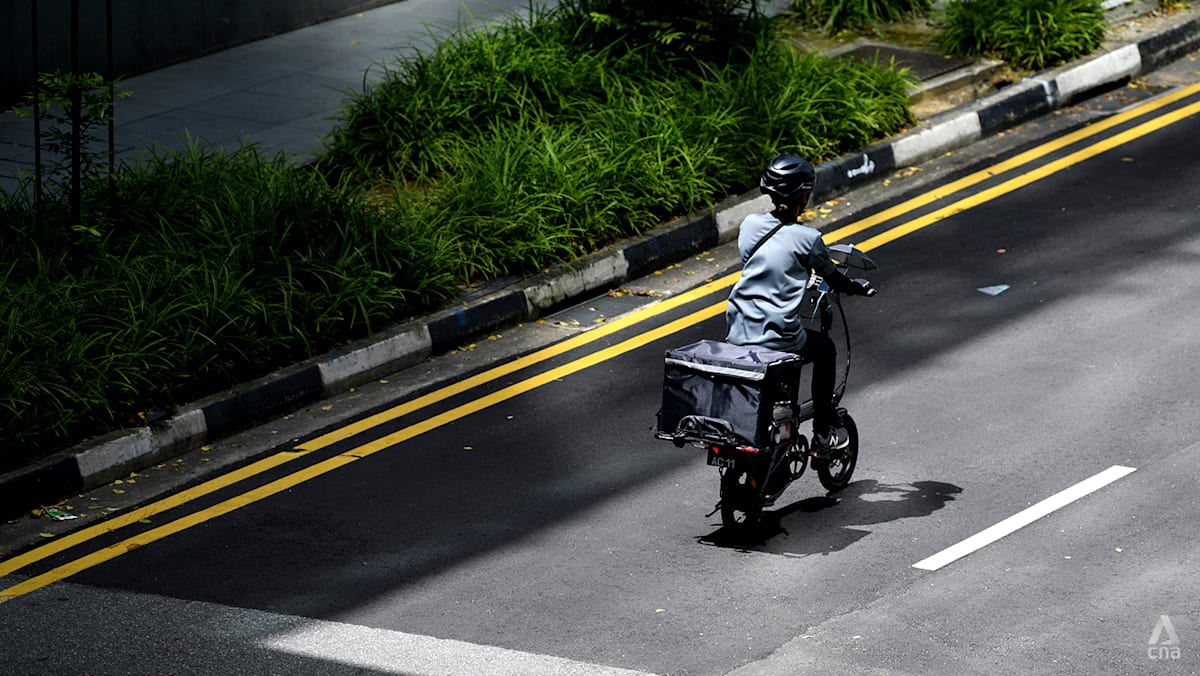
A food delivery rider seen in Singapore's central business district on Jan 14, 2022. (Photo: CNA/Calvin Oh)
This audio is generated by an AI tool.
SINGAPORE: Workplace fatalities rose to 21 in the first half of 2026, pushing Singapore's annualised fatal injury rate to 1.1 per 100,000 workers, according to official figures released on Tuesday (Sep 8).
Vehicular incidents were the leading cause, accounting for nine deaths. Four involved platform workers.
In contrast, major workplace injuries fell to 314, with the annualised rate of major injuries falling to 14.6 between January and June.
This is the lowest annualised major injury rate on record, excluding 2020 when work was disrupted by the COVID-19 pandemic, said the Ministry of Manpower (MOM).
CNA Games Guess Word Crack the word, one row at a time Buzzword Create words using the given letters Mini Sudoku Tiny puzzle, mighty brain teaser Mini Crossword Small grid, big challenge Word Search Spot as many words as you can Show More Show Less “The all-time low in major injuries reflects the hard work of employers, workers and safety professionals,” said Minister of State for Manpower Dinesh Vasu Dash. He added that the increase in fatalities is a serious concern. “Employers and workers must continue to stay vigilant and make workplace safety and health a priority every day.” The fatality statistics include platform workers, while the major injury figures exclude them. MOM said this is because it has been tracking platform worker fatalities through traffic police data, but only began compiling "robust data" after the Platform Workers Act came into force in 2025, requiring platform operators to report work injuries.
“The all-time low in major injuries reflects the hard work of employers, workers and safety professionals,” said Minister of State for Manpower Dinesh Vasu Dash.
He added that the increase in fatalities is a serious concern. “Employers and workers must continue to stay vigilant and make workplace safety and health a priority every day.”
The fatality statistics include platform workers, while the major injury figures exclude them.
MOM said this is because it has been tracking platform worker fatalities through traffic police data, but only began compiling "robust data" after the Platform Workers Act came into force in 2025, requiring platform operators to report work injuries.
The overall fatal injury rate of 1.1 exceeds a target to keep this rate below 1 per 100,000 workers by 2028.
Platform workers did not feature in the discussion when this goal was set in 2017, but Singapore remains on track to meet the target, MOM told reporters at a briefing.
MOM said it was reviewing further measures to strengthen ownership and accountability over workplace safety and health.
The review will include the workplace safety demerit points system and assess whether the bizSAFE capability-building programme better reflects companies' actual safety performance, including the link between training and implementation.
The review comes after MOM tightened penalties in June following a spate of workplace deaths, including higher composition fines and tougher enforcement during a two-week nationwide Safety Time-Out. The ministry said the situation has since stabilised.
MOM also recorded 620 occupational disease cases in the first half of 2026, up from 485 cases in the corresponding period in 2025.
This is the first set of figures since coverage under the Workplace Safety and Health Act and Work Injury Compensation Act was expanded from Dec 1, 2025.
“The rise therefore reflects broader detection and stronger surveillance – not a deterioration in workplace health standards,” said MOM.
PLATFORM WORKERS’ SAFETY
There were a total of 44 fatal and major injuries involving platform workers in the first half of 2026.
Vehicular incidents were a particular concern, accounting for 38 of the 44 cases, said MOM.
Delivery services made up 37 of the 44 cases. The remaining seven occurred during ride-hailing services.
Platform workers recorded an annualised fatal and major injury rate of 92.1 per 100,000 workers in H1 2026 – down from 95.9 for the same period in 2025.
This was substantially higher than the fatal and major injury rates in sectors such as construction, manufacturing and transportation and storage.
Unique factors contributing to the safety risks of platform work are the autonomous nature of the job and exposure to road conditions, the ministry added at the briefing.
According to mid-year traffic police data released in August, road casualties in Singapore have risen over the past three years.
Motorcyclists and pillion riders were involved in more than half of all traffic accidents in H1 2026.
MOM pointed out that two-wheel vehicles are usually used in delivery services, and that this segment accounted for most of the platform worker fatalities and major injuries.
In March, the ministry formed a Platform Worker Safety Workgroup comprising government agencies, platform operators, the National Trades Union Congress and platform work associations.
This group is studying measures like training and support for safer driving and riding and is expected to complete its work by end-2026, said MOM.
In July, the Multi-Agency Workplace Safety and Health Taskforce was also expanded to include the Ministry of Home Affairs and traffic police, to tackle vehicular and traffic risks at workplaces.
SAFETY IN CONSTRUCTION, MANUFACTURING
Construction and manufacturing continued to account for the bulk of fatal and major injuries.
In the construction sector, the number of fatal and major injuries declined to 69 in the first half of 2026. The annualised rate of 24.1 is the lowest since 2020.
However, smaller-scale construction works saw a slight increase in the number of injuries compared to the same period in 2025.
MOM said it was reviewing measures to strengthen deterrence and accountability among contractors on such projects, which include renovations and alteration and addition works.
In manufacturing, there were a total of 62 fatalities and major injuries in the first half of 2026, with an annualised rate of 28.4.
Metalworking recorded the biggest increase in fatal and major injuries, rising from 18 cases to 28. MOM said it will maintain a higher inspection frequency for metalworking, with a focus on addressing machinery safety and mitigating slip, trip and fall risks.
Overall, the number of dangerous occurrences fell to three for the January to June period in 2026, which is the lowest since 2010.
Dangerous occurrences are a prescribed list of incidents that can cause serious damage, injury or death, such as a crane collapse or explosion.
OCCUPATIONAL DISEASES
MOM also provided an update on occupational diseases, which develop through sustained exposure to workplace hazards and are more insidious.
Noise-induced hearing loss and work-related musculoskeletal disorders were the top two conditions, making up 80 per cent of all cases in the first half of 2026.
There were 354 cases of noise-induced hearing loss and 142 cases of work-related musculoskeletal disorders from January to June.
Previously, before Dec 1, 2025, these were categorised as noise-induced deafness and musculoskeletal disorders of the upper limbs only.
Skin diseases were the third most common occupational disease, with 66 cases in H1 2026.
MOM said it will continue to work with tripartite partners and the medical community to strengthen the detection, reporting and management of occupational diseases.
Get our pick of top stories and thought-provoking articles in your inbox
Stay updated with notifications for breaking news and our best stories
Join our channel for the top reads for the day on your preferred chat app
1 月至 6 月期间,21 起工作场所死亡事故中,平台工人占 4 人。
2022年1月14日,一名外卖骑手出现在新加坡中央商务区。(图片:CNA/Calvin Oh)
这段音频由人工智能工具生成。
新加坡:根据周二(9 月 8 日)公布的官方数据,2026 年上半年工作场所死亡人数上升至 21 人,使新加坡的年化致命伤害率达到每 10 万名工人 1.1 人。
车辆事故是主要死因,造成9人死亡。其中4人为站台工作人员。
相比之下,重大工伤事故减少到 314 起,1 月至 6 月期间的年化重大工伤事故发生率下降到 14.6 起。
人力部表示,这是有记录以来最低的年度重大伤害发生率,不包括因 COVID-19 疫情导致工作中断的 2020 年。
CNA游戏 猜词游戏 逐行破解单词 流行词游戏 用给定的字母组成单词 迷你数独 小谜题,脑力挑战 迷你填字游戏 小方格,大挑战 单词搜索 尽可能多地找出单词 显示更多 显示更少 “重大伤亡事故数量创历史新低,反映了雇主、工人和安全专业人员的辛勤工作,”人力部政务部长迪内什·瓦苏·达什表示。他补充说,死亡人数的增加令人严重担忧。“雇主和工人必须继续保持警惕,并将工作场所的安全和健康作为每天的首要任务。” 死亡统计数据包括平台工人,而重大伤亡数据不包括他们。人力部表示,这是因为该部门一直通过交警数据追踪平台工人的死亡情况,但直到2025年《平台工人法》生效后才开始收集“可靠的数据”,该法要求平台运营商报告工伤事故。
“重大工伤事故数量创历史新低,反映了雇主、工人和安全专业人员的辛勤工作,”人力部国务部长迪内什·瓦苏·达什表示。
他补充说,死亡人数的增加令人严重担忧。“雇主和员工必须继续保持警惕,并将工作场所的安全和健康作为每天的首要任务。”
死亡统计数据包括平台工人,而重大伤亡统计数据不包括他们。
人力部表示,这是因为人力部一直在通过交警数据追踪平台工人的死亡情况,但直到 2025 年《平台工人法》生效后才开始收集“可靠的数据”,该法要求平台运营商报告工伤事故。
总体致命伤害率为 1.1,超过了到 2028 年将该比率控制在每 10 万名工人 1 人以下的目标。
人力部在简报会上告诉记者,平台工作者在 2017 年设定该目标时并未被纳入讨论范围,但新加坡仍有望实现该目标。
人力部表示,正在审查进一步措施,以加强对工作场所安全和健康的自主权和问责制。
此次审查将包括工作场所安全扣分制度,并评估 bizSAFE 能力建设计划是否能更好地反映公司的实际安全绩效,包括培训与实施之间的联系。
此次审查是在人力部6月份收紧处罚措施之后进行的,此前发生了一系列工作场所死亡事故,包括提高罚款金额,并在为期两周的全国安全暂停期间加强执法力度。人力部表示,目前情况已趋于稳定。
人力部还记录到,2026 年上半年共有 620 例职业病病例,高于 2025 年同期的 485 例。
这是自 2025 年 12 月 1 日起,工作场所安全与健康法和工伤赔偿法的覆盖范围扩大以来的第一组数据。
“因此,病例增加反映的是更广泛的检测和更严格的监控,而不是工作场所健康标准的恶化,”人力部表示。
平台工作人员安全
2026 年上半年,平台工人共发生 44 起致命和重伤事故。
人力部表示,车辆事故尤其令人担忧,在 44 起案件中占 38 起。
在44起病例中,外卖服务占37起,其余7起发生在网约车服务期间。
2026 年上半年,平台工人的年化致命和重伤率为每 10 万名工人 92.1 人,低于 2025 年同期的 95.9 人。
这远高于建筑业、制造业、运输和仓储等行业的致命伤和重伤率。
该部在简报会上补充说,导致平台作业安全风险的独特因素是工作的自主性和暴露于道路状况。
根据新加坡交通警察8月份公布的年中数据,过去三年新加坡的道路交通事故伤亡人数有所上升。
2026年上半年,摩托车驾驶员和乘客卷入了超过一半的交通事故。
人力部指出,两轮车通常用于送货服务,而这一群体造成了平台工人死亡和重伤事故的大部分。
今年3月,该部成立了平台工人安全工作组,成员包括政府机构、平台运营商、全国职工总会和平台工人协会。
人力部表示,该小组正在研究诸如培训和支持等措施,以促进更安全的驾驶和骑行,预计将于 2026 年底完成其工作。
7 月,多机构工作场所安全与健康工作组也扩大了规模,纳入了内政部和交通警察,以应对工作场所的车辆和交通风险。
建筑和制造安全
建筑业和制造业仍然是造成致命和重伤事故的主要原因。
在建筑行业,2026年上半年致命和重伤事故数量下降至69起。年化事故率为24.1,是2020年以来的最低水平。
然而,与 2025 年同期相比,小规模建筑工程的受伤人数略有增加。
人力部表示,正在审查相关措施,以加强对这类项目(包括翻新、改建和扩建工程)承包商的威慑和问责。
2026 年上半年,制造业共发生 62 起死亡和重伤事故,年化率为 28.4。
金属加工行业的致命和重伤事故增幅最大,从 18 起上升至 28 起。人力部表示,将继续提高金属加工行业的检查频率,重点关注机械安全问题,并降低滑倒、绊倒和跌倒的风险。
总体而言,2026 年 1 月至 6 月期间危险事件的数量下降到 3 起,这是自 2010 年以来的最低水平。
危险事件是指可能造成严重损害、伤害或死亡的一系列特定事件,例如起重机倒塌或爆炸。
职业病
人力部还提供了有关职业病的最新信息,这些疾病是由于持续接触工作场所的危害而引起的,而且更具隐蔽性。
噪声性听力损失和与工作相关的肌肉骨骼疾病是两大主要疾病,占 2026 年上半年所有病例的 80%。
1月至6月,共有354例噪声性听力损失病例和142例与工作相关的肌肉骨骼疾病病例。
此前,在 2025 年 12 月 1 日之前,这些疾病仅被归类为噪声性耳聋和上肢肌肉骨骼疾病。
皮肤病是第三大常见职业病,2026 年上半年有 66 例。
人力部表示,将继续与三方合作伙伴和医学界合作,加强职业病的检测、报告和管理。
订阅我们的邮件,即可获取精选热门新闻和引人深思的文章。
订阅通知,第一时间获取突发新闻和精彩报道。
加入我们的频道,即可在您常用的聊天应用上获取当日热门文章。