Law proposed to require online sellers of active mobility devices to display warning notices拟议法案要求在线销售助行设备的商家展示警告标识
The Bill will also introduce key measures to further strengthen controls against deregistered vehicles.
The Bill will also introduce key measures to further strengthen controls against deregistered vehicles.
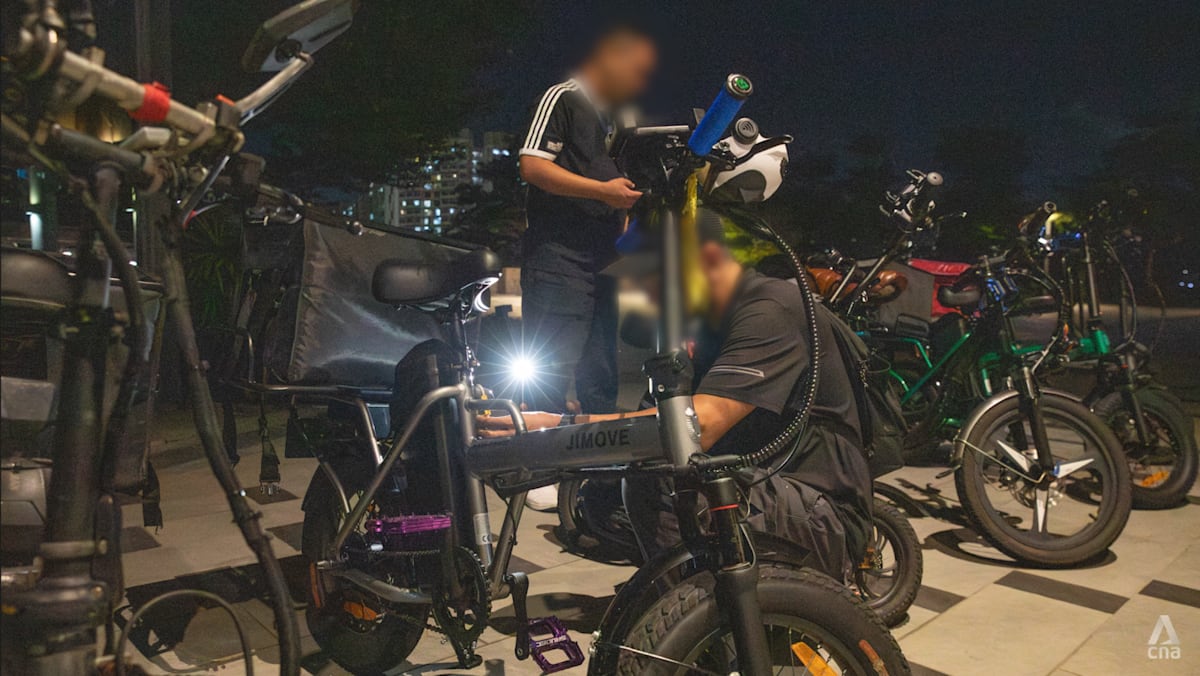
Online sellers of active mobility devices must display warning notices on the device and usage rules, and cannot advertise and sell non-compliant active mobility devices. (Photo: CNA/Raj Nadarajan)
This audio is generated by an AI tool.
SINGAPORE: Online sellers of active mobility devices could be required to display warning notices on the device and usage rules, under a new Bill tabled in parliament on Tuesday (Sep 8).
Introduced by the Ministry of Transport (MOT), the Land Transport and Related Matters Bill proposes legislative amendments to the Active Mobility Act 2017, Electric Vehicles Charging Act 2022, Road Traffic Act 1961, and Small Motorised Vehicles (Safety) Act 2020.
The new legislative provisions are intended to empower LTA to further strengthen controls against deregistered vehicles and expand the scope of existing active mobility regulations.
The Bill will also allow MOT to streamline processes, facilitate industry innovation for electric vehicle (EV) charging, enhance safety for EV charging and facilitate the continued safe deployment of autonomous vehicles (AVs) in Singapore.
ACTIVE MOBILITY DEVICES
CNA Games Guess Word Crack the word, one row at a time Buzzword Create words using the given letters Mini Sudoku Tiny puzzle, mighty brain teaser Mini Crossword Small grid, big challenge Word Search Spot as many words as you can Show More Show Less With the Bill, MOT will extend the powers and restrictions imposed on physical retail premises to online sales and advertising platforms. Online sellers of active mobility devices must display warning notices on the device and usage rules, and cannot advertise and sell non-compliant active mobility devices. To protect consumers from unknowingly buying non-compliant devices, the Bill will also prohibit false or misleading representations about the compliance of a device or its components, as well as advertising for illegal modification services. The Bill will also introduce safety rules to reduce fire risks arising from batteries in active mobility devices. Sellers of mobility device batteries must display specification notices with details of the battery, such as compatible device models, voltage and capacity. It would also be an offence for sellers to advertise or sell a non-compatible battery for use in a personal mobility device (PMD), power-assisted bicycle (PAB) or mobility vehicle, or to fit or use a non-compatible battery in such devices, MOT said. To further deter the illegal import of non-compliant PABs and motorised PMDs, the Bill will increase penalties under the Small Motorised Vehicles (Safety) Act. The maximum penalty for an individual would be increased from a fine of S$5,000 (US$3,950) or up to six months' jail or both, to a fine of up to S$10,000 or up to 12 months' jail or both. For non-individuals, the maximum fine would be increased from S$10,000 to S$40,000. “Penalties are doubled for repeat offenders. This aligns with that of similar offences under the Active Mobility Act for illegal modification and sale of non-compliant devices,” MOT said. In recent years, online channels have become an increasingly common means of advertising and selling active mobility devices and their batteries, added the ministry. "The use of batteries that are not compatible with the devices in which they are fitted may also pose fire safety concerns. These developments underscore the need to strengthen safeguards for online sales and battery compatibility."
With the Bill, MOT will extend the powers and restrictions imposed on physical retail premises to online sales and advertising platforms.
Online sellers of active mobility devices must display warning notices on the device and usage rules, and cannot advertise and sell non-compliant active mobility devices.
To protect consumers from unknowingly buying non-compliant devices, the Bill will also prohibit false or misleading representations about the compliance of a device or its components, as well as advertising for illegal modification services.
The Bill will also introduce safety rules to reduce fire risks arising from batteries in active mobility devices.
Sellers of mobility device batteries must display specification notices with details of the battery, such as compatible device models, voltage and capacity.
It would also be an offence for sellers to advertise or sell a non-compatible battery for use in a personal mobility device (PMD), power-assisted bicycle (PAB) or mobility vehicle, or to fit or use a non-compatible battery in such devices, MOT said.
To further deter the illegal import of non-compliant PABs and motorised PMDs, the Bill will increase penalties under the Small Motorised Vehicles (Safety) Act.
The maximum penalty for an individual would be increased from a fine of S$5,000 (US$3,950) or up to six months' jail or both, to a fine of up to S$10,000 or up to 12 months' jail or both.
For non-individuals, the maximum fine would be increased from S$10,000 to S$40,000.
“Penalties are doubled for repeat offenders. This aligns with that of similar offences under the Active Mobility Act for illegal modification and sale of non-compliant devices,” MOT said.
In recent years, online channels have become an increasingly common means of advertising and selling active mobility devices and their batteries, added the ministry.
"The use of batteries that are not compatible with the devices in which they are fitted may also pose fire safety concerns. These developments underscore the need to strengthen safeguards for online sales and battery compatibility."
DEREGISTERED VEHICLES
To further strengthen controls over the disposal of deregistered vehicles so they do not end up on Singapore's roads, the Bill would implement an authorised exporter scheme, which requires deregistered vehicles to be exported through LTA-authorised exporters.
It would also shorten the grace period for owners of deregistered vehicles to fulfil disposal requirements from one month to 14 days.
The Bill would also ensure that offenders remain liable for prosecution for as long as they fail to fulfil the respective disposal requirements.
The proposed law would also empower the government to prevent new or used vehicles from being registered by or transferred to high-risk individuals who are at risk of failing to dispose of the vehicles when they are deregistered.
Furthermore, it would criminalise the sale or supply of deregistered vehicles with the knowledge that, or reckless as to whether, the vehicle will be kept or used on Singapore's roads.
"The government takes a strong stance against any persons using, keeping, buying or selling of deregistered vehicles for unlawful purposes," MOT said.
"Vehicle owners must ensure that deregistered vehicles are disposed of promptly and in accordance with LTA’s requirements. Firm enforcement action will be taken against offenders who fail to comply with the respective requirements."
EV CHARGING, AUTONOMOUS VEHICLES
For EV charging, the Bill proposes to remove the mandatory two-yearly periodic inspection requirement for landed home EV chargers, reducing the compliance burden.
“As a safeguard, LTA retains the power to require ad hoc inspections where safety concerns arise,” MOT said.
The proposed law also allows LTA to presume that an EV charger is in use when it is connected to an EV or EV battery, facilitating enforcement against suspected unlawful or improper charging.
As for AVs, the Bill would extend the existing regulatory sandbox under the Road Traffic Act for AV deployments on roads to Dec 31, 2028.
“This is to ensure that ongoing AV deployments can continue undisrupted until a more holistic legislation is implemented,” MOT said.
Modelled after this existing sandbox, the Bill further introduces a regulatory sandbox under the Active Mobility Act to facilitate AV deployments on public paths, for an initial five-year period, until Sep 30, 2031.
“This new sandbox will allow for the controlled testing and deployment of autonomous mobility solutions such as robosweepers, enabling the industry to gain operational experience and the government to refine the regulatory framework to support the safe and progressive scaling-up of such deployments,” MOT added.
The Bill also introduced strengthened enforcement powers to deal with illegal point-to-point transport services.
These enhanced powers would enable authorities to act more decisively against operators and people who offer unlicensed ride-hailing or taxi services.
"Even as we clamp down on the provision of illegal point-to-point services, we will ensure there are viable alternatives for commuters," said MOT.
Under the enhanced Cross-Border Taxi Scheme, the quota was increased from 200 taxis to 300 taxis since May 4. Authorities are looking to further increase the quota to 500 taxis from each country.
"While enforcement is currently focused on illegal operators and drivers, commuters should note that they may also be penalised for using such illegal services in future," said MOT.
"More immediately, commuters should be aware that unlicensed vehicles lack valid insurance coverage, which can have serious consequences for commuters in the event of an accident."
Get our pick of top stories and thought-provoking articles in your inbox
Stay updated with notifications for breaking news and our best stories
Join our channel for the top reads for the day on your preferred chat app
该法案还将引入关键措施,进一步加强对注销车辆的管控。
网上销售助行设备的商家必须在设备上张贴警告标识和使用规则,不得宣传和销售不符合规定的助行设备。(图片:CNA/Raj Nadarajan)
这段音频由人工智能工具生成。
新加坡:根据周二(9月8日)提交国会的一项新法案,在线销售主动出行设备的商家可能需要在设备上展示警告通知和使用规则。
由交通部提出的《陆路交通及相关事项法案》提议对 2017 年《积极出行法案》、2022 年《电动汽车充电法案》、1961 年《道路交通法案》和 2020 年《小型机动车辆(安全)法案》进行立法修正。
新的立法条款旨在赋予陆路交通管理局更大的权力,以进一步加强对已注销车辆的管控,并扩大现有积极出行法规的范围。
该法案还将允许交通部简化流程,促进电动汽车充电行业的创新,提高电动汽车充电的安全性,并促进自动驾驶汽车在新加坡的持续安全部署。
主动移动装置
CNA游戏猜词游戏:逐行破解单词;流行词游戏:用给定的字母组成单词;迷你数独:小巧的谜题,强大的脑力挑战;迷你填字游戏:小方格,大挑战;单词搜索:尽可能多地找出单词。显示更多 显示更少 根据该法案,交通部将把对实体零售场所施加的权力和限制扩展到在线销售和广告平台。在线销售主动式移动设备的商家必须在设备上展示警告标志和使用规则,并且不得宣传和销售不合规的主动式移动设备。为了保护消费者免于在不知情的情况下购买不合规的设备,该法案还将禁止对设备或其组件的合规性做出虚假或误导性陈述,以及宣传非法改装服务。该法案还将引入安全规则,以降低主动式移动设备电池引发的火灾风险。移动设备电池的销售商必须展示规格说明,其中包含电池的详细信息,例如兼容的设备型号、电压和容量。交通部表示,销售商若宣传或销售不兼容的电池用于个人代步工具(PMD)、电动辅助自行车(PAB)或代步车,或在上述设备中安装或使用不兼容的电池,均属违法行为。为进一步遏制非法进口不合规的电动辅助自行车和个人代步工具,该法案将提高《小型机动车辆(安全)法》规定的处罚力度。个人最高罚款将从5000新元(约合3950美元)或最高6个月监禁(或两者并罚)提高至最高10000新元罚款或最高12个月监禁(或两者并罚)。非个人最高罚款将从10000新元提高至40000新元。交通部指出:“对于屡犯者,处罚力度将加倍。这与《积极出行法》中关于非法改装和销售不合规设备的类似违法行为的处罚力度一致。”该部补充道,近年来,网络渠道已成为推广和销售主动出行设备及其电池日益普遍的途径。“使用与设备不兼容的电池也可能引发火灾安全隐患。这些发展趋势凸显了加强网络销售和电池兼容性保障措施的必要性。”
根据该法案,交通运输部将把对实体零售场所施加的权力和限制扩展到在线销售和广告平台。
在线销售主动出行设备的商家必须在设备上展示警告通知和使用规则,并且不得宣传和销售不合规的主动出行设备。
为保护消费者免于在不知情的情况下购买不合规的设备,该法案还将禁止对设备或其组件的合规性做出虚假或误导性陈述,以及为非法改装服务做广告。
该法案还将引入安全规则,以降低主动式移动设备电池引发的火灾风险。
移动设备电池的销售商必须展示规格说明,详细说明电池信息,例如兼容的设备型号、电压和容量。
交通部表示,销售商宣传或销售不兼容的电池用于个人代步工具(PMD)、电动辅助自行车(PAB)或代步车,或在此类设备中安装或使用不兼容的电池,也属于违法行为。
为了进一步阻止非法进口不合规的便携式汽车和机动个人代步工具,该法案将提高《小型机动车辆(安全)法》规定的处罚力度。
对个人的最高处罚将从罚款 5,000 新元(3,950 美元)或监禁最多 6 个月或两者并罚,提高到罚款最高 10,000 新元或监禁最多 12 个月或两者并罚。
对于非个人,最高罚款将从 10,000 新元增加到 40,000 新元。
“对于屡犯者,处罚将加倍。这与《积极出行法》中关于非法改装和销售不合规设备的类似违法行为的处罚一致,”交通部表示。
该部补充说,近年来,网络渠道已成为宣传和销售主动出行设备及其电池的日益普遍的手段。
“使用与设备不兼容的电池也可能引发火灾安全隐患。这些事态发展凸显了加强网络销售和电池兼容性保障措施的必要性。”
已注销车辆
为了进一步加强对注销车辆处置的控制,防止它们最终出现在新加坡的道路上,该法案将实施授权出口商计划,要求注销车辆必须通过陆路交通管理局授权的出口商出口。
此外,注销车辆车主履行处置要求的宽限期也将从一个月缩短至 14 天。
该法案还将确保,只要违法者未能满足相应的处置要求,他们就仍需承担刑事责任。
拟议的法律还将赋予政府权力,防止新车或二手车被高风险个人登记或转让,这些高风险个人可能无法在车辆注销时处置这些车辆。
此外,该法案还将把明知或罔顾车辆是否会在新加坡道路上使用或保留而出售或供应已注销车辆的行为定为犯罪。
“政府对任何非法使用、持有、购买或出售已注销车辆的人采取强硬立场,”交通部表示。
“车主必须确保已注销车辆及时按照陆路交通管理局(LTA)的要求进行处置。对于不遵守相关规定的违法者,将采取严厉的执法行动。”
电动汽车充电,自动驾驶汽车
对于电动汽车充电,该法案提议取消对已安装家用电动汽车充电器的强制性两年一次的定期检查要求,从而减轻合规负担。
“作为一项保障措施,陆路交通管理局保留在出现安全隐患时要求进行临时检查的权力,”交通部表示。
拟议的法律还允许陆路交通管理局在电动汽车充电器连接到电动汽车或电动汽车电池时,推定该充电器正在使用,从而便于对涉嫌非法或不当充电行为进行执法。
至于自动驾驶汽车,该法案将根据《道路交通法》将现有的自动驾驶汽车道路部署监管沙盒延长至 2028 年 12 月 31 日。
“这是为了确保自动驾驶汽车的持续部署能够不受干扰地进行,直到实施更全面的立法,”交通部表示。
该法案以现有的监管沙盒为蓝本,进一步根据《积极出行法案》引入监管沙盒,以促进自动驾驶汽车在公共道路上的部署,初始期限为五年,至 2031 年 9 月 30 日。
“这个新的沙箱将允许对扫地机器人等自主移动解决方案进行受控测试和部署,使行业能够获得运营经验,并使政府能够完善监管框架,以支持此类部署的安全、逐步扩大规模,”交通部补充道。
该法案还引入了更强有力的执法权力,以打击非法点对点运输服务。
这些增强的权力将使当局能够更果断地打击无证网约车或出租车服务的经营者和个人。
“即使我们严厉打击非法点对点服务,我们也会确保通勤者有可行的替代方案,”交通部表示。
根据加强版跨境出租车计划,自5月4日起,每个国家的出租车配额已从200辆增加到300辆。当局正考虑进一步将每个国家的出租车配额增加到500辆。
“虽然目前的执法重点是打击非法运营者和司机,但通勤者应该注意,将来使用此类非法服务也可能受到处罚,”交通部表示。
“更直接地说,通勤者应该意识到,无牌车辆缺乏有效的保险,一旦发生事故,可能会给通勤者带来严重后果。”
订阅我们的邮件,即可获取精选热门新闻和引人深思的文章。
订阅通知,第一时间获取突发新闻和精彩报道。
加入我们的频道,即可在您常用的聊天应用上获取当日热门文章。