Joo Chiat vs Haji Lane: What makes a shopping neighbourhood work for retailers?如切街 vs 哈芝巷:什么因素决定了零售商能否在购物街区取得成功?
Haji Lane offers visibility, while Joo Chiat provides room to linger. But for Singapore’s independent retailers, neither foot traffic nor a distinctive setting guarantees a sustainable business.
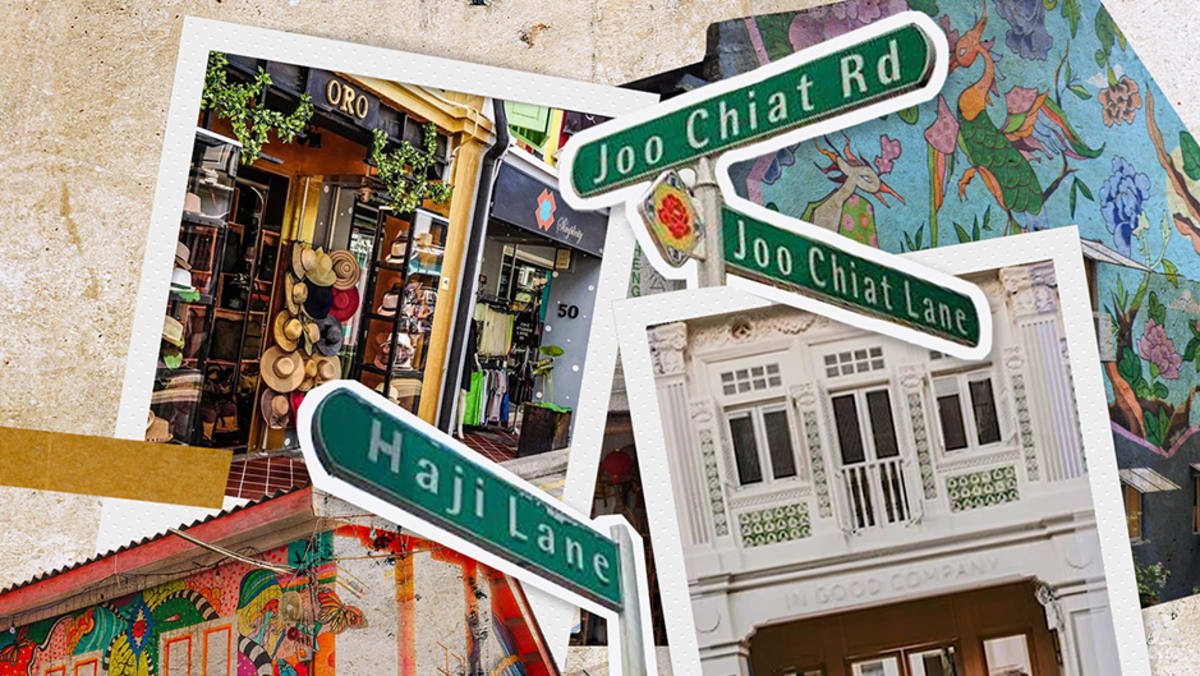
Haji Lane offers visibility, while Joo Chiat provides room to linger. But for Singapore’s independent retailers, neither foot traffic nor a distinctive setting guarantees a sustainable business.
(Art: Chern Ling; photos: Beau, In Good Company, Singapore Tourism Board)
This audio is generated by an AI tool.
For independent retailers, a busy street can be a double-edged sword. More foot traffic means more potential customers, but not everyone who walks through the door intends to buy, and high rents make that gap costly.
That tension runs through two of Singapore’s best-known independent retail enclaves. Joo Chiat and Haji Lane both offer what malls struggle to replicate: shophouse character, strong identities and a mix of shops, cafes and concepts that makes shopping feel like discovery.
But they are developing differently. Joo Chiat is becoming a neighbourhood for lingering, with brands building spaces that invite people to stay, while Haji Lane’s tourist crowds have drawn in photobooths and food concepts alongside the fashion and vintage stores that made its name.
For retailers, the question is the same in both places: Can the numbers work, with the cost of running a physical store still climbing?
JOO CHIAT: MORE THAN A PLACE TO SHOP
For local home and lifestyle brand Sojao, Joo Chiat was a natural fit for its flagship before the neighbourhood became the buzzy lifestyle destination it is today.
Co-founder Jan Tan grew up near the area, as did fellow co-founder Priscilla Tan (not related). “In fact, my parents used to run a hawker stall nearby at Dunman Food Centre,” said Jac Tan.
The brand launched online in 2018 and has operated its 1,400 sq ft flagship at 251 Joo Chiat Road since November 2021. Its second outlet, at New Bahru, opened in June 2024 and is just under 1,000 sq ft.
Sojao at Joo Chiat. (Photo: Sojao)
Joo Chiat’s residential character, historic shophouses and independent spirit were the draw. So was cost – mall rents can be steep, and often come with long opening hours.
“We wanted the store to feel like part of a neighbourhood rather than simply another shop in a mall,” Tan added. “We felt a more experiential, rather than transactional, environment would suit the brand.”
Sojao interior. (Photo: Sojao)
Its customers include residents, Singaporeans making a dedicated trip (some customers even call for directions, as the store is a little far from an MRT station) and tourists, with Chinese visitors particularly strong. The brand does not track an exact local-to-tourist split.
Others find Sojao by accident. Someone might come for brunch, wander into a few independent shops and end up in the store. For a brand selling bedding, being found in person matters. Customers can read about the softness of organic cotton online, but nothing replaces touching it.
“The neighbourhood itself becomes part of the experience,” said Tan. Food and beverage businesses give people a reason to stay for hours, while fashion, design, beauty and wellness shops give them more to discover. Independent businesses benefit from one another rather than having to attract every customer alone.
A DIFFERENT KIND OF FLAGSHIP
Interior of In Good Company's flagship at Joo Chiat. (Photo: In Good Company)
Homegrown fashion label In Good Company is making a similar bet.
Opened in July, its three-storey, 3,000 sq ft Joo Chiat flagship retains the shophouse’s original brick walls, timber flooring, exposed beams and spiral staircase, with warm finishes and woven textures lending a more residential feel. It combines fashion with hospitality, design and collaborations, including Miura, a Japanese tea and wagashi space by the team behind Paaru.
Co-founder and managing director Jaclyn Teo said the aim was to create something more than a larger store. “There is already a strong sense of community and discovery here, and we felt there was an opportunity for In Good Company to become part of that rhythm rather than simply operate within it,” she said.
Wabi Sabi space at In Good Company. (Photo: In Good Company)
Customers often take their time, browsing the clothes before discovering Miura or another corner of the space. Compared with Orchard Road, she said, Joo Chiat draws visitors more interested in exploring the neighbourhood than shopping alone.
That is deliberate. In Good Company’s other stores, including its upcoming Ion Orchard boutique, will focus on the shopping experience, while Joo Chiat gives the brand room to experiment. Malls, Teo said, remain important for their convenience, accessibility and high footfall, which make shopping easy to fit into daily routines.
It is too early to judge the flagship’s performance, she added, as it had been open only a few months at the time of the interview. But the brand sees it as a way to learn how a physical space can build deeper engagement beyond the transaction.
HAJI LANE: WHEN FOOT TRAFFIC ISN’T ENOUGH
Haji Lane offers a different proposition: scale. Its tourist crowds can put retailers in front of people who would never otherwise find them.
View this post on Instagram A post shared by woofie (@woofie.co)
A post shared by woofie (@woofie.co)
That was the appeal for vintage thrift business Woofie . After opening at Golden Landmark Shopping Complex in 2023, founder Desiree Chang wanted to see what the brand could become in a bigger, more visible space. In 2024, she opened a two-storey outlet on North Bridge Road – near one of the entrances to Haji Lane.
“Being situated right at the entrance of Haji Lane meant greater exposure to both locals and tourists, as well as the opportunity to reach customers who might not have discovered Woofie otherwise,” said Chang.
The exposure was real, with more spontaneous walk-ins, including tourists. But many visitors were there to take photos, eat or simply explore.
“High foot traffic doesn’t always translate into high sales,” she said. Roadworks that diverted pedestrians away from her stretch of shops made matters worse.
Costs piled on. Rent, including utilities, was about S$10,500 to S$10,600 a month, around S$2,000 more than the previous tenant had paid. The older shophouse also suffered frequent leaks and, on bad days, flooding.
For a thrift store built on affordable prices, the math stopped working. Woofie’s North Bridge Road outlet will close on Nov 7.
At Woofie’s outlet in Golden Landmark, which the brand will retain, there are fewer chance walk-ins. Customers tend to arrive on purpose, having found the brand through social media or word of mouth. Lower costs give Chang more room on pricing and inventory without relying on walk-ins to cover fixed costs.
“For an independent thrift store, I think having a sustainable cost structure is ultimately more important than being in the busiest location,” she said.
NEW CONCEPTS, NEW CROWDS
Chang’s experience comes amid a broader shift on Haji Lane towards photobooths, food and beverage businesses and other experience-led concepts. These bring new energy and crowds, she said, but she worries about what happens if rising costs push out smaller retailers.
“One of the things that made Haji Lane special was the diversity of small businesses you could discover there,” said Chang.
The now-defunct Solace Studios at 30 Haji Lane. (Photo: Solace Studios)
Keith Kok, founder of photobooth chain Solace Studios, has watched the change since opening his first outlet there in 2022. At the time, he said, the street had only self-photo studios that required reservations. Solace’s walk-in model proved popular, with customers queueing for almost an hour. Similar concepts began opening along the street within months, turning photobooths into a more prominent part of Haji Lane’s retail mix.
The area’s foot traffic was crucial in those early days, although some customers also arrived after finding Solace online. Kok said tourists and locals spend similar amounts, and both tend to snap a photo afterwards and tag the brand on social media.
Solace Studios. (Photo: Solace Studios)
Solace closed its original outlet at 30 Haji Lane in December 2025 and is looking to close the one at 76 Haji Lane when its lease ends, as it now wants bigger spaces rather than small outlets. Kok declined to disclose rents, but said Haji Lane still generates enough business to keep at least one outlet going at 73 Haji Lane, helped by a good relationship with the landlord. Solace has also expanded into malls, including in Woodlands and Punggol, but he said Haji Lane gives more creative freedom, even if space is tight.
He recently opened Yogeek, a frozen yoghurt concept, on the street, partly out of sentiment and a wish to help revive its local business scene. “You can say that Haji Lane is my comfort zone,” he said.
Kok believes fashion, food and beverage, and photobooths can coexist in the enclave. His worry is who can afford to stay.
“I think the bigger concern isn’t necessarily the changing tenant mix, but whether Haji Lane can remain a place where small, independent Singaporean businesses have a fair chance to thrive,” he said. Larger operators, he noted, including a growing number of overseas concepts, are better able to absorb rising rents.
THE RIGHT LOCATION, NOT JUST THE BUSIEST ONE
Joo Chiat is not immune to rising costs either. Neither Sojao nor In Good Company would disclose the rent for their Joo Chiat stores, but Tan said the cost of running a physical store has risen considerably over the years, across rent, manpower and general operating expenses, forcing the brand to keep reassessing whether its spaces remain sustainable.
Footfall has softened too. Tan said pedestrian traffic outside Sojao fell by about 15 per cent in the first half of 2026 compared with the same period last year. Yet more people came inside, which she credits to pop-ups and an expanded product range.
Events can help. On Oct 3, more than 5,000 people visited a stretch of Joo Chiat Road closed to traffic for World Car-Free Day, with around 90 merchants taking part. But a one-off crowd is no guarantee of steady footfall on an ordinary day.
Sojao’s lesson from operating in both Joo Chiat and New Bahru, Tan said, is that footfall alone is not enough. “When we consider future locations, we’d look closely at who is already spending time there, their intention when they visit, how long they stay, the surrounding tenant mix, accessibility, visibility, and of course, whether the economics make sense,” she said.
Chang reached a similar conclusion. She is not ruling out another street-front Woofie outlet but said her experience has taught her that “a good location on paper doesn’t necessarily translate into a financially sustainable business”. For now, her focus is Golden Landmark.
So, which is the better home for independent retail? Perhaps that is the wrong question. Haji Lane offers reach, but not necessarily buyers. Joo Chiat offers immersion and repeat visits, but its crowds can soften too. And in both places, retailers hedging their bets – In Good Company with its Ion Orchard boutique, Solace in heartland malls, Woofie at Golden Landmark – suggest the mall has not entirely lost its place.
For both neighbourhoods, the challenge is not simply attracting more visitors but sustaining the mix of independent businesses that makes people want to visit in the first place.
A single handpicked story that we think you shouldn't miss. Just one a day.
哈芝巷人流量大,位置醒目;如切街则给人流连忘返的感觉。但对于新加坡的独立零售商而言,人流量和独特的地理位置都无法保证生意的可持续发展。
(艺术:陈玲;摄影:Beau、In Good Company、新加坡旅游局)
这段音频由人工智能工具生成。
对于独立零售商而言,繁华的街道可能是一把双刃剑。人流量大意味着潜在顾客多,但并非所有进店的顾客都会购买,而高昂的租金会使这部分差额造成不小的损失。
这种张力贯穿新加坡两个最著名的独立零售街区。如切和哈芝巷都拥有购物中心难以复制的特色:店屋的韵味、鲜明的个性以及各种商店、咖啡馆和概念的融合,让购物成为一种探索之旅。
但它们的发展轨迹却截然不同。如切街正逐渐成为一个适合人们流连忘返的街区,各大品牌纷纷打造吸引人们驻足停留的空间;而哈芝巷则吸引了大量游客,除了那些令其声名鹊起的时尚和古着店之外,还涌现出了许多照相亭和餐饮场所。
对于零售商而言,这两个地方的问题是一样的:在实体店运营成本不断攀升的情况下,这样的盈利模式是否可行?
如切:不仅仅是购物场所
对于本土家居生活品牌 Sojao 而言,在如切成为如今热闹的生活方式目的地之前,这里自然而然地成为了其旗舰店的理想选址。
联合创始人陈嘉欣 (Jan Tan) 和另一位联合创始人陈普莉希拉 (Priscilla Tan,两人并无亲属关系) 都成长于附近地区。“事实上,我的父母以前就在附近的敦曼熟食中心经营过一个摊位,”陈嘉欣说道。
该品牌于 2018 年在线推出,并于 2021 年 11 月在如切路 251 号开设了 1400 平方英尺的旗舰店。其第二家分店位于新峇鲁,于 2024 年 6 月开业,面积略低于 1000 平方英尺。
Sojao 在如切。 (照片:Sojao)
如切的住宅氛围、历史悠久的店屋和独立精神是吸引人们的原因。价格也是一个重要因素——商场租金可能很高,而且通常营业时间很长。
“我们希望这家店能融入社区,而不仅仅是商场里的另一家店铺,”谭补充道。“我们觉得,营造一种体验式而非交易式的环境更符合品牌定位。”
索贾内部。 (照片:Sojao)
其顾客包括本地居民、专程前来购买的新加坡人(由于店铺距离地铁站稍远,一些顾客甚至会打电话问路)以及游客,其中中国游客尤为突出。该品牌并未统计本地居民与游客的具体比例。
有些人偶然发现了Sojao。有人可能来吃早午餐,随意逛了几家独立小店,最后走进了这家店。对于一个销售床上用品的品牌来说,能否被顾客亲自发现至关重要。顾客可以在网上了解有机棉的柔软度,但没有什么能取代亲手触摸的感受。
“街区本身就成了体验的一部分,”谭说道。餐饮店让人们有理由停留数小时,而时尚、设计、美容和健康商店则让他们有更多探索的机会。独立商户之间可以互相受益,而无需独自吸引每一位顾客。
一种不同类型的旗舰
In Good Company位于如切的旗舰店内部。(图片:In Good Company)
本土时尚品牌 In Good Company 也做出了类似的尝试。
这家于七月开业的旗舰店位于如切,占地3000平方英尺,共三层,保留了店屋原有的砖墙、木地板、裸露的横梁和螺旋楼梯,并以温暖的装饰和编织纹理营造出更温馨的居家氛围。它融合了时尚、酒店服务、设计和合作元素,其中包括由Paaru团队打造的日式茶和和菓子空间Miura。
联合创始人兼董事总经理 Jaclyn Teo 表示,他们的目标不仅仅是打造一家更大的门店。“这里已经拥有浓厚的社区氛围和探索精神,我们觉得 In Good Company 有机会融入其中,而不仅仅是作为其中的一部分运营,”她说道。
In Good Company 的侘寂空间。(图片:In Good Company)
顾客们常常会放慢脚步,慢慢浏览衣服,然后再去发现Miura或其他角落。她说,与乌节路相比,如切吸引的顾客更热衷于探索街区,而不是独自购物。
这是有意为之。Good Company的其他门店,包括即将开业的ION Orchard精品店,将专注于提升购物体验,而Joo Chiat门店则为品牌提供了更多尝试的空间。Teo表示,购物中心仍然非常重要,因为它们便利、易达且人流量大,使购物能够轻松融入日常生活。
她补充说,现在判断这家旗舰店的业绩还为时尚早,因为采访时它才开业几个月。但该品牌将其视为了解实体空间如何能在交易之外建立更深层次的客户互动的一种方式。
哈芝巷:当人流量不足以满足需求时
哈芝巷则呈现出不同的模式:规模效应。熙熙攘攘的游客能让零售商出现在那些原本根本不会注意到他们的顾客面前。
在 Instagram 上查看此帖子 由 woofie (@woofie.co) 分享的帖子
由 woofie (@woofie.co) 分享的帖子
这就是复古二手店Woofie的吸引力所在。2023年,Woofie在金禧购物中心开业后,创始人Desiree Chang希望看看品牌在更大、更显眼的空间里能发展成什么样子。2024年,她在桥北路开设了一家两层楼的门店——靠近哈芝巷的入口之一。
张先生表示:“店铺位于哈芝巷入口处,这意味着可以更广泛地接触到本地居民和游客,也有机会接触到那些原本可能不会发现 Woofie 的顾客。”
这次客流量确实很大,有不少游客自发前来参观。但很多游客来这里只是为了拍照、吃饭或随便逛逛。
“人流量大并不总是能转化为销售额高,”她说。道路施工将行人引离她所在的店铺区域,使情况变得更糟。
各种费用接踵而至。租金,包括水电费在内,每月大约10,500至10,600新元,比之前的租户多出约2,000新元。这间老旧的店屋还经常漏水,天气不好时甚至会被淹。
对于一家以低价著称的二手商店来说,这种经营模式已经难以为继。Woofie's 北桥路分店将于11月7日关闭。
Woofie位于Golden Landmark的门店(该品牌将继续保留)客流量较少。顾客通常是专程前来,通过社交媒体或口碑了解到该品牌。较低的成本让Chang在定价和库存方面拥有更大的灵活性,无需依赖客流量来支付固定成本。
“对于一家独立的旧货店来说,我认为拥有可持续的成本结构最终比位于最繁华的地段更重要,”她说。
新概念,新人群
张女士的经历正值哈芝巷整体向照相亭、餐饮店和其他体验式商业模式转变之际。她表示,这些转变带来了新的活力和人流,但她也担心成本上涨会迫使小型零售商退出市场。
张先生说:“哈芝巷的特别之处在于,你可以在那里发现各种各样的小商户。”
现已关闭的位于哈芝巷30号的Solace Studios。(图片:Solace Studios)
自2022年在哈芝巷开设第一家门店以来,照相亭连锁店Solace Studios的创始人Keith Kok见证了这条街的变化。他表示,当时这条街上只有需要预约的自助照相馆。Solace的免预约模式大受欢迎,顾客经常排队近一个小时。几个月内,类似的照相亭如雨后春笋般在哈芝巷涌现,使照相亭成为哈芝巷零售业态中更为重要的组成部分。
在创业初期,该地区的人流量至关重要,尽管也有一些顾客是通过网络找到Solace后前来光顾。Kok表示,游客和当地居民的消费金额相近,而且他们都倾向于在购物后拍照并在社交媒体上标记该品牌。
Solace Studios。(图片:Solace Studios)
Solace于2025年12月关闭了位于哈芝巷30号的首家门店,并计划在哈芝巷76号的门店租约到期后也将其关闭,因为该公司现在更倾向于更大的店面,而非小型门店。Kok拒绝透露租金,但他表示,哈芝巷目前的客流量仍然足以维持哈芝巷73号至少一家门店的运营,这得益于与房东良好的关系。Solace也已将业务拓展至包括兀兰和榜鹅在内的多家购物中心,但他表示,即使空间有限,哈芝巷也能提供更大的创意自由。
他最近在哈芝巷开了家名为“Yogeek”的冷冻酸奶店,部分原因是出于怀旧之情,也希望能够帮助振兴当地的商业氛围。“可以说,哈芝巷是我的舒适区,”他说。
Kok认为时尚、餐饮和照相亭可以在这个区域共存。他担心的是谁能负担得起留下来的费用。
“我认为更大的问题并非租户构成的变化,而是哈芝巷能否继续成为新加坡小型独立企业公平发展之地,”他说道。他指出,包括越来越多的海外品牌在内的大型运营商更有能力承受租金上涨。
选择合适的地点,而不仅仅是最繁忙的地点。
如切地区也未能幸免于成本上涨的影响。Sojao 和 In Good Company 均未透露其如切门店的租金,但 Tan 表示,实体店的运营成本近年来大幅上涨,包括租金、人力和一般运营费用,迫使该品牌不断重新评估其门店是否仍能维持运营。
客流量也有所下降。谭女士表示,2026年上半年,Sojao门店外的行人流量比去年同期下降了约15%。然而,进店的顾客却更多了,她认为这得益于快闪店的推出和产品种类的丰富。
举办活动可以起到一定作用。10月3日,为庆祝世界无车日,如切路一段路段封闭交通,吸引了超过5000人次前来参观,约有90家商户参与其中。但一次性的客流量并不能保证日常客流量的稳定增长。
谭女士表示,Sojao在如切和新峇鲁的运营经验表明,仅仅关注客流量是不够的。“在考虑未来的选址时,我们会仔细考察哪些人已经在那里停留,他们的来访目的是什么,停留时间有多长,周边商户构成如何,交通便利性如何,可见度如何,当然,还有经济效益是否可行。”她说道。
张女士也得出了类似的结论。她不排除未来在街边再开一家Woofie分店,但她表示,经验告诉她“纸面上的好位置并不一定能转化为盈利的生意”。目前,她的重心放在了金阁广场。
那么,独立零售商更适合在哪里落脚呢?或许这个问题本身就问错了。哈芝巷地广人稀,但未必能吸引顾客。如切街则能带来沉浸式体验和回头客,但人流量也可能有所下降。而且,在这两个地方,一些零售商都在采取分散投资的策略——例如在ION Orchard开设精品店的In Good Company、在社区购物中心开设分店的Solace以及在Golden Landmark开设分店的Woofie——这表明购物中心并没有完全失去其地位。
对于这两个街区来说,挑战不仅在于吸引更多游客,还在于维持现有独立商户的组合,正是这种组合最初吸引人们前来参观。
每天一篇,我们精心挑选一篇您不容错过的精彩故事。