Some self-defence gyms see rising demand from parents enroling children in classes一些自卫健身房发现,家长为孩子报名参加课程的需求正在上升。
Beyond physical fitness, parents hope such lessons will help their children build confidence, discipline and resilience.
新闻视频
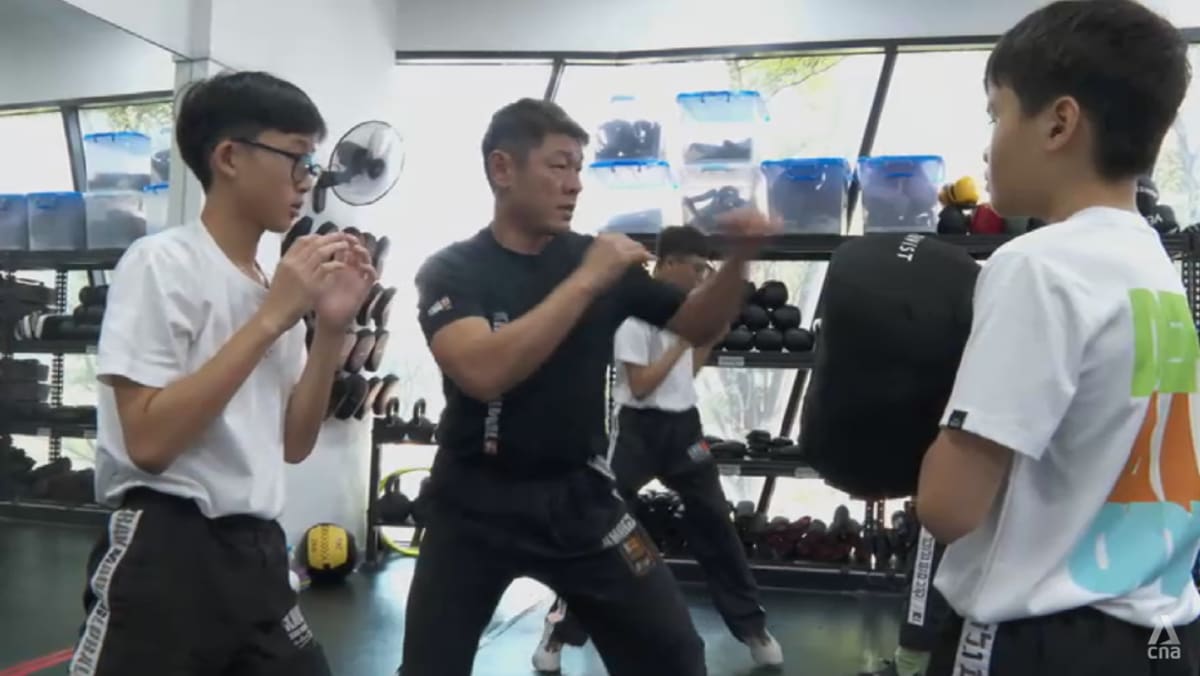
Beyond physical fitness, parents hope such lessons will help their children build confidence, discipline and resilience.
Kravist head instructor Edwin Peng conducts a Krav Maga class for children. (Image: CNA)
This audio is generated by an AI tool.
SINGAPORE: For the past six years, 12-year-old Brandon Yap has been learning Krav Maga, a martial art focused on self-defence in real-world situations.
His mother, Amanda Yap, enrolled him in the lessons hoping they would help him become fitter and more disciplined, while equipping him with practical skills to protect himself.
“We live in a very unpredictable world, you never know when something bad might happen to you,” she told CNA.
“From a young age, I want him to be equipped with the skills he needs so if ever one day he meets a bad (situation), at least he's able to protect himself.”
CNA Games Guess Word Crack the word, one row at a time Buzzword Create words using the given letters Mini Sudoku Tiny puzzle, mighty brain teaser Mini Crossword Small grid, big challenge Word Search Spot as many words as you can Show More Show Less She believes these skills will become increasingly important as her son grows older and becomes more independent. “I don't need any skills that are showy. I don't need him to win competitions. I just (want) really practical self-defence skills,” she said. “As he grows older, where he goes and who he hangs out with … is less and less beyond a parent's control. So definitely, I feel that self-defence skills will be important.” Ms Yap is among a growing number of parents in Singapore signing their children up for self-defence lessons, with several gyms reporting rising demand in recent years. MORE PARENTS SIGNING KIDS UP At Kravist, where Brandon trains, enrolment among children aged six to 12 has been growing steadily. The Tai Seng gym now runs 11 classes across its youth division, up from about six when training resumed after the COVID-19 pandemic. Sign-ups are particularly common among children preparing to enter a new school environment, such as six-year-olds moving from kindergarten to primary school, and 12-year-olds transitioning to secondary school. Its founder and head instructor Edwin Peng said many new children trainees tend to be soft-spoken or less outgoing, with parents hoping the classes will help them build confidence and self-esteem. “They're going to meet new friends, new teachers. I guess the parents' approach is to hopefully help them get ready for the big change in environment,” he said.
She believes these skills will become increasingly important as her son grows older and becomes more independent.
“I don't need any skills that are showy. I don't need him to win competitions. I just (want) really practical self-defence skills,” she said.
“As he grows older, where he goes and who he hangs out with … is less and less beyond a parent's control. So definitely, I feel that self-defence skills will be important.”
Ms Yap is among a growing number of parents in Singapore signing their children up for self-defence lessons, with several gyms reporting rising demand in recent years.
MORE PARENTS SIGNING KIDS UP
At Kravist, where Brandon trains, enrolment among children aged six to 12 has been growing steadily.
The Tai Seng gym now runs 11 classes across its youth division, up from about six when training resumed after the COVID-19 pandemic.
Sign-ups are particularly common among children preparing to enter a new school environment, such as six-year-olds moving from kindergarten to primary school, and 12-year-olds transitioning to secondary school.
Its founder and head instructor Edwin Peng said many new children trainees tend to be soft-spoken or less outgoing, with parents hoping the classes will help them build confidence and self-esteem.
“They're going to meet new friends, new teachers. I guess the parents' approach is to hopefully help them get ready for the big change in environment,” he said.
At Kapap Academy, enrolment in children's self-defence lessons across its Bugis and Central Business District locations has more than doubled to 20 trainees from a year ago.
The gym also has a waiting list of about 20 students and plans to expand its classes to meet demand.
Its CEO and coach Qin Yunquan said parents are increasingly looking for practical self-defence training rather than traditional martial arts.
“They don't want something that's just routine or repetitive. They want something … based on real-life situations,” she said.
“It's set within a scenario where somebody launches an attack, whether it's a grab (or) a punch, how do they defend themselves? The objective here is: Number one – defend. Number two – escape.”
Meanwhile, SixSigma, an all-female Muay Thai club that trains at the National Stadium, has seen children's enrolment rise by as much as 50 per cent over the past year.
Its founder and coach Natalie Soh said parents who previously signed their children up mainly for boot camps or holiday programmes are now increasingly opting for regular weekday sessions.
She added that the benefits of martial arts goes beyond physical fitness or the ability to protect oneself.
“Muay Thai teaches you character. We (teach) you how to pick yourself up when you fall,” she said, adding that the sport also helps children develop resilience and tenacity.
SixSigma trainees practice sparring during a muay thai session at the National Stadium in Kallang. (Image: CNA)
TEACHING CHILDREN WHEN NOT TO FIGHT
While some parents enrol their children in self-defence training to learn a practical skill or for fitness, some are motivated by concerns over bullying in schools.
Mr Peng said Kravist typically sees a surge in enquiries when incidents involving bullying or violence in schools make headlines or circulate on social media.
However, coaches emphasise that teaching children when not to use the techniques they learn is just as important as equipping them with the skills to protect themselves.
They say lessons should focus on avoiding confrontation, exercising self-control and escaping dangerous situations, rather than winning fights.
Mr Peng recalled an encounter with a parent who wanted to enrol his son because the boy frequently got into fights at school but often lost.
“If you are sending your child here to learn how to fight and to win the fight, then obviously that's the wrong approach,” he said.
“Learning how to deal with confrontation, both physically and non-physically, is very important. It’s our job to educate children that violence is not the answer to everything. If we can, as much as possible, don’t use violence.”
At Kravist, students are also taught how to handle bullying without resorting to violence, such as how to respond when someone calls them names.
Classes typically begin with about 10 minutes of open discussion, during which students are encouraged to share their views or give short presentations.
Mr Peng said this helps children become more comfortable speaking up and standing up for themselves.
“The goal is to let them speak louder and braver and build that confidence,” he said.
Kapap Academy coach Qin Yunquan teaches a girl how to escape from a rear bear hug. (Image: Kapap Academy)
At Kapap Academy, Ms Qin said instilling a sense of responsibility is central to her teaching approach.
“The last thing I want is for them to become bullies themselves,” she said.
“The core values that I try to propagate in my class are self-control, discipline and being responsible for one's actions. If you abuse these skills, clearly you're not being responsible.”
SixSigma's Ms Soh similarly cautioned that children must understand the potential consequences of using the techniques they learn.
“With great power comes great responsibility. Because they have learned this skill, and this art is potentially dangerous, they can be confident yet dangerous,” she said.
“There is a thin line between injuring someone and defending yourself. So, we need to educate them, especially at a young age.”
The gym plans to introduce online sessions for parents and children next year, focusing on how to de-escalate difficult situations and manage their emotions.
Get our pick of top stories and thought-provoking articles in your inbox
Stay updated with notifications for breaking news and our best stories
Join our channel for the top reads for the day on your preferred chat app
除了锻炼身体,家长们还希望这些课程能够帮助孩子们培养自信心、自律性和韧性。
以色列格斗术首席教练彭文伟正在为孩子们授课。(图片:中央社)
这段音频由人工智能工具生成。
新加坡:过去六年里,12岁的Brandon Yap一直在学习以色列格斗术(Krav Maga),这是一种专注于在现实生活中进行自卫的武术。
他的母亲阿曼达·叶让他参加这些课程,希望这些课程能帮助他变得更健康、更自律,同时让他掌握保护自己的实用技能。
“我们生活在一个变幻莫测的世界里,你永远不知道什么时候会发生不好的事情,”她告诉CNA。
“我希望他从小就掌握必要的技能,这样如果有一天他遇到不好的情况,至少能够保护自己。”
CNA游戏 猜词游戏 逐行破解单词 流行词游戏 用给定的字母组成单词 迷你数独 小谜题,脑力挑战 迷你填字游戏 小方格,大挑战 单词搜索 尽可能多地找出单词 显示更多 显示更少 她认为,随着儿子年龄增长,变得更加独立,这些技能将变得越来越重要。“我不需要任何炫耀的技能。我不需要他赢得比赛。我只想要真正实用的自卫技能,”她说。“随着他年龄的增长,他去哪里,和谁在一起……越来越不受父母的控制。所以,我绝对认为自卫技能会很重要。” 叶女士是新加坡越来越多为孩子报名参加自卫课程的家长之一,一些健身房报告称,近年来需求不断增长。 越来越多的家长为孩子报名 在布兰登训练的克拉维斯特健身房,6至12岁儿童的报名人数一直在稳步增长。泰盛体操馆青少年部目前开设了11个班,比新冠疫情后恢复训练时的约6个班有所增加。报名参加课程的主要是即将进入新学校环境的孩子,例如6岁从幼儿园升入小学,以及12岁升入中学。该馆创始人兼首席教练彭先生表示,许多新学员性格内向,不善言辞,家长们希望这些课程能帮助孩子建立自信和自尊。“他们会结识新朋友,新老师。我想家长们的初衷是希望帮助孩子为即将到来的环境变化做好准备。”他说道。
她认为,随着儿子年龄增长、变得更加独立,这些技能将变得越来越重要。
“我不需要任何花哨的技能。我不需要他赢得比赛。我只想要真正实用的自卫技能,”她说。
“随着孩子年龄增长,他去哪里、和谁交往……这些都越来越不受父母控制。所以,我觉得自卫技能肯定很重要。”
叶女士是新加坡越来越多的家长之一,他们为孩子报名参加防身术课程,近年来多家健身房也表示需求不断增长。
更多家长为孩子报名
在布兰登训练的克拉维斯特学校,6 至 12 岁儿童的入学人数一直在稳步增长。
大成健身房目前在其青少年组开设了 11 个课程,而 COVID-19 疫情后恢复训练时只有大约 6 个课程。
报名参加入学考试在即将进入新学校环境的儿童中尤为常见,例如六岁儿童从幼儿园升入小学,十二岁儿童升入中学。
其创始人兼首席教练彭文表示,许多新来的儿童学员往往说话轻声细语或不太外向,家长们希望这些课程能帮助他们建立自信和自尊。
“他们会结识新朋友,新老师。我想家长们的做法是希望帮助他们为环境的巨大变化做好准备,”他说。
Kapap Academy 在武吉士和中央商务区的儿童自卫课程报名人数比一年前增加了一倍多,达到 20 名学员。
该健身房目前还有大约 20 名学生在候补名单上,并计划扩大课程规模以满足需求。
其首席执行官兼教练秦云泉表示,家长们越来越倾向于选择实用的自卫训练,而不是传统的武术。
“他们不想要千篇一律或重复性的东西。他们想要一些……基于真实生活情境的东西,”她说。
“游戏设定在有人发起攻击的情境中,无论是抓人还是出拳,他们该如何自卫?目标是:第一,防守;第二,逃脱。”
与此同时,在国家体育场训练的全女子泰拳俱乐部 SixSigma,在过去一年中儿童学员的入学人数增长了 50%。
其创始人兼教练 Natalie Soh 表示,以前主要为孩子报名参加训练营或假期课程的家长,现在越来越多地选择让孩子参加常规的平日课程。
她补充说,武术的好处不仅限于身体健康或自卫能力。
“泰拳能培养你的品格。我们教你如何在跌倒后重新站起来,”她说道,并补充说这项运动还能帮助孩子们培养韧性和毅力。
在加冷国家体育场,六西格玛学员正在进行泰拳实战练习。(图片:CNA)
教导孩子何时不该打架
有些家长让孩子参加自卫训练是为了学习一项实用技能或锻炼身体,而有些家长则是出于对孩子在学校遭受欺凌的担忧。
彭先生表示,当涉及校园欺凌或暴力事件登上新闻头条或在社交媒体上传播时,克拉维斯特通常会收到大量咨询。
然而,教练们强调,教导孩子何时不应该使用他们所学的技巧,与让他们掌握保护自己的技能同样重要。
他们认为,教育的重点应该放在避免冲突、锻炼自控力和逃离危险境地,而不是赢得打斗。
彭先生回忆起曾遇到一位家长,这位家长想让自己的儿子入学,因为这个男孩经常在学校打架,但往往输掉。
“如果你把孩子送到这里是为了学习如何打架和赢得战斗,那么显然这是错误的做法,”他说。
“学习如何应对冲突,无论是肢体冲突还是非肢体冲突,都非常重要。我们的职责是教育孩子们,暴力并非解决一切问题的办法。如果可以,我们尽可能避免使用暴力。”
在克拉维斯特学校,学生们还会学习如何在不诉诸暴力的情况下应对欺凌,例如当有人辱骂他们时该如何回应。
课程通常以大约 10 分钟的开放式讨论开始,鼓励学生分享自己的观点或进行简短的演讲。
彭先生表示,这有助于孩子们更自在地表达自己的想法,并维护自己的权益。
“我们的目标是让他们更大声、更勇敢地表达自己的想法,从而建立自信,”他说。
卡帕普学院教练秦云泉正在教一个女孩如何挣脱背后熊抱。(图片:卡帕普学院)
秦女士表示,在卡帕普学院,培养学生的责任感是她教学方法的核心。
“我最不希望看到的就是他们自己也变成欺凌者,”她说。
“我在课堂上努力灌输的核心价值观是自律、纪律和对自己的行为负责。如果你滥用这些品质,显然你就没有做到负责任。”
SixSigma 的 Soh 女士也同样告诫孩子们,他们必须了解使用所学技巧的潜在后果。
“能力越大,责任越大。因为他们掌握了这项技能,而这种技艺又具有潜在的危险性,所以他们既可以自信,也可以很危险,”她说道。
“伤害他人和自卫之间只有一线之隔。所以,我们需要对他们进行教育,尤其是在他们年幼的时候。”
该健身房计划明年推出面向家长和孩子的在线课程,重点讲解如何缓解困难情况和管理情绪。
订阅我们的邮件,即可获取精选热点新闻和引人深思的文章。
订阅通知,第一时间获取突发新闻和精彩报道。
加入我们的频道,即可在您常用的聊天应用上获取当日热门文章。