Dutch military faces a tough mission: finding space to prepare for war荷兰军方面临着一项艰巨的任务:找到备战空间
It's hard to replicate large-scale ground combat in a densely populated country that takes 10 minutes to cross by super-cruising jet.
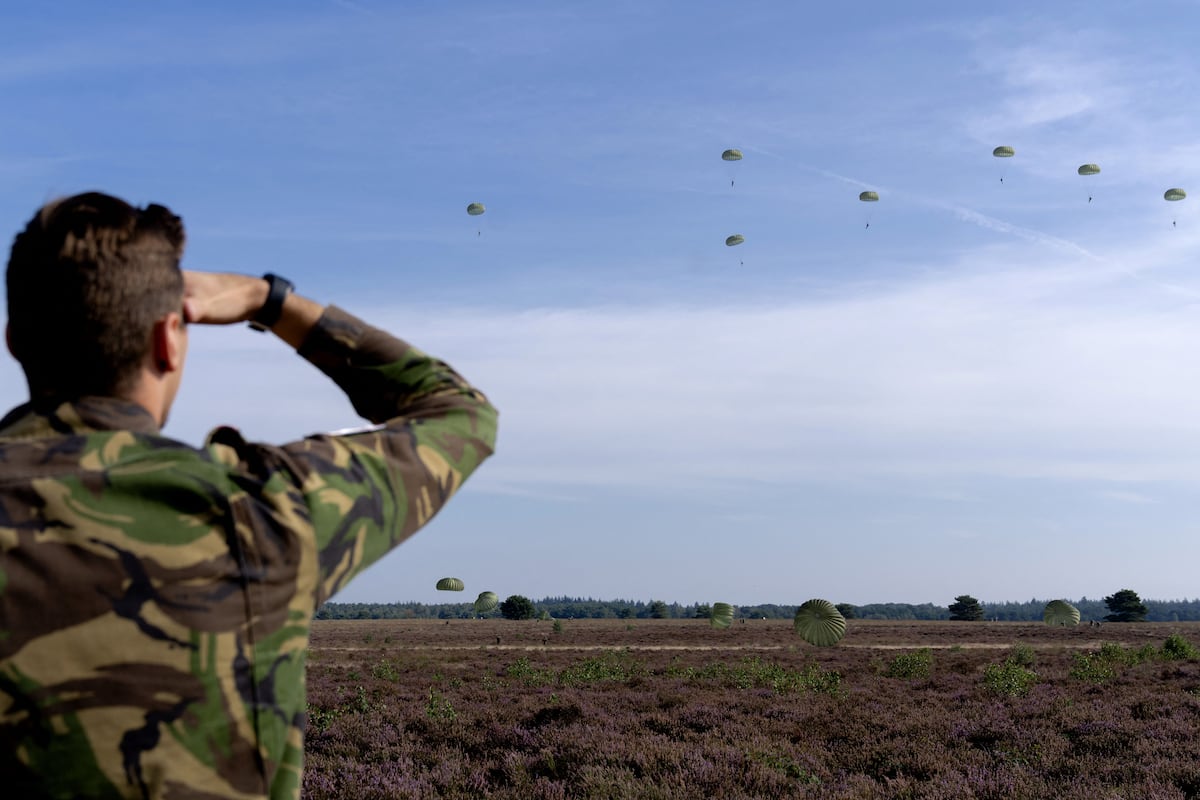
PARIS — With trench warfare back in Europe, the Royal Netherlands Army would like to dig ditches to train for defense of NATO’s eastern flank – but environmental regulations make taking a shovel to its exercise ranges all but impossible.
Other Dutch services face hurdles to improving military readiness. The Air Force is keen to fly its F-35 fighters more often, yet is bound by flight restrictions at air bases hemmed in between villages, farms and cities, in a country that takes 10 minutes to cross by super-cruising jet.
The country’s new civil-military conundrum is emblematic of similar developments elsewhere in Europe, where space is limited in densely populated areas, and modern regulations are tuned to reconcile economic and environmental goals, not matters of war and peace.
As the armed forces of the Netherlands expand again after three decades of budget cuts, they’re looking to step up everything from live fire exercises to low-level helicopter training and ammo stockpiles. The government is puzzling how to fit additional defense activity in a country more densely populated than any of its NATO allies, and where military terrain left empty after the Cold War was converted to civilian use by planners hungry for space.
“There is a need for more terrain and more exercise facilities, and that’s a problem, because a lot has completely disappeared, is no longer usable,” said Dick Zandee, senior research fellow at Dutch think tank Clingendael Institute and former head of planning at the European Defence Agency. “All kinds of things that were possible during the Cold War are no longer possible.”
Dutch State Secretary for Defence Gijs Tuinman is wrapping up a tour of provincial capitals this week in a last diplomatic push of his ministry’s “Room for Defense” plan. The government will narrow down possible locations next month for everything from corridors to fly cargo drones to a new mock village to train urban combat and an additional range for explosives training.
The government plan to free up physical and regulatory space for defense solicited more than 2,200 written questions from citizens, firms and local politicians. Increased military jet sorties were the biggest area of concern, ahead of low-flying rotorcraft, explosives training, ammo storage and drone flights.
While surveys show the Dutch population supports strengthening the armed forces and NATO, citizens may not be ready for associated nuisances such as low-flying helicopters, according to Zandee. “Citizens all recognize that it’s all necessary, but as soon as it comes near their homes, then suddenly they don’t want it. That’s the inconsistency in the reasoning, of course.”
Still, public tolerance for certain inconveniences will have to go up if the Netherlands wants to remain prosperous and secure, argues Tuinman, a decorated former officer in the Dutch Commando Corps who served five tours in Afghanistan. That may mean accepting the occasional fighter jet overhead, or a tank driving through a farm field, the state secretary said in political talk show Buitenhof last month.
“We’ve been used to the government ensuring that every year you have a little less nuisance,” Tuinman said. “What the Americans call the sound of freedom, that’s ultimately important. That we again learn to appreciate that what we have requires an effort.”
The armed forces held two dozen information meetings between June and October, bringing out brass up to three-star generals to answer questions from the public. Concerned attendees included a campground owner fretting that noisy F-35s overhead will hurt business and homeowners who found their property drawn inside a red circle on a map indicating plans for ammo storage.
The ministry is also eyeing several areas owned by conservation group Natuurmonumenten, including a dune-wetland reserve that is home to rare orchids and a stopover for migratory birds. The Marines would like to train amphibious landings there, something the nature group calls “unthinkable.”
“Nature is already under so much pressure, should this be added?” said Jeroen de Koe, director for nature at Natuurmonumenten, which is the Netherlands’ largest private property owner. “Not as far as we’re concerned.”
The late urban planner Dirk Frieling described the Netherlands as “not a densely populated country but a sparsely populated city.” The country was home to an average 518 people per square kilometer in 2022, more than twice as many as Germany or Italy and almost five times as many as France, European Union statistics show.
The Netherlands also houses Europe’s largest seaport and its fourth-busiest airport and is the continent’s largest agricultural exporter, leaving society and nature scrambling for space.
After the collapse of the Soviet Union in 1991, defense moved down the priority list in Western Europe, and spending was redirected to areas such as healthcare, education and infrastructure, Most armies geared around a conscription component were downsized and reorganized into smaller forces of professional soldiers, with some military real estate abandoned or repurposed.
In the Netherlands, ammo bunkers were turned into storage for ripening cheese, barracks were reassigned for uses such as medical centers, or demolished to build apartments. New rules around issues such as noise pollution and environmental protection threw up hurdles to military land use.
“Until the fall of the Wall we had barracks all over the place in the Netherlands, with their associated local training grounds,” Zandee said. “That’s all gone. Defense got rid of a lot of those barracks, and local training grounds were handed over to the municipalities.”
Russia’s invasion of Ukraine in February 2022 shook Western countries awake, with governments realizing that decades neglecting military power had left them unprepared for war. In response, the Netherlands plans to boost its defense budget to around €24 billion ($26 billion) a year, nearly double what it spent on defense two years ago.
The Netherlands is using a share of the extra billions for new capabilities that require space, from rocket artillery to a tank battalion and an Army drone unit, and is experimenting with a year of voluntary military service for young people in order to attract more personnel.
The Dutch are in talks with Germany to station their future tank battalion at the NATO training areas of Bergen-Hohne, as the practice and shooting ranges in the Netherlands lack the space to realistically train with a battalion of heavy armor.
The changed security situation has also squarely put the focus back on territorial defense and NATO’s mutual defense, rather than peacekeeping missions abroad, which requires more frequent and larger-scale training, according to Zandee. The Netherlands is just too small to practice some things, such combined-arms exercises, he said.
Boosting deterrence requires a more ambitious exercise program, a NATO official told Defense News. The alliance this year held Steadfast Defender, its biggest exercise in more than 30 years, which saw the Dutch 13th Light Brigade build a pontoon bridge over the IJssel river before driving through Germany to Poland to train as an entire brigade.
For the Dutch, an exercise on that scale “has obviously not happened since the Cold War,” Zandee said. “That just indicates how the situation has changed.”
A soldier stands at a storage facility for military vehicles in Oirschot, the Netherlands, in March 2024 as the Dutch Army prepared to participate in NATO's large-scale Steadfast Defender 24 exercise. (Photo by Remko de Waal/ANP/AFP via Getty Images)
NATO is planning further large exercises that will require more intensive use of training grounds, public infrastructure and sometimes private land, according to the alliance official. Many countries sold training ranges in the past two decades, and are now in the process of rebuilding or expanding them, the official said.
Lithuania, which has been hosting troops from NATO allies including from the Netherlands, in June approved creating two new training areas big enough for maneuvers with a company-sized unit. Even more space will be necessary in the future, and relocations may be necessary , presidential adviser Kęstutis Budrys told local radio broadcaster LRT in July, citing “a new reality.”
The Dutch military says it still needs additional room to train domestically, as doing even more abroad isn’t really an option, The Army already spends about 60% of its training hours outside Dutch borders, while the Air Force makes 40% of its flight hours in foreign skies, even more when counting pilot training.
“This is about a minimum requirement for Defence, and that has to be in the Netherlands,” said Martijn van der Wind, a spokesman for Tuinman. “We simply also need space in the Netherlands,”
The MoD is looking for capacity to add 2,300 fighter sorties in the Netherlands, including for large-scale NATO exercises, and a dirt strip to practice with tactical transport aircraft for at least 240 flights a year. The armed forces need around 2,500 hours to train with low-flying helicopters, compared with current permission for 1,378 hours, according to the ministry.
The “Room for Defense” plan envisages cargo-drone corridors and helicopter-landing zones in densely populated parts such as the province of South Holland. In the more sparsely populated north, the ministry is considering areas to practice amphibious landings and fly unmanned naval helicopters, new ammunition storage and an explosives-training range.
The provinces have been less than welcoming about the plans, citing their own difficulties finding space for new homes or renewable energy, and the potential for disturbance caused by low-flying helicopters , irreparable damage from digging trenches in natural areas, or the increased risk of forest fires from defense activities in combination with climate change.
Farmers’ organization LTO Noord has called on the defense department to invest in its existing real estate and better use already available space, as well as reinstate abandoned terrains. The farmers are particularly worried about the effect of new helicopter-landing zones on animal welfare.
Natuurmonumenten was caught off guard by the plans and the lack of discussion, said De Koe.
The military is also eyeing two forested areas owned by the conservation group for explosives training, on terrain the non-profit says is home to several protected bird species.
“How on Earth does Defence envision this, to start using vulnerable areas for all kinds of military use?” De Koe said. With nature in the Netherlands already suffering from nitrogen pollution, poor water management and excess recreational use, it can’t handle more external pressures, he said,
De Koe said finding room for more defense activity is admittedly complex, but the Netherlands has more suitable areas than some of those now pencilled in. The government is the largest property owner in the Netherlands, and the Dutch national property office manages around 26,000 hectares of air bases, exercise areas and shooting ranges for the defense ministry.
“If I would have a lot of land and I would want to do something new, I would first look at my own land to see if that is possible, and only then see if the neighbor’s garden might also be available.”
Complicating the issue is that about two-thirds of defense ministry land consists of protected nature reserves, and military use isn’t necessarily bad news for plants and animals, De Koe at Natuurmonumenten acknowledged.
Birds and deer get used to loud explosions , which are less disruptive than human visitors, according to national property office ecologist Theo Linders, who says deer on military ranges are less shy than those in recreational nature areas. Craters caused by mortar shells mix up the soil and create a steppe landscape that benefits certain vegetation, Linders says.
Tuinman has been happy to adopt the conservation argument, saying nature in some areas of the Netherlands has been protected precisely because of its military status.
The government will decide on the most feasible locations next month based on support from society and lawmakers, defense needs and the environmental impact, Van der Wind said.
The Dutch understand the need to find room for defense, “that’s never the issue,” and their concerns are rather about how the plans will impact their living environment, Tuinman said in an Oct. 3 interview with broadcaster NPO1. Nevertheless, defending freedom and security means society must step up and the armed forces need to become stronger, he said.
“We need more equipment, we need to train more, we need to shoot more, and at the end of the day, we need to do that together,” Tuinman said.
Rudy Ruitenberg is a Europe correspondent for Defense News. He started his career at Bloomberg News and has experience reporting on technology, commodity markets and politics.
巴黎——随着堑壕战在欧洲卷土重来,荷兰皇家陆军希望挖掘壕沟来训练,以保卫北约东翼——但环境法规使得在训练场上动用铁锹几乎成为不可能。
荷兰其他军种在提升军事战备方面也面临诸多障碍。空军渴望更频繁地使用F-35战斗机,但却受到飞行限制,因为空军基地位于村庄、农场和城市之间,而在这个国家,乘坐超音速巡航喷气式飞机只需10分钟即可横跨国界。
该国新出现的军民关系难题,是欧洲其他地区类似发展的典型代表。在人口稠密的地区,空间有限,现代法规旨在协调经济和环境目标,而不是战争与和平问题。
在经历了三十年的预算削减之后,荷兰武装部队再次扩充规模,计划全面加强从实弹演习到低空直升机训练以及弹药储备等各项活动。荷兰政府正苦苦思索如何在人口密度高于任何北约盟国的国家中,合理安排额外的国防活动。冷战结束后,许多军事用地被急于利用空间的规划者们改造成了民用用地。
“我们需要更多的场地和训练设施,但这却是个问题,因为很多地方已经完全消失了,无法再使用了,”荷兰智库克林根达尔研究所高级研究员、欧洲防务局前规划主管迪克·赞迪说。“冷战时期各种各样可能的事情,现在都不可能了。”
荷兰国防国务秘书吉斯·图因曼本周结束对各省会城市的访问,这是他所在部门“国防空间”计划的最后外交推进。下个月,政府将最终确定可能的选址,这些选址将涵盖从无人机货运训练走廊到用于城市作战训练的新型模拟村庄,以及用于爆炸物训练的额外靶场等各种项目。
政府计划腾出更多空间用于国防,并为此征集了来自公民、企业和地方政界人士的2200多份书面问题。其中,增加军用喷气式飞机的出动架次是最受关注的问题,其次是低空飞行的旋翼机、爆炸物训练、弹药储存和无人机飞行。
调查显示,荷兰民众支持加强武装力量和北约,但据赞迪称,民众可能还没有做好应对相关扰民措施(例如低空飞行的直升机)的准备。“民众都承认这一切是必要的,但一旦这些设施靠近他们的家,他们就突然不想要了。这当然就是逻辑上的矛盾之处。”
不过,曾五次赴阿富汗服役的荷兰突击队功勋军官图伊曼认为,如果荷兰想要保持繁荣和安全,公众对某些不便的容忍度就必须提高。这位国务秘书上个月在政治脱口秀节目《Buitenhof》中表示,这可能意味着要接受偶尔有战斗机从头顶飞过,或者坦克驶过农田的情况。
“我们已经习惯了政府每年都确保我们少受到一些骚扰,”图伊曼说。“美国人所说的自由之声,最终才是最重要的。我们要再次学会珍惜我们所拥有的一切,而这需要付出努力。”
从六月到十月,军方举行了二十多场信息发布会,包括三星将军在内的高级将领都出席了会议,回答公众的提问。一些与会者忧心忡忡,其中包括一位露营地老板,他担心头顶上空呼啸而过的F-35战斗机噪音会影响生意;还有一些房主,他们的房产被地图上一个红色圆圈圈了起来,这个圆圈标明了军方计划用于弹药储存。
该部还关注着自然保护组织Natuurmonumenten拥有的几处区域,其中包括一片沙丘湿地保护区,那里生长着珍稀兰花,也是候鸟的迁徙中转站。海军陆战队希望在那里进行两栖登陆训练,但自然保护组织称此举“不可想象”。
“自然环境已经承受了如此巨大的压力,难道还要再增加这种压力吗?”荷兰最大的私人土地所有者——荷兰自然保护协会(Natuurmonumenten)的自然事务主管耶伦·德·科伊(Jeroen de Koe)说道,“就我们而言,不应该。”
已故城市规划师德克·弗里林曾将荷兰描述为“不是人口稠密的国家,而是人口稀少的城市”。欧盟统计数据显示,2022年荷兰平均每平方公里人口为518人,是德国或意大利的两倍多,几乎是法国的五倍。
荷兰还拥有欧洲最大的海港和第四繁忙的机场,并且是欧洲最大的农产品出口国,这使得社会和自然环境都在争夺空间。
1991年苏联解体后,西欧的国防优先级降低了,支出被重新分配到医疗保健、教育和基础设施等领域。大多数以征兵制为基础的军队都被缩减规模,并重组为规模较小的职业军人部队,一些军事用地被废弃或改作他用。
在荷兰,弹药库被改造成奶酪熟成库,营房被重新规划用途,例如用作医疗中心,或者被拆除建造公寓。围绕噪音污染和环境保护等问题的新规也给军事用地的使用设置了障碍。
“柏林墙倒塌之前,荷兰各地到处都是兵营,以及相关的当地训练场,”赞迪说。“这些都没了。国防部拆除了很多兵营,当地的训练场也移交给了市政当局。”
2022年2月俄罗斯入侵乌克兰,令西方国家如梦初醒,各国政府意识到,数十年来忽视军事力量建设,导致自身对战争毫无准备。作为回应,荷兰计划将国防预算增加到每年约240亿欧元(260亿美元),几乎是两年前的两倍。
荷兰正利用额外数十亿资金的一部分,发展需要太空的新能力,从火箭炮到坦克营和陆军无人机部队,并正在试行一年的青年自愿兵役制,以吸引更多人员。
荷兰正在与德国商讨将其未来的坦克营部署在北约卑尔根-霍恩训练区,因为荷兰的训练和射击场缺乏足够的空间来对一个重型装甲营进行真实的训练。
赞迪表示,安全形势的变化也使得重点重新回到领土防御和北约共同防御上,而不是海外维和行动,而后者需要更频繁、更大规模的训练。他说,荷兰国土面积太小,无法进行某些方面的训练,例如联合兵种演习。
一位北约官员告诉《防务新闻》,加强威慑需要更雄心勃勃的演习计划。北约今年举行了“坚定捍卫者”演习,这是30多年来规模最大的一次演习。演习中,荷兰第13轻型旅在艾瑟尔河上架设了一座浮桥,然后驱车穿越德国前往波兰,进行全旅联合训练。
赞迪说,对荷兰人来说,如此规模的演习“显然自冷战以来就没发生过”。“这正表明局势发生了怎样的变化。”
2024年3月,在荷兰奥尔斯霍特,一名士兵站在军用车辆存放设施前,当时荷兰陆军正准备参加北约大规模的“坚定捍卫者24”演习。(图片来源:Remko de Waal/ANP/AFP via Getty Images)
据北约官员透露,北约正计划举行更多大型演习,这将需要更密集地使用训练场地、公共基础设施,有时甚至需要用到私人土地。该官员还表示,过去二十年间,许多国家出售了训练靶场,目前正在进行重建或扩建工作。
立陶宛一直驻扎着包括荷兰在内的北约盟国的部队。今年6月,立陶宛批准新建两个足以容纳一个连级规模部队进行演习的训练场。总统顾问凯斯图蒂斯·布德里斯7月在接受当地广播电台LRT采访时表示,未来需要更大的训练空间,甚至可能需要进行部队搬迁,他援引了“新的现实”这一说法。
荷兰军方表示,他们仍然需要更多空间在国内进行训练,因为在国外进行更多训练并非一个可行的选择。陆军目前约有 60% 的训练时间是在荷兰境外进行的,而空军 40% 的飞行时间是在国外进行的,如果算上飞行员训练,这一比例还会更高。
“这是国防的最低要求,而且必须在荷兰境内,”图因曼公司发言人马丁·范德温德表示。“我们荷兰境内也确实需要空间。”
英国国防部正在寻求在荷兰增加2300架次战斗机出动架次的能力,其中包括用于大规模北约演习的出动架次;此外,还希望获得一条简易跑道,用于每年至少240架次的战术运输机训练。国防部表示,武装部队需要约2500小时的低空直升机训练时间,而目前获准的训练时间仅为1378小时。
“国防空间”计划设想在人口稠密的地区,例如南荷兰省,建立货运无人机走廊和直升机起降区。在人口较为稀少的北部地区,国防部正在考虑设立两栖登陆演习区、无人海军直升机飞行训练场、新的弹药库和爆炸物训练场。
各省对这些计划并不十分欢迎,他们指出自己在寻找新住房或可再生能源空间方面存在困难,而且低空飞行的直升机可能会造成干扰,在自然区域挖掘沟渠可能会造成不可挽回的破坏,或者国防活动与气候变化相结合会增加森林火灾的风险。
农民组织LTO Noord呼吁国防部投资现有土地,更好地利用现有空间,并恢复废弃的土地。农民们尤其担心新建直升机停机坪会对动物福利造成影响。
德科表示,Natuurmonumenten 对这些计划和缺乏讨论感到措手不及。
军方还盯上了该环保组织拥有的两片森林地区,打算在那里进行爆炸物训练。该非营利组织称,这片森林是几种受保护鸟类的栖息地。
德·科伊说:“国防部究竟是如何设想将脆弱地区用于各种军事用途的?”他表示,荷兰的自然环境已经饱受氮污染、水资源管理不善和过度休闲活动之苦,根本无法承受更多的外部压力。
德科表示,为更多国防活动寻找空间固然复杂,但荷兰拥有比目前计划中的一些地区更合适的区域。荷兰政府是该国最大的土地所有者,荷兰国家财产管理局为国防部管理着约26000公顷的空军基地、演习区和射击场。
“如果我拥有一大片土地,并且想做一些新的事情,我会首先看看自己的土地是否可行,然后再看看邻居的花园是否也可以使用。”
使问题更加复杂的是,国防部约三分之二的土地是受保护的自然保护区,而军事用途对动植物来说未必是坏事,自然保护协会的德·科承认道。
据国家财产管理局生态学家西奥·林德斯称,鸟类和鹿已经习惯了巨大的爆炸声,爆炸声对它们的干扰远小于人类游客。林德斯表示,军事靶场的鹿比休闲自然区的鹿更不怕人。迫击炮弹造成的弹坑会搅动土壤,形成有利于某些植被生长的草原景观。
图因曼欣然接受了保护自然的论点,称荷兰某些地区的自然环境之所以受到保护,正是因为其军事地位。
范德温德表示,政府将于下个月根据社会和立法者的支持、国防需求和环境影响,决定最可行的选址。
图伊曼在10月3日接受NPO1电视台采访时表示,荷兰人理解需要为国防留出空间,“这从来都不是问题”,他们更关心的是这些计划会如何影响他们的生活环境。但他同时指出,捍卫自由和安全意味着社会必须积极行动起来,武装部队也需要变得更加强大。
“我们需要更多装备,我们需要更多训练,我们需要更多射击练习,归根结底,我们需要一起完成这些事情,”图因曼说道。
鲁迪·鲁伊滕贝格是《防务新闻》的欧洲记者。他的职业生涯始于彭博新闻社,拥有报道科技、大宗商品市场和政治方面的经验。