Is The U.S. Navy Missing The Boat By Not Including The Type 26 In Its Frigate Competition?美国海军在护卫舰竞标中没有将26型护卫舰纳入考虑范围,是否错失良机?
The Navy wants to focus on designs that are already in service, but the under construction Type 26 design represents a unique opportunity.
新闻视频
By Joseph Trevithick
Updated Dec 1, 2019 6:50 AM EST
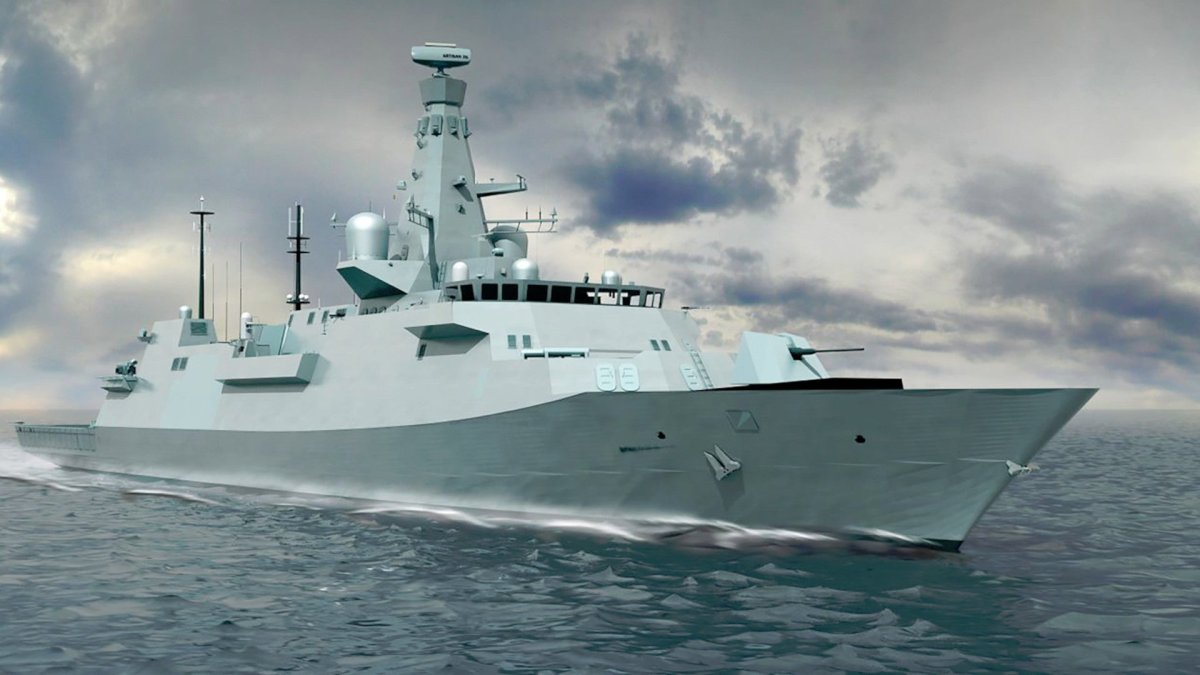
As the U.S. Navy gets closer to issuing the final request for proposals for its future frigate competition, or FFG(X) , one particularly notable design, BAE System’s Type 26 , has largely been absent from the discussion. It seems particularly curious given that the British-designed ship is well on its way to becoming one of the most popular warships in its class among some of America’s closest allies, with 32 examples in various configurations on order for the U.K. Royal Navy , the Royal Australian Navy , and the Royal Canadian Navy .
BAE did propose a variant of the Type 26 to the Navy in 2017 , but the United Kingdom-headquartered defense contractor did not receive one of the five initial developmental contracts in 2018. The service says it still expects other firms to make offers when it announces the formal request for FFG(X) proposals, which is supposed to happen by the end of September 2019. But with an eye toward reducing risk and keeping costs low, the program, at present, is focused on designs based on ships that are already in service. Construction of the very first Type 26 for the Royal Navy only began in 2017 .
The Type 26’s design itself, also known as the Global Combat Ship (GCS), dates back to the mid-2000s. BAE Systems originally developed the ship, which The War Zone
previously examined in depth , in response to a U.K. Royal Navy requirement, but has always had an eye toward the export market.
“BAE Systems has a proven track record in licensing warship designs and combat systems to international customers and partners, enabling local build which enhances skills and improves in-service support,” the company’s website says . “BAE Systems has committed to working with prospective international partners to learn more about their requirements and ensure these can be met by the Global Combat Ship design.”
If it weren’t for the “already in service” requirement, just based on the Navy’s other publicly stated demands and from looking at the other FFG(X) contenders , the Type 26 would certainly be a competitive design. BAE says the ship has a maximum speed of 26 knots, or around 30 miles per hour, and a range of over 7,000 nautical miles, which would meet certain FFG(X) threshold performance requirements. It is not clear if this reaches the Navy’s desired top speed, though, although it surely could be modified to do so.
An infographic giving a basic overview of the Type 26 for the Royal Navy and its performance and capabilities., BAE Systems
A crew of just over 150 can operate the frigate, fulfilling another Navy stipulation. The basic design has a big flight deck and associated hangar that could easily accommodate the MH-60R Sea Hawk helicopters and MQ-8C Fire Scout the service expects will fly from its FFG(X)s.
A rendering of a Royal Navy Merlin helicopter landing onboard a Type 26 frigate., Crown Copyright
With a displacement of around 7,000 tons, the Type 26 is also larger overall than the other known FFG(X) competitors by varying degrees. The existing proposals include a design from Fincantieri Marine Group based on its Fregata Europea Multi-Missione (FREMM), or European Multi-Mission Frigate, and an offering from General Dynamics Bath Iron Works derived from Spanish shipbuilder Navantia’s F100 Álvaro de Bazán -class .
Austal USA has pitched a new version of its Independence -class Littoral Combat Ship (LCS), while the proposal from Hungtinon Ingalls Industries remains unknown. Lockheed Martin, which had been working on a variant of its Freedom -class LCS, just announced it had decided not to make a bid for the final contract later this year.
The ship’s starting size could make it easier to accommodate the Navy’s existing weapons and mission systems requirements. For instance, the Royal Navy’s Type 26 design already has 48 vertical launch system cells for the Sea Ceptor surface-to-air missile, as well as another 24 Mk 41 vertical launch system cells, each of which can accommodate a wide array of weapons, including quad-packed RIM-162 Evolved Sea Sparrow Missiles (ESSM) or a single Tomahawk Land Attack Missile (TLAM) cruise missile, among others. FFG(X) calls for a total of 32 Mk 41 cells, which BAE could certainly find space for by deleting the Sea Ceptor system.
BAE would still need to accommodate other systems the Navy has outlined in its FFG(X) requirements, including Lockheed Martin’s COMBATSS-21 battle management system, which is a derivative of the Aegis combat system , and Raytheon’s Enterprise Air Surveillance Radar (EASR). The service also has significant demands for trade space to support the integration of additional capabilities in the future, including manned-unmanned teaming capabilities and directed energy weapons , among other things.
The core Type 26 design already features a reconfigurable “mission bay” that could help with the rapid integration of new systems in the future and make the ship more flexible overall. This, along with the larger starting design, could make a version of the ship particularly attractive. You can read more about the service’s exact requirements for the FFG(X) and its future plans to expand its capabilities here and here .
A diagram showing various existing FFG(X) mission system requirements, as well as systems the Navy may want to integrate onto the ships in the future., USN
The bigger design may also simply be more expensive. The Navy is targeting an average FFG(X) unit cost of around $800 million .
The U.K. Ministry of Defense’s awarded BAE a 3.7 billion pound contract for the first three of its Type 26s, which would average out to more than $1.5 billion per ship, though the deal almost certainly includes other ancillary items and costs that don’t factor directly into the price tag of the individual ships. Still, past estimates have pegged the unit cost for the Royal Navy’s new frigates at between 750 and 800 million pounds . At the time of writing, the current exchange rate is $1.26 to the pound.
At the same time, the price the Navy would pay would likely be lower given that the United Kingdom and others have effectively financed the base Type 26’s development already. The service also plans to buy 20 frigates in total, more than twice the number of Type 26s the Royal Navy eventually expects to receive, which could help push the unit cost down, as well.
An artist’s conception of one of the future Royal Australian Navy Hunter -class frigates., Australian DOD
With all this in mind, and with BAE’s hullform design already mature enough to enter production, one has to wonder whether the Navy is unnecessarily limiting its options by preventing ship designs that are not in service yet from at least competing in the FFG(X) program. In its most recent report to Congress on the frigate project, which came out earlier in May 2019 , the Congressional Research Service raised just this question, writing:
As mentioned earlier, using the parent-design approach can reduce design time, design cost, and technical, schedule, and cost risk in building the ship. A clean-sheet design approach, on the other hand, might result in a design that more closely matches the Navy’s desired capabilities for the FFG(X), which might make the design more cost-effective for the Navy over the long run. It might also provide more work for the U.S. ship design and engineering industrial base. Another possible alternative would be to consider frigate designs that have been developed, but for which there are not yet any completed ships. This approach might make possible consideration of designs, such as (to cite just one possible example) the UK’s new Type 26 frigate design, production of which was in its early stages in 2018. Compared to a clean-sheet design approach, using a developed-but-not-yet-built design would offer a reduction in design time and cost, but might not offer as much reduction in technical, schedule, and cost risk in building the ship as would be offered by use of an already-built design.
As mentioned earlier, using the parent-design approach can reduce design time, design cost, and technical, schedule, and cost risk in building the ship. A clean-sheet design approach, on the other hand, might result in a design that more closely matches the Navy’s desired capabilities for the FFG(X), which might make the design more cost-effective for the Navy over the long run. It might also provide more work for the U.S. ship design and engineering industrial base.
Another possible alternative would be to consider frigate designs that have been developed, but for which there are not yet any completed ships. This approach might make possible consideration of designs, such as (to cite just one possible example) the UK’s new Type 26 frigate design, production of which was in its early stages in 2018. Compared to a clean-sheet design approach, using a developed-but-not-yet-built design would offer a reduction in design time and cost, but might not offer as much reduction in technical, schedule, and cost risk in building the ship as would be offered by use of an already-built design.
There is a possibility that BAE may already be looking to partner with an American shipyard and to make exactly this case. It is worth remembering that Huntington Ingalls Industries has categorically refused to give any details about its FFG(X) proposal or any information about the team it has working on the ship’s design. This is already curious given that the shipbuilder had been publicly offering more combat-focused frigate variants of its Legend -class National Security Cutter, which it developed for the U.S. Coast Guard, for years now.
There has also been speculation that Huntington Ingalls might join with one of the companies competing for the U.K. Royal Navy’s Type 31e General Purpose Frigate tender and pitch a variant of one of those designs to the Navy for FFG(X). Another option might be a design that leverages the Danish Navy’s StanFlex modular mission systems technology.
BAE could also look to partner with Lockheed Martin, as the two companies are already working together to supply a Type 26 variant to the Royal Canadian Navy. The American firm has also now dropped out of the FFG(X) competition as a prime contractor, saying it made its decision in large part on the fact that it will be supplying various systems, such as the COMBATSS-21, to whoever wins the final FFG(X) competition. The two would still need to identify a U.S. shipyard to build the American variant of the Type 26.
An artist’s conception of the Royal Canadian Navy’s future Type 26 variant., BAE
All told, it is hard to deny that the Type 26 offers a more modern design than any of the existing FFG(X) competitors. The fact that three of America’s closest allies are betting big on it is also very attractive, to say the least. Its size and unique feature set lend themselves better to longevity and the ability to offer more flexible capabilities down the road, too.
Although the Navy wants something as close to off the shelf as possible, it seems irresponsible to not at least consider what they are giving up by leaving the Type 26 out of the competition.
Contact the author: jtrevithickpr@gmail.com
Comments couldn’t be loaded. Please refresh the page.
作者:约瑟夫·特雷维西克
更新于美国东部时间2019年12月1日上午6:50
随着美国海军即将发布未来护卫舰(FFG(X))竞标的最终提案征集书,英国航空航天系统公司(BAE Systems)设计的26型护卫舰却鲜少出现在讨论中。考虑到这款英国设计的舰艇正迅速成为美国一些最亲密盟友中最受欢迎的同级舰艇之一,英国皇家海军、澳大利亚皇家海军和加拿大皇家海军已订购了32艘不同配置的26型护卫舰,这种情况显得尤为令人费解。
英国航空航天系统公司(BAE Systems)曾在2017年向英国海军提交过26型护卫舰的改进方案,但这家总部位于英国的国防承包商在2018年并未获得最初的五份研发合同中的任何一份。英国海军表示,在正式发布FFG(X)护卫舰项目招标公告时,预计会有其他公司提交方案,该公告预计将于2019年9月底发布。但为了降低风险和控制成本,该项目目前专注于基于现有舰艇的设计。英国皇家海军的首艘26型护卫舰的建造工作直到2017年才开始。
26型护卫舰的设计本身,也被称为全球作战舰(GCS),可以追溯到2000年代中期。该舰最初由BAE系统公司开发,《战区》杂志对此进行了报道。
此前曾进行过深入研究,以响应英国皇家海军的要求,但一直关注着出口市场。
“BAE系统公司在向国际客户和合作伙伴授权军舰设计和作战系统方面拥有良好的业绩记录,这促成了本地化建造,从而提升了技能并改善了在役支持,”该公司网站称。“BAE系统公司致力于与潜在的国际合作伙伴合作,深入了解他们的需求,并确保全球作战舰艇设计能够满足这些需求。”
如果不是因为“已服役”这一要求,仅根据海军公开的其他需求以及对其他FFG(X)竞标方案的考察,26型护卫舰无疑会是一个极具竞争力的设计。BAE系统公司表示,该舰最大航速为26节(约30英里/小时),航程超过7000海里,这符合FFG(X)的部分性能要求。不过,目前尚不清楚这是否能达到海军期望的最高航速,当然,通过改装肯定可以实现。
一张信息图,概述了英国皇家海军26型护卫舰的基本情况、性能和能力。(BAE系统公司)
该护卫舰仅需150余名船员即可操作,满足了海军的另一项要求。其基本设计拥有大型飞行甲板和配套机库,可轻松容纳海军预计将从FFG(X)护卫舰上起飞的MH-60R“海鹰”直升机和MQ-8C“火力侦察兵”无人机。
皇家海军梅林直升机降落在26型护卫舰上的渲染图。(版权归英国皇家所有)
26型护卫舰排水量约为7000吨,其整体尺寸也比其他已知的FFG(X)级竞争舰艇更大,但差距不一。现有的方案包括芬坎蒂尼海事集团基于其欧洲多用途护卫舰(FREMM)的设计方案,以及通用动力巴斯钢铁厂基于西班牙纳凡蒂亚造船厂F100“阿尔瓦罗·德·巴赞”级设计的方案。
奥斯塔美国公司(Austal USA)已提交了其“独立”级濒海战斗舰(LCS)的新版本方案,而亨廷顿·英格尔斯工业公司(Hungtinon Ingalls Industries)的方案仍未可知。洛克希德·马丁公司(Lockheed Martin)此前一直在研发其“自由”级濒海战斗舰的改进型,但该公司刚刚宣布决定不参与今年晚些时候的最终合同竞标。
该舰的初始尺寸使其更容易满足海军现有的武器和任务系统需求。例如,英国皇家海军的26型护卫舰设计已经配备了48个用于“海捕手”(Sea Ceptor)地空导弹的垂直发射单元,以及另外24个Mk 41型垂直发射单元,每个单元都可以容纳多种武器,包括四联装的RIM-162改进型海麻雀导弹(ESSM)或单枚战斧陆攻导弹(TLAM)等。FFG(X)护卫舰总共需要32个Mk 41型发射单元,BAE系统公司完全可以通过取消“海捕手”系统来腾出空间。
BAE系统公司仍需满足海军在FFG(X)护卫舰需求中列出的其他系统,包括洛克希德·马丁公司的COMBATSS-21作战管理系统(该系统是宙斯盾作战系统的衍生产品)和雷神公司的企业级空中监视雷达(EASR)。此外,海军还对预留空间有着巨大的需求,以便未来集成更多功能,例如有人/无人协同作战能力和定向能武器等。
26型护卫舰的核心设计已经包含一个可重构的“任务舱”,这有助于未来快速集成新系统,并提升舰艇的整体灵活性。这一点,再加上其更大的初始设计,使得该舰的某个版本极具吸引力。您可以点击此处和此处了解更多关于海军对FFG(X)护卫舰的具体要求及其未来扩展计划的信息。
一张图表展示了现有的各种FFG(X)任务系统需求,以及海军未来可能希望集成到舰艇上的系统。(美国海军)
更大的设计也可能意味着更高的成本。海军的目标是将FFG(X)的平均单价控制在8亿美元左右。
英国国防部已授予BAE系统公司一份价值37亿英镑的合同,用于建造首批三艘26型护卫舰,平均每艘造价超过15亿美元。不过,该合同几乎肯定包含其他辅助项目和费用,这些费用并不直接计入单艘舰艇的造价。尽管如此,此前的估计显示,英国皇家海军新型护卫舰的单价在7.5亿至8亿英镑之间。截至发稿时,英镑兑美元汇率为1.26。
与此同时,鉴于英国和其他国家已经为26型护卫舰的基础研发提供了资金支持,海军最终支付的价格可能会更低。此外,海军还计划总共采购20艘护卫舰,是皇家海军最终预期接收的26型护卫舰数量的两倍多,这也有助于降低单价。
这是艺术家绘制的未来澳大利亚皇家海军“猎人”级护卫舰的示意图。(澳大利亚国防部)
考虑到以上所有因素,以及BAE系统的船体设计已经足够成熟可以投入生产,人们不禁要问,海军是否因为阻止尚未服役的舰艇设计参与FFG(X)项目的竞争而限制了自身的选择。国会研究服务处在其2019年5月初提交给国会的最新护卫舰项目报告中也提出了这个问题,报告写道:
如前所述,采用母舰设计方法可以缩短设计时间、降低设计成本,并减少舰艇建造过程中的技术、进度和成本风险。另一方面,全新设计方法可能会产生更符合海军对FFG(X)舰艇预期能力的舰艇设计,从长远来看,这可能使该设计对海军更具成本效益。此外,它还可能为美国舰艇设计和工程工业基础带来更多工作机会。另一种可能的替代方案是考虑已开发但尚未建造的护卫舰设计。这种方法可能使一些设计方案成为可能,例如(仅举一例)英国新型26型护卫舰设计,该舰在2018年处于早期生产阶段。与全新设计方法相比,使用已开发但尚未建造的设计方案可以缩短设计时间和降低成本,但在降低舰艇建造过程中的技术、进度和成本风险方面,可能不如使用已建造的设计方案那样有效。
如前所述,采用母舰设计方法可以缩短设计时间、降低设计成本,并减少舰艇建造过程中的技术、进度和成本风险。而全新设计方法则可能使设计方案更贴近海军对FFG(X)舰艇的预期能力,从长远来看,这可能使海军的成本效益更高。此外,它还可能为美国舰艇设计和工程工业基础创造更多就业机会。
另一种可能的替代方案是考虑已开发但尚未建成舰艇的护卫舰设计方案。这种方法或许可以考虑一些设计方案,例如(仅举一例)英国新型26型护卫舰设计,该舰的生产在2018年尚处于早期阶段。与全新设计方案相比,采用已开发但尚未建造的设计方案可以缩短设计时间和降低成本,但在建造过程中,其在技术、进度和成本风险方面的降低可能不如采用已建成的设计方案显著。
BAE系统公司或许已经在寻求与美国造船厂合作,并以此为契机推进该项目。值得注意的是,亨廷顿·英格尔斯工业公司一直断然拒绝透露其FFG(X)护卫舰方案的任何细节,也拒绝透露负责该舰设计团队的任何信息。考虑到这家造船厂多年来一直在公开推销其为美国海岸警卫队开发的“传奇”级国家安全舰的更多作战型护卫舰改进方案,这种做法着实令人费解。
也有人猜测,亨廷顿·英格尔斯公司可能会与参与英国皇家海军31e型通用护卫舰招标的某家公司合作,并向海军推介其中一家公司的改进型设计方案,用于FFG(X)护卫舰项目。另一种方案可能是采用丹麦海军的StanFlex模块化任务系统技术。
BAE系统公司也可能考虑与洛克希德·马丁公司合作,因为这两家公司目前已在为加拿大皇家海军提供26型护卫舰的改进型。这家美国公司目前已退出FFG(X)护卫舰主承包商的竞标,并表示其退出的主要原因是,无论最终中标方是谁,BAE系统公司都将向其提供包括COMBATSS-21在内的各种系统。两家公司仍需确定一家美国造船厂来建造美版26型护卫舰。
这是艺术家对加拿大皇家海军未来26型潜艇改型的概念图,由BAE系统公司提供。
总而言之,不可否认,26型护卫舰的设计比现有的任何FFG(X)竞争对手都更加现代化。美国三大盟友都对其寄予厚望,这一点也极具吸引力。其尺寸和独特的功能组合使其更有利于长期服役,并在未来提供更灵活的作战能力。
虽然海军希望尽可能采用现成的产品,但如果不考虑将 26 型护卫舰排除在竞争之外,他们将会失去什么,这似乎是不负责任的。
联系作者:jtrevithickpr@gmail.com
评论加载失败,请刷新页面。