Liew Chin Tong urges accountants to embrace multidisciplinary skills as AI reshapes finance profession刘振东敦促会计师掌握多学科技能,因为人工智能正在重塑金融行业。
KUALA LUMPUR, Nov 5 — Deputy Finance Minister Liew Chin Tong has urged accountants and finance professionals to be multidisciplinary as the positive and negative impacts of...
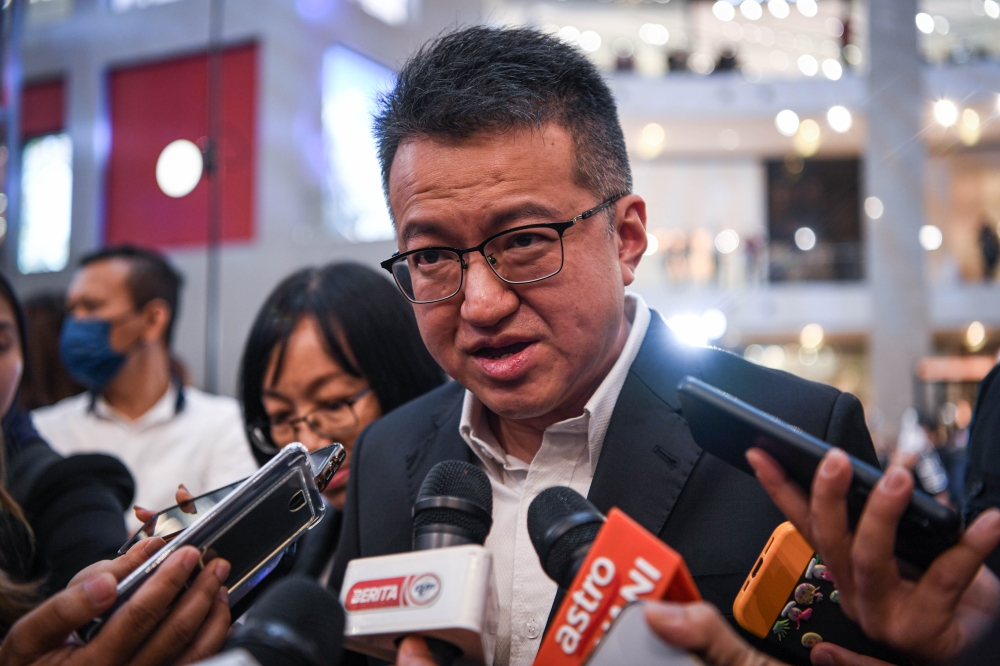
Deputy Finance Minister Liew Chin Tong highlighted the need for accountants and finance professionals to be multidisciplinary amidst the evolving influence of artificial intelligence (AI) in the industry.
He anticipates AI will replace some jobs but create new opportunities requiring human judgment and value-based decision-making.
Liew emphasized Malaysia's role in the global supply chain and political landscape, urging regional collaboration to strengthen the middle class and resist detrimental competitive practices.
Additionally, he expressed the intention to expedite amendments to the Accountants Act 1967.
KUALA LUMPUR, Nov 5 — Deputy Finance Minister Liew Chin Tong has urged accountants and finance professionals to be multidisciplinary as the positive and negative impacts of artificial intelligence (AI) emerge and continue to occupy the minds of finance leaders in the years ahead.
He said AI would displace some less sophisticated jobs held by accountants but would probably create new ones requiring deeper human judgement, fewer technical skills and more value-based decision-making.
“It is in this context that I would say that Malaysia’s positioning in this less innocent and more complex era is to focus on ‘the three middles’.
“Namely, to fortify Malaysia’s position as the indispensable middle in the supply chain and in technology; to hold on to the geopolitical middle and be non-aligned throughout; and to build a strong middle class,” he said in his keynote address at the Certified Practising Accountant (CPA) Congress 2026 today.
He said that in 2026, an accountant or finance leader would be nearing dereliction of his or her duties if no attention were paid to geopolitics and geoeconomics, supply chain resilience, critical materials and minerals, technology and AI, and carbon emissions and climate change.
Liew said Malaysia, Asean and even Australia should see themselves as middle powers, adding that greater alignment among these countries would strengthen their ability to deal with superpowers, including the United States (US), China and Russia, on a more equal footing.
“But the US middle class is shrinking, and would not be able to consume the world’s entire manufacturing capacity. ASEAN states would need to create a sizable middle class rich enough to consume the outputs from the productive capacity in the region,” he said.
He said building and sustaining the middle class would require Southeast Asian nations to abandon a race-to-the-bottom mentality, work together to establish a floor on wages, create more homegrown technology corporations and increase local ownership of technology.
“Often, accountants and finance leaders are asked by their multinational clients or employers to urge ASEAN governments to compete with each other for favourable tax incentives, or suppression of wages or workers’ rights, or relaxed environmental laws and compliance requirements.
“I urge the accountants and the finance leaders in the room to resist such race-to-the-bottom acts as we have a collective objective to see a prosperous, cohesive, and safe Asean people,” he said.
Meanwhile, Liew said he had visited the Malaysian Institute of Accountants last week to discuss the long-awaited amendments to the Accountants Act 1967, which will mark its 60th anniversary in 2027.
“I hope we will be able to move the agenda to amend the law as quickly as possible. In the meantime, I hope to see discussion reflecting on six decades of the current legislation,” he said. — Bernama
No water found in RON95 so far, but Petron and Caltex are offering goodwill payment to motorists with damaged engines
Two Thai nationals face death penalty for allegedly killing MMEA officer in Sungai Padang
Takiyuddin: CSA funding terms must be made public like 2021 MoU
财政部副部长刘振东强调,随着人工智能 (AI) 对行业的影响不断扩大,会计师和财务专业人员需要具备多学科知识。
他预计人工智能将取代一些工作,但也会创造新的就业机会,这些机会需要人类的判断和基于价值的决策。
刘先生强调了马来西亚在全球供应链和政治格局中的作用,敦促区域合作以增强中产阶级实力并抵制有害的竞争行为。
此外,他还表示有意加快对 1967 年《会计师法》的修订。
吉隆坡,11月5日讯——财政部副部长刘振东敦促会计师和财务专业人士要具备多学科知识,因为人工智能(AI)的正面和负面影响正在显现,并将在未来几年继续占据财务领导者的注意力。
他表示,人工智能将取代会计师的一些技术含量较低的工作,但可能会创造新的工作岗位,这些岗位需要更深入的人类判断、更少的技术技能和更多基于价值的决策。
“正是在这种背景下,我认为马来西亚在这个不再纯真、更加复杂的时代所采取的定位是专注于‘三个中间’。
“也就是说,要巩固马来西亚在供应链和技术领域不可或缺的中间地位;保持地缘政治中间立场,并始终保持不结盟;以及建立一个强大的中产阶级,”他在今天举行的 2026 年注册会计师 (CPA) 大会的主题演讲中说道。
他表示,到 2026 年,如果会计或财务领导者不关注地缘政治和地缘经济、供应链韧性、关键材料和矿产、技术和人工智能以及碳排放和气候变化,那么他们就接近于玩忽职守。
刘先生表示,马来西亚、东盟甚至澳大利亚都应该将自己视为中等强国,并补充说,这些国家之间加强协调将增强它们与包括美国、中国和俄罗斯在内的超级大国在更加平等的基础上进行博弈的能力。
“但是美国的中产阶级正在萎缩,无法消费全球全部的制造业产能。东盟国家需要建立一个规模庞大、足够富裕的中产阶级,才能消费该地区的生产能力产出,”他说道。
他表示,要建立和维持中产阶级,东南亚各国需要放弃竞相压低工资的心态,共同努力设定工资底线,创建更多本土科技公司,并提高本地对技术的拥有权。
“会计师和财务主管经常被他们的跨国客户或雇主要求敦促东盟各国政府相互竞争,以获得优惠的税收激励、压制工资或工人权利,或放松环境法律和合规要求。
“我敦促在座的会计师和财务领导人抵制这种竞相降低标准的行为,因为我们有一个共同的目标,那就是看到一个繁荣、团结和安全的东盟人民,”他说。
与此同时,刘先生表示,他上周访问了马来西亚会计师协会,讨论了期待已久的 1967 年会计师法令修正案,该法令将于 2027 年迎来其颁布 60 周年。
“我希望我们能够尽快推进法律修订议程。与此同时,我希望看到对现行法律六十年来的反思性讨论,”他说道。——马新社
目前尚未在RON95汽油中检测到水,但Petron和Caltex正在向发动机受损的车主提供补偿金。
两名泰国公民因涉嫌在双溪巴东杀害马来西亚海事执法局官员而面临死刑。
塔基尤丁:CSA的资助条款必须像2021年的谅解备忘录一样公开。