Govt expands Sabah sea surveillance system to plug maritime monitoring gaps政府扩大沙巴海域监视系统,以弥补海上监测漏洞
KUALA LUMPUR, Nov 5 — The government has approved the expansion of the Sabah Sea Surveillance System (Swasla) under Phase Two to cover Malawali Island and Sandakan, in a move...
The Malaysian government has approved Phase Two of the Sabah Sea Surveillance System (Swasla) to extend its coverage to Malawali Island and Sandakan, aiming to bolster maritime surveillance capabilities.
This project, under the First Rolling Plan of the 13th Malaysia Plan for 2026, seeks to address existing surveillance gaps with the tender process slated for year-end.
The initiative will involve expanding radar coverage, deploying UAVs, modernizing assets, and procuring UAV-equipped vessels to enhance aerial surveillance.
Despite ongoing challenges such as incomplete surveillance coverage and limited resources, efforts are underway to modernize and strategically enhance the Malaysian Maritime Enforcement Agency's capabilities.
KUALA LUMPUR, Nov 5 — The government has approved the expansion of the Sabah Sea Surveillance System (Swasla) under Phase Two to cover Malawali Island and Sandakan, in a move to enhance the country’s maritime surveillance capabilities, the Dewan Rakyat was told today.
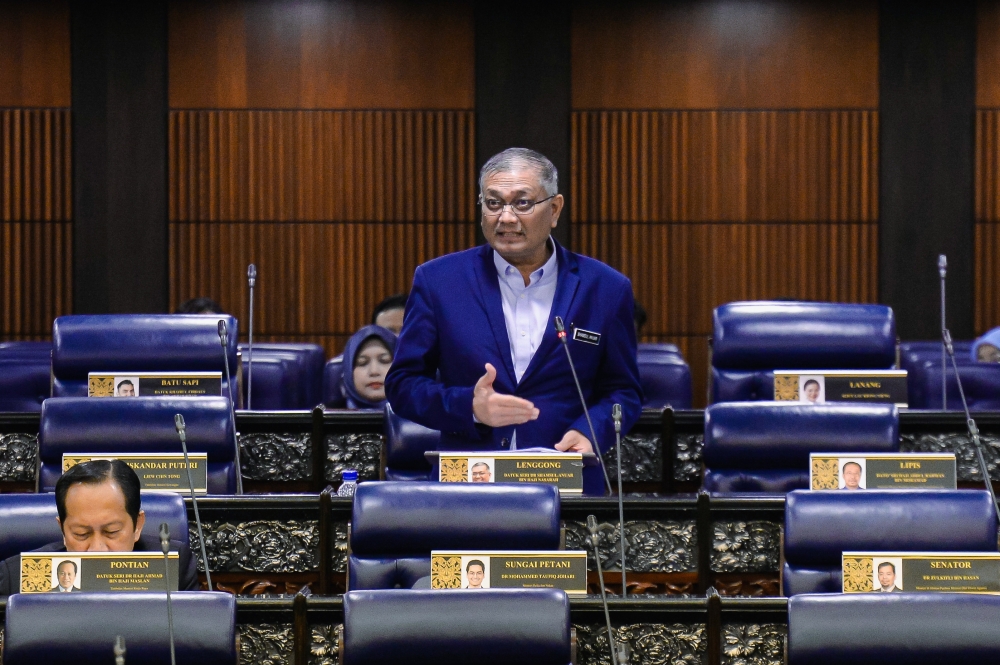
Deputy Home Minister Datuk Seri Shamsul Anuar Nasarah said the project was approved under the First Rolling Plan of the 13th Malaysia Plan for 2026 to address gaps in maritime surveillance coverage across Malaysian waters, with the tender process expected to begin by year-end.
He said the Malaysian Maritime Enforcement Agency (MMEA) currently operates 15 Remote Sensored Site (RSS) radar stations under Swasla, comprising 12 along the Strait of Melaka and three off Sabah’s west coast.
“All 15 MMEA RSS stations operate 24 hours a day, seven days a week, providing continuous surveillance within their respective coverage areas,” he said during the question-and-answer session in the Dewan Rakyat today.
He was responding to a question from Datuk Seri Hasni Mohammad (BN-Simpang Renggam) on early detection systems using radar, drones and satellites, round-the-clock surveillance coverage, smuggling syndicates dismantled and gaps in MMEA’s capabilities.
However, Shamsul Anuar said the radar stations’ continuous operation did not provide complete surveillance coverage of Malaysian waters, with MMEA deploying ships and boats to patrol areas beyond the system’s coverage.
He said funding for SWASLA development in Sarawak was approved under the Fourth Rolling Plan of the 12th Malaysia Plan (12MP) for 2024, while the proposed study on the system was still awaiting feedback from the Economy Ministry.
Shamsul Anuar said the government had also approved a study on SWASLA development along the east coast of Peninsular Malaysia under the Fourth Rolling Plan of the 12MP, with the tender process for the study to begin soon.
To strengthen maritime surveillance, he said the Home Ministry (KDN), through MMEA, was shifting from a “detect-and-act” approach to a more integrated system based on early detection, target identification and rapid response.
He said the approach involved expanding radar coverage, deploying unmanned aerial vehicles (UAVs), modernising assets and improving the integration of operational information, as well as procuring two UAV-equipped vessels to strengthen aerial surveillance capabilities.
Shamsul Anuar said MMEA has yet to acquire a dedicated satellite for continuous maritime surveillance, with existing satellite technology mainly used to support search and rescue (SAR) operations.
He said MMEA recorded 834 smuggling cases involving seizures worth RM257.55 million from 2020 to August this year.
However, he stressed that enforcement effectiveness was not measured solely by the number of seizures.
Instead, the government was focusing on dismantling the entire smuggling chain through detection, investigation, seizures, prosecution and intelligence sharing, while also targeting logistics networks and those supporting such activities, he said.
“Among the gaps in MMEA’s asset capabilities that still need to be addressed are incomplete surveillance coverage, the need for additional UAVs and aerial assets for continuous monitoring, long-range vessels, high-speed interception assets and a C4ISR (command, control, communications, computers, intelligence, surveillance and reconnaissance) system.
“The government is gradually addressing these gaps by expanding the Swasla network, procuring strategic assets and implementing programmes to modernise MMEA’s operational vessels and boats,” he said.
Responding to a supplementary question from Hasni on the detention and deportation of migrants entering Malaysian waters illegally, Shamsul Anuar said MMEA does not have its own detention centres but only lock-up facilities to hold suspects for remand and investigation purposes.
He said those sentenced would be transferred to the relevant authorities for placement in detention centres. — Bernama
Liew Chin Tong urges accountants to embrace multidisciplinary skills as AI reshapes finance profession
No water found in RON95 so far, but Petron and Caltex are offering goodwill payment to motorists with damaged engines
Two Thai nationals face death penalty for allegedly killing MMEA officer in Sungai Padang
马来西亚政府已批准沙巴海上监视系统(Swasla)第二阶段,将其覆盖范围扩大到马拉瓦利岛和山打根,旨在加强海上监视能力。
该项目是马来西亚第十三个五年计划(2026 年)第一个滚动计划的一部分,旨在解决现有的监测差距,招标过程定于年底进行。
该计划将包括扩大雷达覆盖范围、部署无人机、更新资产以及采购配备无人机的船只,以加强空中监视。
尽管面临监控覆盖范围不完整、资源有限等持续挑战,但马来西亚海事执法机构正在努力实现现代化,并从战略上提升其能力。
吉隆坡,11月5日讯——政府已批准沙巴海上监视系统(Swasla)第二阶段的扩建计划,将覆盖马拉瓦利岛和山打根,以增强该国的海上监视能力。国会下议院今日获悉了这一消息。
内政部副部长拿督斯里沙姆斯·安努尔·纳萨拉表示,该项目已根据2026年马来西亚第十三个五年计划的第一个滚动计划获得批准,旨在解决马来西亚水域海上监视覆盖范围的不足,预计招标程序将于年底开始。
他表示,马来西亚海事执法机构(MMEA)目前在Swasla的指挥下运营着15个远程传感器站点(RSS)雷达站,其中12个位于马六甲海峡沿岸,3个位于沙巴西海岸附近。
“马来西亚海事执法局所有 15 个 RSS 站每周 7 天、每天 24 小时运转,在其各自的覆盖区域内提供持续监控,”他在今天国会下议院的问答环节中说道。
他是在回答拿督斯里哈斯尼·穆罕默德(国阵-新邦令金)关于使用雷达、无人机和卫星的早期检测系统、全天候监控覆盖、走私集团被捣毁以及海事执法局能力差距的问题时做出上述表态的。
然而,沙姆苏尔·阿努尔表示,雷达站的持续运行并不能提供对马来西亚水域的完全监视覆盖,马来西亚海事执法局部署了船只巡逻系统覆盖范围之外的区域。
他表示,根据第十二个马来西亚计划(12MP)的第四个滚动计划(2024 年),砂拉越 SWASLA 的发展资金已获批准,而关于该系统的拟议研究仍在等待经济部的反馈。
沙姆斯·阿努尔表示,政府已批准在12MP的第四个滚动计划下,对马来西亚半岛东海岸的SWASLA发展进行研究,该研究的招标程序即将开始。
他表示,为了加强海上监视,内政部(KDN)通过海事执法局(MMEA)正在从“发现并采取行动”的方式转向基于早期发现、目标识别和快速反应的更综合的系统。
他表示,该方案包括扩大雷达覆盖范围、部署无人机、更新资产、改进作战信息整合,以及采购两艘配备无人机的船只以加强空中监视能力。
Shamsul Anuar 表示,MMEA 尚未购置专用卫星用于持续海上监视,现有的卫星技术主要用于支持搜救行动。
他表示,马来西亚海事执法局 (MMEA) 从 2020 年到今年 8 月共记录了 834 起走私案件,查获走私物品价值 2.5755 亿令吉。
但他强调,执法效果不能仅仅用查获的数量来衡量。
他表示,政府的重点不是打击走私,而是通过侦查、调查、查获、起诉和情报共享来瓦解整个走私链,同时打击物流网络和支持此类活动的人员。
“MMEA资产能力中仍存在一些需要解决的差距,例如监视覆盖范围不完整、需要更多无人机和空中资产进行持续监视、远程舰艇、高速拦截资产以及C4ISR(指挥、控制、通信、计算机、情报、监视和侦察)系统。
他说:“政府正在逐步弥补这些差距,通过扩大Swasla网络、采购战略资产和实施现代化计划,使海事执法局的作业船只现代化。”
针对哈斯尼提出的关于非法进入马来西亚水域的移民的拘留和驱逐的补充问题,沙姆苏尔·阿努尔表示,马来西亚海事执法局没有自己的拘留中心,只有拘留设施,用于关押嫌疑人以进行还押和调查。
他表示,被判刑者将被移交给有关当局,安置在拘留中心。——马新社
刘振东敦促会计师掌握多学科技能,因为人工智能正在重塑金融行业。
目前尚未在RON95汽油中检测到水,但Petron和Caltex正在向发动机受损的车主提供补偿金。
两名泰国公民因涉嫌在双溪巴东杀害马来西亚海事执法局官员而面临死刑。