Fighter Pilots Could Soon Train To Dogfight Against Virtual Projections Of Adversary Jets战斗机飞行员可能很快就能接受训练,与虚拟投影的敌方战机进行空战。
We go in-depth with Red 6's Dan Robinson about how his AR solution to air combat training could drastically change how fighter pilots learn to fight.
新闻视频
Updated Nov 27, 2020 6:25 PM EST
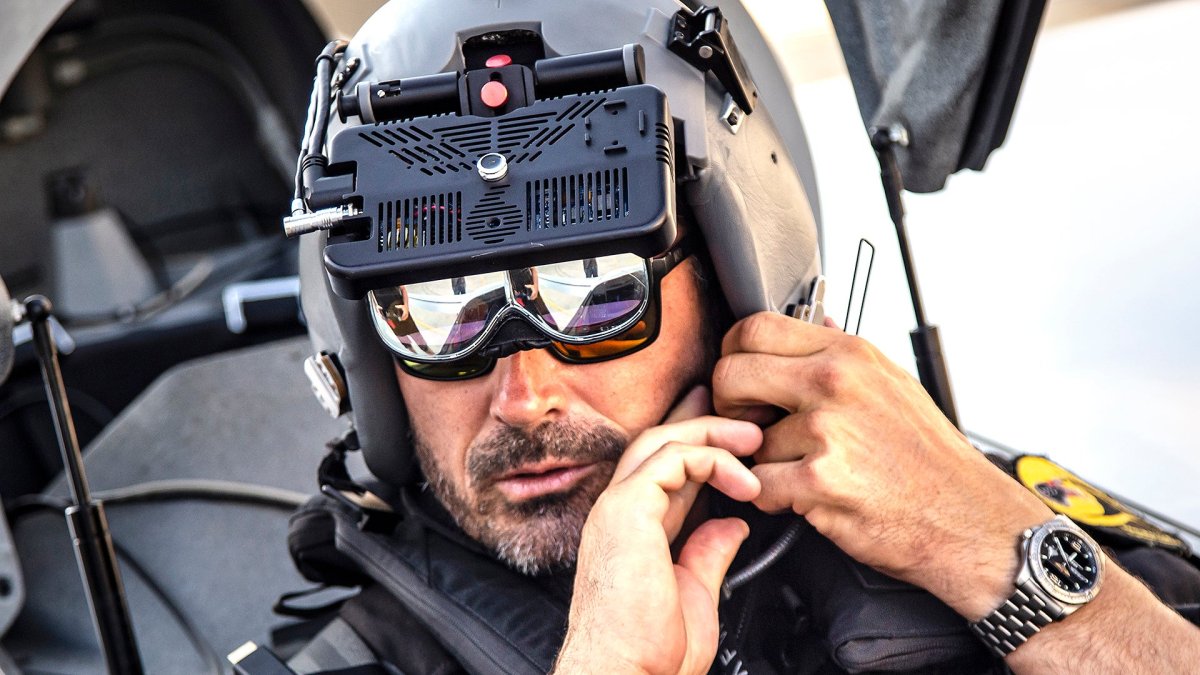
Retired fighter pilot Dan Robinson and his team at Red 6 are working to revolutionize the way military pilots train for air combat, and possibly much more, by harnessing advances in augmented reality (AR). They are working to replace adversary aircraft that have to physically fly against fighter pilots—at a cost of tens of thousands of dollars an hour—with computer-generated projections displayed in front of the trainee’s eyes as they fly their aircraft through the air. If Red 6 is successful, the technology could bleed into many other areas of air combat training and move to other domains, as well, such as to the warfighter on land and at sea. In doing so, it would disrupt entire marketplaces and many traditional, long-held training techniques and procedures.
The potential savings and flexibility that the Red 6 concept brings to the fight are so massive that the Air Force is already working with the small company to move the idea forward. Still, major cultural hurdles are likely to supersede technological ones, but their timing couldn’t be better. As America’s flying force is faced with having to innovate at a far quicker pace than ever before in order to counter ballooning threats from China and Russia, AR-enabled air combat training is exactly the type of technology the Air Force brass say they aren’t only interested in, but that may be key to America’s future ability to provide air supremacy during a major conflict.
Dan Robinson, CEO of Red 6. , Mike Killian
We talked with Dan Robinson at length to provide the most in-depth look at where Red 6 came from, what it is trying to achieve, and where it could be going in the not so distant future. Here is that interview:
Ty: Can you tell us a bit about your background Dan and how you came up with this concept?
Dan: I was an RAF [U.K. Royal Air Force] fighter pilot for 10 years or so. I graduated Fighter Weapons School, and I was lucky enough to be the first non-American to fly F-22s for the U.S. Air Force. And I wasn’t just the first non-American, I was one of the first kind of cadre of guys that were on the first operational squadron, so right at the very beginning of the program, which was obviously a huge privilege, but tremendous insight into an astonishing platform and the capabilities thereof. It also showed some of the real limitations associated not just with that platform, but with the broader combat air force… Namely, training, which ultimately leads us to where we are.
Dan flying the F-22 Raptor. , @red6CEO
So, in simple terms, every time we go fly and train, we need someone to go fly and train against, and that’s a multi-billion dollar a year problem. It wasn’t being solved back in 2006 to 2009, and it’s only gotten worse since then.
It’s a problem for a number of reasons. A, the outright cost. It’s obviously extremely expensive to provide it. B, we’re critically short on guys and girls on the front line because it’s hard to find us, hard to train us, and hard to keep us.
I would say that, critically, whilst we’ve been involved in conflicts in the Middle East in the last 20 years or so, two things have happened, geopolitically. You’ve seen the re-emergence of Russia onto the world’s stage as a state actor and proliferation of technology coming out of there, which is credible, particularly when it comes to IADs (integrated air defenses) and next generation airplanes . And I think most importantly of all, of course, is the rise of China and the pace of innovation coming out of China.
I think China has historically been very good at copying technology and I think we’ve seen a definite shift to innovation and a systematic engagement of the industrial base around a long-term strategy… Whereas before, we didn’t really have any near-peer threats, it’s fair to say that some of the platforms and the capabilities coming out of China are certainly near-peer and in some instances are downright scary . And if we’re not scared of it, we are wrong, we should be and we should be doing everything we can to counter that.
So, that’s significant because in the F-22, even if we could generate the numbers of airplanes, platforms, and pilots to do it, how do we train, truly train, against near-peer threats? The likes of J-20 or Su-57 , things like that. That was a problem that I really was passionate about solving.
F-22 Raptor firing an AIM-120 AMRAAM. , USAF
As it happens, life would take me in a meandering direction to Red 6. So I left, went to business school, worked in finance for a while, grew a business in the U.K., sold the business in the U.K., and kept coming back to this problem of adversary air, and how do we solve it? Now, as a happen-chance, there was a serendipitous series of events that brought me back to California and I started thinking about the problem again.
Unrelated to the problem at the time, I decided I was going to build my own airplane, and I set about building an airplane, which is an experimental airplane, called a Berkut , and that’s a separate story in itself and one for over a beer maybe, but suffice to say that life was absolutely telling me to build that airplane. In the midst of building that airplane, two individuals literally walked into my life. Both with rich backgrounds in augmented reality and virtual reality. One of them, in particular, had pulled off a world’s first, I think back in 2015, in VR.
Dan in his still very much under construction Berkut 540. , @Red6CEO
And I should pause to ask here, do we understand the distinction between virtual reality and augmented reality? And if not I could cover it really quickly.
Ty: Absolutely, but why don’t you just cover it in your own words so we can set up for what’s coming.
Dan: Okay. So virtual reality, we go into an entirely different world. You and I sitting together, we put our headsets on and we could be in the Bahamas, kite surfing, or whatever it is. Think Holodeck Star Trek type stuff. Augmented reality is a much more complex problem to solve because what we try to do is put virtual entities into the real world that interact with our surroundings as if they were a part of the real world, and that’s a very difficult set of technical problems to solve.
Back in 2015, going back to the guys, one of the guys had pulled off a world first in VR. They took a real race car, put a real race car driver in it, on a real race track in one location, concurrently in a separate location, they took another driver, another car, and another racetrack, and at the same time, both of these drivers went into a virtual world that was created for them and raced race cars against each other. I mean real race cars, against each other, blind, completely blind to the outside world. So they met each other in a volcanic, ashen, molten landscape and raced these real cars around this landscape in VR, which was stunning. As soon as I saw that, the light bulb went off for me. I started connecting dots and I asked two simple questions.
One was, “Guys, is that possible in airplanes?” To which they scratched their heads for a little while and came back with a, “Yes, technically challenging, but we think we could do it.” The next question I asked, and the reason I explained VR versus AR is, “Okay, no one is going to allow fighter pilots to fly around in a virtual world blind to the outside world in VR. So is this possible in AR?” And they looked at me as if I was crazy and said, “Absolutely not.” And I said, “Why?” And they said, “Because augmented reality doesn’t work outdoors and it doesn’t work in dynamic environments.”
Long story short, I kept asking why, until we came up with a thesis, which was a different approach to how traditional players do AR that we felt would work.
I then got excited because the idea I was obviously coming up with was, if I can synthetically inject virtual entities into the real world, up in the sky, and have them maneuver in relation to airplanes, real airplanes, then why would we ever need to put another physical asset, pilot, fuel, logistics up in the sky again?
Now, that’s a vision, right? That’s obviously a little ways off, but it’s a vision that is within the realms of possibility for sure. So, I knew if we could pull this off, we were gonna change the future of how our combat air forces and beyond will train.
With that in mind, very quickly, I called the Air Force’s AFWERX up and I said, “Hey, you guys remember me? Well, I think I can save you billions of dollars a year, solve your Red Air training shortage and your pilot shortage as well, and allow you to train against any near-peer threats. And here’s how… ” They were obviously skeptical, but intrigued. They said, “Go speak to the Air Force Research Laboratory.” So, I called up the Air Force Research Laboratory and said, “Hey guys, this is us,” and they started telling us about LVC [Live Virtual Constructive training] and the work they were doing with the SLATE program, which was extremely encouraging. As I started studying LVC, I realized that it absolutely was aligned with what we’re doing, and it was aligned with what we’re doing because of one of the critical limitations of LVC.
A Live Virtual Constructive is a 50% solution. Why is that? Because it’s a beyond visual range solution only [not for dogfighting within visual range] .. . And as soon as those synthetic entities, be they virtual or constructive, get within the sort of five to 10 nautical mile range where the pilot starts transitioning from the tactician to the fist-fighter, and he puts his or her head out the window, there’s nothing there. Then the whole training solution collapses. Why is that? Because there’s no way of synthetically putting those entities into the field of view of the pilot. Why is that? Because so far augmented reality certainly hasn’t worked outdoors or in dynamic environments and it absolutely hasn’t worked outdoors in dynamic environments at multiple hundreds of miles an hour up in the sky in three dimensions.
So, when I listened to the LVC guys and I said, “Well, here’s what we’re building,” they couldn’t believe it. They said, “Guys, we’ve been looking for this for over five years, no one is doing this. Is it true?” And I said, “Well, right now it’s a… We think so. We have a thesis and we’re getting ready to build this out.” And so they partnered with us, through AFWERX and they set us up with two challenges. Firstly, just go prove that your approach toward augmented reality will work, initially in an airplane, firstly on the static environment on the ground. We had a ground demonstration back in February of 2019 where we invited a bunch of folks from the Air Force’s Test Pilot School, Research Lab, and Weapons School, they all came to see us and they sat in our airplane. This experimental airplane that I happened to be building became our test platform, and they were able to fly an augmented reality tanking sortie, and then go fight a couple of Russian Su-57s.
It was a clunky prototype demo at the time, but it proved that our thesis was indeed possible. So, the next challenge they gave us was, “Okay, obviously go prove that this works up in the air.” And so that was targeted for November of 2019, and the Test Pilot School said, “Look, guys, these are big claims you’re making, so let’s do a crawl, walk, run approach. Initially what we’d like you to do is to prove that you can just fix a static object up in space and we can maneuver in relation to it as if it were a real object.” So, we became known for this three-dimensional cube that we’ve got floating around the skies of Southern California, and it’s a 500-foot by 500-foot cube and it’s framed with no sides for a reason I’ll get to here in a second. We technically actually achieved that in August of last year and whilst from a developmental test and engineering perspective, I knew that that was gonna be extremely significant to both engineers and developmental test pilots, I knew that from an operational perspective, pilots would understand airplanes flying around, and so I pushed the team really hard, and in doing so, we cracked the problem.
Setting up the giant virtual floating cube., Red 6 video screencap
When the guys came out for the demo in November of 2019, we took them up in a real airplane we flew them to the cube and the cube is amazing, and as we get there, it’s a big old cube floating in space. As we get closer, it gets bigger, as we fly around it we can observe aspect changing, size changing. I mentioned it was a wire-framed cube with no sides, that was for a very particular reason because I wanted to demonstrate the truly immersive nature of this technology. What that means is we were able to fly through the cube, and this cube surrounds the airplane as you go through it, and it’s so compelling that as you fly your airplane, through this virtual cube that doesn’t exist, I’m careful not to hit the wings of the airplane on the sides of the cube, which sounds ridiculous, but it demonstrates the immersive nature of the technology.
So, we came off the cube and everyone was really excited. It was a big, big win for us, and then I was delighted to say, “Well, that’s not all, so now come and see this,” and we did an intercept on a virtual KC-46 tanker, and we pulled up alongside a virtual tanker flying around the sky, and it looked and felt like a real big old airplane sitting next to us as we pulled up in formation. On its wing was an F-22, and then we slid around the back, we dropped into a pre-contact position, and there was a boom hanging off the back of the tanker and we drove that boom into the airplane that I was flying. It was so accurate that I can drive the boom of that tanker into my head inside the cockpit.
Dan’s Berkut 540 works as a testbed for Red 6 tech. Here is a rendering of it pulling up behind a virtual KC-46 tanker. , Red 6 screencap
It was absolutely stunning. So we did the world’s first-ever augmented reality refueling training sortie. Then we came off that and we did an intercept on an Su-57 and we did the very beginnings of a dogfight against an Su-57 just flying around in augmented reality up in the sky.
When they all saw that, everyone was stunned. We were transitioned immediately to a SBIR Phase II with the Air Force and then invited out to the Weapons and Tactics Conference, which is held at now in I think this was in January or February of this year. So we went out to the Weapons and Tactics Conference. We got to sit down with a new chief and a bunch of senior folks, and we took a bunch of generals flying, a bunch of colonels flying. To an individual, they were all stunned and blown away with what we’d done. So much so that they invited us out to ACC [Air Combat Command] earlier in the year and now the Air Force is transitioning us to a SBIR Phase III, and so we’re the first company in AFWERXs history to make it to a SBIR Phase III, which is extremely exciting.
The Berkut 560 cockpit and the AR visor that projects imagery in front of the pilot’s eyes. , Red6CEO
I should say concurrently, we were also demonstrating the technology to a bunch of industry partners, all of the big ones. I think most prominent of all was the Skunk Works out of Lockheed Martin. I think that was the most nerve-racking demo for us, as well, because we thought Skunk Works would come along with all of their tech and the programs they’re working on, and they’d look at us and laugh and pat us on the head and say, “That’s a cute demo guys, but here’s how we really do it in Skunk Works,” and on the contrary, they were blown away. They said, “No, guys. Holy Moly. This is far away ahead of anything we’ve seen out there.” And so with that, then Lockheed Martin started showing an interest in us, and after a series of about five-six months of negotiations, we just closed an investment from Lockheed Martin into Red 6, which has a number of strategic benefits, not least access to fifth-generation platforms and beyond.
So, you join us right at this time now where I’ve literally just come back from Fort Worth, Texas having met with Lockheed and talking about plans moving forward together, and it’s a really exciting phase.
Ty: There are very few times that I’ve seen technology, including the leading edge of consumer technology, and the needs of the military converging together for something like this. I’m a VR user myself. I try to keep up with it. Nothing, obviously, as advanced as this, but this solves so many problems that it’s kind of amazing where it could go so fast.
One of the biggest air combat training issues that we talk about often is the target saturation issue the Air Force and the Navy are facing in terms of red air training. They have aircraft like advanced 5th generation fighters, and even upgraded 4th generation ones, with pilots in the cockpit that are not challenged enough with the number and capability of the adversaries they put in the air to fight against them. So, obviously, augmenting the tangible aggressor aircraft that are out there is probably a huge part of this, right? Instead of putting up a 4 vs 8, which is quite a large adversary air training mission, you could theoretically put up a 4 vs 30 and it wouldn’t cost any more money to do. Is that a major area that you’re looking at, the augmentation area, where you add additional airborne threats to those that are actually there, not just the replacement of all of them?
Dan: Absolutely, because there are two observations you made, which are really astute, and one is the intersection of commercial and DoD. If I can just talk to that first before I come back to the saturation issue, it’s important because I think one of the reasons that everyone has lamented the sort of… The struggle that AR has had to be adopted is frankly, there are a bunch of technical challenges to it, but AR is fundamentally an indoor solution only. I can put a pink elephant on your table and it can dance around, it’s cool for a second, but who gives a shit? Ultimately, AR is an interesting technology, looking for a home. It’s a solution in search of a problem, and one of the key aspects to AR being adopted for a mass consumer market is it has to be mobile in nature, which means it has to work outside and it has to work on the move.
There are a bunch of other technical challenges to solving that for the consumer, right? Not least of which price point, power, GPU, CPU, all that kind of stuff. But this is a big step forward, so that’s the first thing. Backing into your other point, which is the intersection of this, because even if that technology did work for the consumer, what would they truly use it for, right? And a bunch of folks, I mean VR is obvious, but a bunch of folks have applied a lot of thought to this, and what is fundamentally the use case for AR right now? It’s difficult to answer that, right? You can give generalizations, but to be very specific, it’s difficult. What we have here, and I think this is really key to what you were pointing out, is we have an incredibly compelling use case into which there is an acutely defined pain point, into which we have said that AR now finds a home because AR can solve this problem directly. I think that’s one thing that sets us apart massively.
Dan flying with the AR display unit attached to his helmet. , @Red6CEO
That leads directly to the second part of the question, which was saturation of the targeteering. Yeah, we can replace obviously the red air entities out there, but I think for any kind of high-intensity war-fighting, you are quite right, we need to be able to replicate that A, the technical sophistication level, but B, the intensity and saturation and numbers that are physically out there. I think it’s really important to do that because if you think about the conflicts we’ve been in in the Middle East, it’s almost as the West assumed like air dominance is our preordained natural right, and on the contrary, it’s not that at all. So whilst we’ve suffered terrible, tragic casualties on the ground in conflicts in Iraq and Afghanistan, they would be exponentially worse if we did not have control of the air, and we’ve always had control of the air.
Then you start looking at, well, what does a near-peer adversary conflict look like? Like China, let’s say in the South China Sea, somewhere like that, where we’re penetrating airspace. You bet your ass we’re gonna have to go fight and get control of the air, and we are going to be outnumbered and they’re going to be on a technical par with us. So the ability to not just emulate threats accurately that are relevant and current, but provide them in sufficient numbers is a key value proposition of this technology. So I think you’re absolutely right.
Ty: Why the numerical superiority issue is so big, especially with what we’ve discussed and what I talk about a lot in terms of the China scenario, people just have no idea really what this looks like. China knows it can flood a zone with throw-away old MiG-21 and F-7 drones that are flying just to some point to crash, all in an attempt to complicate the tactical air picture. This is, in addition, to their vast numerical superiority as we would be fighting in their backyard. This is all part of their tactics base, and so a lot of times when we talk to people that are in the red air business, their eyes kind of glaze over when we discuss this because it’s such a hard threat to replicate and to actually present to fleet pilots.
So it seems, as far as replacing all red air, obviously that’s a technological leap, but it may be closer than anyone wants to admit. It also sounds like you’re already pretty far on a path to showing that instead of using an F-16 to replicate a Su-57 or a J-20, you can actually build the thing in software and present it in AR and it’s going to be accurate to what we think the threat actually is, but also just saturating these pilots with confusing sets of problems in their situational picture to make it where it’s a real challenge, and it’s not just like clubbing baby seals.
Dan: Yeah, absolutely. And you’re exactly right. What you’re talking about is a targeting picture. And targeting is complex in nature, especially when you’re doing high-intensity warfighting, it’s very, very difficult, and it’s an extremely perishable skill that we need to be able to train to. And you’re dead, right, the numbers problem is really, really important.
Russia’s Su-57 Felon., Russian MoD
Ty: Do you see your concept as a threat to the ballooning adversary air market , or do you see it as an added plus? How do you situate yourself in what is a growing market that is actually putting jets on the ramp and putting them in the air at $15,000 an hour under the banner of saving the government money? At the same time, it sounds like you’re saying, well, I can do it for the cost of software and a helmet-mounted display and some data links.
Dan: Yeah, I am. So I’m keen to stay away from language like threatening, adversary, and stuff like that, but if we look at it objectively, I think right now, there is a massive market for everyone to play in, and I think the adversary air aircraft and the private contractors and all that kinda stuff have a very important role to play. But I don’t think it’s ultimately a sustainable solution, and I don’t think in any way, shape, or form they can provide the quantity or the quality and the relevancy of the training that we can do through leveraging this technology.
So, it’s an extremely disruptive technology for sure, and I think right now there’s room for everyone to play in this market, but what I’m doing is playing to where I think, to quote Wayne Gretzky, “I’m playing to where I think the puck is going.” And I think my vision is this, even if we did have the numbers to put up all of these adversary aircraft, what we haven’t talked about is the opportunity cost of doing that. So every time a fighter pilot goes up pretending to be a MiG-29 or a J-20, whatever they’re doing, they’re not doing what they should be doing which is training to be blue air. When we are short of fighter pilots, that is an extreme opportunity cost that we’re incurring every single day.
What I believe we should be doing is, every single sortie we fly as fighter pilots in the west, should be a blue air sortie. If we can leverage the technology to provide ample and relevant red air training, why would we ever want to put another physical asset up there in the future? Now I’m painting a vision, right? I understand that between there and that vision, there is obviously scope for everyone to play for the time being, but I am really playing to where I think the market is going. And no one understood this technology. We’re the first company in the world to pull it off. So no one was even thinking about what is within the realm of possibility.
The private adversary air support market has expanded rapidly in recent years, with private contractors fielding fleets of dozens of supersonic, radar-equipped fighters for fleet pilots to spar with. Here is one of Draken International’s Mirage F-1s. , Draken International
The reality of it is, I want every time I go up and fly, I wanna be doing a Blue Air sortie and then, to give you context, I was an instructor pilot on the F-22. If I wasn’t teaching, I would say 80% of my flying was providing Red Air for the guys that were going through upgrades or whatever it was. That’s incredibly frustrating because the training value… Yeah, I’m flying a Raptor, but it’s not really good training value, it’s not what we should be doing. So, if we’re limited in resources and there is capital rationing, constrained budgets and all that kind of stuff, the question is, how do we provide Red Air efficiently and I think we stand alone in our ability to be able to do that. I think that’s what’s really exciting about what we’ve cracked.
Ty: Absolutely, absolutely. So, I’m an Air Force, and I think this is really cool. What do I need to purchase it? What hardware and software are required? What do I need to make this happen for my pilots? Obviously, many fighter aircraft, including dedicated aggressors , are flying with helmet-mounted displays of all degrees of complexity , some quite simple, some more advanced , that are augmented reality devices to a lesser degree than what you’re discussing. How can you fold it into the hardware that already exists or, if not, what do you need to make it happen?
Dan: There are certain limitations to what I can obviously discuss about how we do it, but let’s just say the system is designed around four key modules. It is designed to be platform-agnostic and it can integrate into any system. Ultimately, what the pilot cares about is the display technology and the ability to visualize this stuff and, of course, we want this technology to sit within the OFP [Operational Flight Program] of the airplane or within the embedded training systems of the airplane, things like that, such that it integrates with the weapon systems onboard.
64th Aggressor Squadron F-16s lineup at Nellis AFB before a mission. Red 6’s technology could drastically augment existing aggressor forces and provide some capabilities they simply cannot. , USAF
And then, in terms of the deliverables… We’re not delivering helmets or anything like that, but we are delivering a fairly unique display tech that has the ability to do all of the projection of all of the targeting symbology, and way better than anything out there right now that does it. But in addition to that, it’s presenting 3D holographic images, as well, because you have to remember, we’re not providing targeting solutions here. We’re not doing head-up displays. So, when people use the term AR and they’re talking about how helmet-mounted cueing systems , that’s not what we’re doing. We’re aiming to simulate human vision. The demands of human vision, it’s a harsh mistress because it’s very exacting.
So, let me give you an example. The current F-35 helmet has round about a 35-degree field of view in terms of the display tech and there’s a number of technical reasons why that is the case, and the latency, frankly, is pretty crap. You have to remember it’s 10 to 15-year-old technology, as well. Our second version of our prototype, right now, is sitting at a 105 degrees field of view and the deliverable that we’re working on pretty soon is 150 degrees field of view. Now, human vision is out at 180 degrees. We are pushing it out to those realms and so, ultimately, the display tech is A, extremely difficult to do and you just look across the AR market at what’s out there, go look at a HoloLens 2 or a Magic Leap . It’s really difficult to do, but it is absolutely critical to presenting the right picture to the individual in the cockpit. And then, the other parts of the system that have to do with tracking and obviously, the game engine itself as to how it displays and does all the video. There are the simulations and all that kind of stuff, but it’s all platform agnostic. It can plug and play into any airplane.
Ty: So, I’m an F-35 operator. I put on your display. There’s some other black boxes, right, like anything else?
Ty: I go out there and now, I’m not wearing my normal HMD, but I’m now able to execute these training sorties where that same symbology I would see normally in my HMD would be also presented in your forward vision. Is that correct, in your display system that you would provide?
Dan: Absolutely, and not only that, the symbology would make sense. It would interact with the virtual entity.
Dan: In the same way that it does with LVC.
Ty: It wouldn’t mean changing to a whole new symbology architecture or anything else?
Dan: Yeah, no, it’d just be the same. But it would be presented in a way more compelling way, with much higher brightness, field of view, fidelity and lower latency as well.
Dan wearing an earlier prototype AR visor. , Red6CEO
Ty: Cost-wise, one of the issues with the AR market and the VR market, to be honest with you, is money, right? These things are very expensive to develop. Do you see the potential for the AR market at large to really make a massive leap? If the government were to say, “Hey, Red 6. Yeah, we’re gonna spend millions of dollars helping you make this thing unbelievably effective,” would those same advances trickle down into the commercial space?
Dan: Yeah, I think absolutely. When you look at the consumer market for AR… I’m pretty straightforward with it. I don’t think there is a consumer market for AR right now. But I do believe the AR consumer market is coming. And when it arrives, I think it represents the single biggest inflection point in how we share and interact with our information since computers went into cellphones. So, when that explodes, it’s a trillion-dollar market. We should be paying attention to Microsoft, and we should be paying attention to Apple and Tim Cook because they’re all going for it, right?
But there are a number of technical challenges to get there. So, when that inflection point arrives, it’s gonna be massive. The question is, for AR companies out there, when that inflection points arrive? A, are you still alive? B, have you got the technology that’s relevant? And C, have you solved the right problems to take your place in that overall ecosystem? And I think what we have is the right strategy through DoD largely driven by such a compelling use case that affords us an opportunity to work on technology that is absolutely leading edge for the warfighter, that directly parlays into a broader consumer vision of AR when that market opportunity arrives, which it will arrive. And so, yeah, I think you’re exactly right.
DoD, as the customer, is the right way to do it, and I think you’re seeing that being reflected in the big AR players out there, like Microsoft and even Magic Leap. For all of the problems they’ve gone through, Magic Leap is way late in figuring this out because their strategy was incoherent, but Microsoft is chasing an enterprise market with HoloLens, because there’s no consumer market out there right now. How can you justify selling a headset at $3,800 to someone that’s gonna wear it once or twice, and certainly not gonna be able to use it outdoors. You can’t. So enterprise is the right route to a successful AR future, and within enterprise, I think DoD is a specific customer base that is crying out for AR, and AR can actually solve many real problems.
Ty: On the many problems front, what comes to mind is, we’re talking adversary air, air-to-air combat, but you mentioned tanking, and obviously there are plenty of other mission sets that could be applicable to this technology, such as air-to-ground training. Then, as the tech evolves over time, you could probably build much more complex environments to help tailor what the mission would be down to probably the environment itself. And then there’s the ground side of things. Soldiers on the ground could potentially use this same sort of technology and probably get a lot out of it in a similar manner. Where do you see the very long-end of this going? You talk about the warfighter, is this going to be something where a soldier on the ground with a rifle is going to be using it as much as a guy flying an F-22 in the decades to come?
Dan: Yeah, I’m smiling because it’s absolutely the right question to ask, and it’s indeed on our roadmap. We can talk training, for sure, but we also talk operations, as well. My vision is, yes, in the same way that we’re doing this for the aviators, we don’t go to war just as an air force, right? We operate across multiple domains as a joint force, and so, what we need to have is situational awareness, we all have to have the same situational awareness.
Just let me give you an example, if there’s a special forces guy on the ground calling in an attack on, let’s say, a tank, or a farmhouse, or something like that, and it’s a training scenario, well, wouldn’t it be great if that tank was synthetically generated and the guy on the ground is in our AR system, talking to the individual up in his airplane that’s about to drop a smart bomb on that tank or something like that? Wouldn’t it be great if they could see the same common picture within the augmented world? And we’re calling that the joint augmented battlespace because you’re exactly right. We’re solving, probably the most complex challenge of all, because airplanes flying around at multiple hundreds of miles an hour in three dimensions, well, if we’ve solved it for that we’ve certainly solved it for a tank, a boat, whatever it is on the ground. The ability to connect those individuals together is something that represents a truly exciting and massive market opportunity. And it doesn’t stop there. I touched upon it a little earlier because I think whilst there are massive training applications for this, there are also massive operational applications through this technology.
Let me give you an example, guys and girls on the ground fighting for their lives trying to call in close air support . For the individual in the cockpit that’s about to press that button, that’s a tremendous amount of stress, especially if they’re in a sort of danger-close scenario, right where there are troops in contact. You want to make sure that you get that right. So, we all just used the traditional ‘nine line’ to call in close air support, and stuff like that. Well, what if we were connected in an augmented world? And, we could paint targets on the ground, bad guys and good guys clearly delineated through whatever visuals you wish to use. It would take away ambiguity, it would shorten the kill chain massively, and it would absolutely save lives, and there are multiple applications that we could think of and discuss, but I think there are huge operational aspects for this tech as well.
Ty: And the data link infrastructure is obviously progressing quite fast on the other side of things.
Ty: That isn’t really related at this time to what you’re doing directly, but, you can imagine them being able to plug in together to be able to send those, using a common waveform, to be able to send that information back and forth, where everybody sort of has the same picture, or at least the information that they needed at the time they need it.
Dan: Yeah, you’re absolutely right. And data links in those communications are massive, massive pieces of this, but, of course, there are tons of companies out there that are doing the Lord’s work in that, and it’s just about getting the right partners.
JTACs work with A-10s during a close air support exercise., USAF
Ty: So the Red Air market is kind of blowing up right now, and we’re also seeing the JTAC [forward air controller] training marketplace becoming pretty hot . When you think of things, you’re mastering sort of the air realm of AR. Have you looked at JTAC training? Because, they’re also putting up aircraft that’s burning thousands of dollars an hour up, flying above them, to do something that’s fairly rudimentary compared to air-to-air combat.
Dan: We are absolutely discussing it. We understand the market opportunity there, as well. It is simply having bandwidth within the existing team and obviously that requires us to bring more resources in. One of the big priorities for me this year is to go out and raise our series A round of financing. This will enable us to do that, but of course, things like the SBIR Phase III from the Air Force are immensely helpful, as well.
Ty: In terms of the T-X , well the T-7 Red Hawk now , the USAF is putting a lot of money into it and really wants to fully change its training apparatus and how it works, lowering the amount of time that a pilot takes to get into an actual operational unit. A lot of that will be centered around getting the basic training down in a different manner than what existed in the old training pipeline. Do you see a student as being able to go out and learn formation keeping with a tanker via using your AR solution? What about learning the primary elements of basic fighter maneuvers (BFM, aka dogfighting)? Do you think it’s going be applicable to the primary military pilot training market too, in addition to the advanced training one? Having F-35 or F-22 pilots going-up against synthetic bad guys is one thing, but what about the lower-end training spectrum?
Dan: Yeah, again, I’m smiling, because you’re asking all my favorite questions. The simple answer is yes, we are doing that. Because whilst the genesis of this was to solve red air, we immediately started figuring out very quickly that, oh my gosh, this has massive applications for how we physically produce pilots… Once you get past the, “Here’s how to fly an airplane up, down, left, right,” most of the flying done in the military is tactical, so you’re flying with someone else.
T-7 Red Hawk., Boeing
So, every time you go up to practice formation, you need someone to formate on. One of the scenarios we’re working on right now is tactical formation for a T-38. And we’re actually doing our first integration into an air force platform later in the year, Q4 of this year I think we commence it, into T-38s to start looking at exactly the problems you talked about. How can we get guys and girls to work with a tanker? How can we teach them basic formation, tactical formation? How can we teach them strafe patterns, things like that? Even within BFM, the ability to, for example, draw the flight paths of the bandits that their flying against, and draw turn circle entries and control zones and things like that. If you can imagine it and you can think there’s a value proposition, then it can be done because it’s simply code. And so, yeah, we’re certainly focusing heavily on that, and I think you’ll see us integrating into T-38, T-6s, and then into tactical airplanes, as well.
Ty: One thing that I know readers are going to ask, especially those that are not as familiar with the VR and AR space and with the whole red air capacity situation that we’re in right now, is why can’t the Air Force just build more simulators? What does Red 6 give you that a full-dome simulator can’t?
Dan: Yeah, absolutely. So I’ll say this. I think simulators play an incredibly important role in the training of a fighter pilot. They’re very good for repetitive tasks. They’re very good for process-driven tasks. But what simulators cannot simulate or emulate in any way, shape or form is the cognitive load on an operator when they’re out there physically flying an airplane, when they can run out of fuel, pull G force, be shot at, their lives at risk. It fundamentally changes the name of the game. We always joke you can be Chuck Yeager everyday in a simulator when you know that you’re just gonna step outside, and it’s basically, in essence, a big video game, right? But when you’re flying that airplane for real and your under all of that stress, that cognitive stress, that physical duress, and you put your helmet on, we say you lose 50% of your brain capacity. And when you close the canopy, you lose the other 50%.
Flying airplanes is a fundamentally different proposition to flying in a simulator. And so what we’ve done here is we’re acknowledging that live flight has to happen, and I don’t think you’re gonna get anyone that’s gonna argue that otherwise, once informed. We understand that simulators are of a big value proposition. What we’ve identified is a spot in the middle that no one has thought of yet.
What I want to do is every… I come back to it as every time we fly… If we accept that we have to fly, which we do, every time we fly, we should be giving our warfighters absolute goodness of training. It should be relevant, it should be blue air, and they should be out there doing those things for real. So, I don’t think we’re replacing simulators at all, but I don’t think simulators can offer anywhere near what we can offer in terms of the physical realities of flying high-performance airplanes.
Ty: What are the roadblocks? What are the challenges to getting this where it needs to be, where it’s effective? Can we get to a point where the Weapons School can say, “Hey, we wanna build a J-20 adversary,” and it’s a case of a software engineer building that aircraft to their specifications and then fighting it in AR? How do we get to that point?
Dan: Look, I think there are obvious technical challenges, right? This is leading-edge technology, and it’s extremely encouraging, and we’re getting really good results. But, of course, integrations, we’re inevitably gonna come across a speed bump. That’s just a given. I think the single biggest thing that I worry about is actually a cultural issue. What I mean by that is the Air Force is making great strides through Dr. Roper and senior leadership to really embrace innovation. AFWERX is a great case in point. What we tend to find, and this will come as no surprise to you, is it’s the frozen middle where you come up against those cultural roadblocks and barriers to entry and people that are reluctant to change because we’ve always done it this way. The thing I worry about, I think, perhaps most of all is that we need to innovate and we need to innovate quickly, rapidly. We need to fail fast , learn the lesson, and move on all the time. Because that’s what the Chinese are doing and they’re eating our lunch.
If we don’t have a culture that embraces innovation and incentivizes innovation at every level of the military, then we are going to leave a bunch of value on the table, and we’re never going to be a truly innovative service. I believe the service leadership at the top want it. I believe Dr. Roper, through AFWERXs and a bunch of other initiatives, is doing fantastic work. Absolutely fantastic. I believe the warfighters on the ground want it. Generally, where you find sort of roadblocks is in the frozen middle management. It’s not something that is certainly insurmountable. It can all be overcome. It’s just we want to move with the speed of heat because we need to move at the speed of heat, and so I would encourage leadership at all levels to just really embrace a culture of innovation.
The private sector is just able to move so much quicker than DoD. I was asked a question once by a senior general in the Air Forces, “How fast can you go with this technology?” And my answer was, “As fast as you’ll let us.” Because we’re certainly not going to be the ones that are delaying progress on this stuff. So, I think that’s the single biggest risk and thing that we have to be concerned about and make sure we get right.
TR: That’s something I’ve talked about continuously, especially in the unmanned space , the resistance. With all the platitudes that exist within the Air Force about unmanned technology, there is a resistance. And in the Navy, for that matter, as well. There’s a key resistance when it comes to eliminating pilots, but not for the lower end stuff that isn’t sexy. But when you talk about potentially removing fighter pilots from cockpits in any way, it doesn’t matter if it’s AR or if it’s unmanned technology, there seems to be a massive cultural hurdle, and progress is stymied even though the technology clearly exists and maybe it’s even existed for decades. Do you see running into similar potential roadblocks, because that’s one less fighter pilot that’s flying in a fighter every day to provide red air support and the white scarf culture will resist it?
Dan: It’s a great question, but I’d just throw it back to you because I don’t think it’s the right sort of thinking from their perspective. On the contrary, we’re not aiming to reduce the number of flying hours the pilots get. I’d want to double the number of flying hours a pilot can get because we’ve got so much more spare resources… Now we’re protecting our assets. We’re not beating them up doing red air. What I want them to do is every time they go flying BFM, I want them to fly BFM as an F-22. I don’t want to go up there and pretend to be a MiG-29 . So I say that this is a gross oversimplification, but I think this kind of technology gives commanders optionality, and you can think about it in this context. I can either double the amount of flying you’re getting, or I can half your training cost.
Now, that’s a gross exaggeration, but somewhere in there lies that value proposition for commanders, right? And it’s scalable. You can bring it up or down depending on the operational tempos, what you’ve got going on at that time. The point is, you have that optionality. So, on the country, I don’t think it’s a threat to flying. I think it offers you the chance to fly more and more relevantly, for sure. Then coming back to the culture of people just kind of putting roadblocks in place, I think the fundamentals of this, the market decides, right? Because the fundamentals of supply and demand exist. There is a massive, massive demand signal and chronic undersupply.
Given those fundamentals, this technology has massive applications. The other thing is that people move on from careers and all that kind of stuff. You can’t stop technological advancement. There’ll be bumps and hurdles and naysayers and all that kind of stuff, but it’s coming and it’s going to happen for sure.
The Red 6 team., @Red6CEO
Author’s note: A huge thanks to Mike Killian who took many of the photos seen in the feature on behalf of Red 6. Make sure to check out more of Mike’s outstanding work here.
Contact the author: Tyler@thedrive.com
Comments couldn’t be loaded. Please refresh the page.
更新于美国东部时间2020年11月27日下午6:25。
退役战斗机飞行员丹·罗宾逊和他在Red 6的团队正致力于利用增强现实(AR)技术的进步,彻底革新军方飞行员的空战训练方式,其影响可能远不止于此。他们正努力用计算机生成的投影取代传统的假想敌机训练——这种训练每小时耗资数万美元,需要飞行员亲自驾驶飞机进行对抗。这些投影会显示在受训飞行员的眼前,让他们在驾驶飞机的同时进行训练。如果Red 6取得成功,这项技术不仅可以应用于空战训练的诸多领域,还可以扩展到其他领域,例如陆地和海上作战人员。如此一来,它将颠覆整个市场,并改变许多沿用已久的传统训练方法和流程。
Red 6概念为作战带来的潜在节省和灵活性如此巨大,以至于空军已经与这家小型公司合作推进该理念。尽管如此,文化方面的重大障碍很可能超过技术方面的挑战,但时机可谓恰到好处。为了应对来自中国和俄罗斯日益增长的威胁,美国空军必须以前所未有的速度进行创新,而增强现实(AR)空中作战训练正是空军高层表示他们不仅感兴趣,而且可能对美国未来在重大冲突中保持空中优势至关重要的技术。
Red 6 首席执行官 Dan Robinson,Mike Killian
我们与 Dan Robinson 进行了深入交流,以全面了解 Red 6 的起源、目标以及在不久的将来可能的发展方向。以下是采访内容:
Ty:Dan,你能跟我们简单介绍一下你的背景,以及你是如何想到这个创意的吗?
丹:我曾在英国皇家空军当了大约十年的战斗机飞行员。我毕业于战斗机武器学校,很幸运地成为第一位驾驶F-22战斗机为美国空军效力的非美国籍飞行员。而且我不仅是第一位非美国籍飞行员,还是第一批加入首个作战中队的飞行员之一,也就是从项目伊始就参与其中。这当然是一种莫大的荣幸,也让我对这款令人惊叹的战机及其性能有了深刻的了解。同时,我也看到了这款战机乃至整个空军作战体系的一些局限性……尤其是训练,而训练最终决定了我们今天的处境。
丹驾驶 F-22 猛禽。 ,@red6CEO
简单来说,每次我们进行飞行训练时,都需要有人和我们进行对抗训练,这是一个每年耗资数十亿美元的问题。这个问题在2006年至2009年期间没有得到解决,而且此后情况只会变得更糟。
这存在诸多问题。首先,成本高昂。提供这项服务显然极其昂贵。其次,我们一线人员严重短缺,因为我们很难找到人,很难培训人,也很难留住人。
我认为,至关重要的是,尽管过去二十年来我们一直深陷中东冲突,但从地缘政治角度来看,发生了两件事。一是俄罗斯作为国家行为体重新登上世界舞台,二是俄罗斯的技术迅速发展,尤其是在综合防空系统(IAD)和新一代飞机方面,其影响力不容小觑。当然,我认为最重要的是中国的崛起及其创新步伐。
我认为中国历来非常擅长技术复制,而且我们已经看到中国明显转向创新,并围绕长期战略系统性地调动产业基础……过去,我们几乎没有遇到任何势均力敌的对手,但现在可以说,中国的一些平台和能力确实已经达到了势均力敌的水平,在某些情况下甚至令人担忧。如果我们对此不感到恐惧,那就大错特错了,我们应该感到恐惧,并且应该竭尽全力去应对。
所以,这一点意义重大,因为即便我们能够制造出足够数量的F-22战机、平台和飞行员,我们又该如何进行真正的训练,来对抗势均力敌的对手呢?比如歼-20或苏-57之类的战机。这正是我非常热衷于解决的问题。
美国空军F-22猛禽战斗机发射AIM-120 AMRAAM导弹。
机缘巧合之下,我的生活把我引向了红六号基地。于是我离开了那里,去读了商学院,在金融行业工作了一段时间,在英国创立了自己的公司,然后又在英国卖掉了公司,但我始终没有忘记敌方空中威胁的问题,以及我们该如何解决它。后来,机缘巧合之下,一系列机缘巧合的事件把我带回了加利福尼亚,我又开始重新思考这个问题。
当时的问题与我遇到的无关,我决定要造一架属于自己的飞机。于是我开始动手,造出了一架实验型飞机,名叫“金雕”(Berkut)。这本身就是一个故事,或许可以边喝啤酒边聊,但总之,冥冥之中似乎有某种力量在指引我造这架飞机。就在我造飞机的过程中,两个人走进了我的生活。他们都在增强现实和虚拟现实领域有着深厚的背景。其中一位尤其厉害,我记得是在2015年,他创造了世界首创的虚拟现实技术。
Dan 的 Berkut 540 仍在建造中。,@Red6CEO
这里我想停下来问一下,我们是否理解虚拟现实和增强现实之间的区别?如果不理解,我可以很快地解释一下。
泰:当然可以,但你为什么不直接用你自己的话来描述一下,这样我们就可以为接下来的内容做好准备了。
丹:好的。虚拟现实,就是带我们进入一个完全不同的世界。你我坐在一起,戴上头显,我们就能身处巴哈马群岛,玩风筝冲浪,或者做任何你想做的事情。想想《星际迷航》里的全息甲板之类的。增强现实则要复杂得多,因为我们试图将虚拟实体融入现实世界,让它们像现实世界的一部分一样与周围环境互动,这本身就是一系列非常棘手的技术难题。
回到2015年,说回我们这帮人,其中一位在VR领域取得了世界首创。他们找来一辆真正的赛车,让一位真正的赛车手驾驶,在一个真实的赛道上驰骋。与此同时,在另一个地方,他们又找来另一位车手、另一辆赛车和另一条赛道,让这两位车手同时进入一个专门为他们打造的虚拟世界,进行比赛。我说的是真正的赛车,在完全与外界隔绝的情况下进行比赛。他们在一个火山、灰烬、熔岩遍布的虚拟世界中相遇,驾驶着这些真实的赛车在这个虚拟世界中竞速,场面令人叹为观止。我一看到这个,就灵光一闪。我开始把这些线索联系起来,并提出了两个简单的问题。
其中一个人问:“伙计们,这在飞机上可行吗?”他们挠了挠头,想了一会儿,然后回答说:“是的,技术上很有挑战性,但我们认为可以做到。”我接下来的问题,也是我解释VR和AR区别的原因,是:“好吧,没人会允许战斗机飞行员在VR中完全看不到外面的世界的情况下,在虚拟世界里飞行。那么这在AR中可行吗?”他们看着我,好像我是个疯子,说:“绝对不行。”我问:“为什么?”他们说:“因为增强现实在户外行不通,在动态环境中也行不通。”
简而言之,我一直在追问为什么,直到我们提出了一个论点,那就是采用一种与传统玩家进行 AR 开发方式不同的方法,我们认为这种方法会奏效。
我当时很兴奋,因为我显然想到的是,如果我能将虚拟实体合成地注入到现实世界的天空中,并让它们与飞机(真正的飞机)进行机动,那么我们为什么还需要在天空中再次投入其他物理资产、飞行员、燃料和后勤保障呢?
这的确是一个愿景,对吧?虽然距离实现还有一段距离,但绝对是完全有可能实现的。所以,我知道如果我们能做到这一点,我们将彻底改变未来空军及其他部队的训练方式。
考虑到这一点,我迅速联系了空军的AFWERX部门,说道:“嘿,你们还记得我吗?我觉得我可以每年帮你们节省数十亿美元,解决你们的红方训练和飞行员短缺问题,还能让你们应对任何势均力敌的对手。方法如下……”他们显然有些怀疑,但也挺感兴趣。他们说:“去联系空军研究实验室。”于是,我联系了空军研究实验室,说道:“大家好,我们就是。”他们开始向我们介绍LVC(实战虚拟构造训练)以及他们正在开展的SLATE项目,这让我非常鼓舞。当我开始研究LVC时,我意识到它与我们目前的工作完全契合,而这恰恰是因为LVC的一个关键局限性。
实时虚拟构造训练只能达到50%的效果。为什么呢?因为它仅适用于超视距范围(不适用于视距内空战)……一旦这些合成实体(无论是虚拟的还是构造的)进入飞行员开始从战术家转变为近战战士的5到10海里范围内,当飞行员把头伸出窗外时,视野中却空无一物。整个训练方案就此失效。为什么呢?因为根本无法将这些实体合成地置于飞行员的视野中。为什么呢?因为到目前为止,增强现实技术在户外或动态环境中都无法正常工作,尤其是在以数百英里/小时的速度在三维空间中飞行时,更无法在动态环境中正常工作。
所以,当我听LVC的人说起我们正在开发的东西时,他们简直不敢相信。他们说:“伙计们,我们找这个已经五年多了,没人做过。这是真的吗?”我说:“嗯,目前……我们认为是的。我们有理论,正在准备把它实现。”于是他们通过AFWERX与我们合作,并给我们布置了两个挑战。首先,证明你们的增强现实方案可行,首先要在飞机上进行,先在地面的静态环境中进行。我们在2019年2月进行了一次地面演示,邀请了空军试飞员学校、研究实验室和武器学校的许多人前来参观,并坐进了我们的飞机。我碰巧正在建造的这架实验飞机成为了我们的测试平台,他们能够进行增强现实加油飞行,然后与几架俄罗斯苏-57战斗机交战。
当时这只是一个笨拙的原型演示,但它证明了我们的理论是可行的。所以,他们给我们的下一个挑战是:“好吧,显然,我们要证明这在空中也能行得通。” 这项任务的目标是2019年11月,试飞员学校说:“伙计们,你们提出的要求很高,所以我们要循序渐进。首先,我们希望你们证明,你们可以把一个静止的物体固定在太空中,然后我们可以像操控真实物体一样操控它。” 于是,我们因为这个在南加州上空漂浮的三维立方体而闻名,它是一个500英尺乘500英尺的立方体,没有侧面,原因我稍后会解释。从技术上讲,我们实际上在去年八月就实现了这一点。从研发测试和工程的角度来看,我知道这对工程师和研发试飞员来说意义重大;而从操作的角度来看,飞行员会理解飞机在空中飞行,所以我对团队施加了很大的压力,通过这样做,我们解决了这个问题。
设置巨型虚拟漂浮立方体。(Red 6 视频截图)
2019年11月,我们安排他们来做演示,当时我们用一架真正的飞机带他们飞到那个立方体附近。那个立方体真是太神奇了,它就像一个巨大的立方体漂浮在太空中。随着我们不断靠近,它变得越来越大。我们绕着它飞行时,可以观察到它的外观和大小都在变化。我之前提到过,这是一个没有侧面的线框立方体,这是有原因的,因为我想展示这项技术的真正沉浸感。这意味着我们可以驾驶飞机穿过这个立方体,当飞机穿过它时,立方体会环绕着飞机。这种体验非常引人入胜,以至于当你驾驶飞机穿过这个并不存在的虚拟立方体时,我会小心翼翼地避免机翼撞到立方体的侧面。这听起来可能有点荒谬,但这恰恰体现了这项技术的沉浸感。
所以,我们从模拟飞行室出来后,大家都非常兴奋。这对我们来说是一场巨大的胜利,然后我高兴地说:“但这还没完,快来看这个!”我们模拟拦截了一架虚拟的KC-46加油机,我们拉近到一架在空中盘旋的虚拟加油机旁边,感觉就像一架真正的大型飞机停在我们旁边一样。它的机翼上停着一架F-22战斗机,然后我们绕到它后面,进入对接前的位置,加油机尾部垂着一根吊杆,我们把吊杆插入了我驾驶的飞机。模拟效果非常逼真,我感觉在驾驶舱里,那根吊杆都能戳到我的脑袋。
Dan 的 Berkut 540 被用作 Red 6 技术的测试平台。下图是它停靠在虚拟 KC-46 加油机后面的渲染图。(Red 6 截图)
真是太震撼了。我们完成了世界上首次增强现实空中加油训练飞行。之后,我们又进行了一次对苏-57的拦截演练,并在增强现实的模拟环境下,与一架苏-57在空中进行了初步的空战模拟。
当他们看到这一切时,所有人都惊呆了。我们立即被转入空军的SBIR第二阶段项目,并受邀参加武器战术会议,该会议现在应该在今年一月或二月举行。我们参加了武器战术会议,有机会与一位新任主管和许多高级官员会面,我们还带了一些将军和上校乘飞机参观。他们每个人都对我们的成果感到震惊和震撼。正因如此,他们在今年早些时候邀请我们参加空战司令部(ACC)的会议,现在空军正在将我们转入SBIR第三阶段项目,因此我们是AFWERX历史上第一家进入SBIR第三阶段的公司,这真是令人无比兴奋。
Berkut 560 的驾驶舱和将图像投射到飞行员眼前的 AR 头盔显示器。,Red6CEO
与此同时,我们也向许多行业合作伙伴,包括所有大型企业,展示了这项技术。其中最引人注目的是洛克希德·马丁公司的臭鼬工厂(Skunk Works)。那次演示对我们来说也是最紧张的,因为我们原本以为臭鼬工厂会带着他们所有的技术和正在研发的项目来,然后看着我们哈哈大笑,拍拍我们的头说:“伙计们,这演示挺有意思的,但臭鼬工厂的真正实力是这样的。”结果却恰恰相反,他们被彻底震撼了。他们说:“我的天哪!这远远领先于我们之前见过的任何技术。”就这样,洛克希德·马丁公司开始对我们表现出兴趣,经过大约五六个月的谈判,我们最终获得了洛克希德·马丁公司对Red 6的投资。这笔投资带来了诸多战略优势,其中最重要的是能够接触到第五代及更先进的平台。
此刻,我刚刚从德克萨斯州沃斯堡回来,在那里我与洛克希德公司会面,讨论了未来的合作计划,这是一个非常激动人心的阶段。
泰:我很少见到科技,包括尖端消费科技和军事需求,像这样融合在一起。我自己也是VR用户,我一直关注着它的发展。当然,目前还没有什么像这个一样先进,但它解决的问题如此之多,其发展速度之快令人惊叹。
我们经常谈到的一个最大的空战训练问题,就是空军和海军在红方训练中面临的目标饱和问题。他们拥有先进的第五代战斗机,甚至还有升级后的第四代战斗机,但驾驶舱内的飞行员却无法应对数量和能力都足以让他们感到挑战的假想敌。显然,增加现有假想敌飞机的数量是解决这个问题的关键,对吧?与其进行4对8的假想敌训练(这已经是一个相当大的规模了),理论上你可以进行4对30的训练,而且成本不会增加。这是否是你们正在关注的一个重点领域,即在现有假想敌的基础上增加新的空中威胁,而不是简单地替换掉所有假想敌?
丹:当然,因为你提出的两点观察非常精辟,其中一点就是商业和国防部的交集。在回到饱和度问题之前,我想先谈谈这一点,因为我认为大家一直抱怨增强现实(AR)普及受阻的原因之一,坦白说,是它面临诸多技术挑战,但AR本质上只能用于室内。我可以把一只粉红色的大象放在你的桌子上,让它跳舞,这看起来很酷,但谁会在意呢?归根结底,AR是一项有趣的技术,它正在寻找合适的应用场景。它就像一个为了解决问题而生的解决方案,而AR要想被大众消费市场接受,关键在于它必须具备移动性,这意味着它必须在户外工作,并且能够在移动中使用。
要解决这个问题,对消费者来说还有很多其他的技术挑战,对吧?其中最重要的就是价格、功耗、GPU、CPU等等。但这确实是一大进步,这是最重要的一点。回到你刚才提到的另一个问题,也就是这个问题的交集,因为即使这项技术真的对消费者有效,他们真正会用它来做什么呢?很多人,我的意思是VR,显然是其中之一,但还有很多人对此进行了深入思考,那么AR目前的根本应用场景是什么呢?这个问题很难回答,对吧?你可以给出一些概括性的描述,但要具体说明就很难了。我们现在拥有的,我认为这才是你刚才指出的关键所在,就是我们有一个极具说服力的应用场景,它针对的是一个非常明确的痛点,而我们说过,AR现在找到了用武之地,因为它可以直接解决这个问题。我认为这是我们最大的优势之一。
丹的头盔上装有增强现实显示单元,可以正常飞行。@Red6CEO
这就直接引出了问题的第二部分,即目标锁定的饱和度。是的,我们当然可以替换那些红色的空中力量,但我认为,对于任何高强度的战争,你说得完全正确,我们需要能够复制A,即技术水平,以及B,即实际部署的强度、饱和度和数量。我认为做到这一点至关重要,因为想想我们在中东经历的冲突,西方几乎想当然地认为空中优势是我们与生俱来的权利,但事实恰恰相反。虽然我们在伊拉克和阿富汗的冲突中遭受了地面上惨重的伤亡,但如果我们失去了制空权,伤亡将会更加惨重,而我们一直都拥有制空权。
然后你就会开始思考,与势均力敌的对手发生冲突会是什么样子?比如说中国,在南海之类的海域,我们侵入他们的领空。你肯定知道,我们肯定要打仗夺回制空权,而且我们人数会处于劣势,他们的技术水平也会和我们不相上下。所以,这项技术的关键价值在于,它不仅能够准确模拟当前相关的威胁,还能提供足够数量的威胁。因此,我认为你说得完全正确。
泰:数量优势问题之所以如此重要,尤其是在我们讨论过以及我经常谈到的中国战局的情况下,人们根本无法真正理解这背后的含义。中国知道,他们可以大量投放老旧的米格-21和F-7无人机,这些无人机飞行到某个地点后就会坠毁,其目的就是为了扰乱敌方的空中战术态势。此外,由于我们将在他们的“后院”作战,他们还拥有巨大的数量优势。这一切都是他们战术体系的一部分,所以很多时候,当我们和那些从事模拟空战的人谈论这个问题时,他们的眼神会变得茫然,因为这种威胁很难复制,也很难真正向舰队飞行员展示。
所以,就完全取代红色空中目标而言,这显然是一项技术飞跃,但或许比任何人愿意承认的都要接近实现。听起来你们已经在证明这一点方面取得了相当大的进展:与其用F-16来模拟苏-57或歼-20,不如用软件构建出来,并以增强现实(AR)的形式呈现。这样不仅能准确地模拟我们认为的实际威胁,还能在飞行员的态势感知中制造出一系列复杂的问题,从而构成真正的挑战,而不是像打小海豹一样轻松。
丹:没错,完全正确。你说的正是目标定位图。目标定位本身就很复杂,尤其是在高强度作战中,难度非常大,而且这是一项极易退化的技能,我们需要通过训练来掌握。你说得对,数量问题确实非常非常重要。
俄罗斯苏-57“重罪犯”战斗机,俄罗斯国防部
泰:你认为你的理念是对日益膨胀的敌方空中作战市场构成威胁,还是会成为其优势?在这个打着为政府省钱旗号,以每小时15000美元的价格将喷气式飞机投入使用并升空的市场中,你如何定位自己?与此同时,听起来你好像在说,我只需要软件、头盔显示器和一些数据链的成本就能做到这一点。
丹:是的,我的确是这么想的。所以我尽量避免使用“威胁”、“敌对”之类的词语,但如果客观地来看,我认为目前这是一个巨大的市场,每个人都可以参与其中,而且我认为模拟飞机、私人承包商等等都扮演着非常重要的角色。但我认为这最终并非一个可持续的解决方案,而且我认为无论从哪个方面来看,他们都无法提供我们利用这项技术所能提供的训练的数量、质量和相关性。
所以,这绝对是一项极具颠覆性的技术,我认为目前这个市场容得下所有人参与,但我所做的,正如韦恩·格雷茨基所说,“我朝着我认为冰球会去的方向前进”。我的愿景是,即便我们有足够的数量来部署所有这些假想敌飞机,我们还没有讨论过这样做的机会成本。所以,每当一名战斗机飞行员升空假想驾驶米格-29或歼-20时,无论他们在做什么,他们都无法进行他们应该做的训练——成为蓝方飞行员。当我们战斗机飞行员短缺时,我们每天都在为此付出巨大的机会成本。
我认为我们应该做的是,我们作为西方战斗机飞行员执行的每一次飞行任务都应该是蓝方训练。如果我们能够利用这项技术提供充足且相关的红方训练,那么未来我们为什么还要在那里部署其他实体设施呢?我现在是在描绘一个愿景,对吧?我明白,在这个愿景和现实之间,显然每个人都有发挥的空间,但我真正关注的是我认为的市场发展方向。而且,没有人真正理解这项技术。我们是世界上第一家成功实现这项技术的公司。所以,没有人想到过这项技术的可能性。
近年来,私人对抗性空中支援市场迅速扩张,私人承包商部署了数十架配备雷达的超音速战斗机,供舰队飞行员进行对抗训练。图为德拉肯国际公司的一架幻影F-1战斗机。
现实情况是,我希望每次飞行都能进行蓝方实战演练。我之前是F-22的教官飞行员。如果我不教课,我飞行时间的80%都花在为那些正在升级或其他训练的飞行员提供红方实战演练上。这非常令人沮丧,因为训练价值……没错,我开的是猛禽战斗机,但这训练价值并不高,这不是我们应该做的。所以,如果我们资源有限,资金配给紧张,预算紧缩等等,问题就变成了:我们如何高效地提供红方实战演练?我认为我们在这方面独占鳌头。我认为这正是我们所取得突破性进展的真正令人兴奋之处。
泰:当然,当然。我是空军人员,我觉得这东西真酷。我需要采购什么?需要哪些硬件和软件?我需要做些什么才能让我的飞行员用上它?显然,许多战斗机,包括专门的假想敌飞机,都配备了各种复杂程度的头盔显示器,有些很简单,有些更先进,它们都属于增强现实设备,但程度不如你讨论的这个。如何将它集成到现有硬件中?如果不能,需要哪些东西才能实现?
丹:关于我们具体如何操作,我能透露的信息肯定有限,但简单来说,这套系统围绕四个关键模块设计。它的设计理念是平台无关的,可以集成到任何系统中。最终,飞行员最关心的是显示技术以及可视化这些信息的能力。当然,我们希望这项技术能够融入飞机的作战飞行程序(OFP)或嵌入式训练系统等,从而与机载武器系统无缝集成。
美国空军第64假想敌中队的F-16战机在内利斯空军基地列队待命,准备执行任务。红6中队的技术可以大幅增强现有假想敌部队的实力,并提供一些他们目前无法具备的能力。
至于最终交付成果……我们交付的不是头盔之类的东西,而是一种相当独特的显示技术,它能够投射所有瞄准符号,而且效果远胜目前市面上的任何同类产品。除此之外,它还能呈现3D全息图像,因为您必须记住,我们提供的并非瞄准解决方案,也不是抬头显示器。所以,当人们提到AR(增强现实)这个词,并谈论头盔式瞄准系统时,我们做的并非如此。我们的目标是模拟人类视觉。人类视觉的要求非常苛刻,因为它极其精准。
举个例子来说,目前的F-35头盔的显示技术视场角大约只有35度,这其中有很多技术原因,而且说实话,延迟也相当糟糕。别忘了,这可是10到15年前的技术了。我们目前的第二版原型机视场角达到了105度,而我们即将交付的产品视场角将达到150度。要知道,人眼的视野范围是180度。我们正在努力将视场角扩展到这个范围。所以,归根结底,显示技术的实现难度非常大,你只要看看AR市场上的产品就知道了,比如HoloLens 2或者Magic Leap。这确实很难做到,但对于向驾驶舱内的飞行员呈现正确的图像来说,它至关重要。此外,系统的其他部分还包括跟踪功能,以及游戏引擎本身,它负责显示和处理所有视频。还有模拟功能等等,但所有这些都是平台无关的,可以即插即用到任何飞机上。
泰:我是F-35战机操作员。我打开了你的显示屏。还有一些其他的黑盒子,对吧,就像其他什么东西一样?
泰:我现在出去执行训练任务,虽然我没有佩戴平时用的头戴式显示器,但我仍然能够执行这些训练任务,在这些任务中,我平时在头戴式显示器上看到的那些符号也会显示在我的前视视野中。是这样吗?这是在你们提供的显示系统中吗?
丹:当然,不仅如此,这种符号体系也说得通。它会与虚拟实体互动。
丹:就像它对LVC的作用一样。
Ty:这不意味着要改变成一套全新的符号体系或其他任何东西吧?
丹:是啊,没错,结果还是一样。但它的呈现方式会更吸引人,亮度更高,视野更开阔,画面更清晰,延迟也更低。
丹戴着早期原型AR头盔。,Red6CEO
泰:说实话,从成本角度来看,AR市场和VR市场面临的问题之一就是资金,对吧?这些技术的开发成本非常高。你认为AR市场整体上是否有可能实现巨大的飞跃?如果政府说:“嘿,红六部队,我们将投入数百万美元帮助你们把这个项目做得无比高效”,那么这些技术进步是否也会惠及商业领域?
丹:是的,我完全同意。说到AR的消费市场……我的看法很直接。我认为目前还没有真正的AR消费市场。但我相信AR消费市场终将到来。一旦它到来,我认为这将是自电脑普及手机以来,我们在信息共享和互动方式上最大的转折点。所以,当它爆发式增长时,这将是一个万亿美元的市场。我们应该关注微软,也应该关注苹果和蒂姆·库克,因为他们都在全力投入,对吧?
但要实现这一点,还有许多技术挑战需要克服。所以,当那个转折点到来时,影响将是巨大的。问题是,对于现有的AR公司来说,当那个转折点到来时,A,你们还能生存下去吗?B,你们是否拥有相关的技术?C,你们是否解决了能够在整个生态系统中占据一席之地的关键问题?我认为我们拥有正确的战略,这主要得益于国防部提出的一个极具吸引力的应用案例,该案例让我们有机会研发绝对领先的作战技术,并在市场机会到来时(而它终将到来)直接转化为更广泛的AR消费愿景。所以,是的,我认为你说得完全正确。
国防部作为客户才是正确的方向,我认为这一点在微软甚至Magic Leap等大型AR厂商身上都有所体现。Magic Leap虽然经历了不少波折,但由于战略混乱,他们在理解AR技术方面起步较晚。而微软则凭借HoloLens瞄准企业市场,因为目前消费市场尚不成熟。你如何说服消费者花3800美元购买一个头显,而他们可能只会佩戴一两次,而且肯定无法在户外使用?这显然不合理。因此,企业市场才是AR成功发展的正确途径。在企业市场中,我认为国防部是一个迫切需要AR技术的特定客户群体,AR技术确实能够解决许多实际问题。
泰:说到诸多问题,我想到的是,我们讨论的是敌方空中作战和空对空作战,但你提到了坦克作战,显然还有很多其他任务类型可以应用这项技术,例如空对地训练。随着技术的不断发展,或许可以构建更加复杂的环境,从而根据环境本身的特点来定制任务。然后还有地面方面。地面士兵也可以使用类似的技术,并以类似的方式从中获益。你认为这项技术长远发展会如何?你谈到作战人员,在未来的几十年里,地面士兵使用这项技术的频率会和驾驶F-22战斗机的飞行员一样高吗?
丹:是的,我笑了,因为这确实是个好问题,而且也确实在我们的计划之中。我们当然可以谈谈训练,但我们也谈作战。我的设想是,就像我们为飞行员所做的那样,我们打仗不仅仅是空军的事,对吧?我们作为联合部队在多个领域作战,所以,我们需要的是态势感知,我们所有人都必须拥有相同的态势感知。
让我举个例子,假设地面上的特种部队队员正在呼叫对坦克、农舍或其他类似目标发起攻击,而这只是一个训练场景,那么,如果这辆坦克是合成生成的,而地面队员通过我们的增强现实系统与即将投掷智能炸弹的空中飞行员进行对话,岂不是很棒?如果他们能在增强现实世界中看到相同的画面,岂不是很棒?我们称之为联合增强战场空间,因为您说得完全正确。我们正在解决的可能是所有挑战中最复杂的一个,因为飞机以数百英里的时速在三维空间中飞行,既然我们已经解决了这个问题,那么对于坦克、舰艇以及地面上的任何目标,我们也肯定能解决。将这些人员连接起来的能力代表着一个真正令人兴奋且巨大的市场机遇。而且,这还不是全部。我之前稍微提到过这一点,因为我认为虽然这项技术在培训方面有着巨大的应用前景,但它在实际操作方面也具有巨大的应用潜力。
举个例子,地面上的士兵们为了生存而战,试图呼叫近距离空中支援。对于驾驶舱里即将按下呼叫按钮的飞行员来说,压力巨大,尤其是在近距离危险的情况下,敌军正在交战。你必须确保万无一失。所以,我们一直以来都使用传统的“九线”呼叫近距离空中支援。那么,如果我们身处一个增强现实的世界呢?我们可以在地面上标出目标,用任何你想要的视觉方式清晰地区分敌我。这将消除歧义,大幅缩短杀伤链,绝对可以挽救生命。我们可以想到并讨论很多应用场景,但我认为这项技术在作战层面也具有巨大的潜力。
Ty:而另一方面,数据链路基础设施的发展速度显然也相当快。
Ty:这和你现在正在做的事情并没有直接关系,但是,你可以想象它们可以连接在一起,使用通用波形来发送这些信息,从而实现信息的双向传输,让每个人都能看到大致相同的画面,或者至少在需要的时候都能获得所需的信息。
丹:是的,你说得完全正确。这些通信中的数据链路是其中极其重要的组成部分,当然,也有很多公司在这方面做出了巨大的贡献,关键在于找到合适的合作伙伴。
联合终端攻击控制员(JTAC)在近距离空中支援演习中与A-10攻击机协同作战。(美国空军)
泰:所以现在红方模拟市场非常火爆,我们也看到联合终端攻击控制员(JTAC)的培训市场也变得相当火爆。想想看,你实际上是在掌握增强现实的空中领域。你了解过JTAC的培训吗?因为他们也派出每小时花费数千美元的飞机在他们头顶盘旋,而这些训练与真正的空战相比却相当基础。
丹:我们当然在讨论这个问题。我们也了解那里的市场机会。问题在于现有团队的资源有限,显然这需要我们投入更多资源。我今年的首要任务之一就是完成A轮融资。这将使我们能够实现这一目标,当然,像空军的SBIR第三阶段项目这样的资助也对我们大有帮助。
Ty:就TX而言,也就是现在的T-7红鹰教练机,美国空军投入了大量资金,并希望彻底改变其训练体系和运作方式,缩短飞行员进入实际作战部队所需的时间。这其中很大一部分将围绕着以不同于传统训练流程的方式进行基础训练展开。您认为学员能否利用您的增强现实解决方案来学习与加油机保持编队飞行?学习基础战斗机机动(BFM,也就是近距离空战)的基本要素呢?您认为除了高级训练之外,它是否也适用于初级军事飞行员训练市场?让F-35或F-22飞行员与模拟敌人作战是一回事,但低端训练领域呢?
丹:是啊,我又笑了,因为你问的都是我最喜欢的问题。答案很简单,是的,我们正在做这件事。虽然最初是为了解决红方干扰问题,但我们很快就意识到,天哪,这在飞行员的培养方面有着巨大的应用……一旦你掌握了“如何驾驶飞机上下左右”的基本技巧,就会发现军方的大部分飞行任务都是战术性的,所以你实际上是和别人一起飞行。
T-7 红鹰教练机,波音公司
所以,每次进行编队训练时,都需要有人配合。我们目前正在研究的一个场景是T-38的战术编队。我们计划在今年晚些时候,大概第四季度,将这项技术首次集成到空军平台,应用于T-38战机,以解决您刚才提到的问题。如何让飞行员与加油机协同作战?如何教他们基本的编队和战术编队?如何教他们扫射模式等等?即使在战斗飞行模型(BFM)中,例如,也能绘制敌机的飞行轨迹,绘制转弯半径入口和控制区域等等。只要你能想象到,并且认为它有价值,那么它就能实现,因为它只是代码而已。所以,是的,我们肯定会重点关注这一点,我认为你会看到我们将其整合到 T-38、T-6 以及战术飞机中。
泰:我知道读者们肯定会问一个问题,特别是那些不太了解虚拟现实和增强现实领域以及我们目前面临的空军能力不足问题的读者,那就是为什么空军不能建造更多的模拟器?Red 6 能提供什么全穹顶模拟器无法提供的功能?
丹:没错,绝对是这样。所以我想说的是,我认为模拟器在战斗机飞行员的训练中扮演着极其重要的角色。它们非常适合重复性任务,也非常适合流程驱动型任务。但是,模拟器无论如何都无法模拟飞行员在实际驾驶飞机时所承受的认知负荷,比如燃油耗尽、承受过载、遭到射击,生命受到威胁等等。这从根本上改变了游戏规则。我们总是开玩笑说,在模拟器里,你知道自己随时可以走出机舱,所以你每天都可以扮演查克·耶格尔,这本质上就像一个大型电子游戏,对吧?但是,当你真正驾驶飞机,承受着所有压力——认知压力和生理压力——戴上头盔时,我们说你会损失50%的脑力。而当你关闭座舱盖时,你还会损失另外50%。
驾驶飞机与在模拟器中飞行有着本质的区别。因此,我们在这里所做的,是承认实际飞行是必要的,我相信一旦了解了这一点,就不会有人反对。我们明白模拟器具有巨大的价值。而我们发现的,是一个尚未有人想到的中间地带。
我想做的是,每次飞行……我总会回到这个问题……如果我们接受我们必须飞行(而事实也的确如此),那么每次飞行,我们都应该为我们的作战人员提供绝对优质的训练。训练内容应该切合实际,应该是完全安全的空域训练,而且他们应该在实际环境中进行这些训练。所以,我认为我们完全没有要取代模拟器,但模拟器在模拟驾驶高性能飞机的真实体验方面,也远远无法与我们提供的训练相提并论。
Ty:有哪些障碍?要让这项技术达到应有的水平并发挥效用,会面临哪些挑战?我们能否实现这样的目标:武器学校可以提出“嘿,我们想打造一个歼-20的假想敌机”,然后由软件工程师根据他们的要求构建这架飞机,并在增强现实(AR)环境中进行对抗?我们该如何实现这一点?
丹:你看,我认为技术挑战显而易见,对吧?这是前沿技术,而且非常令人鼓舞,我们取得了非常好的成果。但是,当然,在整合过程中,我们不可避免地会遇到一些障碍。这是必然的。我认为我最担心的其实是文化问题。我的意思是,空军在罗珀博士和高层领导的领导下,正在大力推进创新。AFWERX 就是一个很好的例子。我们往往会发现,这一点你肯定不会感到意外,问题出在中间环节,那里存在着文化障碍和准入壁垒,人们不愿改变,因为我们一直都是这么做的。我认为,我最担心的是,我们需要创新,而且需要快速创新。我们需要快速试错,吸取教训,然后不断前进。因为中国人就是这么做的,他们正在蚕食我们的市场份额。
如果我们没有一种拥抱创新、激励军队各层级创新的文化,那么我们将错失很多宝贵的机会,也永远无法成为一支真正具有创新精神的军队。我相信军队高层领导都希望如此。我相信罗珀博士通过AFWERXs和其他一系列举措,正在做出卓越的贡献。绝对出色。我相信一线作战人员也希望如此。通常,阻碍创新的地方在于僵化的中层管理人员。但这并非无法克服,一切皆有可能。只是我们需要以迅雷不及掩耳之势推进创新,因为我们确实需要如此。因此,我鼓励各级领导真正拥抱创新文化。
私营部门的行动速度远超国防部。我曾被一位空军高级将领问过:“这项技术你们能以多快的速度推进?”我的回答是:“只要你们允许,我们就能做到。”因为我们绝不会成为阻碍这项技术进展的人。所以,我认为这是我们必须关注并确保万无一失的最大风险所在。
TR:我一直在谈论这个问题,尤其是在无人领域,阻力重重。尽管空军内部对无人技术赞誉有加,但阻力依然存在。海军的情况也类似。在淘汰飞行员的问题上,阻力尤为突出,但对于那些不那么引人注目的低端技术,阻力并不存在。然而,一旦涉及到以任何方式将战斗机飞行员从驾驶舱中移除,无论是增强现实技术还是无人技术,似乎都会遇到巨大的文化障碍,即使技术已经存在,甚至可能已经存在了几十年,进展仍然受阻。您是否预见到会遇到类似的潜在阻碍?因为这意味着每天驾驶战斗机提供空中支援的飞行员将减少一人,而那些奉行“白围巾文化”的人会对此抵制。
丹:这是一个很好的问题,但我还是想把这个问题抛回给你,因为我认为从他们的角度来看,这种想法并不正确。恰恰相反,我们的目标不是减少飞行员的飞行时间。我希望飞行员的飞行时间能翻倍,因为我们现在有更多剩余资源……现在我们是在保护我们的资产。我们不会让他们在模拟空战中吃亏。我希望他们每次进行近距离空战训练时,都像驾驶F-22那样进行近距离空战。我不想让他们上去假装自己是米格-29。所以,我承认这是一种过于简化的说法,但我认为这种技术赋予了指挥官更多的选择,你可以从这个角度来思考:我可以选择让你的飞行时间翻倍,也可以选择将你的训练成本减半。
当然,这有点夸张,但指挥官们确实能从中找到价值,对吧?而且它是可扩展的。你可以根据作战节奏和当时的实际情况来调整。关键在于,你有这种选择权。所以,就国家层面而言,我不认为这会对飞行构成威胁。我认为它肯定能让你有机会进行更多、更相关的飞行。至于有些人喜欢设置障碍,我认为这件事的根本在于市场,对吧?因为供需关系是存在的。存在着巨大的需求信号和长期的供应不足。
基于这些基本原理,这项技术有着巨大的应用前景。另一方面,人们会经历职业变动等等。你无法阻止技术进步。过程中肯定会遇到坎坷、障碍、反对者等等,但这项技术终将到来,而且一定会实现。
Red 6 团队,@Red6CEO
作者注:非常感谢 Mike Killian 为 Red 6 拍摄了本文中的许多照片。请务必点击此处查看 Mike 的更多优秀作品。
联系作者:Tyler@thedrive.com
评论加载失败,请刷新页面。