More kiddy train, carousel rides to come as rules relaxed for those that meet safety criteria: Chee随着对符合安全标准的儿童放宽限制,更多儿童小火车和旋转木马等游乐设施即将开放:Chee
BCA relaxes rules for low-risk amusement rides as Chee Hong Tat says changes will cut costs and ease market entry. Read more at straitstimes.com.
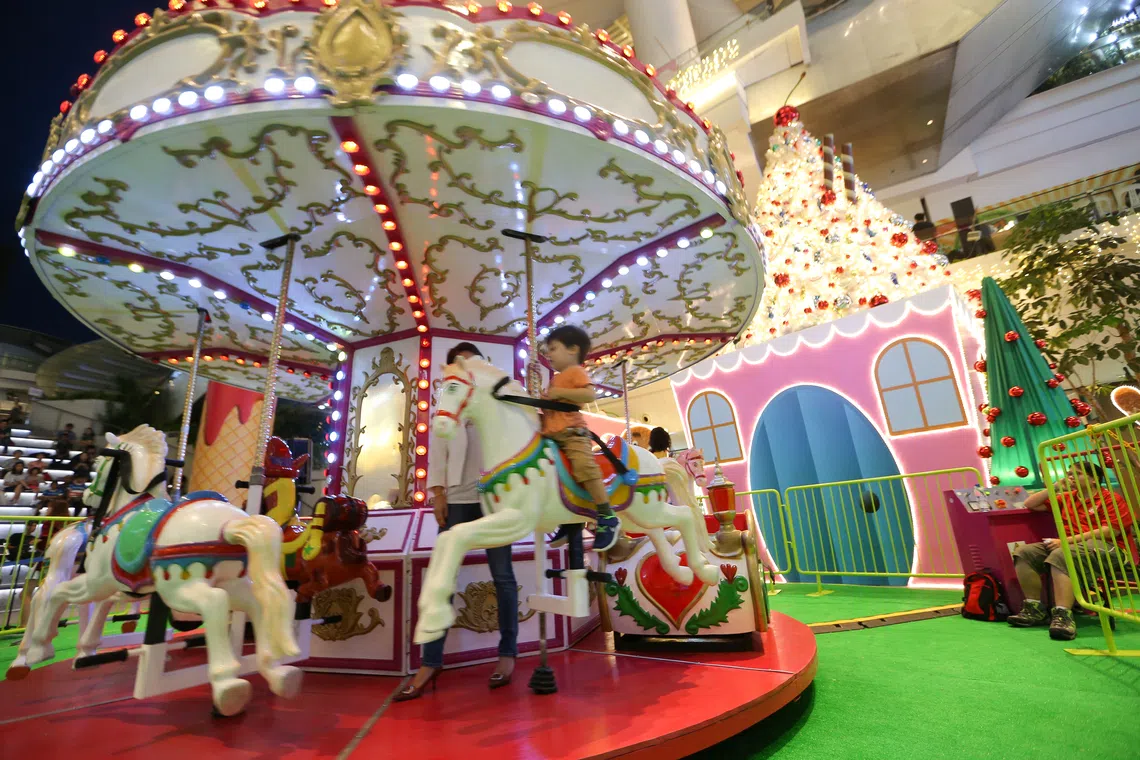
The safety criteria will be clearly defined, National Development Minister Chee Hong Tat said, adding that the aim is to implement these changes by June 2027, after legislative amendments are made.
Published Nov 05, 2026, 08:05 PM
Updated Nov 05, 2026, 08:05 PM
BCA will relax rules for more low-risk amusement rides, such as kiddy trains, carousels and flume rides, to help businesses enter the market more easily.
Rides that meet clear safety criteria will no longer need permits, while higher-risk rides will still face full checks. Changes are planned for June 2027.
Chee said the move could cut costs by up to $20,000 upfront and $2,000 a year per ride. He also said Singapore will keep reviewing rules to support enterprise and growth capital.
SINGAPORE - Kiddy train rides and carousels are among the low-risk amusement park rides that could be exempt from having to obtain operation and installation permits, potentially saving qualifying operators thousands of dollars in costs each year.
This move comes after the Building and Construction Authority (BCA) in January gave such exemptions to operators of battery-powered go-kart rides that have a speed limit of under 6kmh, and have mechanical parts that are safely covered.
It followed an appeal from some operators that the rules were overly onerous and resulted in high compliance costs.
Speaking at the Spirit of Enterprise awards gala dinner on Nov 5, National Development Minister Chee Hong Tat cited the BCA’s latest move as an example of regulations being updated to keep pace with how businesses operate today.
“Our amusement rides regulations were designed at a time when rides were mostly larger and higher-risk attractions, such as roller coasters and drop towers,” he said.
However, Chee noted that technology today has brought smaller-scale and low-risk rides into the market including battery-operated kiddy rides and low-speed go-karts, which are common in shopping malls, family entertainment centres and carnivals.
But because of the broad definition of an amusement ride, some of these were subject to requirements meant for higher-risk rides, he said.
Under the new rules, operators of qualifying low-risk rides that meet the safety criteria will no longer be required to obtain permits, while higher-risk rides will continue to be subject to the appropriate regulatory requirements and safeguards, Chee said.
The safety criteria will be clearly defined, he said, adding that the aim is to implement these changes by June 2027, after legislative amendments are made.
This will make it easier for new businesses to enter the amusement rides market, while existing operators whose rides fall within the scope of the relaxed rules will benefit from lower compliance costs, Chee said.
The estimated savings are up to $20,000 in upfront costs and $2,000 in recurring costs per ride each year.
For travelling carnival operator Uncle Ringo, which was established in 1984, the relaxed regulations are a welcome change because this will help lower the operator’s compliance costs and also result in the industry bringing in more low-risk amusement rides.
“We will see some cost savings... But the savings aren’t that substantial because we have more regulated rides, about 10, and just two deregulated rides,” said Joyce Lee, director of Uncle Ringo.
Ms Lee, 42, who is the daugher of Uncle Ringo founder Lee Woon Chiang, said she was concerned about how other operators will ensure that low-risk amusement rides are operated safely once the rules are relaxed.
“This is because the operators of such rides may not be obligated to report incidents of injury to BCA after the rules are relaxed. And if an incident happens, that will affect the reputation of the industry,” said Ms Lee, who has been running Uncle Ringo since 2011.
Smiley World Singapore, which operates three Smiley World Choo Choo train rides in Downtown East, Westgate and Waterway Point, also welcomed the proposed changes.
“This will save us compliance costs and manhours on permit applications,” said Chew Peck Seong, technical manager of Smiley World Singapore.
Even though the operator of low-risk amusement train rides will "technically” not be required to report to BCA if incidents happen after the rule changes, Chew said Smiley World will still be getting public liability insurance to ensure it has coverage for incidents.
“We will continue with good practices such as safety checks and other guidelines,” he added.
On Nov 5, Chee also spoke about Government efforts to help businesses try new ideas and simplify existing rules.
For instance, the Inter-Ministerial Committee on Pro-Enterprise Rules Review has engaged more than 200 business leaders and reviewed over 300 pieces of industry feedback in the past two years, Chee said.
The committee works across government agencies to simplify regulatory applications, speed up approvals, and review outdated requirements. More than two-thirds of the issues raised have since been resolved, Chee added.
“For example, businesses have told us that longer construction periods and rising development costs can make it harder to plan major investments. JTC has therefore added three years to the lease tenure of new greenfield industrial land allocations,” he said.
For entrepreneurship to flourish, businesses also need capabilities, talent, access to markets and capital to start, grow and expand overseas, Chee said.
To that end, the Monetary Authority of Singapore introduced the Venture Capital Fund Manager regime in 2017 to make it simpler for venture capital managers to establish themselves locally.
There are now more than 180 such managers, expanding the pool of capital and expertise available to support start-ups and growing enterprises.
MAS is also working with the Ministry of Energy, Trade and Industry to further strengthen Singapore’s growth capital ecosystem.
This involves looking at how to better support companies at different stages of growth, broaden exit and capital recycling options, and deepen capabilities across the financing chain.
BCA/Building and Construction Authority
国家发展部长徐芳达表示,安全标准将明确界定,并补充说,目标是在立法修正案出台后,于2027年6月之前实施这些改变。
发布于 2026 年 11 月 5 日晚上 8:05
更新于2026年11月5日晚上8:05
建设局将放宽对儿童小火车、旋转木马和水上滑道等低风险游乐设施的规定,以帮助企业更容易地进入市场。
符合明确安全标准的游乐设施将不再需要许可证,而高风险游乐设施仍需接受全面检查。相关变更计划于2027年6月生效。
Chee表示,此举可节省高达2万美元的前期费用和每年2000美元的单次乘车费用。他还表示,新加坡将继续审查相关规定,以支持企业发展和增长资本。
新加坡——儿童小火车和旋转木马等低风险游乐园游乐设施可能无需获得运营和安装许可证,这每年可为符合条件的运营商节省数千美元的成本。
此前,新加坡建设局 (BCA) 于 1 月份对限速低于 6 公里/小时且机械部件得到安全覆盖的电池驱动卡丁车运营商给予了此类豁免。
此前一些运营商提出申诉,称这些规定过于繁琐,导致合规成本过高。
11月5日,国家发展部长徐芳达在“企业精神奖”颁奖晚宴上发表讲话时,以建设局的最新举措为例,说明法规正在更新,以跟上当今企业的运营方式。
他说:“我们的游乐设施法规是在游乐设施大多是规模更大、风险更高的项目(例如过山车和跳楼机)的时代制定的。”
然而,Chee指出,如今的技术已经将规模较小、风险较低的游乐设施带入市场,包括电池驱动的儿童游乐设施和低速卡丁车,这些设施在购物中心、家庭娱乐中心和嘉年华中很常见。
但他表示,由于游乐设施的定义很宽泛,其中一些设施需要遵守针对高风险游乐设施的要求。
Chee表示,根据新规,符合安全标准的低风险游乐设施运营商将不再需要获得许可证,而高风险游乐设施仍将受到相应的监管要求和保障措施的约束。
他表示,安全标准将明确界定,并补充说,目标是在立法修正案出台后,于 2027 年 6 月之前实施这些变更。
Chee表示,这将使新企业更容易进入游乐设施市场,而现有运营商如果其游乐设施符合放宽后的规则范围,也将受益于更低的合规成本。
预计每次出行可节省高达 20,000 美元的前期成本和 2,000 美元的年度经常性成本。
对于成立于 1984 年的流动嘉年华运营商 Uncle Ringo 来说,放宽的监管规定是一个受欢迎的变化,因为这将有助于降低运营商的合规成本,并促使该行业引入更多低风险的游乐设施。
“我们会看到一些成本节约……但节约的幅度并不大,因为我们有大约 10 个受管制的游乐设施,而只有两个不受管制的游乐设施,”Uncle Ringo 的主管 Joyce Lee 说。
42岁的李女士是“林戈叔叔”创始人李云强的女儿,她说她担心一旦规则放宽,其他运营商将如何确保低风险游乐设施的安全运营。
“这是因为规则放宽后,这类游乐设施的经营者可能没有义务向建筑管理局报告受伤事故。如果发生事故,将会影响整个行业的声誉,”自2011年以来一直经营“林戈叔叔”游乐设施的李女士说道。
在 Downtown East、Westgate 和 Waterway Point 运营三条 Smiley World Choo Choo 小火车线路的新加坡 Smiley World 也对拟议的变更表示欢迎。
“这将为我们节省合规成本和许可证申请的人工时间,”新加坡 Smiley World 技术经理 Chew Peck Seong 表示。
尽管低风险游乐列车的运营商“理论上”无需在规则变更后向BCA报告事故,但Chew表示,Smiley World仍将购买公共责任保险,以确保在发生事故时获得赔偿。
“我们将继续推行安全检查和其他指导方针等良好做法,”他补充道。
11月5日,Chee还谈到了政府为帮助企业尝试新想法和简化现有规则所做的努力。
Chee表示,例如,过去两年里,跨部门促进企业发展规则审查委员会已经与200多位商界领袖进行了交流,并审查了300多份行业反馈意见。
该委员会与各政府机构合作,简化监管申请流程,加快审批速度,并审查过时的要求。Chee补充说,目前已解决超过三分之二提出的问题。
“例如,企业告诉我们,更长的建设周期和不断上涨的开发成本会使重大投资计划更加难以制定。因此,裕廊集团将新划拨的工业用地租赁期限延长了三年,”他说道。
Chee表示,创业精神要想蓬勃发展,企业还需要能力、人才、市场准入和资金才能在海外起步、发展和扩张。
为此,新加坡金融管理局于 2017 年推出了风险投资基金经理制度,以简化风险投资经理在本地设立机构的流程。
目前已有超过 180 位这样的管理者,扩大了可用于支持初创企业和成长型企业的资金和专业知识池。
新加坡金融管理局也正与能源、贸易和工业部合作,进一步加强新加坡的增长资本生态系统。
这包括研究如何更好地支持处于不同发展阶段的公司,拓宽退出和资本循环利用的选择,以及深化整个融资链的能力。
建设局/建筑管理局