Mask distribution, haze shelters to cease by Nov 7, haze subsidy scheme to end from Nov 12口罩发放和雾霾避难所将于11月7日停止,雾霾补贴计划将于11月12日结束。
NEA’s daily 24-hour PSI forecast will also end on Nov 7. Read more at straitstimes.com.
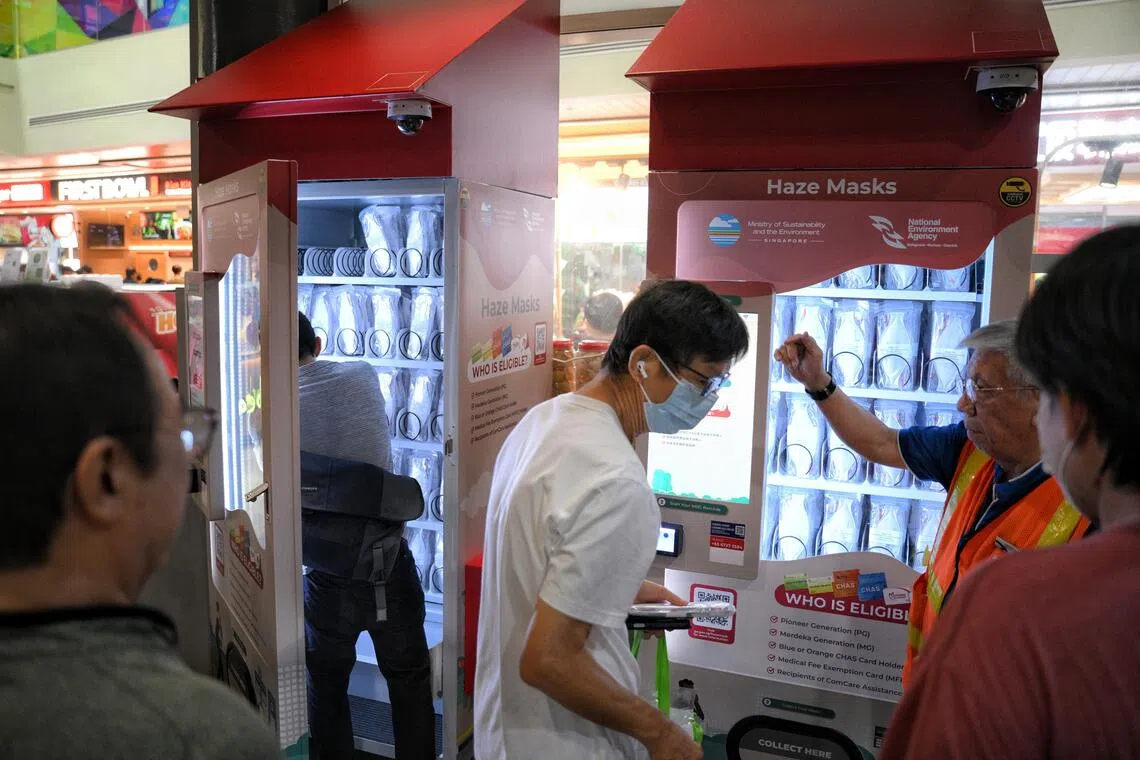
SMRT staff help out elderly residents with the redemption of their face masks from a mask vending machine at Ang Mo Kio Bus Interchange on Oct 15, 2026.
Published Nov 05, 2026, 08:09 PM
Updated Nov 05, 2026, 08:09 PM
SINGAPORE - By Nov 7, most of Singapore’s haze measures will end, including the distribution of masks and the running of haze shelters, as the risk of transboundary haze reaching the country is expected to be low with inter-monsoon conditions and more rain setting in.
The haze subsidy scheme will cease from Nov 12, said the National Environment Agency (NEA) on Nov 5.
NEA’s daily 24-hour PSI (Pollutant Standards Index) forecast – which has been issued every evening for over two months – will also end on Nov 7.
The distribution of haze masks will conclude at 6pm on Nov 7.
On the same day and time, air-conditioned rooms at community clubs and selected Residents’ Committee (RC) and Residents’ Network (RN) Centres that serve as haze shelters will also close.
The 28-agency haze task force will also be stood down.
As at Oct 29, close to 30% of eligible Singaporeans – including seniors aged 60 and above, pregnant women and children – had collected masks from vending machines and community clubs and other points. The distribution of masks and the opening of haze shelters at air-conditioned rooms in community clubs began on Oct 14, after the levels of PM2.5 – the dominant pollutant during haze – surged to very high levels in the western region.
Haze shelters were also set up in integrated community hubs, Residents’ Committee Centres and Residents’ Networks.
Nov 11 is the last day for patients to see a doctor under the haze subsidy scheme, which was activated on Oct 12.
As at Oct 31, over 100,000 visits were recorded at GP clinics participating in the scheme, and more than 60,000 visits were logged at the polyclinics, said MOH in a separate statement on Nov 5.
Under the scheme, eligible Singapore citizens pay no more than $10 for treatment of haze-related ailments at more than 1,300 private general practitioner (GP) clinics and polyclinics.
With the improvement in air quality conditions, the Ministry of Manpower will also stand down its haze-related measures for outdoor workers from Nov 7.
“Employers may resume outdoor work without the additional haze-related precautions,” said NEA.
Overall, Singapore has experienced more than seven weeks of haze in 2026, starting from Sept 4, when air quality first entered the unhealthy range.
Bouts of haze then continued to hit the country until air quality improved from around Oct 26. The weatherman said on Oct 29 that changing wind conditions due to the onset of the inter-monsoon in Singapore will likely lower the risk of transboundary haze affecting the Republic. The inter-monsoon period is characterised by lighter, more variable winds. Together with wetter conditions over Singapore and the nearby areas, the smoke haze situation for Singapore is expected to improve. Inter-monsoon conditions have been progressively setting in over Singapore and the surrounding region with the weakening of the south-west monsoon. That monsoon season is characterised by winds blowing from the south, which had pushed the pollution from the fires in Indonesia to Singapore over the past two months.
The PSI forecast for Nov 6 is expected to be in the moderate range from 51 to 80. For Nov 6 and the weekend, showers and variable winds over Singapore and the surrounding region should keep the haze situation suppressed, added NEA.
While wind conditions have become more favourable around Singapore alongside more rainfall, fires are still burning in Indonesia. The ASEAN Specialised Meteorological Centre’s (ASMC) website showed hotspots in Kalimantan and Sumatra on Nov 5 after 5pm. Moderate to dense smoke haze was observed over the southern parts of Kalimantan.
2026年10月15日,SMRT工作人员在宏茂桥巴士转换站帮助老年居民从口罩自动售货机领取口罩。
发布于 2026 年 11 月 5 日晚上 8:09
更新于2026年11月5日晚上8:09
新加坡——到 11 月 7 日,新加坡的大部分雾霾防控措施将结束,包括分发口罩和运营雾霾避难所,因为随着季风间歇期和降雨量的增加,跨境雾霾到达该国的风险预计会很低。
国家环境局(NEA)于11月5日宣布,雾霾补贴计划将于11月12日起停止。
新加坡国家环境局 (NEA) 每日 24 小时污染物标准指数 (PSI) 预报——已连续两个多月每晚发布——也将于 11 月 7 日结束。
防霾口罩发放工作将于11月7日下午6点结束。
同一天同一时间,社区俱乐部和部分居民委员会(RC)和居民网络(RN)中心的空调房间(用作雾霾避难所)也将关闭。
由28个机构组成的雾霾治理工作组也将解散。
截至10月29日,近30%符合资格的新加坡公民——包括60岁及以上的长者、孕妇和儿童——已从自动售货机、民众俱乐部和其他地点领取了口罩。10月14日,在西部地区PM2.5(雾霾期间的主要污染物)浓度飙升至极高水平后,口罩分发和民众俱乐部空调房内设立的雾霾避难所开始开放。
综合社区中心、居民委员会中心和居民网络也设立了雾霾避难所。
11月11日是雾霾补贴计划下患者就医的最后一天,该计划于10月12日启动。
卫生部在 11 月 5 日的另一份声明中表示,截至 10 月 31 日,参与该计划的家庭医生诊所记录了超过 10 万次就诊,综合诊所记录了超过 6 万次就诊。
根据该计划,符合条件的新加坡公民在超过 1300 家私人全科医生诊所和综合诊所治疗与雾霾相关的疾病,只需支付不超过 10 美元。
随着空气质量状况的改善,人力部也将从11月7日起取消针对户外工作者的与雾霾相关的措施。
国家环境局表示:“雇主可以恢复户外工作,无需采取额外的与雾霾相关的预防措施。”
总体而言,新加坡在 2026 年经历了超过七周的雾霾天气,从 9 月 4 日开始,当时空气质量首次进入不健康范围。
此后,雾霾持续侵袭新加坡,直到10月26日左右空气质量才有所改善。气象部门于10月29日表示,由于新加坡进入季风间歇期,风向发生变化,跨境雾霾影响新加坡的风险可能会降低。季风间歇期的特点是风力较弱且变化无常。加之新加坡及其周边地区降雨量增加,预计新加坡的烟霾情况将有所改善。随着西南季风减弱,新加坡及其周边地区逐渐进入季风间歇期。西南季风的特点是南风,过去两个月,正是这种南风将印尼山火产生的污染物吹向了新加坡。
预计11月6日的空气污染指数(PSI)将在51至80之间,处于中等水平。国家环境局补充说,11月6日及周末,新加坡及其周边地区的阵雨和多变的风向应该能够抑制雾霾情况。
虽然新加坡周边地区的风力条件有所改善,降雨量也增加,但印尼的火灾仍在持续。东盟专业气象中心(ASMC)网站显示,11月5日下午5点后,加里曼丹岛和苏门答腊岛仍有火点。加里曼丹岛南部地区出现中度至重度烟霾。