Bankrupt property agent admits to faking sales to get advance commissions破产房产经纪人承认伪造销售业绩以骗取预付佣金
In one instance, another real estate agent had to repay most of the full advance commission of S$91,653 that had been delivered over a fraudulent sale.
In one instance, another real estate agent had to repay most of the full advance commission of S$91,653 that had been delivered over a fraudulent sale.
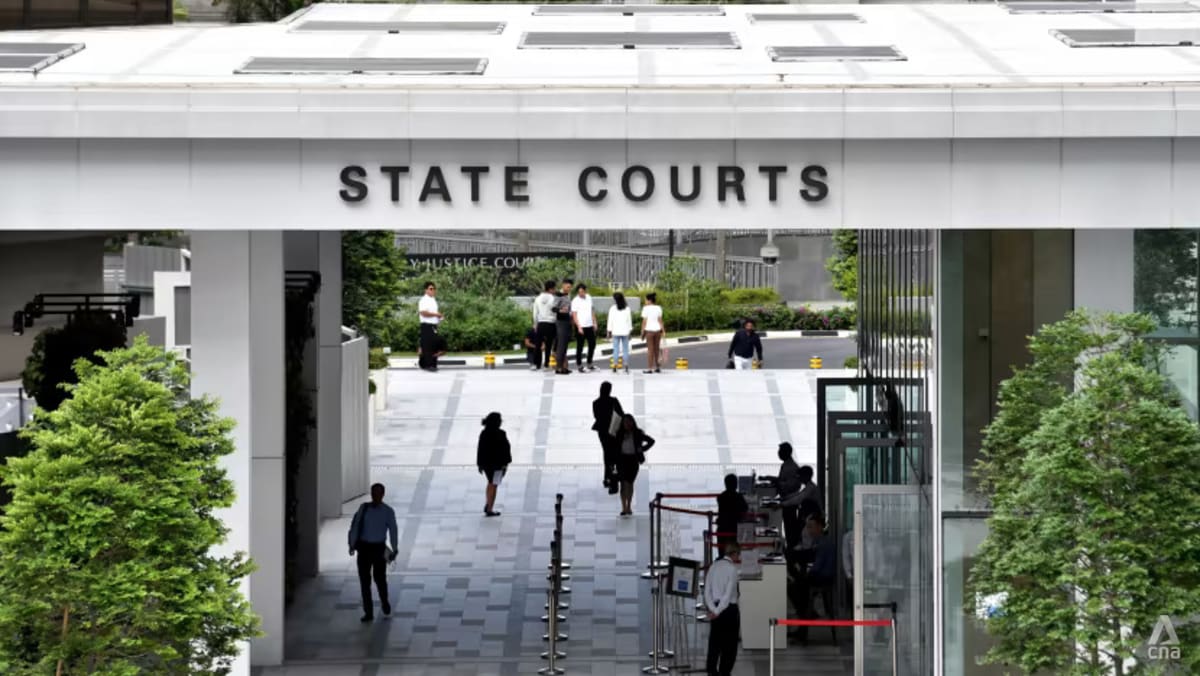
File photo of the State Courts in Singapore.
This audio is generated by an AI tool.
SINGAPORE: A bankrupt property agent faked sales in order to get advance commissions, tricking fellow agents into helping him, and leaving them to pay the debts.
Cheong En Kiong, a 51-year-old Singaporean, pleaded guilty on Tuesday (Sep 8) to four charges which include forgery, cheating and receiving benefits from criminal conduct.
Several other charges will be considered in sentencing.
The court heard that Cheong has been an undischarged bankrupt since 2019.
He is obligated to make monthly payments to his creditors, and he also owed money to his friends and unlicensed moneylenders.
At the time of the offences, Cheong was a real estate agent with ERA Real Estate Singapore. As of Tuesday, he is no longer listed on the Council for Estate Agencies' public register.
THE S$11 MILLION PROPERTY
In June 2022, Cheong asked a 38-year-old real estate agent he had known for a decade to be the co-broker for the sale of a property in Prudential Tower.
The woman was recovering from injuries from an accident at the time.
Cheong chose the property at 30 Cecil Street as it was worth about S$11 million (US$8.7 million) and would yield higher advance commissions.
Cheong told the woman, named only as A1 in court papers, that he needed money urgently and said he was unable to make a submission for advance commission from LytePay.
LytePay is licensed by the Monetary Authority of Singapore and disburses advance commissions to real estate agents in exchange for processing fees.
It works by first delivering advance commissions to real estate agents. When the seller of the property pays the commission due to the real estate agent's company, the company then deducts the advance commission already received by the real estate agent and repays the remainder to LytePay.
Cheong told A1 that she would receive S$5,000 of commission for co-broking. He said he would cover and include her Medisave and income tax for the sale.
A1 believed Cheong was extending her a genuine opportunity and agreed. She had no experience with such a large sale before and Cheong told her he would prepare the documents for her to submit on LytePay.
Cheong forged the signatures in several documents including an option to purchase and a seller's commission agreement.
A1 then submitted the documents to LytePay, requesting an advance commission.
LytePay delivered S$91,653 to A1, who deducted her share and transferred about S$83,500 to Cheong.
Cheong used the money to settle his debts.
Six months later, ERA discovered that the purported buyer had not sent the agency their commission for the sale.
It discovered Cheong's fraudulent actions after an internal investigation and issued him with a warning.
ERA asked A1 and Cheong to repay the full advance commission of S$91,653 that LytePay delivered.
To date, Cheong has paid only about S$10,000 to S$12,000 of this sum and A1 had to bear the remaining amount. She also received a statutory demand from LytePay, which deducted her commission on other sold properties to offset the amount owed.
A1 has tried asking Cheong to repay her the full amount multiple times, to no avail, the prosecutor said.
THE LUCKY PLAZA PROPERTY
Despite receiving a warning from ERA, Cheong offended again.
In October 2025, he went to the home of a former customer who was then aged 69, named B1 in court documents.
He lied that there was a buyer for a commercial property in Lucky Plaza owned by B1.
He then said he needed B1's signature to exercise the option to purchase.
B1 signed on some blank documents.
Cheong then deceived his friend, a 63-year-old OrangeTee & Tie real estate agent with prostate cancer, into co-brokering the sale with him.
He said he needed money urgently due to his debts and business losses, and his friend agreed to help, thinking the unit was genuinely being sold.
Cheong forged signatures in some of the required documents and handed them to his friend, who submitted the documents to OrangeTee, requesting an advance commission via LytePay.
LytePay delivered S$7,955 to Cheong's friend, who gave S$4,700 to Cheong.
Cheong had also deceived his friend into co-brokering a sale of a unit at Prudential Tower in July 2025, once again receiving an advance commission from LytePay.
OrangeTee later sent a letter of reminder to the purported seller of the Prudential Tower unit, saying the company owed OrangeTee about SS$135,300 in agency fees.
A director of the company informed OrangeTee that the company had not, in fact, sold the unit.
OrangeTee conducted internal investigations and discovered the fraudulent transactions done by Cheong for both the Prudential unit and the Lucky Plaza unit.
The company fired Cheong's friend and made him bear the total amount of advance commission he received from both sales – a sum of about S$86,000.
Those involved lodged police reports in October 2025.
To date, Cheong has made no restitution to OrangeTee, his friend, or to LytePay.
He has been remanded since early April this year.
The prosecutor sought 24.5 to 28 months' jail, saying that Cheong exploited his own friends who trusted him.
He left them "saddled with substantial financial obligations to LytePay", obligations which he would have understood as a bankrupt of several years' standing, said Deputy Public Prosecutor Kelly Ng.
Defence lawyer Riko Isaac from Riko Isaac Legal sought 18.5 to 21.5 months' jail instead.
He said his client had pleaded guilty at the earliest opportunity and fully cooperated with the authorities.
The case was adjourned to October for sentencing.
For cheating or forgery to commit cheating, he could be jailed for up to 10 years and fined.
For acquiring property that are the benefits of criminal conduct, he could be jailed for up to 10 years, fined up to S$500,000, or
Get our pick of top stories and thought-provoking articles in your inbox
Stay updated with notifications for breaking news and our best stories
Join our channel for the top reads for the day on your preferred chat app
在一次欺诈性销售中,另一名房地产经纪人不得不退还大部分预付佣金 91,653 新元。
新加坡国家法院的资料照片。
这段音频由人工智能工具生成。
新加坡:一名破产的房地产经纪人为了骗取预付佣金而伪造销售业绩,欺骗其他经纪人帮助他,并让他们替他偿还债务。
51岁的新加坡人张恩强(Cheong En Kiong)于周二(9月8日)承认四项指控,包括伪造、欺诈和从犯罪行为中获利。
量刑时还会考虑其他几项指控。
法庭获悉,Cheong自2019年以来一直处于未解除破产状态。
他有义务每月向债权人还款,他还欠朋友和无证放贷人的钱。
案发时,张某是新加坡ERA房地产公司的房地产经纪人。截至周二,他已从房地产代理理事会的公开名册中除名。
价值1100万新元的房产
2022 年 6 月,张先生请他认识了十年的一位 38 岁的房地产经纪人担任保诚大厦一处房产的联合经纪人。
事发时,这名女子正在从一场事故中受伤的伤势中恢复。
张先生之所以选择塞西尔街 30 号的房产,是因为它的价值约为 1100 万新加坡元(870 万美元),可以带来更高的预付佣金。
Cheong告诉法庭文件中只称其为A1的女子,他急需用钱,并表示他无法向LytePay申请预付佣金。
LytePay 已获得新加坡金融管理局的许可,并向房地产经纪人预付佣金,以换取手续费。
其运作方式是先向房地产经纪人预付佣金。当房产卖方向房地产经纪人公司支付应付佣金时,该公司会从中扣除已收到的预付佣金,并将剩余部分返还给 LytePay。
张女士告诉A1,她将获得5000新元的佣金作为合作经纪费。他还表示,他会承担她此次交易的保健储蓄账户和所得税。
A1相信Cheong是真心实意地给她提供了一个机会,于是同意了。她之前从未有过如此大额的销售经验,Cheong告诉她他会帮她准备好在LytePay上提交的文件。
郑某伪造了多份文件的签名,其中包括一份购买选择权协议和一份卖方佣金协议。
A1随后将文件提交给LytePay,要求预付佣金。
LytePay 向 A1 支付了 91,653 新元,A1 扣除了自己的份额后,将约 83,500 新元转给了 Cheong。
郑用这笔钱偿还了债务。
六个月后,ERA发现所谓的买家并没有向该机构支付销售佣金。
经内部调查,该公司发现了郑某的欺诈行为,并对其发出警告。
ERA要求A1和Cheong偿还LytePay支付的全部预付佣金91653新元。
截至目前,张女士仅支付了约1万至1.2万新元,剩余款项由A1承担。此外,她还收到了LytePay的法定催款通知,LytePay从她出售其他房产的佣金中扣除了欠款。
检察官表示,A1曾多次要求Cheong偿还全部款项,但均无果。
幸运广场物业
尽管收到了ERA的警告,郑某仍再次违规。
2025 年 10 月,他前往一位当时 69 岁的老客户的家中,该客户在法庭文件中被称为 B1。
他谎称B1公司在幸运广场拥有的商业地产已经找到了买家。
然后他说他需要 B1 的签名才能行使购买权。
B1在一些空白文件上签了名。
然后,张某欺骗了他的朋友,一位63岁的OrangeTee & Tie房地产经纪人,这位经纪人患有前列腺癌,与他共同促成了这笔交易。
他说他因为负债和生意亏损急需用钱,他的朋友同意帮忙,以为这套房子真的要卖了。
Cheong伪造了一些所需文件的签名,并将这些文件交给了他的朋友,他的朋友将这些文件提交给了OrangeTee,并通过LytePay要求预付佣金。
LytePay 向 Cheong 的朋友支付了 7,955 新元,这位朋友又给了 Cheong 4,700 新元。
2025 年 7 月,Cheong 还欺骗他的朋友共同促成了保诚大厦一套公寓的出售,并再次从 LytePay 获得了预付佣金。
OrangeTee 后来向 Prudential Tower 单元的所谓卖方发送了一封催款信,称该公司欠 OrangeTee 约 135,300 新元的代理费。
该公司的一位董事告知 OrangeTee,该公司实际上并未出售该设备。
OrangeTee 进行了内部调查,发现 Cheong 为 Prudential 单位和 Lucky Plaza 单位进行了欺诈交易。
公司解雇了张先生的朋友,并让他承担从这两笔销售中获得的全部预付佣金——约 86,000 新元。
相关人员于 2025 年 10 月向警方报案。
截至目前,Cheong 尚未向他的朋友 OrangeTee 或 LytePay 做出任何赔偿。
他自今年四月初以来一直被还押候审。
检察官要求判处郑某 24.5 至 28 个月监禁,称郑某利用了信任他的朋友。
副检察官凯利·吴表示,他留给他们的是“对 LytePay 的巨额财务义务”,而作为一名破产多年的破产者,他理应理解这些义务。
辩护律师里科·艾萨克(Riko Isaac)代表里科·艾萨克律师事务所(Riko Isaac Legal)请求判处18.5至21.5个月的监禁。
他说,他的当事人已在第一时间认罪,并全力配合当局的调查。
该案延期至十月宣判。
如果犯有欺诈或伪造罪,他可能被判处最高 10 年监禁并处罚款。
他因获取犯罪所得财产,可能被判处最高 10 年监禁,并处以最高 50 万新元的罚款。
订阅我们的邮件,即可获取精选热门新闻和引人深思的文章。
订阅通知,第一时间获取突发新闻和精彩报道。
加入我们的频道,即可在您常用的聊天应用上获取当日热门文章。