Two-thirds of S’pore students use AI to help them learn at least once a week: Pisa study比萨研究显示,新加坡三分之二的学生每周至少使用一次人工智能辅助学习。
Those who don't use AI tend to score about 20 points higher in science. Read more at straitstimes.com.
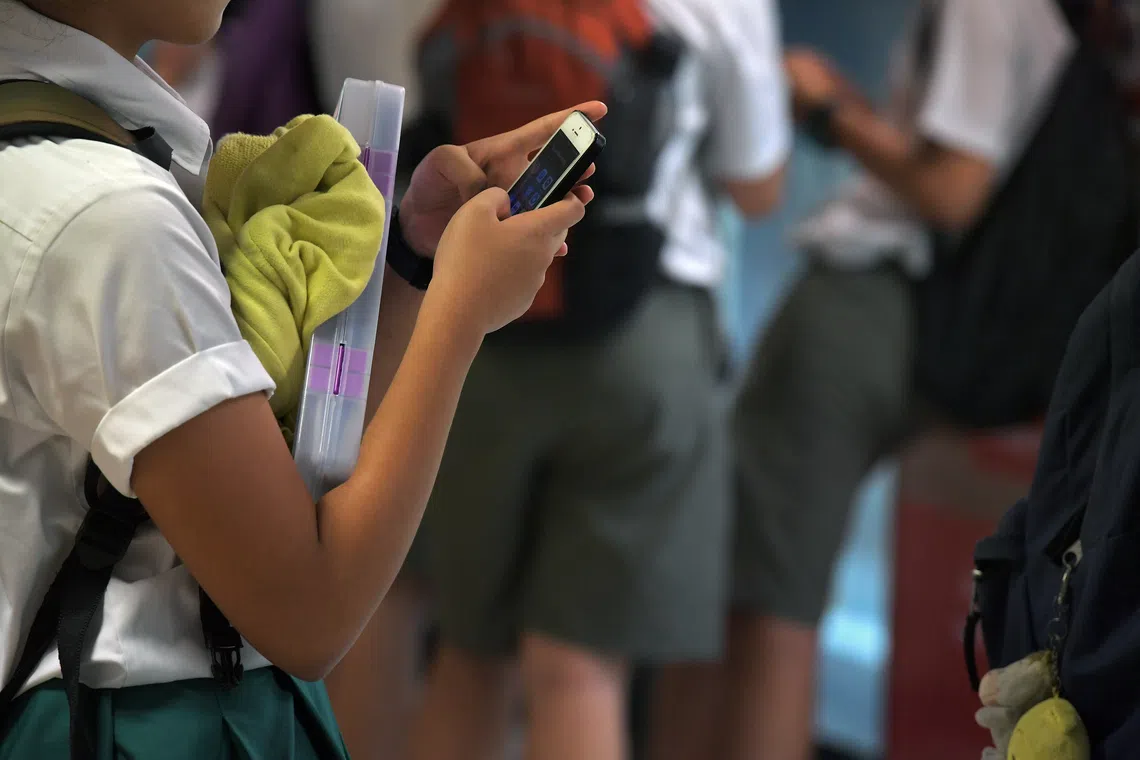
Nearly half of students here frequently use AI to research new topics, summarise texts and draft text for writing assignments.
Published Sep 08, 2026, 03:30 PM
Updated Sep 08, 2026, 03:30 PM
Two-thirds of Singapore students use AI chatbots weekly for learning, but those who don't use AI tend to score about 20 points higher in science.
Moderate and guided AI use can support learning, while overuse or lack of guidance may cause distraction and lower performance.
Family support for students in Singapore has declined, which concerns experts, as parental involvement strongly influences educational outcomes.
SINGAPORE - Two-thirds of Singapore students reported using AI chatbots to help them learn at least once a week, compared with 46 per cent of students on average across Organisation for Economic Cooperation and Development (OECD) countries.
Nearly half - 41 per cent to 46 per cent - of students here said they frequently use AI to do research on new topics, summarise texts and draft text for writing assignments.
And only 4 per cent of students said they never or hardly ever use AI chatbots for schoolwork, according to a background questionnaire that was part of the Programme for International Student Assessment (Pisa) 2025.
The questionnaire had posed 15-year-olds around the world a range of questions including their attitudes towards learning, how they used digital resources, how often they were bullied, as well as teacher support and parental involvement.
It surveyed 6,551 students across 157 schools here. The Pisa 2025 results were released on Sept 8, and a record 91 countries and economies had taken part in the latest assessment, which examined the use of AI in school systems for the first time.
The study looked at the differences in AI use across high-performing systems. Singapore has explicitly included the use of AI tools , it noted, while the use of AI for schoolwork in Japan and Estonia is more limited in scope.
Students here reported spending on average 2.1 hours per day using digital devices at school for learning activities, compared to the OECD average of 1.7 hours. They reported spending one hour a day using digital devices at school for leisure, close to the OECD average of 1.1 hours.
In Singapore, 29 per cent of students said their peers are often distracted by the use of digital devices during most or all science lessons, similar to the OECD average (28%).
More schools here have also introduced cell phone bans , with the proportion rising from 16 per cent in 2022 to 43 per cent in 2025.
On average across OECD countries, students in schools where cell phone use is not allowed on school premises are about 13 per cent less likely to report digital distraction.
The Pisa report found a complex relationship between AI use and science performance, with the effects depending on how students use AI.
On average across countries, students who said they do not use AI outperform those who do in science by around 20 points - which OECD said is equivalent to being around one year of schooling ahead of their peers.
Speaking to The Straits Times on the findings, OECD’s director for education and skills Dr Andreas Schleicher said AI separates task performance from learning, letting students “do wonderful things without learning anything”.
The report noted that poorer performance could be linked to other reasons, such as struggling students potentially being more likely to rely on AI.
Students who do not use AI for specific schoolwork tasks outperform those who do. On the other hand, students who use AI weekly for general learning purposes perform similarly as those who do not use AI.
Students who report using AI chatbots to help them learn once or twice a week perform at a similar level fared similarly as students who report not using AI at all, on average across the OECD.
This shows that digital tools can support learning when used purposefully and in moderation, said the report. In contrast, overuse or a lack of guidance can lead to distraction, limiting meaningful engagement and negatively affecting learning outcomes.
Students who frequently use AI for learning - and learn to assess the quality of AI-generated information at school - also achieve slightly higher science performance than non- or infrequent users, Pisa found.
However, socio-economically advantaged students have greater access to these opportunities, raising concerns about a potential AI divide, the report noted.
Schleicher said the biggest surprise for him was how nearly 40 per cent of the young participants in Singapore said they would check information against sources but rely on common sense over scientific studies.
Students were asked about their views on whether information from a single source should be checked against other sources, and if they should rely more on common sense than scientific evidence.
“AI is common sense. AI is very fluent. It’s very persuasive. It’s very intuitive. In this age, I think common sense is no longer good enough. I think we need to actually reinforce that more scientific attitude, a shared reality that can be verified, not intuition and common sense,” said Schleicher.
He said the danger of AI is that “we give in our human autonomy, our ways of thinking, because technology provides easy solutions”.
Overall, as students engage less in advanced mental processes, this may also contribute to their decline in performance across all three areas in reading, mathematics and science, he added.
“You do not get fit by watching sports - you get fit by doing sports. And the same is with learning, learning is always about cognitive struggle.”
Dip in family support
Despite strong teacher support in Singapore, students perceive their families as being less supportive in their learning, compared to their OECD peers . “That’s also a concern - that families increasingly become the client of education, not the co‑producer,” said Schleicher.
In 2025, 55 per cent of students in Singapore said their parents or guardians asked them at least once per week what they did at school, while 37 per cent reported having at least weekly discussions about problems they might have at school.
“It’s not about making sure that your child gets into the best school,” he said. “It’s a lot more about what you do yourself as a parent to value the education. It’s not just about delegating that responsibility to an institution.”
“The Pisa data shows that care and attention from families is a very powerful predictor for outcomes,” Schleicher said.
Acknowledging this finding, MOE said only about half of Singapore students reported having weekly family discussions about how they were doing in school, and 39 per cent said their families take interest in what they learned in school.
“Children desire and benefit from such interaction with parents,” said the ministry, adding that its Parenting for Wellness resources can guide parents in supporting their children’s learning.
MOE also noted the study’s finding that Singapore students are also less physically active outside of school. While more students reported exercising outside school in 2025 than in 2022, 23 per cent reported not exercising at all outside school, higher than the OECD average of 17 per cent.
The ministry said it will continue to work with other agencies to help students lead an active lifestyle.
Shermaine Ang is a journalist at The Straits Times, covering social issues in Singapore.
Ministry of Education
AI/artificial intelligence
这里近一半的学生经常使用人工智能来研究新课题、总结文本和撰写写作作业的草稿。
发布于 2026 年 9 月 8 日下午 3:30
更新于2026年9月8日下午3:30
新加坡三分之二的学生每周使用人工智能聊天机器人进行学习,但那些不使用人工智能的学生在科学方面的得分往往高出约 20 分。
适度且有指导的人工智能使用可以辅助学习,而过度使用或缺乏指导则可能导致注意力分散和表现下降。
新加坡家庭对学生的支持有所下降,这引起了专家的担忧,因为家长的参与对教育成果有着重要的影响。
新加坡——三分之二的新加坡学生表示,他们每周至少使用一次人工智能聊天机器人来帮助他们学习,而经济合作与发展组织(OECD)国家的平均学生使用人工智能聊天机器人的比例为 46%。
这里近一半(41%至46%)的学生表示,他们经常使用人工智能来研究新课题、总结文本和撰写作业草稿。
根据国际学生评估计划 (PISA) 2025 的一项背景调查问卷显示,只有 4% 的学生表示他们从不使用或几乎不使用人工智能聊天机器人来完成学校作业。
该问卷向世界各地的 15 岁青少年提出了一系列问题,包括他们对学习的态度、他们如何使用数字资源、他们被欺凌的频率,以及教师的支持和家长的参与情况。
该调查涵盖了本地157所学校的6551名学生。PISA 2025的测试结果于9月8日公布,共有创纪录的91个国家和经济体参与了此次评估,这也是该评估首次考察人工智能在学校系统中的应用情况。
该研究考察了不同高性能系统中人工智能应用方面的差异。研究指出,新加坡已明确将人工智能工具纳入其应用范围,而日本和爱沙尼亚在学校作业中使用人工智能的范围则较为有限。
这里的学生报告称,他们平均每天在学校使用电子设备进行学习活动2.1小时,而经合组织国家的平均水平为1.7小时。他们还报告称,他们平均每天在学校使用电子设备进行休闲活动1小时,与经合组织国家的平均水平1.1小时接近。
在新加坡,29% 的学生表示,他们的同学在大多数或所有科学课上经常因使用电子设备而分心,这与经合组织平均水平 (28%) 相似。
这里越来越多的学校也开始禁止使用手机,这一比例从 2022 年的 16% 上升到 2025 年的 43%。
在经合组织国家,平均而言,在禁止在校园内使用手机的学校里,学生报告受到电子产品干扰的可能性要低约 13%。
PISA报告发现人工智能的使用与科学成绩之间存在复杂的关系,其影响取决于学生如何使用人工智能。
各国平均而言,不使用人工智能的学生在科学方面的表现比使用人工智能的学生高出约 20 分——经合组织表示,这相当于比同龄人领先一年左右的教育水平。
经合组织教育与技能主管安德烈亚斯·施莱歇尔博士在接受《海峡时报》采访时谈到这些发现,他表示人工智能将任务表现与学习分开,让学生“无需学习任何东西就能做出精彩的事情”。
报告指出,表现较差可能与其他原因有关,例如学习困难的学生可能更倾向于依赖人工智能。
不使用人工智能完成特定作业的学生,其成绩优于使用人工智能的学生。另一方面,每周使用人工智能进行一般学习的学生,其成绩与不使用人工智能的学生相差无几。
在经合组织国家中,平均而言,每周使用一到两次人工智能聊天机器人帮助学习的学生,其学习成绩与完全不使用人工智能的学生的学习成绩相似。
报告指出,这表明,如果使用得当且适度,数字工具可以辅助学习。相反,过度使用或缺乏指导则会导致注意力分散,限制有效参与,并对学习效果产生负面影响。
PISA 研究发现,经常使用人工智能进行学习的学生,以及在学校学习评估人工智能生成的信息质量的学生,其科学成绩也比不经常使用人工智能的学生略高。
报告指出,然而,社会经济地位优越的学生更容易获得这些机会,这引发了人们对人工智能可能造成的鸿沟的担忧。
施莱歇尔表示,最令他惊讶的是,近 40% 的新加坡年轻参与者表示,他们会核对信息来源,但更依赖常识而不是科学研究。
学生们被问及他们对以下问题的看法:来自单一来源的信息是否应该与其他来源的信息进行核对;以及他们是否应该更多地依赖常识而不是科学证据。
“人工智能就是常识。人工智能非常流畅,非常有说服力,也非常直观。在这个时代,我认为常识已经不够用了。我认为我们需要真正强化那种更科学的态度,一种可以验证的共同现实,而不是直觉和常识,”施莱歇尔说道。
他表示,人工智能的危险在于“我们放弃了人类的自主权和思维方式,因为技术提供了简单的解决方案”。
他还补充说,总体而言,随着学生参与高级思维过程的减少,这也可能导致他们在阅读、数学和科学这三个领域的表现下降。
“看体育比赛并不能让你变得健康——只有参与体育比赛才能让你变得健康。学习也是如此,学习始终是一个认知挑战的过程。”
家庭支持减少
尽管新加坡教师给予学生大力支持,但与经合组织成员国的同龄人相比,学生们感觉他们的家庭在学习方面支持力度不足。“这也是一个令人担忧的问题——家庭越来越成为教育的接受者,而不是共同创造者,”施莱歇尔说道。
2025年,新加坡55%的学生表示,他们的父母或监护人每周至少会问他们一次在学校做了什么,而37%的学生表示,他们每周至少会与父母或监护人讨论他们在学校可能遇到的问题。
他说:“关键不在于确保你的孩子能进最好的学校,而在于你作为父母自身如何重视教育,而不是把这份责任完全推给教育机构。”
施莱歇尔说:“PISA 数据显示,家庭的关爱和关注是预测结果的一个非常有力的指标。”
教育部承认这一发现,并表示只有大约一半的新加坡学生表示每周都会与家人讨论他们在学校的表现,39%的学生表示他们的家人对他们在学校学到的东西感兴趣。
“孩子们渴望并能从与父母的这种互动中受益,”该部表示,并补充说,其“健康育儿”资源可以指导父母支持孩子的学习。
教育部还注意到,该研究发现新加坡学生在校外体育锻炼的程度也较低。虽然2025年报告在校外锻炼的学生人数比2022年有所增加,但仍有23%的学生表示完全不在校外锻炼,这一比例高于经合组织17%的平均水平。
教育部表示将继续与其他机构合作,帮助学生养成积极健康的生活方式。
Shermaine Ang是《海峡时报》的记者,负责报道新加坡的社会问题。
教育部
人工智能