Space Force says its relationship with Europe is ‘business as usual’美国太空部队称其与欧洲的关系“一切照旧”。
Gen. Chance Saltzman's comments come as the Space Force prepares to release an international partnership strategy in the coming weeks.
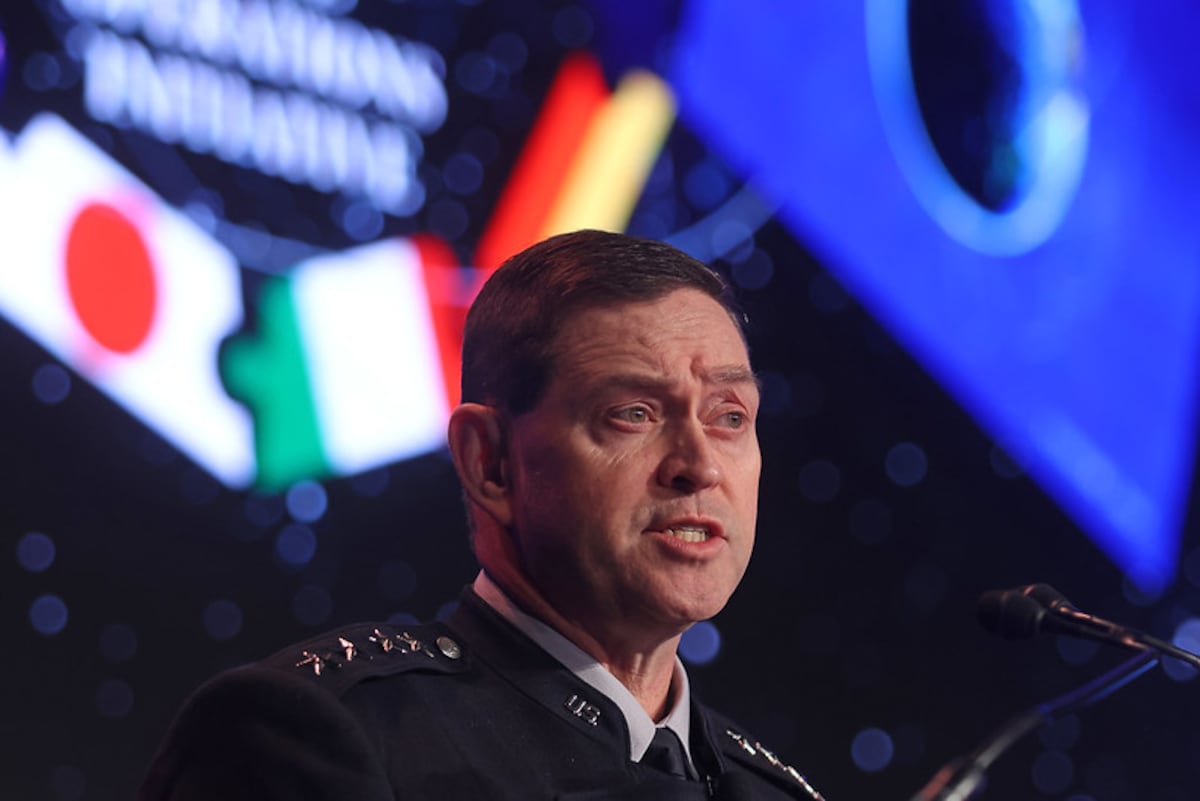
COLORADO SPRINGS, Colo. — The Space Force’s top officer on Wednesday said his service’s day-to-day interactions with European allies haven’t been impacted by growing uncertainty about the United States’ relationship with Europe and the Trump administration’s shifting posture toward Ukraine.
“The military-to-military relationships, especially with my counterparts that I deal with on a routine basis …it’s business as usual,” Chief of Space Operations Gen. Chance Saltzman told reporters during a briefing at the Space Symposium in Colorado Springs, Colorado. “We’re still discussing the same challenges we had. … We’re still working the same basic collaborative issues that we’ve been working.”
Saltzman’s comments come as U.S. aid for Kiev’s defense has slowed and the Defense Department is moving troops away from a Ukraine support hub in Poland . In early March, the National Geospatial-Intelligence Agency temporarily froze Ukraine’s access to key satellite imagery amid a broader DOD pause on military aid to the country .
Defense Secretary Pete Hegseth has also urged Europe to invest more domestic funding in national security and rely less on U.S. support. At the same time, U.S. officials have said they want the European Union to continue to buy weapons from American companies.
Saltzman noted that much of the Space Force’s engagement with European partners comes through NATO and the service’s commitment to information sharing with allied nations. Broader decisions around support for Ukraine and U.S. troop levels in Europe are outside of the Space Force’s scope or responsibility.
In the same briefing, Air Marshal Paul Godfrey, the Space Force’s assistant chief of space operations for future concepts and partnerships, said the service and its partners recognize Space Force support to allied nations with nascent military space capabilities and organizations is crucial.
“If we just cut ties, let Europe get on with it, then they’re going to have to spend significant amounts of money, potentially go down dead-ends, developing the sort of capabilities that the U.S. has put together over decades,” he said.
That message undergirds a new international partnerships strategy the Space Force expects to roll out in the coming weeks. Saltzman previewed the document Wednesday during a speech at the symposium.
“Our international partnership strategy is built on one key concept: Coalition operations will be far more successful if we work together well before those contingency operations become necessary,” he said. “We’re not tightly coupled in our training, if we’re not reconciling our operational concepts, if we’re not integrating our capabilities, we will have a very steep learning curve when called upon in crisis or conflict.”
The strategy’s three main goals are to leverage individual nations’ unique expertise, improve information sharing and interoperability and integrate across the spectrum of operations — from force design to employment of capabilities.
Saltzman said the Space Force wants to embed more allies into its planning processes and acquisition strategies, expand joint exercises and coordinate personnel exchanges that allow partners to learn from one another.
He also emphasized that the strategy does not view partnership in space as a one-way street, but instead recognizes that all nations have something to contribute.
“The trick is in focusing on areas where we have a comparative advantage,” he said. “Maybe it’s space domain awareness or hosted payloads. Maybe it’s launch capacity or even simple geography for a ground station. I firmly believe that every contribution can make a meaningful impact on space security.”
Saltzman and Godfrey told reporters they’ve been floating the draft strategy to foreign partners this week at Space Symposium and will discuss it in greater depth Thursday as Saltzman hosts a gathering of international space chiefs representing around 20 different nations.
Then on Friday, the 10 nations who are members of the Space Force’s Combined Space Operations initiative will meet to discuss partnership opportunities for the coming year.
Courtney Albon is C4ISRNET’s space and emerging technology reporter. She has covered the U.S. military since 2012, with a focus on the Air Force and Space Force. She has reported on some of the Defense Department’s most significant acquisition, budget and policy challenges.
科罗拉多州科罗拉多斯普林斯——美国太空军最高官员周三表示,尽管美国与欧洲的关系日益不明朗,且特朗普政府对乌克兰的态度不断转变,但太空军与欧洲盟友的日常互动并未受到影响。
“军事关系,特别是与我日常打交道的同行之间的关系……一切照常,”太空作战部长钱斯·萨尔茨曼将军在科罗拉多州科罗拉多斯普林斯举行的太空研讨会上向记者表示。“我们仍在讨论同样的挑战……我们仍在处理那些我们一直在努力解决的基本合作问题。”
萨尔茨曼发表上述言论之际,美国对基辅国防的援助已经放缓,国防部也正从位于波兰的乌克兰支援中心撤军。3月初,在国防部暂停对乌克兰军事援助的同时,国家地理空间情报局暂时冻结了乌克兰获取关键卫星图像的权限。
美国国防部长皮特·赫格塞斯也敦促欧洲加大国内对国家安全的投入,减少对美国支持的依赖。与此同时,美国官员表示,他们希望欧盟继续从美国公司购买武器。
萨尔茨曼指出,太空军与欧洲伙伴的合作大多通过北约以及太空军与盟国的信息共享承诺来实现。而关于支持乌克兰和美军在欧洲驻军规模的更广泛决策则超出了太空军的职权范围。
在同一次简报会上,太空部队未来概念和伙伴关系助理太空作战部长保罗·戈弗雷空军元帅表示,太空部队及其合作伙伴认识到,太空部队对拥有新兴军事太空能力和组织的盟国的支持至关重要。
他说:“如果我们断绝关系,让欧洲自行发展,那么他们将不得不花费大量资金,甚至可能走上死胡同,才能发展出美国几十年来才建立起来的那种能力。”
这一信息是太空部队计划在未来几周内推出的一项新的国际伙伴关系战略的基础。萨尔茨曼周三在研讨会上发表讲话时预先介绍了这份文件。
他说:“我们的国际伙伴关系战略建立在一个关键理念之上:如果我们能在应急行动成为必要之前就充分合作,联军行动将会更加成功。如果我们训练上的衔接不够紧密,如果我们不能协调作战理念,如果我们不能整合自身能力,那么在危机或冲突中被召集时,我们将面临非常陡峭的学习曲线。”
该战略的三大目标是:发挥各国的独特专长,提高信息共享和互操作性,以及整合从部队设计到能力运用等各个作战领域。
萨尔茨曼表示,太空部队希望将更多盟友纳入其规划流程和采购战略,扩大联合演习,并协调人员交流,使合作伙伴能够互相学习。
他还强调,该战略并不把太空合作视为单向的,而是认为所有国家都能做出贡献。
“关键在于聚焦于我们具有比较优势的领域,”他说。“也许是空间态势感知能力或搭载的有效载荷,也许是发射能力,甚至是地面站的地理位置优势。我坚信,每一份贡献都能对太空安全产生意义深远的影响。”
萨尔茨曼和戈弗雷告诉记者,他们本周在太空研讨会上向外国合作伙伴介绍了该战略草案,并将于周四萨尔茨曼主持召开的由约 20 个不同国家的国际航天负责人参加的会议上进行更深入的讨论。
然后,在周五,太空部队联合太空作战计划的 10 个成员国将举行会议,讨论来年的合作机会。
Courtney Albon是C4ISRNET的太空和新兴技术记者。自2012年以来,她一直报道美国军方新闻,重点关注空军和太空军。她曾报道过国防部一些最重要的采购、预算和政策挑战。