Train like you fight: Taiwan comes to grips with an old military adage像实战一样训练:台湾践行古老的军事格言
Military planners have vowed to inject a greater degree of realism into military training, as China readies new tactics for a potential invasion.
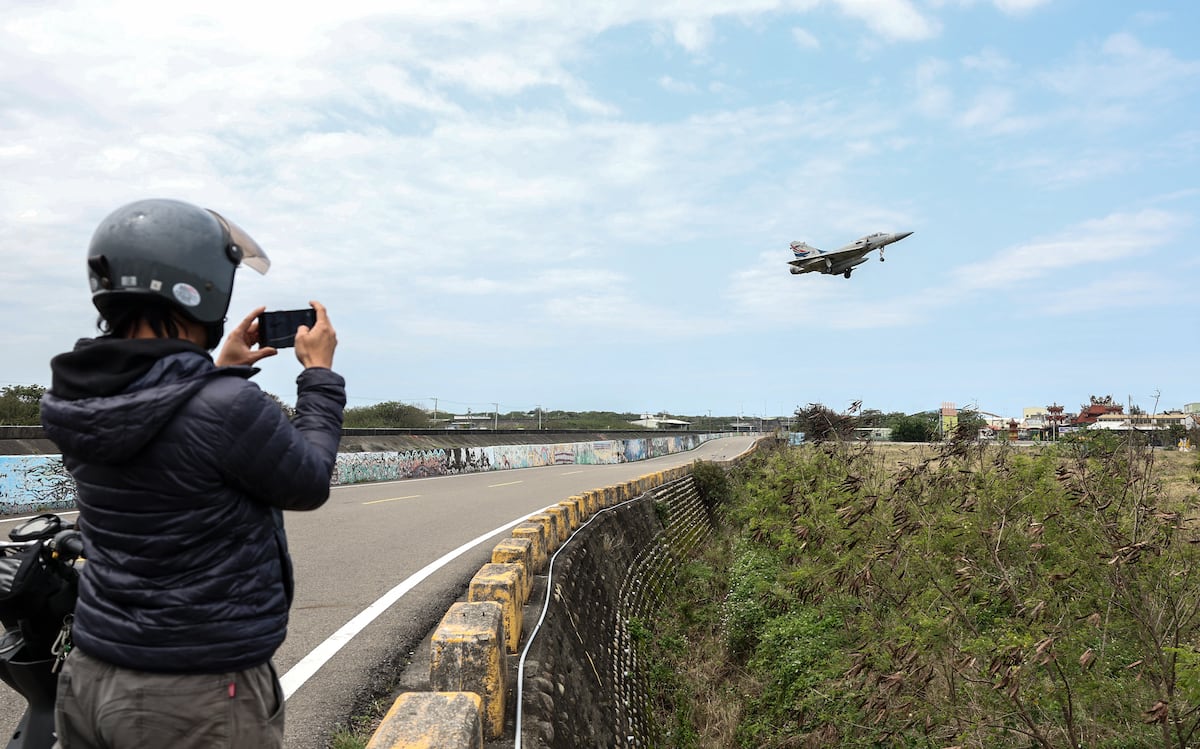
CHRISTCHURCH, New Zealand — A new report by Taiwan’s government pledges to refocus military training on realistic threat scenarios, as the island nation contends with fresh Chinese saber-rattling close to home.
Taipei is aware of the threat posed by Beijing’s forces forces, but officials acknowledge more must be done to deter and, if need be, fight an invasion. That message was prominently included in the Chinese-language Quadrennial Defense Review, published last month, now available as an English translation.
“Training courses and intensity will be increased to enrich combat skills of troops at all levels, and enhance their immediate combat-readiness capabilities,” the document states.
A Defense News reporter has witnessed Taiwanese training events on multiple occasions, which often resembled formulaic and choreographed drills divorced from the fog of war in modern warfare.
A lack of realism has also been fingered as a problem by U.S. observers and advisors.
Rupert J. Hammond-Chambers, president of the U.S.-Taiwan Business Council, told Defense News that the QDR’s aspiration for better training amounts to an important self-criticism.
“Training is a huge area of needed progress,” he noted. “This is going hand in hand with U.S. willingness to liberalize past political boundaries and support expanded training on Taiwan and in the States.”
Randall Schriver, chairman of the U.S.-based Project 2049 Institute, testified to the U.S. Senate in late March that Washington must do more in training Taiwan’s forces.
“That was taboo for decades, and now we’re getting them to a point where they’re more professional, more proficient, as they’re placing a greater emphasis on training,” he told senators.
The QDR listed ways of improving the situation, such as “realistic combat training which is carried out in a force-on-force, on-site and real-time manner.” The review said this is necessary “in response to the enemy’s diversified threats and rapid changes in battlefields.”
One example of China’s evolving tactics was the introduction of new landing barges, exposed in satellite imagery in January . These mobile bridges were employed in a People’s Liberation Army (or PLA) exercise on a Guangdong beach in mid-March.
The innovative devices help military vehicles and supplies move rapidly from ship to shore.
Andrew Erickson, Professor of Strategy at the U.S. Naval War College, warned: “Make no mistake: China’s new bridge-barges are purpose-built for a Taiwan invasion scenario.”
By aligning three landing bridges in a row, a 900-yard-long causeway is created, allowing civilian or naval vessels to berth and unload equipment straight onto beaches.
Erickson explained this unique platform “may represent the missing piece in the puzzle for China to be able to attempt to deploy ferry-delivered, follow-on forces in support of an amphibious assault to the most advantageous locations along Taiwan’s coastline”.
Due to terrain and environmental conditions, the Project 2049 Institute previously identified just 14 Taiwanese beaches suitable for large-scale amphibious landings. However, these new bridge-barges expand the number of potential landing sites, complicating the equation for Taiwanese defense planners.
Taiwan’s defense review urged the armed forces to “construct realistic battlefield environments for joint training and exercises, force-on-force drills, and live-fire shooting practices to validate their results under near realistic combat conditions”.
Last year, Taiwan raised its conscription period from four to twelve months, citing “enemy threats.” Low morale and personnel retention remain problematic, however, something to which poor training contributes.
Conscripts were once lucky to receive a full magazine of bullets to fire during their national service, but the QDR promises they will now also learn how to operate complex weapons such as man-portable air defense missiles, drones and antitank rockets.
Despite such weaknesses, Hammond-Chambers said the latest QDR “grapples with the totality of the threat.”
He believes Taiwan is taking the PLA threat seriously enough. For example, “Defense spending has doubled in the past eight years, and the level of support from the U.S. too has improved in many areas, if not all.”
In terms of Taiwan preparedness, he noted there are “real bright spots, such as deterring a kinetic invasion. But in areas such as gray zone, blockade and critical infrastructure, there is much work to be done.”
Taiwan’s military has an immediate opportunity to demonstrate training improvements, after this year’s major Han Kuang exercise commenced on April 5. This fortnight-long tabletop drill contrasts with last year’s eight-day program.
Maj. Gen. Tung Chi-hsing, director of the Ministry of National Defense’s joint operations planning division, said the wargames have created scenarios in which frequent PLA military exercises escalate into a real attack on Taiwan.
The live-fire segment of Han Kuang will take place July 8-18, and this will see 20,000 reservists mobilized, up from 14,000 last year.
Gordon Arthur is an Asia correspondent for Defense News. After a 20-year stint working in Hong Kong, he now resides in New Zealand. He has attended military exercises and defense exhibitions in about 20 countries around the Asia-Pacific region.
新西兰基督城——台湾政府发布的一份新报告承诺,将把军事训练的重点重新放在现实的威胁场景上,因为这个岛国正在应对中国在近海的新一轮武力威胁。
台北方面意识到北京军队构成的威胁,但官员们也承认,必须采取更多措施来威慑入侵,并在必要时予以反击。这一信息在上月发布的中文版《四年防务评估报告》中得到了重点阐述,该报告目前已有英文译本。
文件指出:“将增加训练课程和强度,以丰富各级部队的作战技能,并提高其即时作战准备能力。”
《防务新闻》记者曾多次目睹台湾的训练活动,这些活动往往类似于程式化的、精心编排的演习,脱离了现代战争的迷雾。
美国观察员和顾问也指出,缺乏现实感也是一个问题。
美台商业委员会主席鲁珀特·J·哈蒙德-钱伯斯告诉《防务新闻》,《四年防务评估报告》中对更好训练的愿望相当于一次重要的自我批评。
他指出:“训练是一个亟需改进的重大领域。这与美国愿意打破政治界限、支持在台湾和美国本土扩大训练的意愿密切相关。”
美国“2049计划研究所”主席兰德尔·施赖弗在3月下旬向美国参议院作证称,华盛顿必须在训练台湾军队方面做得更多。
“这在过去几十年都是禁忌,而现在,我们正努力让他们变得更加专业、更加熟练,因为他们更加重视培训,”他告诉参议员们。
四方防务评估报告列举了改善现状的方法,例如“以实战对抗、实地演练和实时演练的方式进行实战训练”。报告指出,这是“为了应对敌人多样化的威胁和战场上的快速变化”而必须采取的措施。
中国不断演变的战术的一个例子是引入了新型登陆艇,这在1月份的卫星图像中有所曝光。这些移动桥梁在3月中旬中国人民解放军(或称PLA)在广东海滩进行的一次演习中使用。
这些创新装置有助于军用车辆和物资快速从舰船运送到岸上。
美国海军战争学院战略学教授安德鲁·埃里克森警告说:“毫无疑问,中国的新型桥梁驳船是专门为入侵台湾而建造的。”
通过将三座登陆桥并排排列,形成一条 900 码长的堤道,使民用或海军船只能够直接停靠在海滩上并卸载设备。
埃里克森解释说,这个独特的平台“可能代表了中国在尝试部署渡船运送的后续部队以支援两栖攻击到台湾海岸线上最有利地点时所缺失的一块拼图”。
由于地形和环境条件的限制,2049计划研究所此前仅确定了台湾14处适合大规模两栖登陆的海滩。然而,这些新型桥驳船的出现扩大了潜在登陆地点的数量,也让台湾国防规划者的考量变得更加复杂。
台湾的国防评估敦促军队“构建逼真的战场环境,进行联合训练和演习、对抗演练和实弹射击练习,以在接近真实的战斗条件下验证其成果”。
去年,台湾以“敌对威胁”为由,将义务兵役期从四个月延长至十二个月。然而,士气低落和人员流失问题依然存在,而训练不足是造成这一问题的原因之一。
以前,应征入伍的新兵在服兵役期间能领到一整匣子弹就不错了,但QDR承诺,他们现在还将学习如何操作复杂的武器,例如便携式防空导弹、无人机和反坦克火箭。
尽管存在这些弱点,哈蒙德-钱伯斯表示,最新的《四大威胁评估报告》“应对了威胁的方方面面”。
他认为台湾对解放军的威胁足够重视。例如,“过去八年里,台湾的国防开支翻了一番,而且美国对台湾的支持力度在许多方面,即便不是所有方面,也有所提高。”
谈到台湾的防备情况,他指出“确实有一些亮点,例如阻止军事入侵。但在灰色地带、封锁和关键基础设施等领域,还有很多工作要做。”
台湾军方迎来了一个展示训练进步的绝佳机会,今年的“汉光”大型联合军演已于4月5日开始。此次为期两周的桌面演习与去年为期八天的演习形成了鲜明对比。
国防部联合行动计划处处长董志兴少将表示,这些兵棋推演模拟了解放军频繁的军事演习升级为对台湾的真正攻击的情景。
韩光演习的实弹射击环节将于7月8日至18日举行,届时将动员2万名预备役人员,比去年的1.4万人有所增加。
戈登·阿瑟是《防务新闻》的亚洲特派记者。在香港工作20年后,他现居新西兰。他曾到访亚太地区约20个国家,参加过军事演习和防务展览。