From childhood to career and family: NTU student simulates Singapore life through a game从童年到事业再到家庭:南洋理工大学学生通过游戏模拟新加坡人生
A homegrown simulation game turns familiar Singaporean milestones into choices – challenging the conventional idea of what it means to succeed.
新闻视频
A homegrown simulation game turns familiar Singaporean milestones into choices – challenging the conventional idea of what it means to succeed.
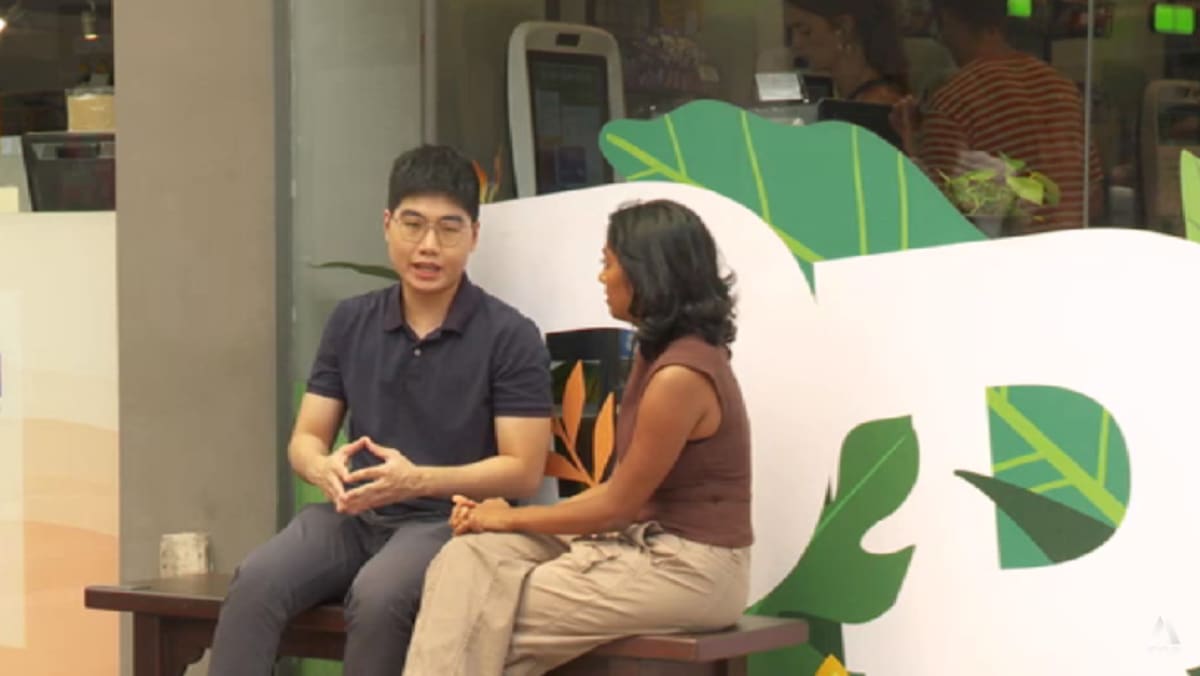
Mr Zhu Ke Xiong (left) speaking to CNA's Alexandra Anand (right) about his game that attempts to simulate a Singaporean life. (Image: CNA)
This audio is generated by an AI tool.
SINGAPORE: What if you could go back and make different choices in life – from what you studied to the career you pursued?
For Nanyang Technological University (NTU) computer science student Zhu Ke Xiong, those questions have become the basis of a game that attempts to simulate an entire Singaporean life.
Called Singapore Life Simulator, the game can be downloaded from the Apple App Store or Google Play.
The third-year student has spent the past few months mapping out a web of decisions spanning childhood, education, careers, relationships and family life.
"This is like a flow chart of how the whole Singaporean life is mapped,” the 23-year-old said.
The simulation starts with the player in childhood, with each life phase featuring its own scenarios.
“For example, when you are in childhood, your life decisions are very rudimentary, like whether you want to put your mother's phone in your mouth or not,” he said.
CNA Games Guess Word Crack the word, one row at a time Buzzword Create words using the given letters Mini Sudoku Tiny puzzle, mighty brain teaser Mini Crossword Small grid, big challenge Word Search Spot as many words as you can Show More Show Less
Mr Zhu shows CNA one of the scenarios in his game, where players make decisions at different stages of life. (Image: CNA)
As the player grows older, the decisions get more difficult – whether to sit for another round of the Gifted Education Programme selection exercise, ask a classmate out, stay in a university hall or take up a part-time job.
Eventually come the adult decisions such as choosing a career and a partner.
But behind those virtual choices was a very real concern: What happens when young people grow up believing there is only one “right” way to live?
Mr Zhu said the local context is what distinguishes his game from other choice-based life simulator games.
“It is based on a unique Singaporean pathway. Everything here is based on very real Singaporean choices,” he said.
Each decision in the game affects four scores – wealth, happiness, family and reputation.
"For wealth, it is one of the more traditional metrics of success,” he said.
“When Singaporeans think of success, we think of money, we think of condominium, car, country club and whatnot,” he added.
But pursuing one measure can come at the expense of another. Working overtime, for example, could increase a player’s wealth, while lowering their happiness and family scores.
Allowing any one of the scores to reach either zero or 100 ends the player’s life, and the game ends.
Players who want to reach the game’s highest tier, the “legendary” tier, may have to do something that can feel uncomfortable in real life.
“You have to take more unconventional life paths,” he said.
The idea for the game grew partly from what Mr Zhu observed among people around him. (Image: CNA)
WHY THE GAME WAS DESIGNED
The idea grew partly from what Mr Zhu observed among people around him.
“I saw a lot of my friends being very, very stressed out, especially during exam seasons,” he said.
“They would think that life is very deterministic. If you fail an exam, then your life is ruined, or if you don't get an internship, then your whole career life is derailed."
It was a pressure he had experienced himself.
When he first entered university, Mr Zhu said he was determined to achieve a strong grade point average and excel in all his academic subjects.
“I became very stressed out. I was studying until 2am every single day, and that really affected my happiness a lot."
TRYING OUT OTHER PATHS
For other NTU students, the simulation offers a chance to test different possibilities without real-world consequences.
The game currently has 67 possible endings, with characters ranging from "disillusioned banker", for a player who pursues a banking career but ends up unhappy, to "quiet heartlander", for a player who ends up with a high score in family but does not possess a condominium.
Ms Delfina Poernomo, a third year-student in the renaissance engineering programme, deliberately made choices based on the mindset she had a few years earlier, when she felt “pressure cooked to perform well and earn a lot of money”.
Her resulting character was the “disillusioned banker”.
The “Disillusioned Banker”, the character Ms Poernomo received after playing Singapore Life Simulator. (Image: CNA)
“I just wanted to see what kind of life I would have if I retained this mindset. Obviously, when looking at this, this is not the life I want to live,” the 21-year-old said.
Another player, Mr Ethan Leo Ming Quan, 25, a third-year computer science student, ended up as a “quiet heartlander”.
"I think it's something that I can resonate with as to how I think my life might turn out, maybe in one way or another,” he said.
Exploring various possibilities also shifted Mr Zhu’s mindset about his own future.
“Before I made this game, my whole life view was that I will become a software engineer after I graduate from CS (computer science),” he said.
But working through the many branches he had created had prompted him to consider alternative life paths.
“After making this game myself, I did see – actually, I can do so many things. I can make my own startup. I can even quit university and start my own pet shop, for example,” he said.
“It did make me widen my worldview a lot."
Get our pick of top stories and thought-provoking articles in your inbox
Stay updated with notifications for breaking news and our best stories
Join our channel for the top reads for the day on your preferred chat app
一款本土开发的模拟游戏将新加坡人熟悉的里程碑事件转化为选择——挑战了传统的成功观念。
朱克雄先生(左)接受亚洲新闻台记者亚历山德拉·阿南德(右)采访,谈及他开发的一款旨在模拟新加坡人生活的游戏。(图片:亚洲新闻台)
这段音频由人工智能工具生成。
新加坡:如果可以回到过去,重新选择人生道路,从学习的专业到从事的职业,你会怎么做?
对于南洋理工大学(NTU)计算机科学系学生朱克雄来说,这些问题成为了一个游戏的基础,该游戏试图模拟新加坡人的完整生活。
这款名为《新加坡生活模拟器》的游戏可以从苹果应用商店或谷歌应用商店下载。
这位大三学生在过去的几个月里,一直在规划一系列涵盖童年、教育、职业、人际关系和家庭生活的决定。
“这就像一张新加坡人生活流程图,”这位23岁的年轻人说。
模拟游戏从玩家的童年时期开始,每个生命阶段都有其独特的场景。
“例如,当你还是个孩子的时候,你的人生决定非常原始,比如你是否想把妈妈的手机放进嘴里,”他说。
CNA游戏 猜词游戏 逐行破解单词 流行词游戏 用给定的字母组成单词 迷你数独 小小谜题,挑战你的大脑 迷你填字游戏 小方格,大挑战 单词搜索 尽可能多地找出单词 显示更多 显示更少
朱先生向中央社展示了他游戏中的一个场景,玩家在游戏中会面临人生不同阶段的抉择。(图片:中央社)
随着玩家年龄的增长,决策变得越来越困难——是否要再次参加天才教育计划选拔考试,是否要邀请同学约会,是否要继续住在大学宿舍,或者是否要找一份兼职工作。
最终,成年人会面临一些重大决定,例如选择职业和伴侣。
但这些虚拟选择背后却隐藏着一个非常现实的问题:当年轻人从小就认为只有一种“正确”的生活方式时,会发生什么?
朱先生表示,本地化背景是他这款游戏与其他基于选择的人生模拟游戏最大的区别。
“这是基于新加坡独有的发展路径。这里的一切都基于新加坡人非常真实的抉择,”他说。
游戏中每个决定都会影响四个方面——财富、幸福、家庭和声誉。
他说:“就财富而言,这是衡量成功的较为传统的指标之一。”
“新加坡人想到成功,就会想到金钱、公寓、汽车、乡村俱乐部等等,”他补充道。
但追求一项指标可能会以牺牲另一项指标为代价。例如,加班可能会增加玩家的财富,但同时也会降低他们的幸福感和家庭评分。
任何一个分数达到 0 或 100 都会导致玩家死亡,游戏结束。
想要达到游戏最高等级“传奇”等级的玩家,可能需要在现实生活中做一些让人感到不舒服的事情。
“你必须选择一些非常规的人生道路,”他说。
这款游戏的创意部分源于朱先生对身边人的观察。(图片:中央社)
游戏设计缘由
这个想法部分源于朱先生对他周围人的观察。
他说:“我看到我的很多朋友都非常非常焦虑,尤其是在考试季。”
“他们会认为人生是完全由命运决定的。如果考试不及格,人生就毁了;如果实习没找到,整个职业生涯就完了。”
这是他自己也曾经历过的压力。
朱先生说,他刚进大学时就决心要取得优异的平均成绩,并在所有学术科目中都取得优异成绩。
“我压力很大。我每天都学习到凌晨两点,这严重影响了我的幸福感。”
尝试其他路径
对于其他南洋理工大学的学生来说,该模拟提供了一个机会,让他们可以在不承担现实世界后果的情况下测试不同的可能性。
该游戏目前有 67 种可能的结局,角色从“心灰意冷的银行家”(玩家追求银行事业但最终不快乐)到“安静的乡下人”(玩家在家庭方面得分很高但没有公寓)。
德尔菲娜·波诺莫女士是文艺复兴工程专业的三年级学生,她刻意地根据几年前的心态做出选择,当时她感到“压力巨大,必须表现出色才能赚很多钱”。
她最终塑造的角色是“心灰意冷的银行家”。
“心灰意冷的银行家”,这是波诺莫女士在玩新加坡人生模拟器后获得的角色。(图片:CNA)
“我只是想看看如果我一直保持这种心态,我会过上什么样的生活。显然,现在看来,这并不是我想要的生活,”这位21岁的年轻人说道。
另一位玩家,25 岁的计算机科学专业三年级学生 Ethan Leo Ming Quan,最终成为了一名“安静的内陆人”。
“我觉得这与我预想的人生走向有些相似,或许在某种程度上,我能从中找到共鸣,”他说。
探索各种可能性也改变了朱先生对自己未来的看法。
“在制作这款游戏之前,我的人生规划是计算机科学专业毕业后成为一名软件工程师,”他说。
但仔细审视他所创建的众多分支,促使他考虑其他的人生道路。
“自己制作了这款游戏之后,我发现——实际上,我可以做很多事情。我可以创办自己的公司。例如,我甚至可以退学,开一家自己的宠物店,”他说。
“这确实大大拓宽了我的世界观。”
订阅我们的邮件,即可获取精选热门新闻和引人深思的文章。
订阅通知,第一时间获取突发新闻和精彩报道。
加入我们的频道,即可在您常用的聊天应用上获取当日热门文章。