Why the US is willing to send Ukraine cluster munitions now为什么美国现在愿意向乌克兰运送集束弹药
Here is a look at what cluster munitions are, where they have been used and why the U.S. plans to provide them to Ukraine now.
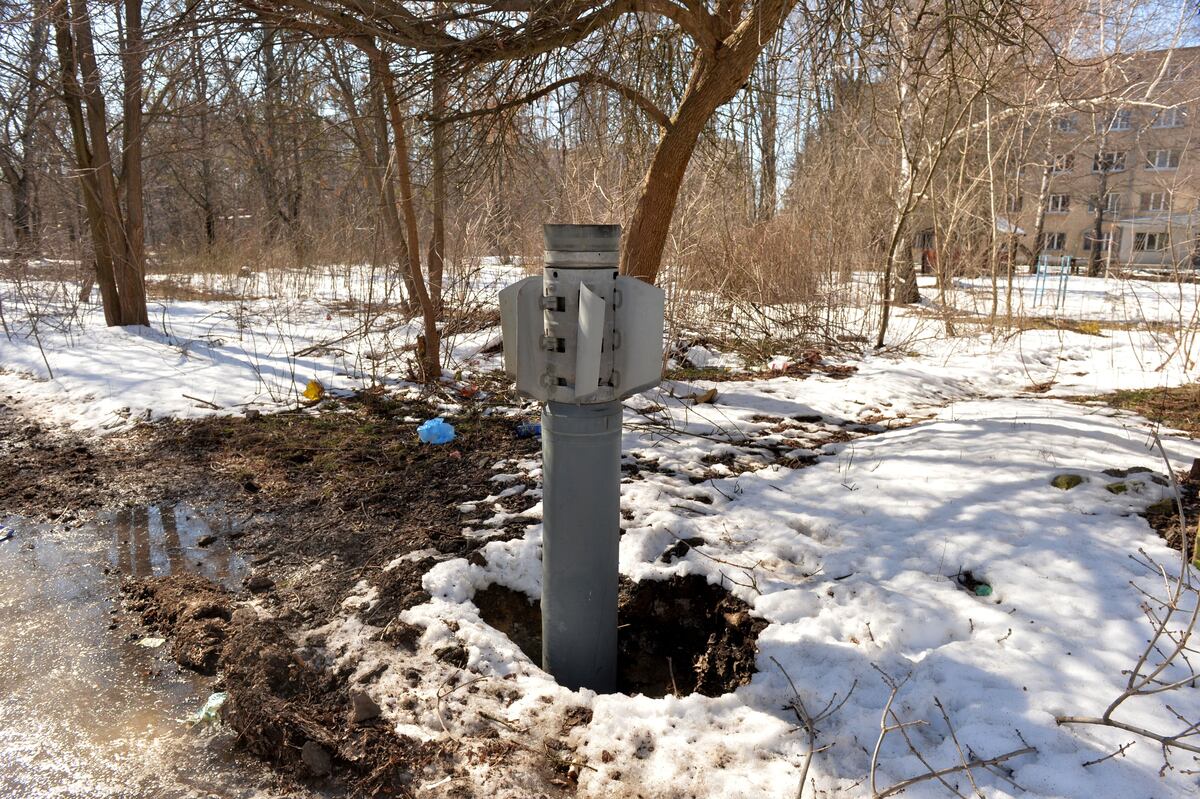
The United States has decided to send cluster munitions to Ukraine to help its military push back Russian forces entrenched along the front lines.
The Biden administration is expected to announce on Friday that it will send thousands of them as part of a new military aid package worth $800 million, according to people familiar with the decision who were not authorized to discuss it publicly before the official announcement and spoke on condition of anonymity.
The move will likely trigger outrage from some allies and humanitarian groups that have long opposed the use of cluster bombs.
Proponents argue that Russia has already been using the controversial weapon in Ukraine and that the munitions the U.S. will provide have a reduced dud rate, meaning there will be far fewer unexploded rounds that can result in unintended civilian deaths.
Here is a look at what cluster munitions are, where they have been used and why the U.S. plans to provide them to Ukraine now.
What is a cluster munition?
A cluster munition is a bomb that opens in the air and releases smaller “bomblets” across a wide area. The bomblets are designed to take out tanks and equipment, as well as troops, hitting multiple targets at the same time.
The munitions are launched by the same artillery weapons that the U.S. and allies have already provided to Ukraine for the war — such as howitzers — and the type of cluster munition that the U.S. is planning to send is based on a common 155 mm shell that is already widely in use across the battlefield.
In previous conflicts, cluster munitions have had a high dud rate, which meant that thousands of the smaller unexploded bomblets remained behind and killed and maimed people decades later. The U.S. last used its cluster munitions in battle in Iraq in 2003, and decided not to continue using them as the conflict shifted to more urban environments with more dense civilian populations.
On Thursday, Brig. Gen. Pat Ryder said the Defense Department has “multiple variants” of the munitions and “the ones that we are considering providing would not include older variants with (unexploding) rates that are higher than 2.35%.”
Why provide them now?
For more than a year the U.S. has dipped into its own stocks of traditional 155 howitzer munitions and sent more than 2 million rounds to Ukraine. Allies across the globe have provided hundreds of thousands more.
A 155 mm round can strike targets 15 to 20 miles (24 to 32 kilometers) away, making them a munition of choice for Ukrainian ground troops trying to hit enemy targets from a distance. Ukrainian forces are burning through thousands of the rounds a day battling the Russians.
Yehor Cherniev, a member of Ukraine’s parliament, told reporters at a German Marshall Fund event in the U.S. this spring that Kyiv would likely need to fire 7,000 to 9,000 of the rounds daily in intensified counteroffensive fighting. Providing that many puts substantial pressure on U.S. and allied stocks.
The cluster bomb is an attractive option because it would help Ukraine destroy more targets with fewer rounds, and since the U.S. hasn’t used them in conflict since Iraq, it has large amounts of them in storage it can access quickly, said Ryan Brobst, a research analyst for the Foundation for Defense of Democracies.
A March 2023 letter from top House and Senate Republicans to the Biden administration said the U.S. may have as many as 3 million cluster munitions available for use, and urged the White House to send the munitions to alleviate pressure on U.S. war supplies.
“Cluster munitions are more effective than unitary artillery shells because they inflict damage over a wider area,” Brobst said. “This is important for Ukraine as they try to clear heavily fortified Russian positions.”
Tapping into the U.S. stores of cluster munitions could address Ukraine’s shell shortage and alleviate pressure on the 155 mm stockpiles in the U.S. and elsewhere, Brobst said.
Is using them a war crime?
Use of cluster bombs itself does not violate international law, but using them against civilians can be a violation. As in any strike, determining a war crime requires looking at whether the target was legitimate and if precautions were taken to avoid civilian casualties.
“The part of international law where this starts playing (a role), though, is indiscriminate attacks targeting civilians,” Human Rights Watch’s associate arms director Mark Hiznay told The Associated Press. “So that’s not necessarily related to the weapons, but the way the weapons are used.”
A convention banning the use of cluster bombs has been joined by more than 120 countries, which agreed not to use, produce, transfer or stockpile the weapons and to clear them after they’ve been used. The U.S., Russia and Ukraine haven’t signed on.
Where have they been used?
The bombs have been deployed in many recent conflicts, including by U.S. forces.
The U.S. initially considered cluster bombs an integral part of its arsenal during the invasion of Afghanistan that began in 2001, according to HRW. The group estimated that the U.S.-led coalition dropped more than 1,500 cluster bombs in Afghanistan during the first three years of the conflict.
The Defense Department had been due by 2019 to stop use of any cluster munitions with a rate of unexploded ordnance greater than 1%. But the Trump administration rolled back that policy, allowing commanders to approve use of such munitions.
Syrian government troops often used cluster munitions — supplied by Russia — against opposition strongholds during that country’s civil war, frequently hitting civilian targets and infrastructure. And Israel used them in civilian areas in south Lebanon, including during the 1982 invasion.
During the monthlong 2006 war with Hezbollah, HRW and the United Nations accused Israel of firing as many as 4 million cluster munitions into Lebanon. That left unexploded ordnance that threatens Lebanese civilians to this day.
The Saudi-led coalition in Yemen has been criticized for its use of cluster bombs in the war with the Iran-backed Houthi rebels that has ravaged the southern Arabian country.
In 2017, Yemen was the second deadliest country for cluster munitions after Syria, according to the U.N. Children have been killed or maimed long after the munitions originally fell, making it difficult to know the true toll.
In the 1980s, the Russians made heavy use of cluster bombs during their 10-year invasion of Afghanistan. As a result of decades of war, the Afghan countryside remains one of the most heavily mined countries in the world.
What’s happening in Ukraine?
Russian forces have used cluster bombs in Ukraine on a number of occasions, according to Ukrainian government leaders, observers and humanitarian groups. And human rights groups have said Ukraine has also used them.
During the early days of the war, there were repeated instances of Russian cluster bombs cited by groups such as Human Rights Watch, including when they hit near a preschool in the northeastern city of Okhtyrka. The open-source intelligence group Bellingcat said its researchers found cluster munitions in that strike as well as multiple cluster attacks in Kharkiv, Ukraine’s second-largest city, also in the northeast.
More recently, in March, a Russian missile and drone barrage hit a number of urban areas, including a sustained bombardment in Bakhmut, in the eastern Donetsk region. Just west of there, shelling and missile strikes hit the Ukrainian-held city of Kostiantynivka and AP journalists in the city saw at least four injured people taken to a local hospital. Police said Russian forces attacked the town with S-300 missiles and cluster munitions.
Just a month later, Donetsk Gov. Pavlo Kyrylenko accused Russian forces of attacking a town with cluster munitions, wounding one person. An AP and Frontline database called War Crimes Watch Ukraine has cataloged how Russia has used cluster bombs.
Tara Copp is a Pentagon correspondent for the Associated Press. She was previously Pentagon bureau chief for Sightline Media Group.
美国决定向乌克兰运送集束弹药,以帮助其军队击退盘踞在前线的俄罗斯军队。
据知情人士透露,拜登政府预计将于周五宣布,将向美国输送数千架飞机,作为一项价值 8 亿美元的新军事援助计划的一部分。这些知情人士在正式宣布之前未被授权公开讨论此事,因此要求匿名。
此举可能会激起一些盟友和人道主义组织的强烈抗议,他们长期以来一直反对使用集束炸弹。
支持者认为,俄罗斯已经在乌克兰使用了这种有争议的武器,而美国将提供的弹药哑弹率较低,这意味着未爆炸的弹药数量会少得多,从而避免造成平民意外死亡。
本文将介绍集束弹药是什么,它们曾被用于哪些地区,以及美国为何计划现在向乌克兰提供集束弹药。
什么是集束弹药?
集束炸弹是一种在空中爆炸后释放出大量小型“子炸弹”的炸弹,这些子炸弹可以同时攻击大片区域。这些子炸弹旨在摧毁坦克、装备以及敌方部队,实现多目标同时打击。
这些弹药由美国及其盟友已向乌克兰提供的用于战争的同一种火炮武器发射——例如榴弹炮——而美国计划提供的集束弹药类型是基于一种常见的 155 毫米炮弹,这种炮弹已经在战场上广泛使用。
在以往的冲突中,集束弹药的哑弹率很高,这意味着成千上万枚未爆炸的子炸弹遗留在现场,在数十年后造成人员伤亡。美国最后一次使用集束弹药是在2003年的伊拉克战争中,随着冲突转移到人口更加密集的城市地区,美国决定不再继续使用这种弹药。
周四,准将帕特·莱德表示,国防部拥有“多种型号”的弹药,“我们正在考虑提供的弹药将不包括未爆率高于 2.35% 的旧型号”。
为什么现在要提供这些信息?
一年多来,美国动用了自身储备的传统155毫米榴弹炮弹药,向乌克兰运送了超过200万发炮弹。全球盟国也提供了数十万发炮弹。
155毫米炮弹射程可达24至32公里(15至20英里),是乌克兰地面部队远距离打击敌方目标的首选弹药。乌克兰军队在与俄军的战斗中,每天都要消耗数千发这种炮弹。
乌克兰议员叶戈尔·切尔涅夫今年春天在美国参加德国马歇尔基金会活动时告诉记者,基辅在加强反攻作战中可能需要每天发射7000至9000发子弹。如此大量的弹药供应将对美国及其盟国的弹药储备造成巨大压力。
保卫民主基金会的研究分析师瑞安·布罗布斯特表示,集束炸弹是一个很有吸引力的选择,因为它可以帮助乌克兰用更少的弹药摧毁更多的目标,而且由于美国自伊拉克战争以来就没有在冲突中使用过这种炸弹,因此美国储存了大量的集束炸弹,可以迅速取用。
2023 年 3 月,众议院和参议院的共和党高层致信拜登政府,称美国可能有多达 300 万枚集束弹药可供使用,并敦促白宫将这些弹药送往美国,以缓解美国战争物资的压力。
布罗布斯特说:“集束弹药比单体炮弹更有效,因为它们能对更大范围的区域造成破坏。这对试图清除俄军重兵把守的阵地的乌克兰来说至关重要。”
布罗布斯特表示,利用美国的集束弹药储备可以解决乌克兰炮弹短缺的问题,并缓解美国和其他地方 155 毫米弹药库存的压力。
使用它们是否构成战争罪?
使用集束炸弹本身并不违反国际法,但对平民使用集束炸弹则可能构成违法行为。与任何袭击一样,判定战争罪行需要考察袭击目标是否合法,以及是否采取了预防措施以避免平民伤亡。
“不过,国际法中真正发挥作用的部分是针对平民的无差别攻击,”人权观察组织武器事务副主任马克·希兹奈告诉美联社。“所以这不一定与武器本身有关,而是与武器的使用方式有关。”
一项禁止使用集束炸弹的公约已获得120多个国家的加入,这些国家同意不使用、生产、转让或储存此类武器,并在使用后进行清理。美国、俄罗斯和乌克兰尚未签署该公约。
它们被用在了哪些地方?
这些炸弹已在近期的许多冲突中使用过,包括美军使用的。
据人权观察组织称,美国最初将集束炸弹视为其在2001年开始的阿富汗战争中武器库的重要组成部分。该组织估计,在冲突的头三年里,美国领导的联军在阿富汗投放了超过1500枚集束炸弹。
美国国防部原本应在2019年之前停止使用未爆弹药率超过1%的任何集束弹药。但特朗普政府推翻了这项政策,允许指挥官批准使用此类弹药。
在叙利亚内战期间,叙利亚政府军经常使用俄罗斯提供的集束弹药攻击反对派据点,屡屡误伤平民目标和基础设施。以色列也曾在黎巴嫩南部平民区使用过集束弹药,包括在1982年入侵期间。
在2006年与真主党长达一个月的战争期间,人权观察组织和联合国指责以色列向黎巴嫩发射了多达400万枚集束弹药。这些未爆炸弹药至今仍威胁着黎巴嫩平民的安全。
沙特阿拉伯领导的也门联军因在与伊朗支持的胡塞武装的战争中使用集束炸弹而受到批评,这场战争已经蹂躏了这个阿拉伯南部国家。
根据联合国的数据,2017 年也门是继叙利亚之后因集束弹药而丧生的第二大国家。由于许多儿童在弹药最初落下很久之后才被杀害或致残,因此很难知道真正的伤亡人数。
上世纪80年代,苏联在长达十年的阿富汗战争中大量使用集束炸弹。由于数十年的战争,阿富汗农村至今仍是世界上地雷最密集的地区之一。
乌克兰发生了什么事?
据乌克兰政府领导人、观察员和人道主义组织称,俄罗斯军队曾在乌克兰多次使用集束炸弹。人权组织也表示,乌克兰方面也使用了集束炸弹。
战争初期,人权观察等组织多次提及俄罗斯使用集束炸弹,其中包括在乌克兰东北部城市奥赫特尔卡一所幼儿园附近发生的袭击。开源情报组织 Bellingcat 表示,其研究人员在那次袭击中发现了集束弹药,并在乌克兰第二大城市哈尔科夫(同样位于东北部)发现了多起集束炸弹袭击事件。
最近,在3月份,俄罗斯导弹和无人机袭击了多个城区,其中包括顿涅茨克州东部的巴赫穆特,该地遭到持续轰炸。在巴赫穆特以西不远处,乌克兰控制的科斯蒂安蒂尼夫卡市也遭到炮击和导弹袭击。美联社记者在科斯蒂安蒂尼夫卡看到至少四名伤者被送往当地医院。警方称,俄罗斯军队使用了S-300导弹和集束弹药袭击了该镇。
仅仅一个月后,顿涅茨克州州长帕夫洛·基里连科就指责俄罗斯军队使用集束炸弹袭击了一个城镇,造成一人受伤。美联社和《前线》杂志联合建立的名为“乌克兰战争罪行观察”的数据库,详细记录了俄罗斯使用集束炸弹的情况。
塔拉·科普是美联社驻五角大楼记者。她此前曾担任Sightline媒体集团驻五角大楼分社社长。