Court ruling could overturn federal control of the National Guard法院裁决可能推翻联邦政府对国民警卫队的控制权。
The National Guard has changed dramatically from its state militia roots, but so have the courts that will decide its fate.
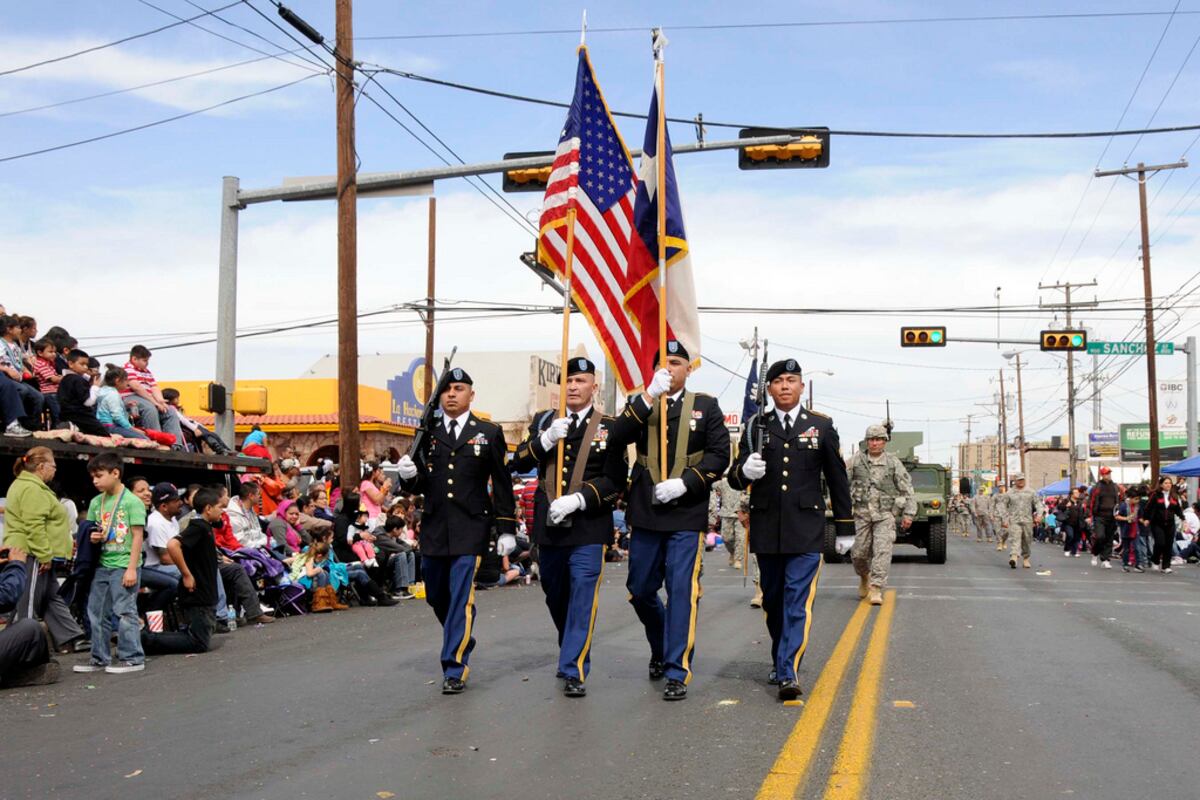
Who owns the National Guard? It’s complicated.
A recent court ruling in Texas could complicate matters further. The stage is set for a fight over control of the Guard — and this time, the states have the upper hand.
For more than a century, the federal government’s authority over the National Guard has steadily increased, as has its usage overseas.
States, who once held near-total control over their militias, sacrificed autonomy on the altar of a federal financial firehose, which gave the Defense Department leverage to shape the Guard in the image of its full-time counterparts. In return, governors now have highly trained forces at their disposal for missions at home, and they’re using them more often than ever .
Both sides have benefitted from this deal since 1990, when the Supreme Court unanimously decided the last major legal battle in favor of the DoD.
But the deal may soon be dead, experts say, after a recent court ruling in Texas Gov. Greg Abbott’s legal fight against the Pentagon’s COVID-19 vaccine mandate.
Army Times reviewed court documents, researched historical cases and spoke to legal scholars about the ruling, the ongoing legal battle, and its potential impact on the Guard.
“What the ruling essentially says is that state compliance with federal guidelines is completely voluntary,” said Jeff Jacobs, a retired Army Reserve two-star general, attorney and author of a 1994 book analyzing the Guard’s dual control structure. “And the only recourse the federal government has — because Texas did not dispute this — is to withdraw funding for [the state’s] National Guard.”
Jacobs warned this decision at its “logical conclusion” allows governors to block military personnel requirements, offering free rein to protect non-federalized Guard members from military punishments for everything from marijuana use to fitness tests. But even under the ruling, troops must meet all federal requirements to join.
“It gives the governor[s] a veto to play politics with every single thing that the Secretary of Defense or the Secretary of the Army or Air Force do,” the retired general warned.
Both the DoD and the National Guard Bureau declined to comment, citing ongoing litigation. In an emailed statement, Abbott spokesperson Andrew Mahaleris said the governor “appreciate[s] the Fifth Circuit’s adherence to the rule of law, and Texas will not stop fighting until the brave men and women of our military receive the full benefits they have more than earned.”
An Air National Guard officer draws Moderna COVID-19 vaccine from a vial into a syringe at Bradley Air National Guard Base in East Granby, Connecticut, Dec. 30, 2020. (Staff Sgt. Steven Tucker/Air Force)
The Abbott administration, later joined by Alaska’s governor, asked a federal judge in Tyler, Texas, to block the DoD’s vaccine mandate in January 2022.
In court filings , the governors claimed that “only the state, through its governor, possesses legal authority to govern state National Guard personnel” when not mobilized under federal control, regardless of who is cutting the drill checks.
Responding to the governors, the federal government contended it has the authority to set readiness requirements and enforce them. They contended that in order to receive federal pay and federal benefits — even when in a state-controlled, federally-funded Title 32 status — members of the Guard needed to comply with federal readiness requirements.
After in-person arguments in June 2022, U.S. District Judge J. Campbell Barker denied the governors’ request for a preliminary injunction, a rare pre-trial declaration that would have blocked the vaccine mandate for Guardsmen nationwide.
The Abbott administration appealed the denial to the 5th U.S. Circuit Court of Appeals, and the result could upend federal control of the Guard.
Within the context of the case, the court’s decision was minor, explained Jason Mazzone, a law professor at the University of Illinois Urbana-Champaign’s College of Law.
A panel of three appeals judges unanimously voted to vacate — or undo — Barker’s denial of the preliminary injunction. The lower district judge must reconsider the matter in the months ahead, and final resolution could be years away.
But when appeals courts vacate district court decisions, as the 5th Circuit did on June 12, they typically publish a legal opinion, a memorandum explaining their reasoning that provides legal guidance to lower courts about the issue. According to Mazzone and Jacobs, pre-trial opinions often foreshadow later decisions.
The June 12 opinion , written by U.S. Circuit Judge Andrew Oldham and signed onto in part by U.S. Circuit Judge Don Willett, left little to the imagination. Oldham, who was appointed by former President Donald Trump, ascended to the 5th Circuit on a 50-49 Senate vote in 2018. He spent the previous three years as an official lawyer for Abbott , culminating as his office’s general counsel.
The panel’s third member, U.S. Circuit Judge Carl Stewart, declined to join the opinion.
“The President of the United States asserts the power to punish members of the Texas National Guard who have not been called into national service,” Oldham said. “The Constitution and laws of the United States, however, deny him that power.”
The ruling overturned Barker’s analysis for the lower district court . Barker held that the federal government can withhold pay and punish members of the National Guard who refuse to comply with readiness requirements. That’s because Guard troops hold simultaneous and overlapping, but legally distinct, memberships in their state’s organized militia and the federal National Guard, Barker argued.
But Oldham disagreed. He analyzed the Constitution’s Militia Clauses, which were a 1780s power-sharing compromise between the federal government and the states. The states feared the potential tyranny of a federal government with a large standing Army, but the Federalists, who favored a strong central government, argued that Congress needed to defend the country.
Reenactors participate in a living history encampment for the 200th commemoration of the Battle of New Orleans in Chalmette, La., Jan. 9, 2015. (Staff Sgt. Scott Raymond/Army)
Under that bargain, the state militia had state-appointed officers and remained under state control on a day-to-day basis, though the federal government set their training standards. The central government also gained absolute power over the militia and its members if and when it was ordered into federal service to repel invasions or suppress insurrections.
Oldham acknowledged that later laws established the National Guard as the organized state militias and increased the federal government’s oversight and funding. But the government’s proposed punishments for Guard members who refused the vaccine mandate — which Oldham said may still occur, citing Military Times’ reporting — “unlawfully usurp Governor Abbott’s exclusive constitutional authority to ‘govern’ the non-federalized Texas militia.” That includes administrative actions like withholding pay and discharging troops.
Jacobs, the retired Reserve general, said Oldham’s reasoning could allow governors to defy any federal requirement they don’t see fit to enforce on their state’s National Guard.
“Let’s say you can’t pass a [physical fitness] test,” Jacobs said. “What Judge Oldham is saying is, ‘Well, Department of Defense [and] Department of the Army, you have no authority to yank that soldier’s recognition...[and] discharge him from the Army National Guard.’”
The federal government can theoretically federalize an entire state’s Guard to undo a governor’s orders, as President Dwight Eisenhower did in 1957 when the governor of Arkansas had deployed his troops to block Black students from integrating a school. But mass call-ups require significant political will, and Oldham noted that Biden appears “unwilling or unable to do so” to enforce the vaccine mandate’s punishments.
Responding to the federal government’s argument that federal laws give it punishment options for non-federalized Guardsmen, Oldham implied such laws are unconstitutional. “Regardless of whether the Government’s reading of these statutes is correct, the Constitution forbids President Biden from bypassing the States, stepping into Governor Abbott’s shoes, and directly governing Texas’s non-federalized militiamen.”
Beyond federalizing the troops, the federal government’s only other option is to take federal funding away from the entire state’s National Guard, Oldham declared. But that idea hasn’t received serious consideration since the 1980s , when governors tried to block overseas deployments.
Not your granddaddy’s Guard
How did Oldham reach a conclusion that could reignite old debates?
The judge is an adherent of originalism, a conservative legal philosophy that places great weight on the original meaning behind the Founding Fathers’ words.
Originalist arguments often use historical analysis to examine how the Framers debated and explained the Constitution’s ideas, an approach that contrasts with other philosophies that consider the Constitution a living document and rely more on how officials and the courts have interpreted it over time.
Originalism coalesced as a theory in the 1980s and gained influence thanks to groups like the Federalist Society, who partnered with conservative politicians to place originalism-minded lawyers into federal judgeships. Five of the Supreme Court’s nine current justices are current or former members of the Federalist Society.
Mazzone, whose Militia Clause research was cited heavily by Oldham, praised the judge’s “sophisticated” analysis.
“[His] use of historical sources was very good,” said Mazzone. “I think he got the story right about the militia…its role, and concerns about who’s going to control it.”
The Militia Clauses of the Constitution split powers between the federal and state governments. (National Archives)
But both Mazzone and Jacobs, the retired Reserve general, questioned whether originalism is an appropriate framework for analyzing the modern National Guard. Today’s Guard, a much smaller all-volunteer force, is highly professionalized and depends on federal funds for organization, equipment, training, paychecks, facilities and more.
Jacobs argued that Oldham “ignores the major thrust” of the 1990 Supreme Court case, Perpich v. Department of Defense, which centered around Guard members’ voluntary enlistment in the federal National Guard. “That is decidedly not the construct that was in place in the 1790s,” he noted.
“I think it’s hard to equate the National Guard with the old militia,” agreed Mazzone. “It is a very different operation.”
The old state militias were mandatory for all adult male citizens, he explained, so giving the federal government “the ability to punish” non-federalized members could have allowed it to punish any male citizen at any time. Today’s National Guard, by contrast, is an all-volunteer force.
Mazzone also contrasted the old militia with the modern Guard’s federal organization, professionalism derived from federal training, and federal funding.
“It’s much closer to being part of the federal military rather than the traditional militia,” he said. Until the early 1900s, militia members didn’t even have standardized weapons.
But in the case Oldham reviewed, neither the government nor the governors argued that the Guard isn’t equivalent to the state militias of yore — and the Guard proudly celebrates its roots in the colonial militias of the 17th century.
“I think there’s a real question about that,” said Mazzone. He argued that the original militia “doesn’t quite have an analogy today, when the numbers are quite smaller.”
Even after Oldham’s ruling, the legal proceedings are far from resolved. The district court will soon resume considering the preliminary injunction in light of the opinion, but a trial could be months or years away, experts said.
“This could be a year or more before we get a final resolution in the case,” Mazzone noted. “If the Biden administration loses and decides to go to the U.S. Supreme court, that could prolong the case for a couple more years while the court decides whether or not to grant review of the case.”
The scholar added that the Supreme Court “almost always grants review in a case in which a lower court has invalidated something that the federal government has done on constitutional grounds.” The “wrinkle in this case” that could see it resolved on a technicality, he noted, would be if the Pentagon backs down on punishing Guardsmen who refused the vaccine.
National Guard members drive through floodwater on Sept. 1, 2021, in Jean Lafitte, La. Category 4 Hurricane Ida made landfall days before, causing flooding and wind damage along the Gulf Coast. (Brandon Bell/Getty Images)
Moreover, today’s Supreme Court — more originalist than ever before — could take a different view on control of the Guard than their predecessors did in 1990, the experts agreed.
It’s also not clear whether Oldham’s ruling would eventually require back pay or reinstatement for Guard members punished for vaccine refusal.
Meanwhile, the opinion sparked internal conversations among National Guard Bureau lawyers, who are watching the case closely, a source familiar with the discussions told Army Times. Bureau spokesperson Deidre Foster confirmed the conversations in an emailed statement, but downplayed them as routine.
Jacobs said the ruling, should its precedent expand, raises questions about the uneasy bargain that emerged when the active duty force ceded combat power to the Guard during late- and post-Cold War drawdowns.
“It’s not an efficient organizational structure for the national defense force of a superpower, exactly for the reasons that created this litigation,” he said.
The retired general, who once commanded Army Civil Affairs and Psychological Operations Command, said the government is likely to fight the case.
“I cannot fathom that DoD will just let this opinion stand,” Jacobs said. “It would throw things into chaos.”
Davis Winkie covers the Army for Military Times. He studied history at Vanderbilt and UNC-Chapel Hill, and served five years in the Army Guard. His investigations earned the Society of Professional Journalists' 2023 Sunshine Award and consecutive Military Reporters and Editors honors, among others. Davis was also a 2022 Livingston Awards finalist.
国民警卫队归谁所有?这很复杂。
德克萨斯州最近的一项法院裁决可能会使局势更加复杂。一场争夺国民警卫队控制权的斗争即将爆发——而这一次,各州占据了上风。
一个多世纪以来,联邦政府对国民警卫队的控制权不断增强,其在海外的使用也日益增多。
各州曾经几乎完全掌控着自己的民兵组织,但为了联邦政府的巨额财政投入,它们牺牲了自主权,这使得国防部能够按照正规军的模式来塑造国民警卫队。作为回报,各州州长现在拥有了一支训练有素的部队,可以随时调动执行国内任务,而且他们使用这些部队的频率也比以往任何时候都高。
自 1990 年最高法院一致裁定国防部胜诉以来,双方都从这项协议中受益。
但专家表示,在德克萨斯州州长格雷格·阿博特 (Greg Abbott) 针对五角大楼新冠疫苗强制令提起的法律诉讼中,法院最近做出了一项裁决,这项协议可能很快就会告吹。
《陆军时报》查阅了法庭文件,研究了历史案例,并采访了法律学者,了解了该裁决、正在进行的法律斗争及其对国民警卫队的潜在影响。
“这项裁决实质上表明,各州遵守联邦指导方针完全是自愿的,”杰夫·雅各布斯说道。他是一位退役陆军预备役少将、律师,也是1994年出版的一本分析国民警卫队双重控制结构的书籍的作者。“由于德克萨斯州对此没有异议,联邦政府唯一的补救措施就是撤回对该州国民警卫队的拨款。”
雅各布斯警告说,这项裁决的“最终逻辑结果是”允许各州州长否决军事人员要求,从而赋予他们极大的自由裁量权,保护非联邦化的国民警卫队成员免受从吸食大麻到体能测试等各种军事处罚。但即便根据这项裁决,士兵仍必须满足所有联邦要求才能入伍。
这位退役将军警告说:“这赋予了州长否决权,让他们可以对国防部长、陆军部长或空军部长所做的每一件事进行政治干预。”
国防部和国民警卫队均以诉讼正在进行为由拒绝置评。阿博特州长的发言人安德鲁·马哈勒里斯在一份电子邮件声明中表示,州长“赞赏第五巡回法院坚持法治,德克萨斯州将继续抗争,直到我们英勇的军人获得他们应得的全部福利。”
2020年12月30日,在康涅狄格州东格兰比的布拉德利空军国民警卫队基地,一名空军国民警卫队军官正在将莫德纳新冠疫苗从药瓶中抽取到注射器中。(史蒂文·塔克中士/空军)
阿博特政府后来与阿拉斯加州州长一起,于 2022 年 1 月请求德克萨斯州泰勒市的一名联邦法官阻止国防部强制接种疫苗。
在法庭文件中,各州州长声称,“只有州政府通过其州长才拥有管理州国民警卫队人员的合法权力”,而不管是谁在发放训练支票。
针对各州州长的质询,联邦政府辩称其有权制定并执行战备要求。联邦政府认为,即使国民警卫队成员处于州政府管辖、联邦政府资助的第32条规定状态,他们也必须遵守联邦战备要求,才能领取联邦工资和福利。
2022 年 6 月,在双方当面辩论后,美国地区法官 J. Campbell Barker 驳回了州长们提出的初步禁令请求。这是一项罕见的审前声明,原本可以阻止全国国民警卫队成员强制接种疫苗。
阿博特政府就此驳回决定向美国第五巡回上诉法院提起上诉,结果可能会颠覆联邦政府对国民警卫队的控制。
伊利诺伊大学厄巴纳-香槟分校法学院的法学教授杰森·马佐内解释说,就本案而言,法院的判决是次要的。
由三名上诉法官组成的合议庭一致投票撤销巴克法官驳回初步禁令的裁决。下级地区法官必须在未来几个月内重新审理此案,最终裁决可能还需要数年时间。
但当上诉法院撤销地区法院的判决时(例如第五巡回上诉法院在6月12日所做的那样),通常会发布一份法律意见书,即一份解释其理由的备忘录,为下级法院就该问题提供法律指导。马佐内和雅各布斯认为,审前意见书往往预示着后来的判决。
6月12日,由美国巡回上诉法院法官安德鲁·奥尔德姆撰写、并由另一位美国巡回上诉法院法官唐·威利特部分签署的意见书,几乎没有留下任何想象空间。奥尔德姆由前总统唐纳德·特朗普任命,于2018年经参议院50比49的投票结果晋升为第五巡回上诉法院法官。此前三年,他曾担任州长阿博特的官方律师,最终升任州长办公室的总法律顾问。
小组的第三名成员,美国巡回法官卡尔·斯图尔特,拒绝加入该意见。
奥尔德姆说:“美国总统声称有权惩罚那些未被征召入伍的德克萨斯州国民警卫队成员。然而,美国宪法和法律剥夺了他这项权力。”
该裁决推翻了巴克在下级地区法院的分析。巴克认为,联邦政府可以扣发国民警卫队成员的工资并对其进行处罚,如果他们拒绝遵守战备要求。巴克辩称,这是因为国民警卫队成员同时拥有本州民兵组织和联邦国民警卫队的成员资格,虽然这两个身份在法律上是不同的,但彼此之间存在重叠。
但奥尔德姆并不认同这种观点。他分析了宪法中的民兵条款,这些条款是18世纪80年代联邦政府与各州之间达成的一项权力分享妥协。各州担心拥有庞大常备军的联邦政府可能滋生暴政,但支持强大中央政府的联邦党人则认为国会需要保卫国家。
2015年1月9日,在路易斯安那州查尔梅特,历史重演爱好者参加了纪念新奥尔良战役200周年的实景历史营地活动。(陆军参谋军士斯科特·雷蒙德/陆军)
根据这项协议,州民兵的军官由州政府任命,日常运作也受州政府控制,但其训练标准由联邦政府制定。此外,如果州民兵奉命参与抵御入侵或镇压叛乱,中央政府也将获得对其及其成员的绝对权力。
奥尔德姆承认,后来的法律确立了国民警卫队作为州民兵的组织形式,并加强了联邦政府的监督和拨款。但政府提议对拒绝接种疫苗的国民警卫队成员进行惩罚——奥尔德姆援引《军事时报》的报道称,这种情况仍有可能发生——“非法僭越了州长阿博特对非联邦化的德克萨斯州民兵‘管辖’的专属宪法权力”。这些惩罚措施包括扣发工资和解散部队等行政行为。
退役预备役将军雅各布斯表示,奥尔德姆的理由可能会让各州州长无视他们认为不适合在本州国民警卫队执行的任何联邦要求。
“假设你没能通过体能测试,”雅各布斯说,“奥尔德姆法官的意思是,‘国防部和陆军部,你们无权撤销这名士兵的荣誉称号……[并]将他从国民警卫队除名。’”
理论上,联邦政府可以像1957年艾森豪威尔总统那样,将整个州的国民警卫队联邦化,以推翻州长的命令。当时,阿肯色州州长部署军队阻止黑人学生进入学校就读。但大规模征召国民警卫队需要强大的政治魄力,奥尔德姆指出,拜登似乎“不愿或无力”执行疫苗强制令的惩罚措施。
针对联邦政府声称联邦法律赋予其惩罚非联邦化国民警卫队成员的权力,奥尔德姆暗示此类法律违宪。“无论政府对这些法规的解读是否正确,宪法都禁止拜登总统绕过各州,越过州长阿博特的职权,直接管辖德克萨斯州的非联邦化民兵。”
奥尔德姆宣称,除了将军队联邦化之外,联邦政府唯一的选择就是停止向全州国民警卫队提供联邦资金。但自上世纪80年代各州州长试图阻止海外部署以来,这一想法就一直没有得到认真考虑。
不是你爷爷那一代的卫队
奥尔德姆是如何得出可能重新引发旧争论的结论的?
这位法官是原旨主义的信奉者,原旨主义是一种保守的法律哲学,它非常重视开国元勋们言论背后的原意。
原旨主义论点经常运用历史分析来考察制宪者如何辩论和解释宪法的思想,这种方法与其他哲学观点形成对比,后者认为宪法是一份活的文件,更多地依赖于官员和法院如何随着时间的推移来解释它。
原旨主义理论在20世纪80年代逐渐形成,并因联邦党人协会等团体的推动而获得影响力。这些团体与保守派政客合作,将秉持原旨主义的律师安插到联邦法官职位上。最高法院现任九名大法官中有五位是联邦党人协会的现任或前任成员。
马佐内对民兵条款的研究被奥尔德姆大量引用,他称赞法官的分析“精辟”。
马佐内说:“他对历史资料的运用非常出色。我认为他对民兵组织的故事……它的作用,以及谁将控制它的担忧,都描述得非常准确。”
宪法中的民兵条款划分了联邦政府和州政府之间的权力。(美国国家档案馆)
但马佐内和退役预备役将军雅各布斯都质疑,原旨主义是否是分析现代国民警卫队的合适框架。如今的国民警卫队规模小得多,完全由志愿者组成,高度专业化,其组织、装备、训练、薪资、设施等各方面都依赖联邦资金。
雅各布斯认为,奥尔德姆“忽略了”1990年最高法院审理的“佩皮奇诉国防部案”的主要论点,该案的核心是国民警卫队成员自愿加入联邦国民警卫队的问题。“这显然与18世纪90年代的情况截然不同,”他指出。
“我认为很难将国民警卫队与旧民兵相提并论,”马佐内表示赞同。“它们的运作方式截然不同。”
他解释说,旧时的州民兵组织对所有成年男性公民都是强制性的,因此赋予联邦政府“惩罚”非联邦成员的权力,就可能使其随时惩罚任何男性公民。相比之下,如今的国民警卫队是一支完全由志愿者组成的部队。
马佐内还将旧民兵与现代国民警卫队的联邦组织、源自联邦培训的专业精神以及联邦资金进行了对比。
他说:“这更像是联邦军队的一部分,而不是传统的民兵组织。” 直到20世纪初,民兵成员甚至都没有标准化的武器。
但在奥尔德姆审查的案例中,政府和州长都没有辩称卫队不等同于过去的州民兵——而卫队则自豪地庆祝其在 17 世纪殖民地民兵中的根源。
“我认为这确实是个问题,”马佐内说。他认为,最初的民兵组织“在如今人数少得多的情况下,已经找不到完全类似的例子了。”
即便奥尔德姆法官作出裁决,法律程序也远未结束。专家表示,地区法院将很快根据该意见继续审议初步禁令,但审判可能还需要数月甚至数年才能进行。
马佐内指出:“这起案件可能需要一年或更长时间才能最终解决。如果拜登政府败诉并决定上诉至美国最高法院,那么在最高法院决定是否受理此案期间,案件可能会再拖延几年。”
这位学者补充说,最高法院“几乎总是会受理下级法院以宪法为由宣布联邦政府某项行为无效的案件”。他指出,此案的“变数”在于,如果五角大楼放弃惩罚拒绝接种疫苗的国民警卫队队员,那么此案就可能因技术性问题而不了了之。
2021年9月1日,在路易斯安那州让·拉菲特,国民警卫队成员驾车穿过洪水。四级飓风“艾达”数日前登陆,给墨西哥湾沿岸地区造成洪水和风灾。(布兰登·贝尔/盖蒂图片社)
此外,专家们一致认为,如今的最高法院比以往任何时候都更加注重原旨主义,因此,其对国民警卫队的控制权的看法可能与 1990 年的前任们的看法有所不同。
目前还不清楚奥尔德姆的裁决最终是否会要求对因拒绝接种疫苗而受到惩罚的国民警卫队成员补发工资或恢复其职务。
与此同时,据一位知情人士向《陆军时报》透露,这一意见在国民警卫队律师内部引发了讨论,他们正密切关注此案。国民警卫队发言人迪尔德丽·福斯特在一份电子邮件声明中证实了这些讨论,但她淡化了其重要性,称其为例行讨论。
雅各布斯表示,如果这一裁决的先例得以扩大,就会引发人们对冷战后期和冷战后裁军期间,现役部队将战斗力让渡给国民警卫队时所达成的不稳定协议的质疑。
他说:“对于一个超级大国的国防军来说,这不是一个高效的组织结构,而这正是引发这场诉讼的原因。”
这位曾任陆军民事事务和心理作战司令部司令的退役将军表示,政府很可能会对此案进行抗辩。
“我无法想象国防部会就此维持这种意见,”雅各布斯说。“这会把事情搞得一团糟。”
戴维斯·温基是《军事时报》的陆军记者。他曾在范德比尔特大学和北卡罗来纳大学教堂山分校学习历史,并在陆军国民警卫队服役五年。他的调查报道曾荣获2023年专业记者协会阳光奖,并连续多年获得军事记者与编辑协会的表彰。戴维斯还曾入围2022年利文斯顿奖的最终候选名单。