Air Force’s largest-ever mobility exercise to prove prowess in Pacific空军有史以来规模最大的机动演习,旨在展现其在太平洋地区的实力。
It’s the first time that Air Mobility Command has brought its marquee biennial event overseas.
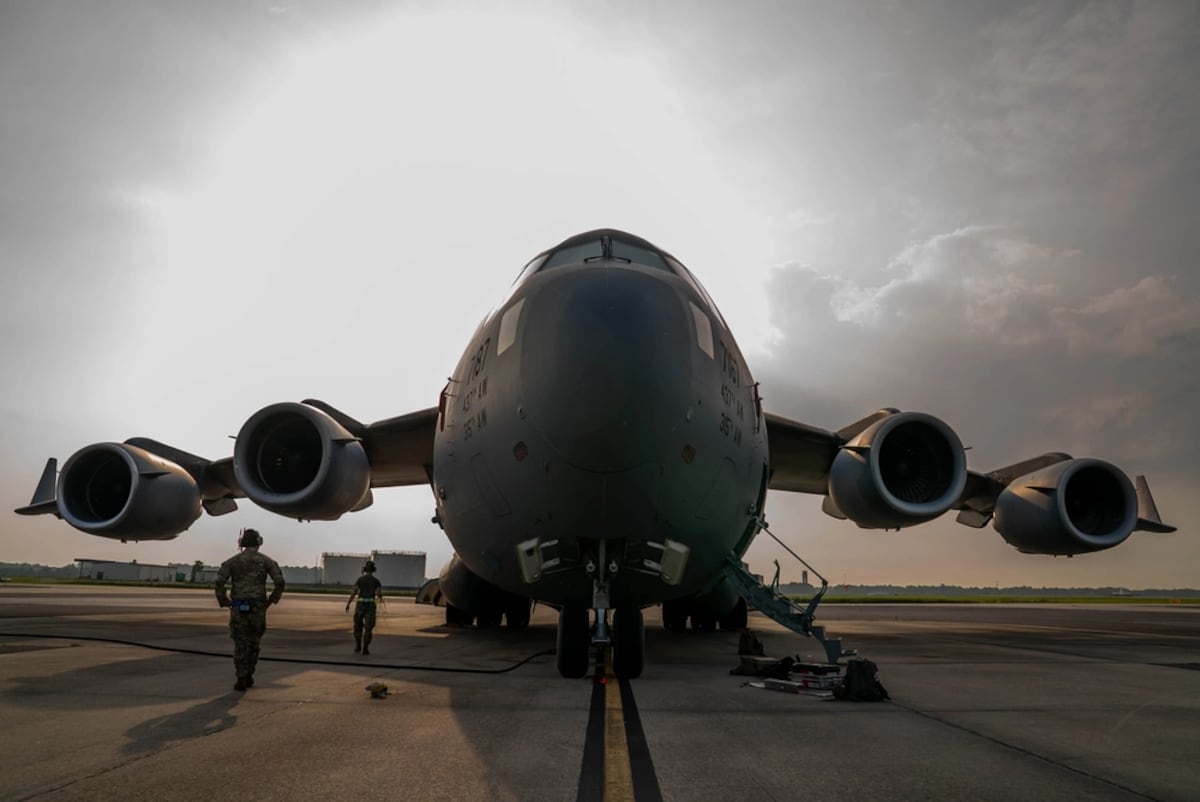
HONOLULU, Hawaii — Mobility Guardian 2023, the Air Force’s premier training exercise for its airlift and aerial refueling fleets, gets underway in the Pacific this week with an eye on potential conflict with China.
Now on its fourth iteration , this year’s Mobility Guardian is the largest to date at around 3,000 U.S. and allied airmen and 70 cargo and tanker planes. It’s the first time that Air Mobility Command has brought its marquee biennial event overseas.
The exercise aims to prove how smoothly the Air Force can dispatch personnel and cargo to the Pacific in a crisis, and how easily U.S. troops collaborate with their partners in the region. Also part of the event are America’s allies in the “Five Eyes” intelligence-sharing coalition — Australia, Canada, New Zealand and the United Kingdom — plus France and Japan.
“Historically, we’re used to focusing on [U.S. Central Command],” exercise planner Lt. Col. Jake Parker said. “This is a completely different [region] that has a completely different focus. It’s really shifting the way that we think through our tactics, techniques and procedures.”
Earlier in the week, aircrews and support staff from across the United States began their journeys to U.S.-run and allied bases in Hawaii, Guam, Australia and Japan, where they will serve as the backbone of several other military exercises across the region through July 21.
Mobility Guardian is largely unscripted on purpose, Parker said. That forces troops to think on their feet to navigate the vast Pacific, set up communications and other support services in regions they’ve never visited, and roll with the punches when things don’t go according to plan.
Logistical snags are already putting that flexibility to the test.
One bleary-eyed crew of nearly 50 airmen departed Joint Base Charleston, South Carolina, after midnight Thursday after weather delayed their outbound C-5 Galaxy for multiple hours. Then the team was waylaid in Honolulu when the crew that was scheduled to ferry them to Guam didn’t arrive at Joint Base Pearl Harbor-Hickam on time.
Once aircraft reach their final destinations, airmen plan to work from bare-bones tents and trailers like those set up at the edge of Andersen Air Force Base, Guam.
The Charleston-based airmen headed for Guam will act as a deployed wing staff, taking control of the airfield from a contingency response team already on the ground to set up a command post that can direct forces around the region on aeromedical evacuations, search and rescue missions and airdrops.
Mobility Guardian also gives airmen the chance to test out myriad other initiatives, from new teams that may help ensure continuity of communications, to command-and-control apps, to a real-time sleep study.
Participating airmen told Air Force Times they’re curious to see how ideas like the service’s new deployment model, known as AFFORGEN, play out in the real world.
“We’re supposed to go with generators and nothing, and set up initial comms,” Master Sgt. Justin Braden, a combat communications specialist, said aboard a C-17 Globemaster III in Charleston. “We’re getting to do more of what we’re supposed to be doing … when you go on deployment. I want more opportunities like this.”
Leaders have stressed they aren’t expecting perfection, and urge airmen to raise any issues that could help the Air Force improve after the exercise is done.
Have fun, they said, and show the world what the Air Force can do.
“I need the best and brightest,” 16th Airlift Squadron commander Lt. Col. Nicole Stenstad told airmen in a pre-deployment briefing in Charleston on Monday. “I need you to put your best foot forward.”
Rachel Cohen is the editor of Air Force Times. She joined the publication as its senior reporter in March 2021. Her work has appeared in the Washington Post, the Frederick News-Post (Md.), Air and Space Forces Magazine, Inside Defense, Inside Health Policy and elsewhere.
夏威夷檀香山——美国空军针对其空运和空中加油机队的首要训练演习“机动卫士 2023”本周在太平洋地区拉开帷幕,旨在应对与中国的潜在冲突。
今年是第四届“机动卫士”演习,规模空前,约有3000名美国及盟军空军人员和70架运输机及加油机参加。这也是美国空军机动司令部首次将其这项两年一度的标志性活动带到海外。
此次演习旨在检验美国空军在危机情况下向太平洋地区派遣人员和物资的效率,以及美军与该地区伙伴部队协同作战的便捷性。参与此次演习的还有美国的“五眼联盟”情报共享盟友——澳大利亚、加拿大、新西兰和英国,以及法国和日本。
“从历史上看,我们习惯于将重点放在[美国中央司令部]上,”演习策划员杰克·帕克中校说。“这是一个完全不同的[地区],关注点也完全不同。这确实改变了我们思考战术、技术和程序的方式。”
本周早些时候,来自美国各地的机组人员和支援人员开始前往位于夏威夷、关岛、澳大利亚和日本的美国及其盟国基地,他们将作为该地区其他几项军事演习的中坚力量,直至 7 月 21 日。
帕克说,“机动卫士”行动刻意没有预先设定太多程序。这迫使部队在广袤的太平洋上随机应变,在从未到访过的地区建立通信和其他后勤保障服务,并在计划出现偏差时灵活应对。
物流方面的障碍已经开始考验这种灵活性。
周四午夜过后,近50名睡眼惺忪的空军人员从南卡罗来纳州查尔斯顿联合基地起飞。由于天气原因,他们乘坐的C-5“银河”运输机被延误了数小时。随后,由于原定将他们送往关岛的机组人员未能按时抵达珍珠港-希卡姆联合基地,这支队伍又在檀香山滞留了下来。
飞机到达最终目的地后,空军人员计划在简易帐篷和拖车中工作,就像在关岛安德森空军基地边缘搭建的那些帐篷和拖车一样。
驻扎在查尔斯顿的空军人员将前往关岛,担任部署联队参谋,从已在地面的应急响应小组手中接管机场,建立一个指挥所,可以指挥该地区的部队执行航空医疗后送、搜救任务和空投任务。
“移动卫士”计划还让空军人员有机会测试其他各种举措,从可能有助于确保通信连续性的新团队,到指挥控制应用程序,再到实时睡眠研究。
参与的空军人员告诉《空军时报》,他们很想看看像空军新的部署模式(称为 AFFORGEN)这样的想法在现实世界中是如何实施的。
“我们原本应该只带发电机,什么都不带,然后建立初始通信线路,”战斗通信专家贾斯汀·布雷登中士在查尔斯顿的一架C-17“环球霸王III”运输机上说道。“我们现在有机会更多地体验部署时应该做的事情……我希望以后能有更多这样的机会。”
领导层强调他们并不期望做到完美,并敦促空军人员提出任何有助于空军在演习结束后改进的问题。
他们说,尽情享受吧,向世界展示空军的实力。
“我需要最优秀、最聪明的人才,”第16空运中队指挥官妮可·斯滕斯塔德中校周一在查尔斯顿举行的部署前简报会上对空军官兵说。“我需要你们全力以赴。”
瑞秋·科恩是《空军时报》的编辑。她于2021年3月加入该刊物,担任高级记者。她的作品曾发表在《华盛顿邮报》、《弗雷德里克新闻邮报》(马里兰州)、《空军与太空部队杂志》、《国防内幕》、《卫生政策内幕》等刊物上。