Lessons from Ukraine could help shape Europe’s new tank — if there is one乌克兰的经验教训或许有助于塑造欧洲的新型坦克——如果真的存在这种坦克的话。
After weeks of watching videos of burned-out Russian tanks in Ukraine, the world is once again writing an obituary for the vehicle type.
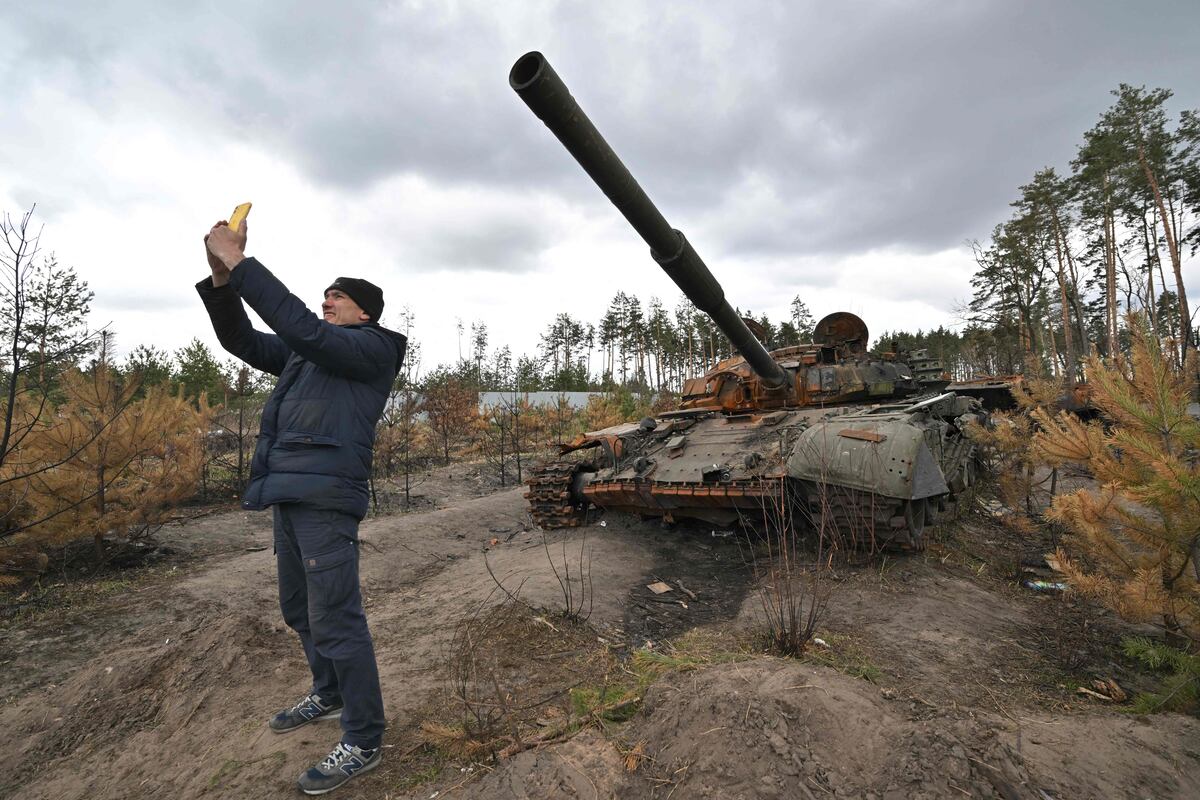
ROME — The burned-out carcasses of scores of Russian tanks in Ukraine have prompted the world to once again write the obituary of the venerable fighting vehicle.
Repeatedly caught by Turkish drones or destroyed by Javelin anti-tank weapons, then towed away by Ukrainian tractors, Moscow’s tanks have proved to be paper tigers, demonstrating to the world these lumbering relics of past wars are no longer relevant.
But some experts warn it’s far too soon to write off the tank, pointing to Russia’s woeful misuse of its tracked vehicles and arguing high-intensity war on land still demands the armor and firepower tanks provide. And now some are worried European plans for a shared main battle tank — the Franco-German Main Ground Combat System with an estimated development cost of €1.5 billion (U.S. $1.6 billion) — will perish thanks to work-share tussles and a renewed focus on quick, off-the-shelf procurements.
“Just as high-intensity warfare is underway in Europe, we cannot lose a program designed to help the survival of European defense,” said Yohann Michel, a research analyst in Berlin with the International Institute for Strategic Studies think tank.
The failures of Russian tanks
Russia has reportedly lost more than 600 tanks in Ukraine, less than three months into the conflict.
In one example of the vehicle type’s failures, a video from March showed mortars and artillery decimating a tank column as it drove through Brovary, on the outskirts of the Ukrainian capital Kyiv.
Released by the Ukrainian military, the video was overlaid with what appears to be the voice of a Russian commander reporting to a superior: “Lots of losses. They waited for us. Head of the convoy got into the ambush.”
While the video ostensibly demonstrated the ineffectiveness of tanks, military experts came away with a different conclusion. They say the video only makes clear tanks are vulnerable if undefended, and Moscow has inexplicably left its tanks in Ukraine brutally exposed.
“In Brovary, a well-trained NATO armored column would have been accompanied by infantry to stop an ambush,” said retired British Army Brig. Ben Barry, a senior land warfare fellow at the IISS think tank in London. “Tanks must be part of a combined arms team. Instead, the Russian tanks have suffered huge losses from [Next generation Light Anti-tank Weapons], Javelins and even Soviet-era anti-tank weapons.
“In the south, the Russians may now use more artillery and mount more cautious offensive operations, but what we have seen so far is poor tactics and training and possibly weakness of leadership.”
Overview shows additional portion of a military convoy in southern Ivankiv, Ukraine, Feb. 28, 2022 (Satellite image ©2022 Maxar Technologies)
American analyst Michael Kofman said infantry support is particularly essential in urban environments.
“The Russian military appears to have dramatically cut the infantry from its units, often with just two to three soldiers available for dismount in infantry fighting vehicles. These are structural issues,” said Kofman, the research program director in the Russia Studies Program at the Center for Naval Analyses.
The result has been evident, thanks to endless images showing Russian tank wreckage in fields and on roadsides, often with the turrets blown off, creating what has been dubbed a “jack in the box” effect.
Sidharth Kaushal, a research fellow at the Royal United Services Institute in London, said Russia has “generally” undertaken combined arms warfare. “But not this time, and it is difficult to explain why we are still seeing tanks without infantry support,” he said.
In terms of tank toughness, Barry argued Russian tanks have thinner armor than Western counterparts, and their explosive reactive armor has appeared to offer little protection in Ukraine.
Kaushal said Russians have a habit of placing an automatic ammunition handling system, known as a carousel loader, beneath the turret of its tanks to save space inside the hull. However, this ultimately creates problems.
“It allows the turret to be lower, which reduces the profile, but that is less of an advantage when you are targeted from above by drones,” he said. “And in that case, the positioning of the ammunition means it can catch fire, which is why we are seeing turrets being blown off.”
Ukraine’s extensive use of cheap Turkish drones has been a game changer in the war, but that does not disqualify the tank, Kaushal said. “Combined teams to protect tanks must offer surveillance and electronic attack and counter-UAV capabilities.”
Apart from tackling drones, Russian tanks needed better intelligence, surveillance and reconnaissance capabilities, said Pierluigi Barberini, a defense and security analyst at the Italian think tank CeSI. “They seemed to lack situational awareness and did not know where the enemy was,” he explained.
‘Wake up and smell the coffee’
This isn’t the first time experts have predicated a premature end to armored vehicles. Some wrote off the tank ever since the introduction of anti-tank guided missiles, such as the Sagger in the 1973 Arab-Israeli Yom Kippur War.
But Kofman believes the tank remains a battlefield necessity.
“They are essential in urban warfare; tanks still offer the best combination of protection, firepower and maneuver on the battlefield in their role,” he said. “Tanks are considered obsolete after every war, but the problems they face are faced by any vehicle.”
Barry said the war has instead offered fresh lessons for tank designers, ones Europe may be considering as it weighs its joint tank effort.
“Now you really need a drone for every tank and a way to keep enemy drones off your back,” he said. “There is no silver bullet yet, but jamming, which has proved effective against improvised explosive devices, is one solution, combined with shooting down drones. Tank designers need to wake up and smell the coffee.”
Barry also noted Russia had not equipped its tanks with active protection systems, which shoot at incoming missiles.
“We need to pay more attention to active protection, meaning [the Israeli-made] Trophy, but also lighter versions since Trophy cannot be used on a vehicle like [an American-made] Bradley [fighting vehicle]. And we should be looking at countering active protection,” he said.
A European land warfare industry executive said many defense contractors are now looking into unmanned tank technology. “Everyone is working on that, possibly using Tesla [driverless] car technology,” he said on the condition of anonymity, as he was not authorized to speak to the press.
But analysts have warned the complexity of urban tank warfare still requires a human presence onboard because negotiating obstacles on the ground and tackling close-up enemy action are far more challenging than unmanned flight.
“Ukraine teaches us that heavy weapons are needed in warfare, and that means tanks will play a part,” said Jean-Pierre Maulny, the deputy director at the French think tank IRIS and a scientific coordinator at its Armament Industry European Research Group.
Europe looks to the next-generation tank
Events in Ukraine may not have proved the tank is dead, but Europe’s much-vaunted Main Ground Combat System initiative, designed to bring together the continent’s fractured and divided tank programs, appears headed that way.
Launched in 2012, the fledgling MGCS program convenes Germany’s Rheinmetall with KNDS, the European land warfare giant created in 2015 by the merger of German firm Krauss-Maffei Wegmann and France’s Nexter.
The Franco-German joint venture KNDS displayed its new European Main Battle Tank at the 2018 Eurosatory exhibit in Paris on June 11.
The program is a response to the frequent complaint from politicians and industry leaders that Europe has 17 tank programs, making the vehicle type a prime example of how to waste money and duplicate efforts.
Almost all European nations operate tanks, even if just a handful in the case of small states. In recent years, the U.K. deployed its Challenger tanks in the Balkans and Iraq.
In early 2020, just as the coronavirus pandemic began sweeping through Europe, the French and German governments announced a 20-month study phase for the platform’s system architecture. The program is the “flagship project for Franco-German cooperation in the land domain,” according to a French Army statement provided to Defense News.
But the program does not appear to be accelerating.
Studies are ongoing to hone the system’s architecture, the statement said, and the launch of the program’s next phase was recently extended to “deepen and consolidate” the various candidate architecture designs. The aim is to complete the studies by 2023 to begin work on a system demonstrator and eventually field a system by 2035. The project aims to “gradually” open up to other partners , the French Army noted.
The French Armed Forces Ministry earmarked €58 million in its 2022 budget to fund MGCS-related studies. Germany has agreed to match France’s spending during development.
A spokeswoman in the German Defence Ministry would only say companies are still negotiating among themselves and that “generally” the signature of a follow-on implementing agreement is still on the calendar for 2022.
The irony is the program could peter out because of the war in Ukraine, not despite it, as jumpy nations seek to make quick purchases rather than to wait for lengthy joint development programs to bear fruit.
A Ukrainian soldier places an American-made Javelin missile in a fighting position on the front line on May 20, 2022, in the country's oblast of Kharkiv. (John Moore/Getty Images)
Poland, which media reports suggested was interested in MGCS, rushed in April to spend about $4.75 billion on 250 Abrams M1A2 SEPv3 tanks from the U.S. to counter Russia’s flagship T-14 Armata tank.
Poland “bought Abrams tanks in a hurry because of the war — meaning MGCS could struggle,” according to the European land warfare industry executive.
Maulny noted that defense budgets are growing and that countries are rapidly seeking capabilities. “The MGCS could be shunned as countries buy new Abrams and Leopard tanks which they will not need to replace for years,” he said.
The war in Ukraine has accelerated other quick weaponry purchases and upgrades across the continent, raising fears a host of longer-term joint programs like MGCS will suffer. One example is Italy, where a program to upgrade its Army’s Ariete tanks is gaining attention, as is a plan to replace its tracked Dardo infantry fighting vehicles.
Meanwhile, in Germany, analyst Christian Mölling said Berlin is falling out of love with the MGCS.
“Appetite for the program in Germany has been shrinking, with some feeling that it would involve giving away the crown jewels of the defense industry,” said Mölling, research director at the German Council on Foreign Relations. “A common feeling is: ‘Are we financing French interests?’ ”
Mölling said the program has been “losing traction” since 2017, when French President Emmanuel Macron and then-German Chancellor Angela Merkel agreed to pursue joint defense programs like MGCS and the Future Combat Air System fighter jet.
Interest has diminished even as current German Chancellor Olaf Scholz prioritizes defense spending with a €100 billion boost to procurement, announced in February in reaction to the war in Ukraine.
“Scholz has a different perspective on the defense industry — Merkel was never interested. He understands the economics, and there are long-standing ties between his Social [Democratic] Party and the industry,” Mölling said.
He added, however, that it might only mean MGCS staggering on for a while longer before it’s terminated.
But some analysts argue that if Europe ever needed a focused, money-saving joint tank program like MGCS, the time is now, as tanks do battle in Europe for the first time in nearly eight decades.
Michel, of IISS in Berlin, said canceling the program would be a “stupid” outcome.
“Both France and Germany will need a new tank to take on the new realities of conflict, and it is really important to move now,” he said.
If the program fails, two national programs could emerge, at the cost of interoperability, he added.
“The worst possible outcome is that we waste money and time, then have to buy tanks, possibly from the U.S., which is not good, not even for the U.S. because we get stuck with fewer production options.”
Tom Kington is the Italy correspondent for Defense News.
罗马——乌克兰境内数十辆被烧毁的俄罗斯坦克残骸再次引发了世界对这种久经沙场的战斗车辆的哀悼。
莫斯科的坦克屡次被土耳其无人机捕获或被标枪反坦克导弹摧毁,然后被乌克兰拖拉机拖走,事实证明它们是纸老虎,向世界表明这些笨重的、过去战争的遗物已经过时了。
但一些专家警告说,现在就断言坦克的时代已经终结还为时尚早。他们指出俄罗斯对其履带式车辆的糟糕使用,并认为高强度陆地战争仍然需要坦克提供的装甲和火力。如今,一些人担心,由于各方在研发分工上的分歧以及对快速、现成采购方式的重新重视,欧洲联合研制主战坦克的计划——法德联合研制的“主战地面作战系统”(Main Ground Combat System,预计研发成本为15亿欧元,约合16亿美元)——将会夭折。
“正如欧洲正在进行高强度战争一样,我们不能失去一个旨在帮助欧洲国防生存的项目,”柏林国际战略研究所智库的研究分析师约翰·米歇尔说。
俄罗斯坦克的失败
据报道,俄罗斯在乌克兰冲突中损失了 600 多辆坦克,而冲突开始还不到三个月。
以这种车辆类型的故障为例,3 月份的一段视频显示,当一支坦克纵队驶过乌克兰首都基辅郊外的布罗瓦里时,迫击炮和火炮将其摧毁殆尽。
这段由乌克兰军方发布的视频配上了疑似一名俄罗斯指挥官向上级汇报的声音:“伤亡惨重。他们一直在等我们。车队的首队中了埋伏。”
虽然这段视频表面上展示了坦克的低效,但军事专家却得出了不同的结论。他们认为,这段视频只是清楚地表明,坦克在缺乏防御的情况下非常脆弱,而莫斯科却莫名其妙地将部署在乌克兰的坦克完全暴露在外。
“在布罗瓦里,一支训练有素的北约装甲纵队本应有步兵护航,以阻止伏击,”伦敦国际战略研究所(IISS)高级陆战研究员、英国陆军退役准将本·巴里说道。“坦克必须是诸兵种合成作战的一部分。然而,俄罗斯坦克却遭受了来自新一代轻型反坦克武器、标枪导弹甚至苏联时代反坦克武器的巨大损失。”
“在南方,俄军现在可能会使用更多火炮,并采取更加谨慎的进攻行动,但我们目前看到的是战术和训练上的不足,以及领导层的薄弱。”
概览图显示了2022年2月28日乌克兰伊万科夫南部一支军事车队的其余部分(卫星图像©2022 Maxar Technologies)。
美国分析师迈克尔·科夫曼表示,步兵支援在城市环境中尤为重要。
“俄罗斯军队似乎大幅削减了步兵部队的兵力,通常只有两到三名士兵可以乘坐步兵战车下车作战。这些都是结构性问题,”海军分析中心俄罗斯研究项目主任科夫曼说道。
结果显而易见,无数照片显示,俄罗斯坦克残骸散落在田野和路边,炮塔经常被炸飞,造成了所谓的“弹簧盒效应”。
伦敦皇家联合军种研究所的研究员西达尔特·考沙尔表示,俄罗斯“通常”会进行诸兵种联合作战。“但这次却并非如此,我们很难解释为什么仍然看到坦克没有步兵支援,”他说道。
巴里认为,就坦克的坚固性而言,俄罗斯坦克的装甲比西方同类坦克更薄,而且其爆炸反应装甲在乌克兰似乎并没有提供多少保护。
考沙尔说,俄罗斯人习惯于将一种名为转盘式装弹机的自动弹药装填系统安装在坦克炮塔下方,以节省车体内部空间。然而,这最终会造成一些问题。
“这样炮塔就能放得更低,降低外形轮廓,但当遭到无人机从上方攻击时,这种优势就不那么明显了,”他说。“在这种情况下,弹药的放置位置意味着它可能会起火,这就是为什么我们看到炮塔被炸飞的原因。”
考沙尔表示,乌克兰大量使用廉价的土耳其无人机改变了战争的局势,但这并不意味着坦克就不堪一击。“保护坦克的联合小组必须具备侦察、电子攻击和反无人机能力。”
意大利智库CeSI的国防与安全分析师皮耶路易吉·巴贝里尼表示,除了应对无人机之外,俄罗斯坦克还需要更好的情报、监视和侦察能力。“他们似乎缺乏态势感知能力,不知道敌人在哪里,”他解释道。
醒醒吧,闻闻咖啡香!
这并非专家们第一次预测装甲车辆的时代即将终结。自从反坦克导弹(例如1973年阿以赎罪日战争中的萨格尔导弹)问世以来,一些人就对坦克失去了信心。
但科夫曼认为坦克仍然是战场上的必需品。
“它们在城市战中至关重要;坦克在战场上仍然能提供最佳的防护、火力和机动性组合,”他说。“每次战争后,坦克都会被认为过时,但它们面临的问题是任何车辆都会遇到的。”
巴里表示,这场战争反而为坦克设计师们提供了新的经验教训,欧洲在权衡其联合坦克计划时可能会考虑这些经验教训。
“现在每辆坦克真的都需要一架无人机,而且还得有办法阻止敌方无人机骚扰你,”他说。“目前还没有万全之策,但干扰(已被证明对简易爆炸装置有效)是一种解决方案,再加上击落无人机,就显得尤为重要。坦克设计师们该醒醒了。”
巴里还指出,俄罗斯的坦克没有配备主动防护系统,这种系统可以拦截来袭导弹。
他说:“我们需要更加关注主动防护系统,比如以色列制造的‘战利品’防空系统,但也需要更轻便的版本,因为‘战利品’不能安装在像美国制造的布雷德利战车这样的车辆上。而且,我们应该研究如何应对主动防护系统。”
一位欧洲陆战行业高管表示,许多国防承包商目前都在研究无人坦克技术。“大家都在研究这个,可能会采用特斯拉(无人驾驶)汽车的技术,”他匿名说道,因为他没有被授权接受媒体采访。
但分析人士警告说,城市坦克战的复杂性仍然需要有人在车上,因为在地面上克服障碍和应对近距离的敌军行动远比无人飞行更具挑战性。
“乌克兰告诉我们,战争中需要重型武器,这意味着坦克将发挥作用,”法国智库 IRIS 副主任兼其欧洲军备工业研究小组科学协调员让-皮埃尔·莫尔尼说。
欧洲着眼于下一代坦克
乌克兰的事件或许还没有证明坦克已经消亡,但欧洲备受吹捧的“主战地面作战系统”计划(旨在整合欧洲大陆分散的坦克项目)似乎正朝着这个方向发展。
MGCS 项目于 2012 年启动,这项新兴计划汇集了德国莱茵金属公司和 KNDS 公司,后者是欧洲陆地战争巨头,由德国 Krauss-Maffei Wegmann 公司和法国 Nexter 公司于 2015 年合并而成。
6 月 11 日,法德合资企业 KNDS 在巴黎举行的 2018 年欧洲防务展上展示了其新型欧洲主战坦克。
该计划是为了回应政界人士和行业领袖经常抱怨欧洲有 17 个坦克项目,这使得坦克成为浪费资金和重复工作的典型例子。
几乎所有欧洲国家都装备有坦克,即使是小国,数量也可能只有少数几辆。近年来,英国已在巴尔干半岛和伊拉克部署了挑战者坦克。
2020年初,正值新冠疫情席卷欧洲之际,法国和德国政府宣布启动一项为期20个月的平台系统架构研究阶段。根据法国陆军提供给《防务新闻》的一份声明,该项目是“法德在陆地领域合作的旗舰项目”。
但该计划似乎并没有加速推进。
声明称,目前正在进行系统架构优化研究,项目下一阶段的启动时间已于近期延长,旨在“深化和巩固”各种候选架构设计。目标是在2023年完成研究,启动系统演示样机的研发工作,并最终在2035年前部署该系统。法国陆军指出,该项目旨在“逐步”与其他合作伙伴开放合作。
法国国防部在2022年预算中拨出5800万欧元用于MGCS相关研究。德国已同意在研发过程中提供与法国同等的资金支持。
德国国防部的一位女发言人只表示,各公司仍在相互谈判,“总体而言”,后续实施协议的签署仍计划在 2022 年进行。
具有讽刺意味的是,该计划可能会因为乌克兰战争而逐渐消亡,而不是尽管有战争在进行,因为急于求成的国家会寻求快速购买,而不是等待漫长的联合发展计划取得成果。
2022年5月20日,在乌克兰哈尔科夫州的前线,一名乌克兰士兵将一枚美制“标枪”导弹部署到作战位置。(John Moore/Getty Images)
媒体报道称波兰对MGCS感兴趣,波兰在4月份匆忙花费约47.5亿美元从美国购买了250辆艾布拉姆斯M1A2 SEPv3坦克,以对抗俄罗斯的旗舰T-14阿玛塔坦克。
据欧洲陆战行业高管称,波兰“由于战争而匆忙购买了艾布拉姆斯坦克——这意味着MGCS可能会遇到困难”。
莫尔尼指出,国防预算正在增长,各国都在迅速寻求提升自身能力。“随着各国购买新型艾布拉姆斯和豹式坦克,而这些坦克在未来几年内都不需要更换,MGCS可能会被冷落,”他说道。
乌克兰战争加速了欧洲大陆其他地区武器装备的快速采购和升级,引发了人们对诸如MGCS等一系列长期联合项目的担忧。例如,意大利正在推进一项升级其陆军Ariete坦克的计划,以及一项替换其履带式Dardo步兵战车的计划,这些项目都备受关注。
与此同时,德国分析师克里斯蒂安·莫林表示,柏林正在对MGCS失去兴趣。
德国对外关系委员会研究主任默林表示:“德国国内对该项目的兴趣正在减弱,一些人认为这将意味着拱手让出国防工业的瑰宝。一种普遍的看法是:‘我们是在资助法国的利益吗?’”
莫林表示,自 2017 年以来,该计划一直在“失去动力”,当时法国总统埃马纽埃尔·马克龙和时任德国总理安格拉·默克尔同意推进 MGCS 和未来作战空中系统战斗机等联合防御项目。
尽管德国现任总理奥拉夫·朔尔茨在2月份宣布将增加1000亿欧元的采购预算,以应对乌克兰战争,并将国防开支列为优先事项,但人们对国防的兴趣却有所减弱。
“舒尔茨对国防工业的看法与默克尔不同——默克尔从来就不感兴趣。他了解其中的经济原理,而且他的社会民主党与国防工业有着长期的联系,”默林说道。
但他补充说,这可能只是意味着 MGCS 还能勉强维持一段时间,然后就会终止。
但一些分析人士认为,如果欧洲曾经需要像 MGCS 那样有针对性、节省资金的联合坦克计划,那么现在就是时候了,因为近八十年来,坦克首次在欧洲投入战斗。
柏林国际战略研究所的米歇尔表示,取消该项目将是一个“愚蠢的”结果。
他说:“法国和德国都需要新型坦克来应对新的冲突现实,现在采取行动至关重要。”
他补充说,如果该计划失败,可能会出现两个国家级计划,但代价是互操作性受损。
“最糟糕的结果是,我们浪费了金钱和时间,然后不得不购买坦克,可能还要从美国购买,这对美国来说也不好,因为这会减少我们的生产选择。”
汤姆·金顿是《防务新闻》驻意大利记者。