America can strike anywhere — but can it stay anywhere?美国可以在任何地方发动袭击——但它可以在任何地方长期驻留吗?
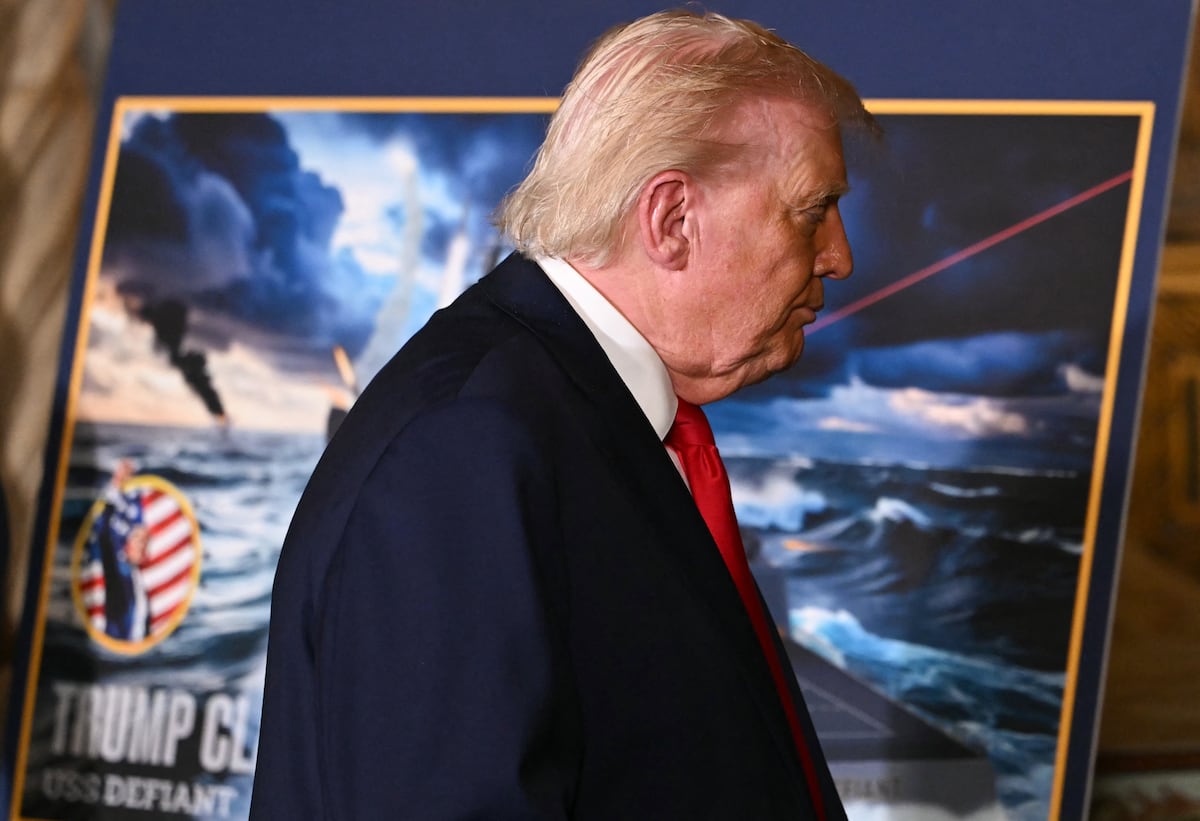
Opinion: Perhaps most troubling, the National Defense Strategy ties its framework explicitly to “President Trump’s vision,” mentioning him 47 times across 24 pages.
The recent Operation Absolute Resolve captured Venezuelan President Maduro in a stunning display of American military power. Yet weeks later, pro-government forces still control Caracas, and the country remains “uninvestable.”
This gap between tactical brilliance and strategic stalemate reveals the central flaw in the Pentagon’s new National Defense Strategy : America can project overwhelming force anywhere on Earth, but increasingly lacks the sustained presence to turn military victories into enduring outcomes.
The Jan. 24 National Defense Strategy, or NDS for short, confronts a hard reality: the United States cannot simultaneously deter China in the Taiwan Strait, defend the Panama Canal, guarantee European security, and extend nuclear deterrence over South Korea with current force levels.
The Pentagon’s answer is to prioritize homeland defense and Western Hemisphere dominance while maintaining First Island Chain denial and providing “critical but more limited” support to Europe and Korea.
The problem isn’t the diagnosis — it’s that the cure may be worse than the disease.
When priorities collide with physics
The math simply doesn’t work. Taiwan contingency planning alone would consume most available naval and air defense forces before accounting for Western Hemisphere or European commitments. Western Hemisphere defense requires separate force packages: airlift, amphibious platforms, intelligence systems, special operations units, and surface combatants. Current force levels were designed for sustained global commitments, not for simultaneous hemispheric dominance and Indo-Pacific denial while maintaining credible deterrence elsewhere.
The Venezuela operation proves this constraint. America demonstrated it can strike anywhere, but the strategic outcome remains unresolved precisely because the new strategy deprioritizes sustained commitments outside priority theaters.
But the force structure gap is only half the problem. The transition period while allies build capacity creates its own dangers.
The transition window problem
The strategy assumes NATO and South Korea can take “primary responsibility” for regional defense within acceptable timeframes. But Europe faces daunting barriers: aggregate debt at 90% of GDP limits defense spending increases, limited indigenous production of precision munitions and advanced air defense creates capability gaps, and untested casualty tolerance raises questions about political sustainability. This creates a 3-5-year vulnerability window. Europe cannot operate independently while U.S. support is reduced.
South Korea’s challenge is even more acute. The claim that Seoul can take “primary responsibility for deterring North Korea” with “critical but more limited U.S. support” assumes conventional superiority can replace a nuclear guarantee. It cannot. North Korea’s growing arsenal creates advantages in any escalation scenario that conventional forces cannot counter. “Critical but more limited” support undermines confidence in the fundamental question: Would Washington trade Los Angeles for Seoul? This ambiguity could prompt Seoul to reconsider its nuclear stance, triggering exactly the proliferation cascade nonproliferation policy seeks to prevent.
When strategy becomes personal
Perhaps most troubling, the NDS ties its framework explicitly to “President Trump’s vision,” mentioning him 47 times across 24 pages. Enduring strategies frame objectives around persistent national interests, not individual leadership. Containment — articulated in George Kennan’s “Long Telegram” and NSC-68 , two pivotal documents of the early Cold War era —survived nearly 50 years across nine administrations because it addressed Soviet threats to American interests.
When strategy becomes synonymous with a single leader, it becomes vulnerable to reversal. If allies and adversaries believe this framework expires in 2029 or 2033, they adjust behavior accordingly: allies delay defense investments awaiting policy reversals; adversaries simply wait us out.
The adversary gets a vote
The strategy’s viability depends on adversaries accommodating American repositioning rather than exploiting vulnerabilities during the transition. History offers little comfort. Britain’s 1937 Imperial Defence White Paper articulated clear priorities, but this didn’t prevent Germany from exploiting the transition period before Allied rearmament.
By designating certain theaters as lower priorities during allied capacity-building, the NDS creates a 3-5-year window for adversaries to test resolve.
The 2026 NDS offers overdue strategic clarity in diagnosing resource constraints. But it fails to show how America bridges the gap between current commitments and future capabilities without creating exploitable vulnerabilities.
The Venezuela operation crystallizes the dilemma: overwhelming tactical capability without strategic staying power. Until the Pentagon shows how it protects allies during the transition — or candidly acknowledges the risks they must accept — this strategy raises more questions than it answers.
Strategy documents set intentions; adversary responses determine outcomes. On current evidence, significant gaps remain.
Richard Berry is a national security strategist who served as senior advisor to six U.S. Indo-Pacific Command and U.S. Special Operations Command (2010-2025).
最近的“绝对决心行动”以惊人的美军实力展示了委内瑞拉总统马杜罗的罪行。然而,数周过去后,亲政府武装仍然控制着加拉加斯,该国依然“不适宜投资”。
战术上的卓越与战略上的僵局之间的这种差距,揭示了五角大楼新的《国防战略》的核心缺陷:美国可以在地球上的任何地方投射压倒性的力量,但却越来越缺乏将军事胜利转化为持久成果的持续存在。
1 月 24 日发布的《国防战略》(简称 NDS)直面一个严峻的现实:以目前的兵力水平,美国无法同时在台湾海峡威慑中国、保卫巴拿马运河、保障欧洲安全以及将核威慑扩展到韩国。
五角大楼的应对之策是,优先保障国土安全和西半球霸权,同时维持对第一岛链的封锁,并向欧洲和韩国提供“关键但更为有限”的支持。
问题不在于诊断结果,而在于治疗方法可能比疾病本身更糟糕。
当优先事项与物理学发生冲突时
这笔账根本算不通。仅台湾的应急计划就足以耗尽大部分可用的海空防御力量,更何况还要考虑西半球或欧洲的军事部署。西半球的防御需要独立的兵力体系:空运、两栖平台、情报系统、特种作战部队和水面作战舰艇。目前的兵力规模是为持续的全球部署而设计的,而不是为了同时在西半球占据主导地位、在印太地区形成拒止局面,并在其他地区维持可信的威慑力。
委内瑞拉战役证明了这种局限性。美国展现了其打击任何目标的能力,但战略结果仍未确定,正是因为新战略降低了在重点战区之外的持续军事投入。
但兵力结构差距只是问题的一半。盟军建立能力的过渡期也会带来自身的危险。
过渡窗口问题
该战略假定北约和韩国能够在可接受的时间范围内承担区域防御的“主要责任”。但欧洲面临着严峻的挑战:高达GDP 90%的债务总额限制了国防开支的增长;精确制导武器和先进防空系统的本土生产能力有限,造成了能力缺口;而未经考验的伤亡承受能力也引发了人们对政治可持续性的质疑。这造成了3-5年的脆弱期。在美国的支持减少的情况下,欧洲无法独立运作。
韩国面临的挑战更为严峻。首尔声称,在“关键但有限的美国支持”下,韩国可以“承担威慑朝鲜的主要责任”,这种说法假设常规力量的优势可以取代核保障。然而,这是不可能的。朝鲜不断增长的核武库在任何局势升级的情况下都具有常规部队无法应对的优势。“关键但有限的”支持削弱了人们对一个根本问题的信心:华盛顿会用洛杉矶换取首尔吗?这种模糊性可能促使首尔重新考虑其核立场,从而引发防扩散政策力图阻止的连锁反应。
当战略变成个人化的
或许最令人担忧的是,《国家安全战略》明确地将其框架与“特朗普总统的愿景”挂钩,在24页的篇幅中提及他47次。持久战略的目标设定应围绕持续的国家利益,而非个人领导。遏制战略——乔治·凯南的《长电报》和NSC-68这两份冷战初期关键文件——之所以在近50年的时间里,历经九届政府,得以延续至今,正是因为它旨在应对苏联对美国利益的威胁。
当战略与某个领导人划上等号时,它就很容易被颠覆。如果盟友和对手都认为这一框架会在2029年或2033年失效,他们就会相应地调整自身行为:盟友会推迟国防投资,等待政策逆转;对手则会静观其变。
对手获得一票
这一战略的可行性取决于对手能否适应美国的重新部署,而不是利用过渡时期的弱点。历史经验令人担忧。英国1937年的《帝国国防白皮书》明确阐述了优先事项,但这并未阻止德国利用盟军重新武装前的过渡期。
通过将某些战区指定为盟军能力建设的较低优先级,《国防战略》为对手创造了 3-5 年的时间来测试决心。
2026年《国防战略》在诊断资源限制方面提供了姗姗来迟的战略清晰度。但它未能阐明美国如何在不造成可被利用的漏洞的情况下弥合当前承诺与未来能力之间的差距。
委内瑞拉行动凸显了这一困境:强大的战术能力却缺乏战略上的持久力。除非五角大楼能够证明其如何在过渡时期保护盟友,或者坦诚地承认其必须承担的风险,否则这项战略提出的问题远多于它所解答的问题。
战略文件设定意图;对手的反应决定结果。根据现有证据,两者之间仍存在显著差距。
理查德·贝里是一位国家安全战略家,曾担任美国印太司令部和美国特种作战司令部六届高级顾问(2010-2025 年)。