US Air Force seeks air-defense guns to protect overseas bases美国空军寻求采购防空炮以保护海外基地
The U.S. Air Force plans to acquire anti-aircraft guns to protect its overseas bases following Iranian attacks on U.S. bases in the Middle East.
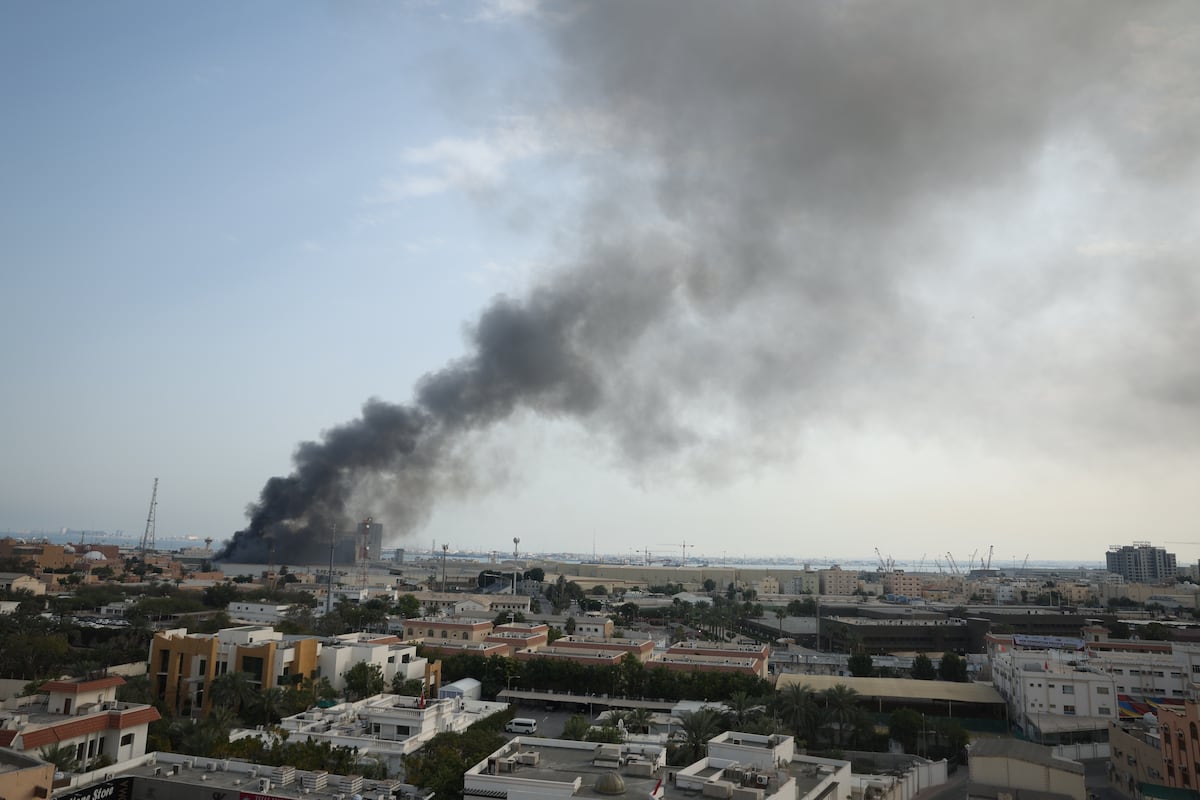
In the wake of Iranian attacks that devastated U.S. bases in the Middle East , the U.S. Air Force wants portable air-defense guns that can destroy drones and cruise missiles.
The Ground-Based, Medium-Caliber Gun Weapon System project is aiming for a weapon “that fires affordable munitions, enables defense against air and missile threats with an initial focus on subsonic cruise missiles (CM) and Unmanned Aircraft Systems (UAS) to provide persistent defense in support of United States Air Force assets,” according to the Air Force’s Request for Information published Thursday. The deadline is Oct. 9.
Iran has unleashed retaliatory strikes at U.S. military installations and civilian infrastructure across the Middle East amid bombardment by U.S. and Israeli forces.
U.S. troops were killed when an Iranian one-way attack drone evaded U.S. air defenses and struck a makeshift operations center at a civilian port in Kuwait. More troops were killed in attacks on Muwaffaq Salti Air Base in Jordan and on Prince Sultan Air Base, Saudi Arabia.
The Iranian strikes have also damaged U.S. aircraft , including five KC-135s on the ground at Prince Sultan Air Base.
The Air Force’s RFI doesn’t request a specific caliber for the new weapons system, but “ medium-caliber ” suggests a weapon in the 20mm to 50mm range. In August, the U.S. Army published a Sources Sought notice for a 50mm anti-drone cannon and ammunition. The Army plans to conduct a live-fire test using Northrop Grumman’s XM913 Bushmaster 50mm chain gun, with companies supplying 50mm ammunition.
The Air Force’s weapon will have 15 baseline parameters, including its probability of kill, or PK, against subsonic cruise missiles, as well as Group 1 to Group 5 UAVs, meaning small drones all the way up to very large unmanned aircraft flying above 18,000 feet.
Contractors “must carefully select the organic sensor capability and phenomenology—integrating the right mix of radar, electro-optical, infrared, or radio-frequency sensors—to ensure reliable target acquisition and tracking across varying weather conditions, environments, and countermeasure scenarios,” the Air Force emphasized.
Weapons will also be assessed for range and elevation, magazine capacity, number of crew needed and integration with other sensors and command networks. They must also be capable of stopping saturation attacks by drones and missiles.
The Air Force is also looking for a portable air defense weapon with “a lightweight, modular, and transportable footprint that can be swiftly projected into austere theater environments to meet emergent threats.”
Based on the RFI, the Air Force appears cognizant of modern air defense’s biggest challenge : air defense systems that are either much more expensive than the drones and missiles they are trying to stop, or systems that run out of ammunition before an attacker does.
The new weapon “must optimize munition performance versus munition cost and gun capability, ensuring that the interceptor’s velocity, maneuverability, and terminal effects are maximized without driving the cost-per-engagement to unsustainable levels or exceeding the physical constraints of the host platform,” the RFI said.
Michael Peck is a correspondent for Defense News and a columnist for the Center for European Policy Analysis. He holds an M.A. in political science from Rutgers University. Find him at theuncommondefense.com. His email is mikedefense1@gmail.com.
在伊朗袭击摧毁美国在中东的基地之后,美国空军希望拥有能够摧毁无人机和巡航导弹的便携式防空炮。
根据美国空军周四发布的征求信息书,陆基中口径火炮武器系统项目旨在研发一种“发射价格低廉的弹药,能够防御空中和导弹威胁的武器,初期重点是亚音速巡航导弹和无人机系统,以提供持续防御,支持美国空军的资产”。征求信息书的截止日期为10月9日。
在美国和以色列军队轰炸中东地区之际,伊朗对美国在中东的军事设施和民用基础设施发动了报复性打击。
一架伊朗单向攻击无人机突破美军防空系统,袭击了科威特一处民用港口的临时作战中心,造成美军士兵死亡。此外,约旦穆瓦法克·萨尔蒂空军基地和沙特阿拉伯苏丹王子空军基地也遭到袭击,造成更多美军士兵丧生。
伊朗的袭击还损坏了美国飞机,其中包括停在苏丹王子空军基地地面的五架KC-135加油机。
空军的信息征询书(RFI)并未明确要求新型武器系统使用特定口径,但“中口径”一词暗示其口径可能在20毫米至50毫米之间。今年8月,美国陆军发布了一份50毫米反无人机火炮及弹药的采购公告。陆军计划使用诺斯罗普·格鲁曼公司的XM913“大毒蛇”50毫米链式机炮进行实弹测试,并由相关公司提供50毫米弹药。
空军的武器将有 15 个基本参数,包括其对亚音速巡航导弹以及第 1 组到第 5 组无人机的杀伤概率 (PK),这意味着从小型无人机到飞行高度超过 18,000 英尺的大型无人机。
空军强调,承包商“必须仔细选择有机传感器能力和现象学——整合雷达、光电、红外或射频传感器的正确组合——以确保在各种天气条件、环境和对抗措施场景下可靠地捕获和跟踪目标”。
武器的评估指标还包括射程和仰角、弹匣容量、所需操作人员数量以及与其他传感器和指挥网络的集成能力。此外,它们还必须能够抵御无人机和导弹的饱和攻击。
空军也在寻找一种便携式防空武器,这种武器“重量轻、模块化、易于运输,可以迅速部署到条件艰苦的战区环境中,以应对突发威胁”。
根据信息征询书,空军似乎意识到了现代防空面临的最大挑战:防空系统要么比它们试图阻止的无人机和导弹贵得多,要么弹药在攻击者之前就耗尽了。
信息征询书称,这种新型武器“必须在弹药性能、弹药成本和火炮能力之间进行优化,确保拦截弹的速度、机动性和末端效应最大化,同时又不至于使每次交战的成本达到不可持续的水平,或超出主机平台的物理限制”。
迈克尔·佩克是《防务新闻》的通讯员,也是欧洲政策分析中心的专栏作家。他拥有罗格斯大学政治学硕士学位。您可以在theuncommondefense.com找到他。他的邮箱是mikedefense1@gmail.com。