European drone training sites mushroom in nod to Ukraine war tactics欧洲无人机训练基地如雨后春笋般涌现,效仿乌克兰战争策略
With drones becoming a staple of modern warfare, nations are creating new test facilities to put them through their paces.
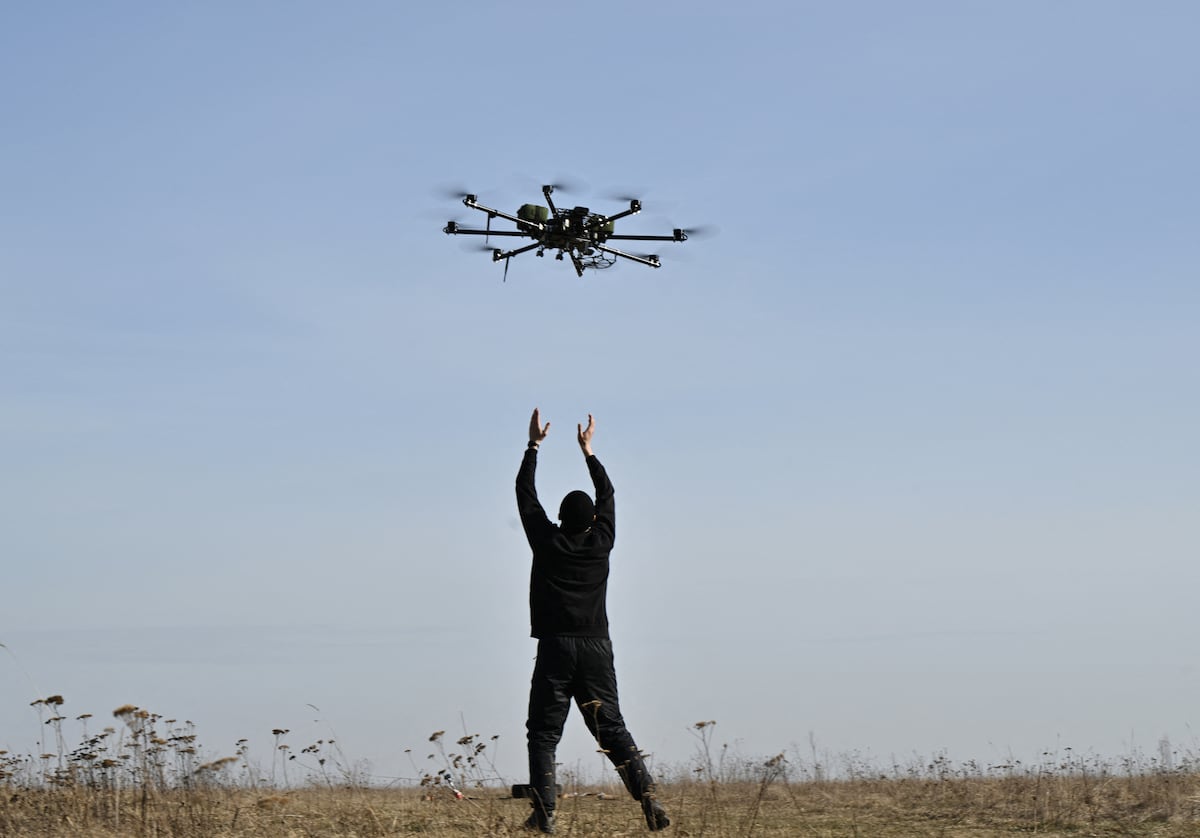
MILAN — Drone tactics emerging from the war in Ukraine have inspired other European countries to intensify their military-experimentation campaigns, with a new crop of testing facilities designed to test the small aircraft in war-like conditions.
Estonia inaugurated its first drone training center, located in the western part of the Baltic country, last week. The facility is meant to enhance the unmanned systems training of the Estonian Defense Forces and NATO allied units.
“The experience from the war in Ukraine shows that drones and unmanned systems are crucial in modern combat – developing Estonia’s defense capabilities requires that we elevate our drone training,” Estonia’s Defense League quoted Defense Minister Hanno Pevkur as saying.
The site, which cost roughly €5 million ($5.7 million) and was financed by Luxembourg, covers 1,300 square meters and includes classrooms, storage, equipment maintenance areas as well as accommodations, according to Estonian public broadcaster ERR.
It will seek to integrate and draw from Ukraine’s wartime expertise in drone warfare as well as NATO’s to offer key infrastructure for national forces and industry players.
An increasing number of European states are following similar steps in attempts to trial drones in real-world scenarios to test their performance and reliability.
Obstacles to be expected in actual conflict include bad weather and enemy jamming of control signals, for example.
Earlier this month, Denmark announced the creation of a new drone centre at the Hans Christian Andersen airport in Odense to serve as a training site for the Danish military.
The airport already has another testing facility. Dubbed the UAS Denmark Test Center and launched in 2013, it focuses on training personnel in beyond-visual-line-of-sight, or BVLOS, flight zones.
In March, the Danish government said it would dedicate $110 million to the new section, building on lessons from the Ukraine war. By 2026, approximately 100 Danish drone operators are expected to be training there, as reported AFP.
In another example, ZenaTech, a company headquartered in Canada that specializes in artificial intelligence, announced in January that it was setting up a BVLOS drone trial facility in Turkey.
“The facility will serve as a product testing site for the company’s subsidiary ZenaDrone 1000 model drones designed for the U.S. defense branches and NATO – it will be fully set up and operational during the first quarter of 2025,” ZenaTech said in a statement .
As part of Finland’s recently published national drone strategy, the country will seek to prioritize investments in drone infrastructure, specifically large-scale laboratories and open-air test sites. The document cites Finnish Arctic conditions as a unique and challenging testing environment.
In 2024, the European Organization for the Safety of Air Navigation, known as Eurocontrol, conducted a survey of 31 civil and military test centers across member states to report on their capabilities and the challenges.
A majority of the respondents were from the European UAS Test Centres Alliance, which comprises 35 organizations from over 17 countries, that seek to enhance and support the development of the drone ecosystem and leverage synergies between the different sites.
The three main operational concerns faced by the facilities were listed as airspace integration, technical reliability, and privacy. The non-operational ones included flight approval by authorities and funding.
Elisabeth Gosselin-Malo was a Europe correspondent for Defense News. She covers a wide range of topics related to military procurement and international security, and specializes in reporting on the aviation sector. She is based in Milan, Italy.
米兰——乌克兰战争中出现的无人机战术激励了其他欧洲国家加强军事试验,并建立了一批新的测试设施,旨在模拟战争条件测试这种小型飞机。
上周,爱沙尼亚在其西部地区启用了首个无人机训练中心。该中心旨在加强爱沙尼亚国防军和北约盟军部队的无人系统训练。
爱沙尼亚国防联盟援引国防部长汉诺·佩夫库尔的话说:“乌克兰战争的经验表明,无人机和无人系统在现代战争中至关重要——发展爱沙尼亚的国防能力需要我们提升无人机训练水平。”
据爱沙尼亚公共广播公司 ERR 报道,该场地耗资约 500 万欧元(570 万美元),由卢森堡出资兴建,占地 1300 平方米,包括教室、储藏室、设备维护区以及住宿设施。
它将寻求整合并借鉴乌克兰在无人机战争方面的战时经验以及北约的经验,为各国军队和行业参与者提供关键基础设施。
越来越多的欧洲国家正采取类似措施,尝试在真实场景中试用无人机,以测试其性能和可靠性。
实际冲突中可能遇到的障碍包括恶劣天气和敌方干扰控制信号等。
本月初,丹麦宣布在欧登塞的汉斯·克里斯蒂安·安徒生机场建立一个新的无人机中心,作为丹麦军队的训练基地。
该机场已经拥有另一个测试设施。该设施名为丹麦无人机系统测试中心,于 2013 年启用,主要负责培训人员在超视距飞行区(BVLOS)进行无人机操作。
今年3月,丹麦政府宣布将拨款1.1亿美元用于新建无人机培训中心,以吸取乌克兰战争的经验教训。据法新社报道,到2026年,预计将有约100名丹麦无人机操作员在此接受培训。
另一个例子是,总部位于加拿大的人工智能公司 ZenaTech 于 1 月份宣布,将在土耳其建立一个超视距无人机试验设施。
ZenaTech在一份声明中表示:“该设施将作为公司子公司ZenaDrone 1000型无人机的产品测试基地,这些无人机是为美国国防部门和北约设计的——它将于2025年第一季度全面建成并投入运营。”
芬兰近期发布的国家无人机战略中,将优先投资无人机基础设施,特别是大型实验室和露天测试场地。该文件指出,芬兰北极地区的气候条件独特且极具挑战性,是开展无人机测试的理想场所。
2024 年,欧洲空中航行安全组织(简称 Eurocontrol)对成员国的 31 个民用和军用测试中心进行了调查,以报告它们的能力和面临的挑战。
大多数受访者来自欧洲无人机系统测试中心联盟,该联盟由来自 17 个国家的 35 个组织组成,旨在加强和支持无人机生态系统的发展,并利用不同站点之间的协同效应。
这些设施面临的三大主要运行问题是空域整合、技术可靠性和隐私性。非运行问题包括获得当局的飞行批准和资金支持。
伊丽莎白·戈斯林-马洛曾任《防务新闻》欧洲通讯员。她的报道涵盖军事采购和国际安全等广泛领域,尤其擅长航空领域的报道。她常驻意大利米兰。