With Indo-Pacific undersea cables at risk, companies tout their tech印度洋-太平洋海底电缆面临风险,各公司纷纷吹嘘自己的技术。
Taiwan has reported five cases of seabed cable damage this year already, compared with just three each in 2023 and 2024.
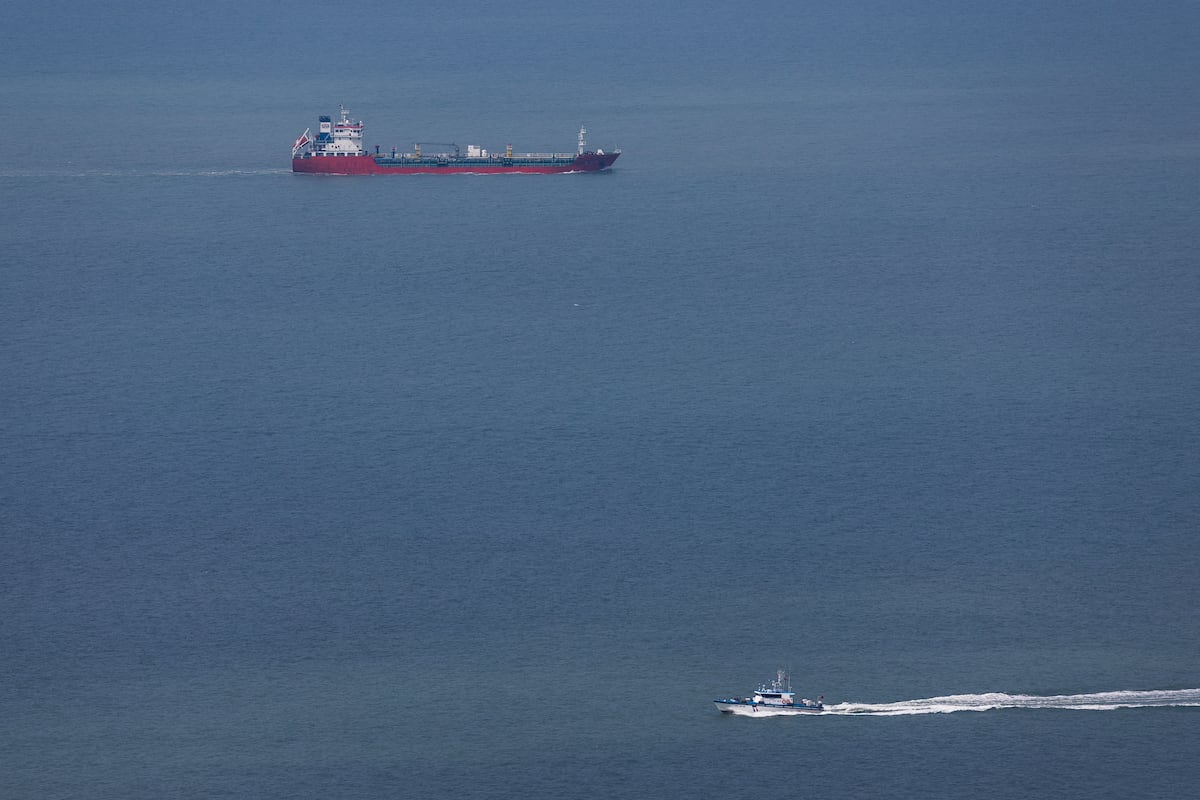
CHRISTCHURCH, New Zealand — Taiwanese authorities this month charged the Chinese captain of the cargo vessel Hong Tai 58 for damaging an underwater communications cable connecting Taiwan to the Penghu Islands near the Chinese coast.
The legal move is a reminder that sabotage of vital seabed cables, which is notoriously difficult to prove, has firmly entered the canon of gray-zone tactics meant to find weak spots in an adversary’s defenses.
Taiwan’s coast guard had detained Hong Tai 58, a Togolese-flagged cargo vessel crewed by Chinese sailors, in late February.
A similar incident occurred north of Taiwan in January, but on that occasion a Hong Kong-owned commercial vessel was fingered as the culprit.
Taiwan has reported five cases of seabed cable damage this year already, compared with just three each in 2023 and 2024. Taiwan’s coast guard has created a blacklist of nearly 100 suspicious China-linked ships.
Despite Beijing’s denials, some observers believe such nefarious actions are part of China’s coercive behavior towards Taiwan.
During a House Armed Services Committee hearing in Washington earlier this month, for example, U.S. Sen. Jacky Rosen (D-Nev.) blasted China’s “reckless, coercive and aggressive activities,” singling out sabotage of undersea cables as a “particularly alarming tactic.”
At the same hearing, U.S. Navy Adm. Samuel Paparo, commander of Indo-Pacific Command (INDOPACOM), acknowledged attempts to sabotage undersea internet cables, particularly around Taiwan.
Wew weeks after Taiwan seized Hong Tai 58, media revealed that the state-owned China Ship Scientific Research Center had patented a deep-sea device “capable of severing the world’s most fortified underwater communication or power lines.”
One of China’s priorities in major hostilities against Taiwan – such as a naval blockade or full-blown invasion – would be to isolate the island and interfere with civilian and military communications.
In his testimony to U.S. lawmakers, Paparo proposed two countermeasures against Chinese sabotage of cables. The first is to penetrate the targeting chain through intelligence gathering, and then showing up with forces “in the locations where they would be otherwise cutting those cables.”
Second, Paparo added, is resilience. This encompasses redundant communication networks to ensure the information environment continues unabated, as well as the proliferation of multiple satellite constellations in low Earth orbit.
Meanwhile, naval tech companies are sensing a new market for their equipment.
Andy Keough, managing director of Saab Australia, said the company is well positioned to support governments in defending underwater infrastructure through its countermine portfolio.
“Our products play a crucial role in mine countermeasure solutions as well as the protection of critical undersea infrastructure, including pipelines and subsea cables, across the globe,” Keough said.
Autonomous underwater vehicles, or AUVs for short, can monitor infrastructure, and seabed sensors can provide real-time maritime domain awareness.
Developing the ability to quickly repair infrastructure or reroute communications is also important. For example, Saab’s electric Work-Class Remote Operated Vehicle can operate at depths of 5,500m and is controlled via satellite link. For inspections and repairs, the company’s Sabertooth AUV can act as a persistent underwater resident with the aid of a subsea docking station, said Keough.
Elsewhere, the company Exail won a French military contract to design an AUV that can dive as deep as 6,000m to counteract seabed warfare. To be delivered in 2027, these vehicles have the ability to reprogram themselves mid-mission. For example, if one detected something suspicious, it could move into observation mode to watch what a given target is doing.
Thales Australia hopes to attract new customers with its sensing equipment. Gavin Henry, of the company’s undersea warfare unit, said Thales’ Blue Sentry technology, with its thin-line towed array, can help find potential threats.
“This system employs a network of sophisticated sensors capable of detecting and tracking both surface and underwater contacts,” he said.
Maritime domain awareness
Ross Babbage, CEO of Strategic Forum in Australia, argues the undersea threat to key infrastructure requires a layered, whole-of-nation approach.
“In conjunction with automatic identification systems on ships, you can make sure people are following the correct channels and their prescribed route, because they’re only going to do these things if they deviate from their normal route,” he said. “So there are bell ringers there to then target an asset to go and have a look.”
Nations like Australia need to conduct surveillance and look for anomalies, Babbage said. “If you can do that, then you can pinpoint those anomalies and start to put the heat on them before they do it, or certainly capture them after they’ve done it, as they’ve done in Europe, and deal with it on a diplomatic basis.”
An Australian Defense Department spokesperson told Defense News the military has a range of capabilities to monitor and respond to threats to undersea communication cables.
The Australian Defence Force works with other agencies specializing in cybersecurity to protect infrastructure, though much of that information is classified.
Gordon Arthur is an Asia correspondent for Defense News. After a 20-year stint working in Hong Kong, he now resides in New Zealand. He has attended military exercises and defense exhibitions in about 20 countries around the Asia-Pacific region.
新西兰基督城——本月,台湾当局指控货船“红泰58”号的中国船长破坏了连接台湾与中国沿海澎湖群岛的海底通信电缆。
这一法律举措提醒人们,破坏重要的海底电缆的行为(众所周知,这种行为很难证明)已经牢牢地成为灰色地带战术的经典手段,旨在寻找对手防御中的薄弱环节。
2月下旬,台湾海巡署扣押了悬挂多哥国旗、船员为中国海员的货船“红泰58”号。
今年1月,台湾北部也发生过类似事件,但当时被指认为肇事者是一艘香港所有的商船。
台湾今年已报告五起海底电缆损坏事件,而2023年和2024年分别只有三起。台湾海巡署已建立一份近百艘可疑的与中国有关联的船只的黑名单。
尽管北京方面否认,但一些观察人士认为,这种卑劣行径是中国对台湾采取胁迫行为的一部分。
例如,在本月初于华盛顿举行的众议院军事委员会听证会上,美国参议员杰基·罗森(内华达州民主党)抨击了中国的“鲁莽、胁迫和侵略性活动”,并特别指出破坏海底电缆是一种“特别令人担忧的策略”。
在同一场听证会上,美国海军印太司令部司令塞缪尔·帕帕罗海军上将承认,有人试图破坏海底互联网电缆,尤其是在台湾附近。
在台湾扣押“红台58”号几周后,媒体披露,国有的中国船舶科学研究中心已获得一项深海装置的专利,该装置“能够切断世界上最坚固的水下通信或电力线路”。
中国对台发动重大敌对行动(例如海上封锁或全面入侵)的首要任务之一是孤立台湾,并干扰民用和军事通信。
帕帕罗在向美国国会议员作证时,提出了两项应对中国破坏海底电缆的反制措施。第一项措施是通过情报收集渗透到目标链中,然后派遣兵力出现在“他们原本会切断这些电缆的地点”。
帕帕罗补充说,其次是韧性。这包括冗余的通信网络,以确保信息环境持续畅通无阻,以及在低地球轨道上部署多个卫星星座。
与此同时,海军技术公司也意识到他们的设备存在新的市场需求。
Saab Australia 的总经理 Andy Keough 表示,该公司凭借其反地雷产品组合,完全有能力支持各国政府保护水下基础设施。
“我们的产品在水雷对抗解决方案以及保护全球关键海底基础设施(包括管道和海底电缆)方面发挥着至关重要的作用,”基奥说。
自主水下航行器(简称 AUV)可以监测基础设施,海底传感器可以提供实时海域态势感知。
快速修复基础设施或重新路由通信的能力也至关重要。例如,萨博公司的电动工作级遥控潜水器可在5500米深的水下作业,并通过卫星链路进行控制。基奥表示,该公司的“剑齿虎”自主水下航行器(AUV)可借助水下对接站,作为持续的水下作业平台,用于检查和维修工作。
此外,Exail公司赢得了一份法国军方合同,将设计一种可潜至6000米深的自主水下航行器(AUV),用于对抗海底战。这些航行器将于2027年交付,它们具备在任务过程中重新编程的能力。例如,如果探测到可疑情况,它可以切换到观察模式,监视特定目标的行动。
泰雷兹澳大利亚公司希望凭借其传感设备吸引新客户。该公司水下作战部门的加文·亨利表示,泰雷兹的“蓝色哨兵”技术,凭借其细线拖曳阵列,可以帮助发现潜在威胁。
他说:“该系统采用复杂的传感器网络,能够探测和跟踪水面和水下目标。”
海上领域感知
澳大利亚战略论坛首席执行官罗斯·巴贝奇认为,海底对关键基础设施的威胁需要采取多层次、举国之力的应对措施。
他说:“结合船舶上的自动识别系统,可以确保人们遵循正确的航道和既定航线,因为只有偏离正常航线时才会启动这些程序。所以,会有人敲响警钟,然后锁定目标进行检查。”
巴贝奇说,像澳大利亚这样的国家需要进行监视并寻找异常情况。“如果能做到这一点,就能准确发现这些异常情况,并在他们采取行动之前就施加压力,或者当然也可以在他们采取行动之后抓住他们,就像欧洲的做法一样,然后通过外交手段解决问题。”
澳大利亚国防部发言人告诉《防务新闻》,军方拥有多种能力来监测和应对海底通信电缆面临的威胁。
澳大利亚国防军与其他专门从事网络安全的机构合作,保护基础设施,但其中很多信息属于机密。
戈登·阿瑟是《防务新闻》的亚洲特派记者。在香港工作20年后,他现居新西兰。他曾到访亚太地区约20个国家,参加过军事演习和防务展览。