Netherlands to buy anti-torpedo weapon, tracked armor, new rifle荷兰将购买反鱼雷武器、履带式装甲车和新型步枪
Total spending on the planned projects will be at least €1.45 billion (US$1.65 billion), based on the lower end of the budget range for each project.
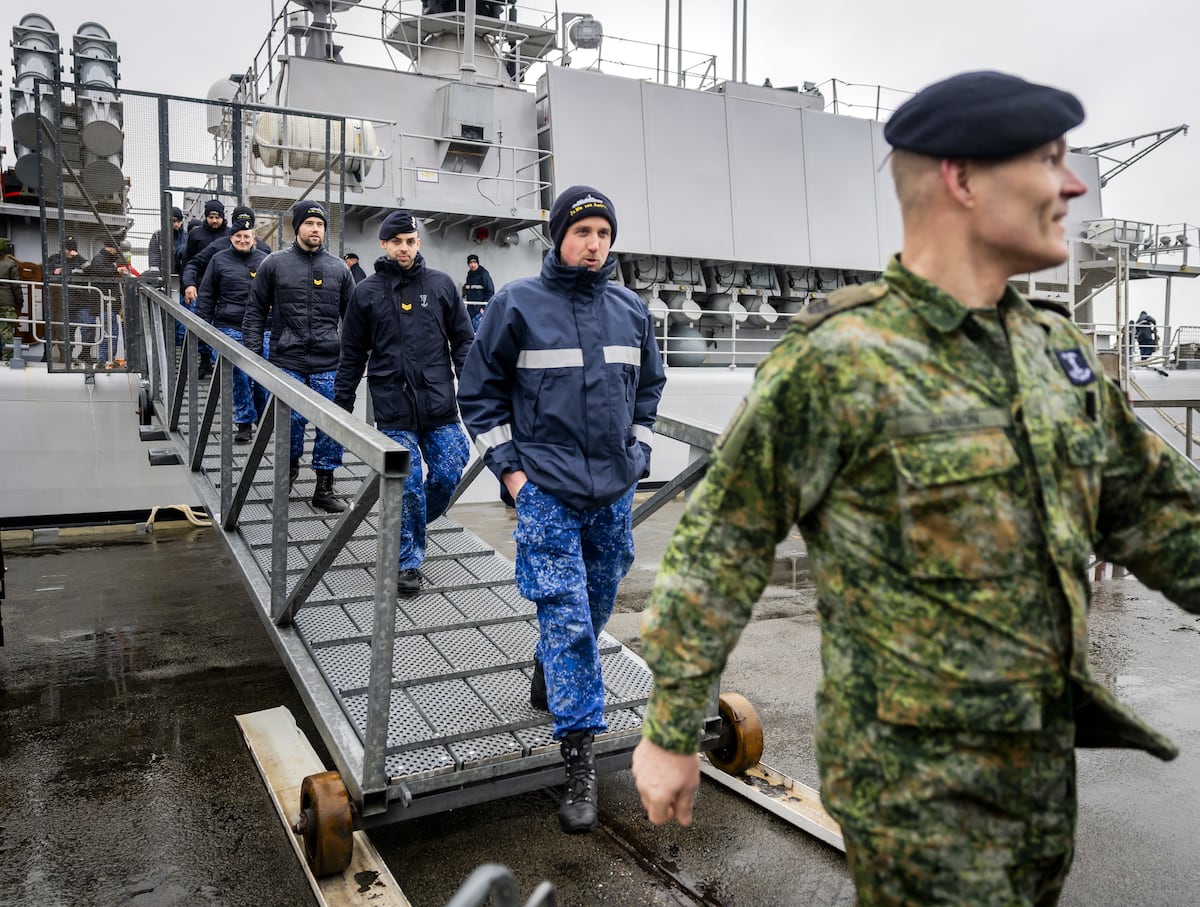
PARIS — The Netherlands plans to buy a torpedo-killing torpedo as early as 2029, replace the armed forces’ standard assault rifle starting this decade and equip its heavy infantry brigade with tracked armored general-purpose vehicles, as part of 17 equipment projects for the coming years.
Total spending on the planned projects will be at least €1.45 billion (US$1.65 billion), based on the lower end of the budget range for each project, according to a so-called “A letter” from the Dutch Ministry of Defense sent to parliament on Wednesday outlining equipment requirements.
“It’s essential that the Ministry of Defense has the necessary defense equipment at its disposal in good time to increase our deterrence and be a reliable NATO ally,” State Secretary of Defence Gijs Tuinman wrote. “With this omnibus A letter, the Ministry of Defense is taking the next step toward greater flexibility and less internal bureaucracy in the procurement process.”
The Netherlands lifted its 2025 defense budget to €22 billion, after spending €21.4 billion last year. The country is in the process of renewing its fleet of air-defense frigates , anti-submarine warfare frigates and submarines, and on land is beefing up its 43 Mechanized Brigade into a heavy infantry brigade with a full-fledged tank battalion and mobile air-defense systems.
The Dutch plan to equip the future frigates, submarines and new amphibious transport vessels with a hard-kill system to defend against unmanned underwater vehicles such as drones and torpedoes. The first platform to be fitted with the anti-torpedo torpedo (ATT) system will be the anti-submarine warfare frigates, according to Tuinman.
Development of the anti-torpedo weapon from a demonstration model to a production-ready design will continue within the European Union’s Permanent Structured Cooperation through to 2028, according to the Dutch MoD. Subsequently, the Netherlands expects to acquire a “qualified ATT” starting in 2029, when the first new Dutch ASW frigate is scheduled to become operational.
The investment for the anti-torpedo torpedo is €250 million to €1 billion for the 2025-2039 period, the ministry said. Potential international military cooperation through PESCO will reduce the technical development and financial risks, according to Tuinman.
Other Navy investment projects include a replacement for the Mark 48 torpedoes for the new Orka-class submarines to be built by Naval Group, with delivery of the new torpedoes planned in the early 2030s. The Netherlands also plans to invest in unmanned aerial vehicles and unmanned surface vessels for maritime intelligence, surveillance and reconnaissance and to contribute to anti-submarine warfare. Both projects are in the €50 million to €250 million range.
For the land forces, the Netherlands plans to buy an estimated 100 to 150 tracked armored vehicles for use by the heavy infantry brigade in roles including transport, command, ambulance, engineering and troop transport, for between €250 million and €1 billion.
The MoD plans to buy the tracked vehicles through a negotiated procedure without tender from a single source, buying systems that are already known and have been acquired previously, Tuinman said. “This ensures that contracting can be done quickly, which benefits delivery time.”
While Tuinman didn’t provide details on the model the Dutch plan to buy, the 43 Mechanized Brigade operates the CV90 infantry combat vehicle from BAE Systems Hägglunds, alongside Leopard 2 main battle tanks . The CV90 exists in an armored-personnel carrier version that is the base for other non-turreted variants.
Sweden, Finland, Norway and Lithuania are preparing a joint purchase of the CV90, the Swedish government said earlier this week.
The Dutch list of projects also includes replacing the armed forces’ Colt C7 standard assault rife and C8 carbines, with a budget of €250 million to €1 billion for the 2027-2041 period. The existing rifles have been modernized since 2009 and will reach the end of their technical lifespan in 2030, and the ministry targets the first deliveries of the new arms before the end of the decade.
The MoD plans to buy multiple variants of the same weapon from a single supplier, and is looking for a possible purchase in cooperation with partner countries to increase interoperability. The Netherlands said several partners and allies either use similar weapons or are planning to acquire them in the short term.
The Netherlands will also buy around 200 multi-barrel machine guns that will equip helicopters and ships, for between €50 million and €250 million. The speed of engagements has increased, and the MoD said it’s looking for a weapon with a higher rate of fire than the current MAG 7.62 mm and Browning .50 machine guns.
Technical improvements on a multi-barrel machine gun make it less likely to malfunction than current weapons, and the improved combat capabilities increase the survivability and operational availability of platforms including naval vessels and helicopters, the ministry said.
The ministry said the Dutch F-35 jets need a tactical armament that can be deployed against well-defended targets, with high survivability to avoid anti-munition weapon systems, and the ministry has budgeted €50 million to €250 million from 2027 to 2032 to acquire such a weapon.
The current weapons for tactical deployment equipping the Dutch F-35 fleet are precision-guided and short-range, free-fall munitions with low survivability due to lack of speed or because of high radar reflectivity. They are limited in their deployment due to vulnerability to weather conditions, camouflage, deception and jamming, the ministry said.
The Netherlands has changed its defense procurement to cut red tape and accelerate the process, doubling the threshold that requires notification to parliament to €50 million and lifting the investment amount that needs parliamentary approval to €250 million from €100 million.
“Since the Russian invasion of Ukraine in February 2022, Defense has taken new measures to increase agility, speed up processes and reduce internal bureaucracy,” Tuinman said.
Rudy Ruitenberg is a Europe correspondent for Defense News. He started his career at Bloomberg News and has experience reporting on technology, commodity markets and politics.
巴黎——荷兰计划最早于 2029 年购买一种鱼雷拦截鱼雷的鱼雷,从本十年开始更换武装部队的标准突击步枪,并为其重型步兵旅配备履带式装甲通用车辆,这是未来几年 17 个装备项目的一部分。
根据荷兰国防部周三向议会提交的所谓“A 信”,计划项目的总支出至少为 14.5 亿欧元(16.5 亿美元),这是根据每个项目预算范围的下限计算得出的。该信函概述了装备需求。
“国防部必须及时获得必要的国防装备,以增强威慑力,成为可靠的北约盟友,”国防国务秘书吉斯·图因曼写道。“通过这封综合性A函,国防部正朝着提高采购流程的灵活性和减少内部官僚主义迈出下一步。”
荷兰将2025年的国防预算提高到220亿欧元,而去年国防支出为214亿欧元。该国正在更新其防空护卫舰、反潜护卫舰和潜艇舰队,并在陆地上加强其第43机械化旅,将其升级为拥有完整坦克营和移动防空系统的重型步兵旅。
荷兰计划为未来的护卫舰、潜艇和新型两栖运输舰配备硬杀伤系统,以防御无人水下航行器,例如无人机和鱼雷。据图因曼称,首个配备反鱼雷鱼雷(ATT)系统的平台将是反潜护卫舰。
据荷兰国防部称,反鱼雷武器从演示模型到量产型设计的研发工作将在欧盟永久结构性合作框架内持续到2028年。随后,荷兰预计将于2029年开始采购“合格的反鱼雷武器”,届时荷兰首艘新型反潜护卫舰也将服役。
该部表示,反鱼雷鱼雷的投资额在2025年至2039年期间为2.5亿欧元至10亿欧元。图因曼认为,通过永久性结构化合作(PESCO)开展潜在的国际军事合作将降低技术研发和财务风险。
海军的其他投资项目包括为法国海军集团建造的新型奥尔卡级潜艇更换Mark 48鱼雷,新鱼雷计划于2030年代初交付。荷兰还计划投资研发无人机和无人水面舰艇,用于海上情报、监视和侦察,并助力反潜作战。这两个项目的投资额均在5000万至2.5亿欧元之间。
荷兰计划为陆军购买约 100 至 150 辆履带式装甲车,供重型步兵旅用于运输、指挥、救护、工程和部队运输等任务,预算在 2.5 亿欧元至 10 亿欧元之间。
图因曼表示,国防部计划通过协商程序,不进行公开招标,从单一供应商处采购履带式车辆,采购的系统都是此前已经采购过的成熟系统。“这确保了合同能够快速签订,从而缩短交付时间。”
图因曼并未透露荷兰计划采购的具体型号,但荷兰第43机械化旅目前装备有BAE系统公司哈格隆德分公司生产的CV90步兵战车,以及豹2主战坦克。CV90战车存在装甲运兵车版本,其他无炮塔衍生型号均以此为基础。
瑞典政府本周早些时候表示,瑞典、芬兰、挪威和立陶宛正在准备联合购买CV90战机。
荷兰的项目清单中还包括替换军队现有的柯尔特C7标准突击步枪和C8卡宾枪,预算为2.5亿至10亿欧元,项目周期为2027年至2041年。这些现役步枪自2009年以来已进行过现代化改造,将于2030年达到技术使用寿命终点。荷兰国防部的目标是在本十年末之前完成新武器的交付。
英国国防部计划从同一供应商处采购同一款武器的多种型号,并正在寻求与伙伴国家合作采购,以提高互操作性。荷兰方面表示,一些伙伴国和盟友要么已经在使用类似武器,要么计划在短期内采购。
荷兰还将采购约200挺多管机枪,用于装备直升机和舰艇,总价在5000万至2.5亿欧元之间。交战节奏加快,荷兰国防部表示,他们正在寻找一种射速高于目前使用的MAG 7.62毫米机枪和勃朗宁.50口径机枪的武器。
该部表示,多管机枪的技术改进使其比现有武器更不容易发生故障,改进的作战能力提高了包括海军舰艇和直升机在内的平台的生存能力和作战可用性。
该部表示,荷兰的 F-35 战机需要一种能够对付防御严密目标、具有高生存能力以避免被反弹药武器系统击落的战术武器,该部已在 2027 年至 2032 年期间拨款 5000 万至 2.5 亿欧元用于采购这种武器。
荷兰国防部表示,目前荷兰F-35机队战术部署所用的武器是精确制导的短程自由落体弹药,由于速度不足或雷达反射率高,其生存能力较差。这些弹药易受天气条件、伪装、欺骗和干扰的影响,因此部署受到限制。
荷兰已对其国防采购流程进行了改革,以减少繁文缛节并加快采购速度,将需要向议会提交通知的门槛提高了一倍,达到 5000 万欧元,并将需要议会批准的投资额从 1 亿欧元提高到 2.5 亿欧元。
“自 2022 年 2 月俄罗斯入侵乌克兰以来,国防部采取了新的措施来提高灵活性、加快流程并减少内部官僚主义,”图因曼说。
鲁迪·鲁伊滕贝格是《防务新闻》的欧洲记者。他的职业生涯始于彭博新闻社,拥有报道科技、大宗商品市场和政治方面的经验。