US arms deal still up in the air after Hegseth visit to Vietnam赫格塞斯访问越南后,美国对越军售案仍悬而未决。
Despite U.S. interest in deeper military ties with Vietnam, the Nov. 2 visit by Defense Secretary Pete Hegseth did not yield an arms sales announcement.
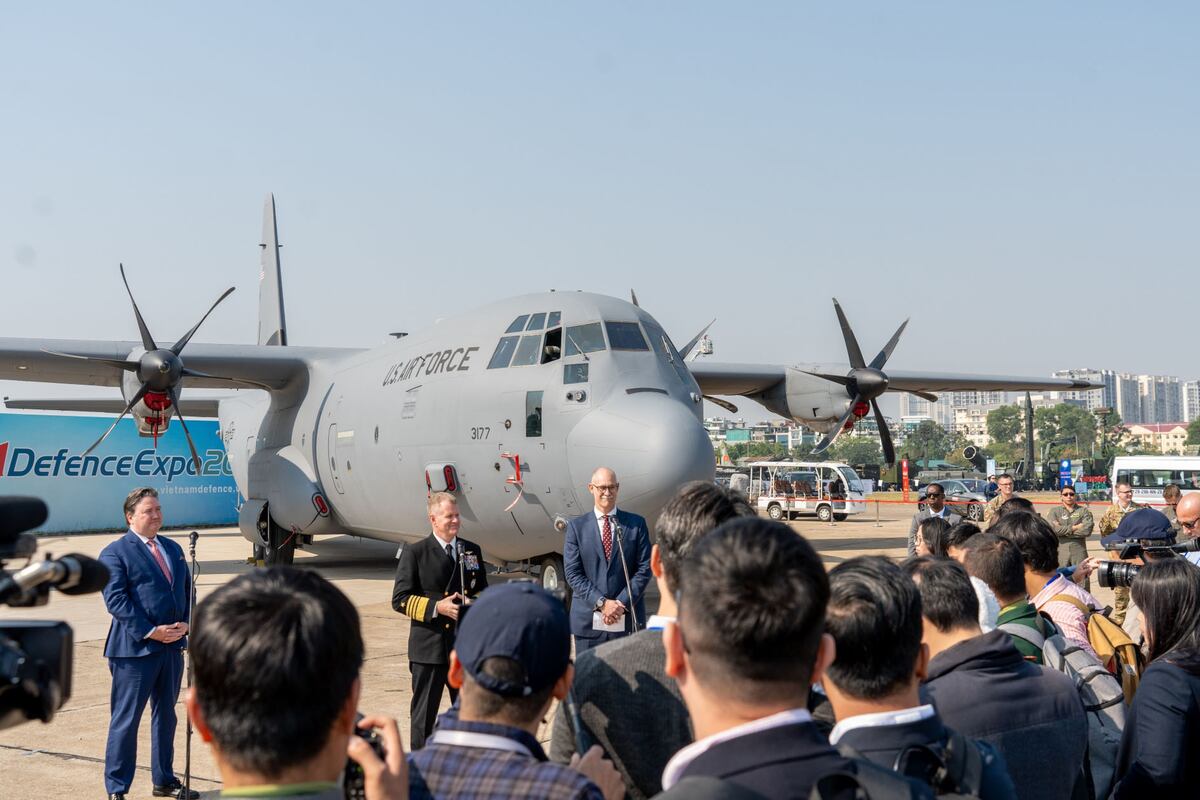
HO CHI MINH CITY, Vietnam — Despite U.S. interest in deeper military ties with Vietnam, the Nov. 2 visit by U.S. Defense Secretary Pete Hegseth, during which he met Communist Party leader To Lam and Defense Minister Phan Van Giang, did not yield an expected announcement on arms sales.
“Deeper [military] cooperation will benefit both of our countries,” Hegseth said ahead of his meeting with Giang.
Despite talks in recent years of Vietnam diversifying its predominantly Russian military arsenal and purchasing U.S.-made weapons, no official announcements have been made on major items. Larger efforts to turn away from Russia as its main arms supplier also appear stalled, as reports indicate Hanoi is using profits from a joint oil venture to acquire Russian weapons.
For Washington, Hanoi is seen as a pivotal partner to countering China’s aggression in the South China Sea.
Hegseth’s visit marked 30 years since the countries normalized diplomatic ties in 1995, and two years since the U.S. was upgraded to Hanoi’s highest diplomatic tier, comprehensive strategic partnership. The U.S. lifted its arms embargo on Vietnam in 2016 and has since delivered three cutters to the Vietnamese coast guard and three T-6C trainer aircraft out of an order of 12.
During Hegseth’s trip, the countries signed a memorandum of understanding on war legacy cooperation. Hegseth announced a $130 million commitment to funding the cleanup of the toxic herbicide Agent Orange, sprayed to destroy jungle foliage during the Vietnam War that continues to cause birth defects among Vietnamese. The funding would also go to clearing unexploded ordnance as well as finding and identifying the remains of American and Vietnamese soldiers. Those efforts were paused after the Trump administration froze U.S. Agency for International Development funds this year.
At the end of his meeting with Giang, Hegseth gave the defense minister a leather box, knife and belt U.S. soldiers had taken from a Vietnamese bunker outside the coastal city of Danang in 1968.
Andrew Wells-Dang, senior adviser to the nonprofit Mission: POW-MIA, said Hegseth’s visit signals that the US-Vietnam partnership continues despite tariff disputes.
“Its significance is that both countries recognize war legacy issues, including the search for missing persons from both sides, is the foundation for security relations,” he told Military Times by WhatsApp.
“This has always been the case for the Vietnamese of course, and it’s important that the U.S. officials agree too,” he wrote.
Nguyen Khac Giang, a visiting fellow at Singapore’s ISEAS-Yusof Ishak Institute, told Military Times that the commitment on war remediation was positive but there appeared to be little movement on arms sales.
“On the defense cooperation, we have seen a lot of talks and promises but we haven’t seen anything really concrete,” he said.
While no arms purchase was announced, Lam, the party leader, described defense cooperation as key to the countries’ partnership. He called defense cooperation “one of the most important pillars of bilateral relations,” the local Voice of Vietnam outlet reported, and he urged continued U.S. support for postwar recovery and for “substantive defense cooperation on the basis of respecting Vietnam’s independence, sovereignty, territorial integrity, foreign and defense principles.”
Beyond official statements, reports indicate deeper talks on arms supplies are in the works. Two unnamed Vietnamese sources and one unnamed U.S. official told Reuters weapons procurement would dominate the Hegseth visit agenda, including possible purchase of Lockheed Martin C-130 Hercules cargo planes and S-92 helicopters and Boeing Chinook helicopters, but neither Lockheed Martin nor the U.S. Embassy in Hanoi would comment. The Vietnamese Embassy in Washington did not reply to questions.
In April, Hanoi said it would buy at least 24 Lockheed Martin F-16 fighter jets but no progress has been reported. The potential C-130 deal surfaced in September of last year after Defense Minister Giang visited Washington. Later, at Hanoi’s December Defense Expo, Vietnam’s deputy defense minister was filmed saying Hanoi had ordered the cargo planes.
Ray Powell, executive director of Indo-Pacific-focused maritime transparency nonprofit SeaLight and former U.S. air attaché to Vietnam, said F-16 sales are unlikely because of Chinese pressure.
“If Vietnam were to buy US F-16s that would certainly aggravate China,” he said. C-130s, as nonlethal cargo planes, would be less likely to rankle Beijing, he said, adding that similar thinking went into the U.S. supplying Vietnam with T-6C training aircraft, an effort led by Powell while air attaché.
“Part of the reason we picked the T-6 as the way to go is because politically it’s not nearly as sensitive as something like a fighter,” he said.
Nguyen Khac Giang said the C-130 deal is likely bogged down by bureaucracy but that the delays could also signify deeper trust issues, especially amid reports that Hanoi is purchasing Russian fighter jets.
“The case of the C-130 is a very obvious delay in defense cooperation,” he said. “It’s mostly bureaucratic hurdles but, nevertheless, if you put that into the comparison with Vietnam’s recent alleged purchase of 40 Su fighters from Russia, I think that may signal some potential trust issues between the two sides.”
Russian arms reports
In September, the Associated Press reported that Hanoi planned to buy Russian weapons through profits from Rusvietpro – a joint oil venture with Russia’s Zarubezhneft – to skirt sanctions by bypassing the international SWIFT network for financial transactions.
In October, The New York Times reported that Hanoi had ordered $8 billion worth of Russian arms, including 40 new Su-35 and Su-30 fighter jets, though deliveries would be delayed by Moscow’s war on Ukraine. Leaked data from hacker group black8mirror in September indicated Vietnam was set to receive nine electronic warfare systems in 2024, and 26 components for mobile ground-based systems that can jam radar-guided missiles this year.
Despite Russian weapons’ lower quality, Powell said the dependence on Russian weapons stems from shared history, corruption and cost incentives.
“Vietnam has been buying Russian weapons for generations and so some of it I think is inertia,” Powell said.
“They know that they have to end up going back and paying more for repairs and parts [for Russian weapons]. ... It’s just when the price point for the initial purchase is cheaper, it’s harder to justify buying the expensive Western product when you can get the cheaper Russian product. Also, again, there are people who get paid, and that’s just a fact.”
Washington appears to be looking the other way on Vietnam purchasing Russian weapons because Hanoi is key to countering Beijing’s growing regional power, he said.
“Geopolitically, we don’t want to alienate these potential partners,” Powell said. “We want these guys with us.”
As Southeast Asian nations are frustrated by policy uncertainty, Nguyen Khac Giang said he sees Hanoi making diplomatic gestures showing its solidarity with Cold War allies.
In October, To Lam went to North Korea, the first official visit by a Vietnamese leader in decades. Meanwhile, Lam attended a Red Square military parade in May.
“The trust of U.S. strategic reliability in Southeast Asia has declined quite significantly,” Giang said.
“It’s the unpredictable policy terms, whether it’s tariff policy, or trade, or USAID.”
“This makes Vietnam think twice in terms of upgrading their defense cooperation with the U.S. because they don’t know what will happen next year or even next month,” he added.
“This kind of uncertainty is very harmful to U.S. interests in making their allies and partners in the region in regards to the great power competition with China,’’ he said.
Meanwhile, Collin Koh Swee Lean, senior fellow at Singapore’s Institute of Defence and Strategic Studies, said Hanoi must balance maintaining close ties with China, building ties with the U.S., and working with its neighbors to counter their “common adversary” at sea – Beijing.
“Hanoi has been navigating it quite deftly, it’s trying to manage all sides at once,” he said. “The sort of consensus that [South China Sea claimants] have arrived at is: ‘You do what you need to do, I’ll do what I need to do, and we just remember that we have one common problem in mind, which is China.’”
越南胡志明市——尽管美国有意深化与越南的军事关系,但美国国防部长皮特·赫格塞斯于11月2日访问越南,期间他会见了越南共产党领导人苏林和国防部长潘文江,但并未就军售问题发表预期声明。
“更深入的(军事)合作将使我们两国受益,”赫格塞斯在与江会晤前表示。
尽管近年来越南一直在讨论使其以俄罗斯武器为主的军事装备多元化,并采购美国制造的武器,但官方尚未就重大项目发布任何声明。更大规模的摆脱对俄罗斯作为其主要武器供应国的努力似乎也陷入停滞,有报道称河内正在利用合资石油企业的利润购买俄罗斯武器。
对华盛顿而言,河内被视为对抗中国在南海侵略行为的关键伙伴。
赫格塞斯此次访问正值两国于1995年实现外交关系正常化30周年,也是美国与越南关系升级为最高级别外交关系——全面战略伙伴关系——两年。美国于2016年解除对越南的武器禁运,此后已向越南海警交付了三艘巡逻艇和三架T-6C教练机(订单共12架)。
在赫格塞斯访问期间,两国签署了一份关于战争遗留问题合作的谅解备忘录。赫格塞斯宣布,美国将承诺拨款1.3亿美元,用于清理越南战争期间喷洒的剧毒除草剂“橙剂”。这种除草剂旨在清除丛林植被,至今仍导致越南民众出生缺陷。这笔资金还将用于清除未爆弹药,以及寻找和辨认美越两国士兵的遗骸。由于特朗普政府今年冻结了美国国际开发署的资金,这些工作被迫暂停。
在与江的会面结束时,赫格塞斯将一个皮盒、一把刀和一条皮带送给了这位国防部长,这些都是美军士兵在 1968 年从越南沿海城市岘港郊外的一个地堡中缴获的。
非营利组织“使命:战俘/失踪人员”的高级顾问安德鲁·威尔斯-当表示,赫格塞斯的访问表明,尽管存在关税争端,但美越伙伴关系仍在继续。
“其意义在于,两国都认识到战争遗留问题,包括寻找双方失踪人员,是安全关系的基础,”他通过 WhatsApp 告诉《军事时报》。
“越南人一直都是这样,这一点当然很重要,美国官员也应该同意这一点,”他写道。
新加坡尤索夫伊萨克东南亚研究所访问学者阮克江告诉《军事时报》,对战争补救的承诺是积极的,但在武器销售方面似乎没有什么进展。
他说:“在国防合作方面,我们看到了很多对话和承诺,但我们还没有看到任何真正具体的成果。”
虽然没有宣布任何军购计划,但越共中央领导人林郑月娥表示,防务合作是两国伙伴关系的关键。据越南之声当地媒体报道,他称防务合作是“双边关系最重要的支柱之一”,并敦促美国继续支持越南战后重建,以及“在尊重越南独立、主权、领土完整、外交和国防原则的基础上开展实质性防务合作”。
除了官方声明外,有报道指出,双方正在就武器供应问题进行更深入的磋商。两名不愿透露姓名的越南消息人士和一名不愿透露姓名的美国官员告诉路透社,武器采购将是赫格塞斯此次访问的主要议题,包括可能购买洛克希德·马丁公司的C-130“大力神”运输机、S-92直升机和波音公司的“支奴干”直升机。但洛克希德·马丁公司和美国驻河内大使馆均拒绝置评。越南驻华盛顿大使馆也未回复置评请求。
今年4月,河内方面表示将购买至少24架洛克希德·马丁公司生产的F-16战斗机,但至今未见任何进展报道。去年9月,在国防部长江东盛访问华盛顿后,有关C-130运输机的潜在交易浮出水面。随后,在河内举行的12月防务展上,越南国防部副部长被拍到表示河内已订购了这些运输机。
专注于印太地区海事透明度的非营利组织 SeaLight 的执行董事、前美国驻越南空军武官雷·鲍威尔表示,由于中国的压力,F-16 的销售不太可能。
“如果越南购买美国的F-16战斗机,肯定会激怒中国,”他说。他表示,C-130运输机作为非致命性运输机,不太可能激怒北京,并补充说,美国向越南提供T-6C教练机也是出于类似的考虑,这项工作正是由鲍威尔担任空军武官期间主导的。
他说:“我们选择 T-6 作为解决方案的部分原因是,从政治角度来看,它远没有战斗机那么敏感。”
阮克江表示,C-130 交易可能因官僚主义而陷入僵局,但延误也可能表明存在更深层次的信任问题,尤其是在有报道称河内正在购买俄罗斯战斗机的情况下。
“C-130运输机的采购案例显然是防务合作方面的一次重大延误,”他说。“这主要是官僚主义障碍,但即便如此,如果将其与越南最近据称从俄罗斯购买40架苏式战斗机的事件进行比较,我认为这可能预示着双方之间存在一些潜在的信任问题。”
俄罗斯武器报告
9 月,美联社报道称,河内计划利用与俄罗斯石油公司 Zarubezhneft 合资的石油企业 Rusvietpro 的利润购买俄罗斯武器,以绕过国际金融交易网络 SWIFT 来规避制裁。
10月份,《纽约时报》报道称,河内已订购价值80亿美元的俄罗斯武器,其中包括40架新型苏-35和苏-30战斗机,但由于莫斯科对乌克兰的战争,交付将被推迟。黑客组织black8mirror在9月份泄露的数据显示,越南计划在2024年接收9套电子战系统,并在今年接收26个用于移动式地面系统的组件,这些系统可以干扰雷达制导导弹。
尽管俄罗斯武器质量较低,但鲍威尔表示,对俄罗斯武器的依赖源于共同的历史、腐败和成本激励。
“越南购买俄罗斯武器已经好几代了,所以我认为部分原因是惯性,”鲍威尔说。
“他们知道最终还是要花更多钱去维修和更换(俄罗斯武器的)零件……只是当初始购买价格更低时,就很难说服自己去购买昂贵的西方产品,毕竟俄罗斯产品更便宜。而且,再说一遍,有人从中获利,这是不争的事实。”
他说,华盛顿似乎对越南购买俄罗斯武器睁一只眼闭一只眼,因为河内对于遏制北京日益增长的地区影响力至关重要。
鲍威尔说:“从地缘政治角度来看,我们不想疏远这些潜在伙伴。我们希望他们与我们站在一起。”
鉴于东南亚各国对政策的不确定性感到沮丧,阮克江表示,他看到河内正在做出外交姿态,以示对冷战盟友的团结。
10月,苏林访问了朝鲜,这是几十年来越南领导人首次正式访问朝鲜。与此同时,苏林还于5月出席了红场阅兵式。
江表示:“美国在东南亚的战略可靠性信任度已经大幅下降。”
“问题在于政策条款的不可预测性,无论是关税政策、贸易政策还是美国国际开发署的政策。”
“这让越南在提升与美国的防务合作方面三思而行,因为他们不知道明年甚至下个月会发生什么,”他补充道。
他说:“这种不确定性对美国在与中国的大国竞争中,在该地区建立盟友和伙伴关系的利益非常有害。”
与此同时,新加坡国防与战略研究所高级研究员许瑞麟表示,河内必须在与中国保持密切联系、与美国建立联系以及与邻国合作对抗其在海上的“共同对手”——北京之间取得平衡。
他说:“河内一直处理得相当巧妙,试图同时兼顾各方。南海声索方达成的共识是:‘你做你该做的,我做我该做的,我们只需要记住,我们有一个共同的问题,那就是中国。’”