ICEYE sees role as Europe’s defense space-intelligence linchpinICEYE 将自身定位为欧洲国防空间情报的关键支柱。
The Finnish firm eyes a satellite fleet large enough to enable ‘tactical’ ground operations without relying on US data.
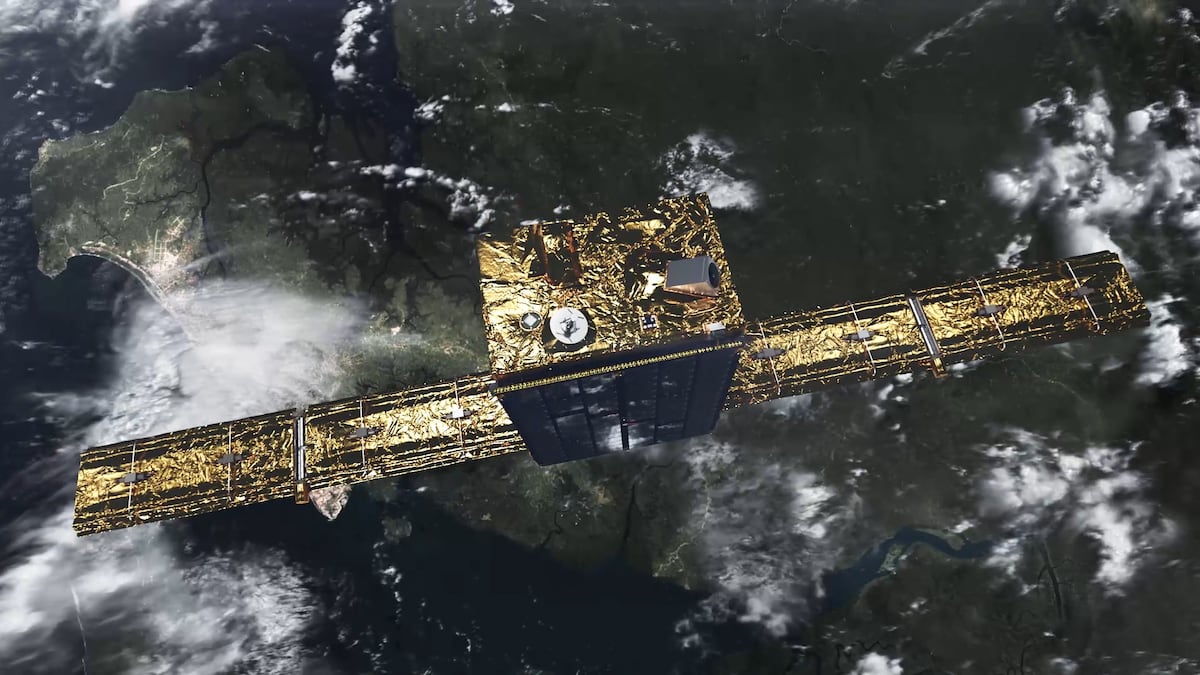
PARIS — Finland’s ICEYE has a “very big role to play” in giving Europe sovereign access to satellite intelligence, without having to rely on the United States, the company’s Vice President for Missions Joost Elstak said.
European interest in ICEYE rose after Russia invaded Ukraine in 2022. But it was the U.S. halting intelligence sharing with Ukraine in March 2025 that really underscored the need for sovereign access to space-based intel, Elstak told Defense News.
“The key thing it proved is that you need independent capabilities, and you need a strong alliance,” he said. “You can’t rely on just one node, whoever that node may be.”
Space-based intelligence, surveillance and reconnaissance, or ISR, was seen as the toughest area for Europe to achieve self-sufficiency , according to a Defense News survey in February. Most of the surveyed defense experts estimated Europe would need five to 10 years to build sufficient capacity to no longer rely on U.S. space intel.
Since then, and following the U.S. data-sharing pause, ICEYE has signed contracts with the armed forces of Poland, Portugal, the Netherlands and Finland. All four will have their own deployed capabilities within the next 12 months, with multiple satellites in orbit before 2028, Elstak said.
Europe can achieve “resilience” in space-based ISR, he argued, citing the Dutch example. ICEYE launched the first satellite for the Royal Netherlands Air Force within four months of the June contract, and all four ordered spacecraft are expected to be operational within 24 months.
“So it is within reach, right?” said Elstak.
ICEYE has provided radar-satellite data to Ukraine since 2022, including during the U.S. intel-sharing halt. Experience supplying Ukraine helped the company refine its offering for defense users, said Elstak, who joined the Finnish company in 2023 from Airbus.
As ICEYE adds military customers and becomes more integrated into Europe’s defense-information flows, “we’re becoming more and more of a defense-intelligence company,” Elstak said.
He said ICEYE’s ability to deliver everything from satellites to ground stations, data analysis and training positions it closer to a large space integrator such as Airbus than SAR-data providers Capella Space and Umbra.
Founded in 2014 as a Finnish university spin-off, ICEYE supplies Earth-observation data using synthetic aperture radar, or SAR for short. Because SAR can collect imagery regardless of cloud cover or time of day, any space-based ISR solution is bound to have a “SAR backbone,” Elstak said.
The firm operates what it describes as the world’s largest SAR constellation, with 20 to 30 active satellites, according to Elstak. This allows ICEYE to provide a radar image from any location roughly every 30 to 60 minutes, unrestricted by U.S. export regulations, which the executive called “quite a unique proposition” for the price.
Through its Missions business, governments can buy ICEYE radar satellites and operate them independently. Between five and 10 sovereign satellites are currently in orbit, with at least another 10 to 15 to be launched in the next two years, according to Elstak.
Almost all sovereign customers are also data clients, according to Elstak. He said military customers want their own minimum national capability, but are then happy to procure additional commercial data from ICEYE through credits or leased capacity.
Elstak declined to discuss pricing but referred to ICEYE’s contract with Poland for a reference . In May, the company agreed to provide Poland with an initial batch of three SAR satellites, with an option for three more, under an agreement worth around €200 million.
Elstak said an ICEYE constellation is far cheaper than previous generations of SAR systems, such as Germany’s SARah constellation, which cost around €1 billion for three satellites.
The company in September introduced ISR Cell , a containerized system that gives ground forces tactical access to space-based ISR, aiming to get satellite intel to the battlefield within minutes. First customer deliveries are expected in early 2026.
ICEYE also announced commercial availability of its fourth generation of SAR satellites, with a larger radar antenna for higher-resolution imagery.
A major focus is cutting the time from sensor to shooter. That means getting more satellites in orbit, improving algorithms to compress and transmit data, and using AI-based analytics “to make sure the user actually gets the data that they want,” Elstak said. “Maybe an uglier image in half an hour is more valuable than a pretty image in an hour.”
ICEYE has agreements with SATIM and SafranAI, which provide AI-based analysis of the radar-satellite data to identify objects including vessels and vehicles.
The company is developing concepts including a constellation of more than 100 satellites, which would enable “a look anywhere in the world in like 10 or 15 minutes,” Elstak said. “It becomes very tactical.”
Experience from Ukraine and ICEYE’s expanding fleet shows users want as much information as possible from hot spots, he added. The firm is improving its ability to deliver detail in congested areas through new image-processing techniques and the larger radar on the Gen4 satellites.
ICEYE currently has capacity to build 25 radar satellites per year and plans to scale up “quite fast” to around 40 satellites annually by late 2026, and probably 50 spacecraft a year in a next step, Elstak said. The company set up a manufacturing joint venture with Rheinmetall in Germany earlier this month that will manufacture its first satellite locally in 2026.
ICEYE has been using SpaceX for launches but is exploring alternatives, with slots booked on the Vega launcher operated by ArianeGroup, and is “very interested” in European small-launcher startups as part of a fully sovereign solution, according to Elstak.
For now, however, the urgency among sovereign customers to acquire capacity means they will “typically take whatever is available” to get satellites into orbit, the executive said.
Most of ICEYE’s defense customers previously lacked space-intelligence capabilities, but countries now understand what they need to own and what they can rely on from commercial providers during a crisis, according to Elstak.
“Even if the war were to stop, there’s a general realization of what type of capabilities you must have at a national level. This is not going to go away in the military doctrine.”
Rudy Ruitenberg is a Europe correspondent for Defense News. He started his career at Bloomberg News and has experience reporting on technology, commodity markets and politics.
巴黎——芬兰 ICEYE 公司负责任务的副总裁 Joost Elstak 表示,ICEYE 在使欧洲能够自主获取卫星情报方面发挥着“非常重要的作用”,而无需依赖美国。
埃尔斯塔克告诉《防务新闻》,俄罗斯在 2022 年入侵乌克兰后,欧洲对 ICEYE 的兴趣有所上升。但美国在 2025 年 3 月停止与乌克兰的情报共享,真正凸显了主权获取天基情报的必要性。
他说:“这件事证明的关键一点是,你需要独立自主的能力,也需要一个强大的联盟。你不能只依赖一个节点,无论这个节点是谁。”
据《防务新闻》2月份的一项调查显示,天基情报、监视和侦察(ISR)被认为是欧洲最难实现自主的领域。大多数受访的国防专家估计,欧洲需要5到10年的时间才能建立起足够的能力,从而不再依赖美国的太空情报。
自那以后,在美国暂停数据共享之后,ICEYE已与波兰、葡萄牙、荷兰和芬兰的武装部队签署了合同。埃尔斯塔克表示,这四个国家都将在未来12个月内具备各自的部署能力,并在2028年之前有多颗卫星在轨运行。
他以荷兰为例,论证了欧洲在天基情报、监视与侦察(ISR)领域能够实现“韧性”。ICEYE公司在6月份签订合同后的四个月内就为荷兰皇家空军发射了第一颗卫星,预计所有四颗订购的卫星都将在24个月内投入使用。
“所以这是可以实现的,对吧?”埃尔斯塔克说道。
自2022年以来,ICEYE一直向乌克兰提供雷达卫星数据,包括在美国停止情报共享期间。埃尔斯塔克表示,为乌克兰提供服务的经验帮助公司改进了其面向国防用户的产品和服务。埃尔斯塔克于2023年从空客公司加入这家芬兰公司。
埃尔斯塔克表示,随着 ICEYE 的军事客户不断增加,并日益融入欧洲的国防信息流,“我们正变得越来越像一家国防情报公司”。
他表示,ICEYE 能够提供从卫星到地面站、数据分析和培训等所有服务,这使得它更接近于像空客这样的大型航天集成商,而不是 SAR 数据提供商 Capella Space 和 Umbra。
ICEYE成立于2014年,是一家芬兰大学的衍生公司,利用合成孔径雷达(简称SAR)提供地球观测数据。埃尔斯塔克表示,由于SAR能够不受云层覆盖或时间限制地采集图像,因此任何基于天基的情报、监视和侦察(ISR)解决方案都必然需要“SAR骨干网”。
据埃尔斯塔克称,该公司运营着号称全球最大的合成孔径雷达(SAR)星座,拥有20至30颗在轨运行的卫星。这使得ICEYE能够大约每30至60分钟从任何地点提供一次雷达图像,且不受美国出口管制条例的限制。这位高管称,就这个价格而言,这“相当独特”。
通过其任务业务,各国政府可以购买ICEYE雷达卫星并独立运营。据埃尔斯塔克称,目前有5到10颗自主运营的卫星在轨运行,未来两年内至少还将发射10到15颗。
埃尔斯塔克表示,几乎所有主权国家客户同时也是数据客户。他说,军方客户希望拥有自身最低限度的国家数据能力,但之后也乐于通过积分或租赁容量的方式从ICEYE获取额外的商业数据。
埃尔斯塔克拒绝透露价格,但提及ICEYE与波兰的合同作为参考。今年5月,该公司同意向波兰提供首批三颗SAR卫星,并可选择再增购三颗,协议总价值约为2亿欧元。
埃尔斯塔克表示,ICEYE星座比前几代SAR系统便宜得多,例如德国的SARah星座,三颗卫星的成本约为10亿欧元。
该公司于9月推出了ISR Cell,这是一种集装箱式系统,可为地面部队提供战术性天基情报、监视和侦察(ISR)能力,旨在将卫星情报在数分钟内送达战场。预计首批客户将于2026年初收到产品。
ICEYE 还宣布其第四代 SAR 卫星正式上市,该卫星配备更大的雷达天线,可提供更高分辨率的图像。
重点在于缩短从传感器到拍摄者的时间。埃尔斯塔克表示,这意味着要让更多卫星进入轨道,改进数据压缩和传输算法,并利用人工智能分析“确保用户真正获得他们想要的数据”。“也许半小时得到的一张不太清晰的图像比一小时得到的一张清晰的图像更有价值。”
ICEYE 与 SATIM 和 SafranAI 达成协议,这两家公司提供基于人工智能的雷达卫星数据分析,以识别包括船舶和车辆在内的物体。
该公司正在开发包括由100多颗卫星组成的星座在内的概念,这将使“在10到15分钟内就能看到世界任何地方的情况”,埃尔斯塔克说。“这将变得非常具有战术意义。”
他补充说,乌克兰的经验以及ICEYE不断扩大的卫星群表明,用户希望从热点地区获取尽可能多的信息。该公司正通过新的图像处理技术和第四代卫星上更大的雷达,提高在拥挤区域提供细节信息的能力。
ICEYE目前具备每年建造25颗雷达卫星的能力,并计划在2026年底前“迅速”将年产量提升至40颗左右,下一步可能达到每年50颗,Elstak表示。该公司本月早些时候与德国莱茵金属公司成立了一家制造合资企业,将于2026年在当地生产其首颗卫星。
据埃尔斯塔克称,ICEYE 一直使用 SpaceX 进行发射,但正在探索其他选择,例如预订了 ArianeGroup 运营的 Vega 运载火箭的发射时段,并且对欧洲小型运载火箭初创公司“非常感兴趣”,希望以此作为完全自主解决方案的一部分。
但这位高管表示,目前主权客户急于获取容量,这意味着他们“通常会接受任何可用的容量”来将卫星送入轨道。
埃尔斯塔克表示,ICEYE 的大多数国防客户以前缺乏太空情报能力,但现在各国都明白在危机期间他们需要拥有什么以及可以从商业供应商那里获得什么。
“即使战争停止,人们也普遍认识到国家层面必须具备哪些能力。这一点不会从军事理论中消失。”
鲁迪·鲁伊滕贝格是《防务新闻》的欧洲记者。他的职业生涯始于彭博新闻社,拥有报道科技、大宗商品市场和政治方面的经验。