French 2023 defense budget adds $3 billion to fund ‘war economy’法国2023年国防预算增加30亿美元,用于资助“战时经济”。
The increase was forecast by Defense Minister Sebastian Lecornu when he met with French lawmakers this summer.
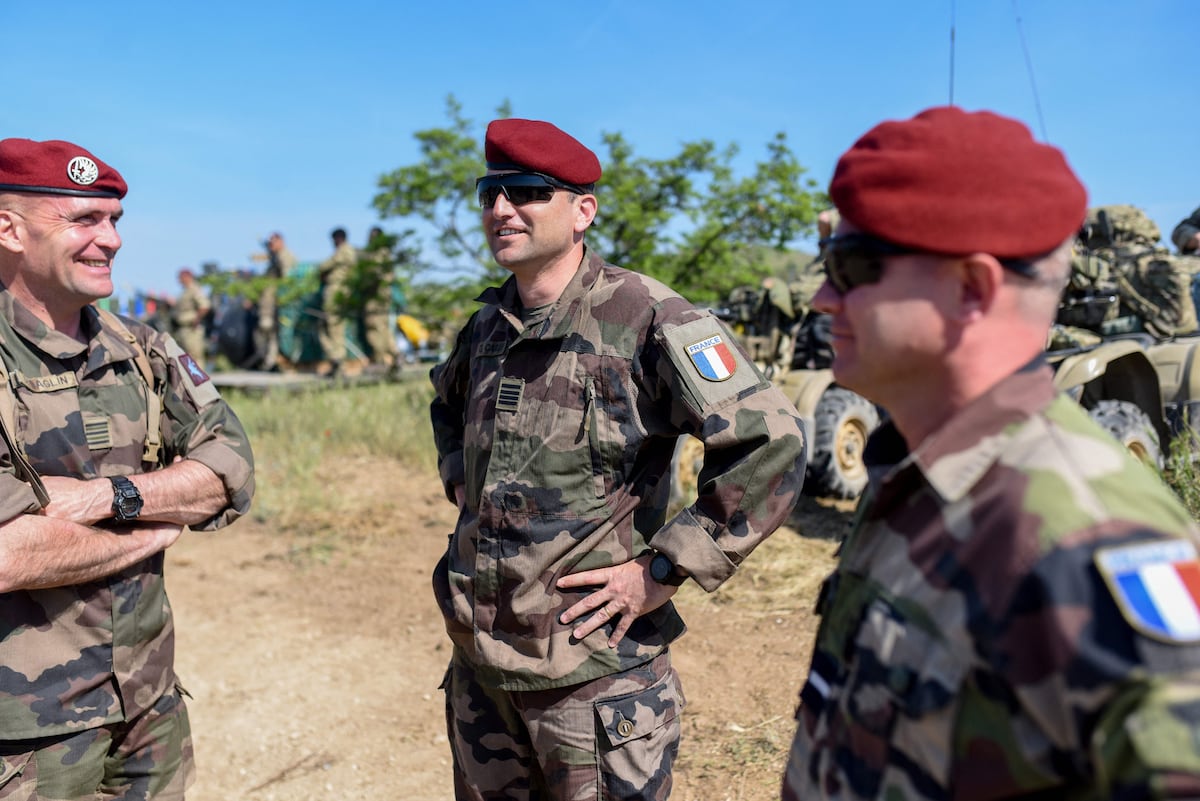
STUTTGART, Germany — Propelled by an edict to make deep investments in its defense industrial base, France’s Ministry of Defense has unveiled a 2023 budget worth billions more than the previous year to launch a new “war economy.”
The proposed €43.9 billion ($42.8 billion) for the French military represents a 36% increase over the 2017 budget and a 7.4% increase over 2022 funds . The €3 billion add for 2023 amounts to nearly twice the year-over-year increases seen in the past couple of years, officials noted during a Tuesday press briefing. Between 2019 and 2022′s budgets, the yearly increase stood at around €1.7 billion, which was the target to reach according to the military’s 2019-2025 military program law.
The increase was forecast by Defense Minister Sebastian Lecornu when he met with French lawmakers this summer.
Equipment orders take up the largest amount in the budget, standing at €38 billion, or $37 billion. The orders, officials said, reflected French President Emanuel Macron’s declaration in July of a “war economy.”
The new funding will launch the “transformation of our industry’s production model towards a ‘war economy,’ and guarantee our sovereignty by renewing our [munition] stocks,” Lecornu said in a statement accompanying the budget documents.
The goal is to boost orders of equipment to keep the production lines moving for France’s defense and industrial base, to keep ammunition supplies high and to prevent any capability attrition in the case of an “engagement,” per ministry documents.
In 2023, the French army plans to order:
420 Serval light armored vehicles,
8,000 HK416 assault rifles,
46 satellite communication ground stations for the Syracuse IV constellation,
one lot of medium-range missiles,
22 next-generation multirole helicopters,
22 heavy armored vehicles for special forces.
The navy plans to order:
3 naval counter-UAS devices,
19 naval SATCOM stations for Syracuse IV,
one lot of MBDA-built Exocet anti-ship missiles,
one lot of MBDA Aster-30 missiles for use on the FREMM multirole frigates,
an “exploratory capacity” for the deep sea beds.
In the air and space domains, the orders include:
42 Rafale fighter aircraft,
One lot of 320 BK 1 NT Aster missiles,
Various equipment kits for France’s Eurocopter EC 725 Caracal helicopters, along with the CN235 and A400M transport aircraft.
Among major developments, the ministry expects to perform the first firing of the next-generation MICA air-to-air missiles built by MBDA, which will equip France’s fighter jets. Munition replenishment in all services takes up €2 billion worth of orders in 2023.
Over €5 billion ($4.8 billion) in the total budget is earmarked for maintenance, a 12% funding increase over last year, which includes investments in digital tools and additive manufacturing capabilities, as well as optimizing supply chain fluxes, per the ministry.
(Relatively) new focus areas
The French Ministry of Defense highlighted “new” areas of funding in the budget, to include €702 million dedicated to the space domain, while €288 million is earmarked for the cyber domain. The ministry plans to recruit about 1,900 “cyber combatants” by 2025. The amount of €467 million is highlighted for information warfare systems.
The most notable “new” funding category is dedicated to seabed warfare, which would receive €3.5 million in 2023. Those funds would cover the protection of sovereign assets deep underwater such as natural resources and deep-sea cables, and invest in tech that could recover “sensitive objects,” per the ministry.
A total of €8 billion is dedicated to research-and-development efforts, including €6 billion for new development programs, while €1 billion is earmarked for “innovation,” the same amount of funding as last year. For R&D, six key priority areas are noted: cyberdefense, counter-UAS technologies, seabed dominance, hypervelocity, and chemical, biological, radiological, and nuclear defense.
Notable exceptions: FCAS and MGCS
Two French-involved programs stand out in the budget thanks to their omission: the Future Combat Air System (FCAS) effort to build a Franco-German-Spanish next-generation fighter aircraft and associated new systems, and the Main Ground Combat System tank in development by Paris and Berlin. The two programs are nowhere to be seen in the budget documents provided by the ministry.
Both efforts have slowed to just about a complete stop at the moment . French ministry officials on Tuesday asserted there was funding in the budget for both efforts to proceed to their next phases of development, but they declined to provide the numbers.
A request for funding numbers to the Ministry of Defense by Defense News was not returned by late Wednesday. Last year, the minister had budgeted €282.7 million for the FCAS program to fund ongoing studies and preparations for the demonstrator phase, while the MGCS program was slated to receive €58 million for ongoing studies.
Meanwhile, the budget documents laud European-wide defense measures undertaken in 2022, noting that increased tensions in the Indo-Pacific region and Russia’s invasion of Ukraine have led to a “collective awareness to strengthen European defense.” Nearly €8 billion, or $7.8 billion, will contribute to European-wide initiatives, and France is involved in 47 of the 61 projects selected for the inaugural European Defence Fund cycle announced in July.
Vivienne Machi is a reporter based in Stuttgart, Germany, contributing to Defense News' European coverage. She previously reported for National Defense Magazine, Defense Daily, Via Satellite, Foreign Policy and the Dayton Daily News. She was named the Defence Media Awards' best young defense journalist in 2020.
德国斯图加特——在一项旨在大力投资国防工业基础的法令的推动下,法国国防部公布了2023年预算,该预算比上一年增加了数十亿,以启动新的“战争经济”。
法国军方拟议的439亿欧元(428亿美元)预算比2017年增长36%,比2022年增长7.4%。官员们在周二的新闻发布会上指出,2023年新增的30亿欧元几乎是过去几年年均增幅的两倍。2019年至2022年期间,军方预算的年均增幅约为17亿欧元,这符合法国军方2019-2025年军事计划法案设定的目标。
国防部长塞巴斯蒂安·勒科尔努今年夏天与法国议员会面时就预测了这一增长。
设备订单在预算中占比最大,达380亿欧元,约合370亿美元。官员们表示,这些订单反映了法国总统马克龙7月份宣布的“战时经济”政策。
莱科尔努在随预算文件发布的声明中表示,新的资金将启动“我国工业生产模式向‘战时经济’的转型,并通过更新我们的(弹药)库存来保障我们的主权”。
根据国防部文件,目标是增加装备订单,以保持法国国防和工业基地的生产线运转,保持充足的弹药供应,并防止在“交战”的情况下出现任何能力损耗。
2023年,法国陆军计划订购:
420辆Serval轻型装甲车
8000支HK416突击步枪
锡拉丘兹四号星座的46个卫星通信地面站,
一批中程导弹,
22架新一代多用途直升机
为特种部队提供22辆重型装甲车。
海军计划订购:
3套海军反无人机系统装置
为锡拉丘兹四号部署了19个海军卫星通信站
一批由MBDA公司制造的飞鱼反舰导弹
一批用于FREMM多用途护卫舰的MBDA Aster-30导弹,
对深海海底的“探索能力”。
在航空航天领域,相关指令包括:
42架阵风战斗机
一批320枚BK 1 NT Aster导弹,
适用于法国欧洲直升机公司 EC 725 Caracal 直升机以及 CN235 和 A400M 运输机的各种设备套件。
在诸多重大进展中,国防部预计将首次试射由MBDA公司制造的下一代MICA空空导弹,该导弹将装备法国战斗机。2023年,各军种的弹药补充订单总额将达到20亿欧元。
据该部称,总预算中超过 50 亿欧元(48 亿美元)被指定用于维护,比去年增加了 12% 的资金,其中包括对数字工具和增材制造能力的投资,以及优化供应链流程。
(相对而言)新的重点领域
法国国防部在预算中重点强调了“新增”的资助领域,其中包括7.02亿欧元用于太空领域,2.88亿欧元用于网络领域。该部计划到2025年招募约1900名“网络作战人员”。此外,信息战系统方面也获得了4.67亿欧元的拨款。
最引人注目的“新”资金类别是专门用于海底战争的,2023 年将获得 350 万欧元。据该部称,这些资金将用于保护深海主权资产,例如自然资源和深海电缆,并投资于可以回收“敏感物品”的技术。
总计80亿欧元将用于研发工作,其中60亿欧元用于新的研发项目,另有10亿欧元用于“创新”,与去年持平。研发方面,六个重点优先领域分别是:网络防御、反无人机系统技术、海底优势、超高速技术以及化学、生物、放射性和核防御。
值得注意的例外情况:FCAS 和 MGCS
预算中有两个法国参与的项目因被遗漏而显得格外引人注目:一个是法德西联合研制的未来作战空中系统(FCAS)项目,该项目旨在打造下一代战斗机及相关新型系统;另一个是由巴黎和柏林联合研发的主战坦克系统。这两个项目在国防部提供的预算文件中均未出现。
目前这两项工作几乎都已完全停滞。法国政府官员周二声称,预算中已为这两项工作进入下一阶段的发展提供了资金,但他们拒绝透露具体数额。
《防务新闻》向国防部提出的拨款金额请求截至周三晚间尚未得到回复。去年,国防部长为未来空中作战系统(FCAS)项目拨款2.827亿欧元,用于资助正在进行的研究和演示阶段的准备工作;同时,多用途空中作战系统(MGCS)项目也计划获得5800万欧元用于正在进行的研究。
与此同时,预算文件赞扬了2022年欧洲范围内采取的防务措施,指出印太地区紧张局势加剧以及俄罗斯入侵乌克兰,促使人们“更加意识到加强欧洲防务的重要性”。近80亿欧元(约合78亿美元)将用于支持欧洲范围内的各项举措,法国参与了7月份公布的首届欧洲防务基金61个项目中的47个。
薇薇安·马奇是驻德国斯图加特的一名记者,主要负责《防务新闻》的欧洲报道。她此前曾为《国家防务杂志》、《防务日报》、《卫星通讯》、《外交政策》和《代顿每日新闻》撰稿。2020年,她荣获防务媒体奖最佳青年防务记者称号。