Ukrainian forces rig machine gun networks to down Russian drones乌克兰军队架设机枪阵地击落俄罗斯无人机
The fallback tactics towards mobile, low-cost defenses come as sophisticated interceptor missiles donated by Western allies are running low.
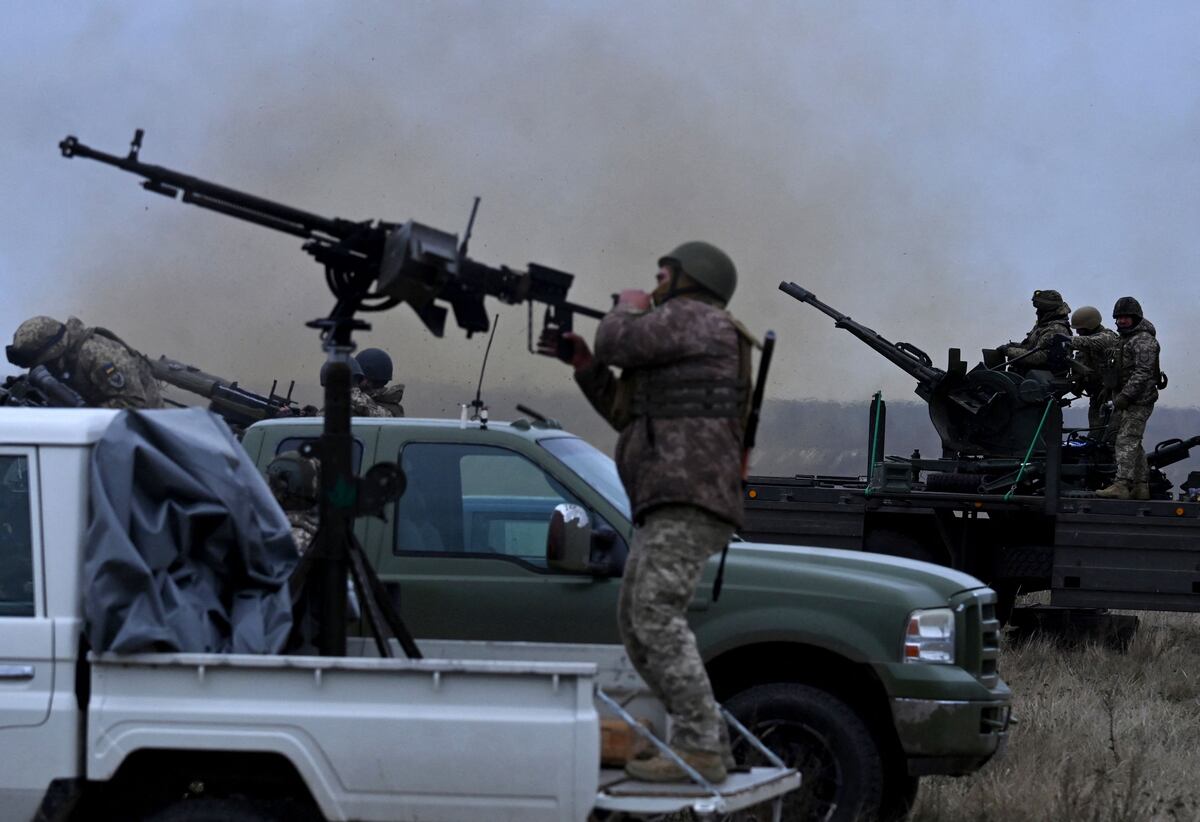
MILAN — Ukrainian forces have rigged an elaborate network of sensors in the country that feeds targeting data to heavy machine guns for downing Russian combat drones, according to analysts.
The fallback tactics towards mobile, low-cost defenses come as sophisticated interceptor missiles donated by Western allies are running low.
Last month alone, Moscow fired more than 3,000 guided aerial bombs, 600 drones and 400 missiles at Ukraine, according to remarks made by President Volodymyr Zelenskyy.
The Kremlin has used Iranian Shahed-type exploding drones, which Russia now reportedly also produces domestically, to carry out attacks against Ukrainian population centers. The threat posed by these weapons are the primary focus of the new class of nimble counter-drone setups that can be moved where they are most needed.
“Mobile air defense in Ukraine is probably responsible for over 40% intercepts of these systems [Shahed-type drones],” Michael Kofman, a senior fellow at the Carnegie Endowment think tank who frequently travels to Ukraine for research, told Defense News. “This is partly due to the deficit of munitions for valuable interceptive systems like Patriots, IRIS-T, amongst others,” he said.
The cheaper option, he explained, consists of “heavy machine guns, with thermal scopes and tablets, paired on a gun mount.”
Kofman said that the tactics of using firearms to shoot down Russian drones are part of an intricate web of detection systems scattered around the country.
“This system works because the gun crew is part of an elaborate sensor network set up around Ukrainian cities; there is an integrated system for tracking incoming drones, including radar and acoustics, and a robust network of electronic warfare systems,” Kofman said.
“That forces Shahed drones to increase in altitude from their standard low-altitude flight in order to navigate,” he added.
Another cheap sensor network Ukrainians have established to track Russian aerial threats consists thousands of cell phones placed next to microphones atop six-foot poles throughout the country, forwarding incoming engine noise to anti-aircraft artillery units for processing.
In a recent interview with the Wall Street Journal , the commander of U.S. Air Forces Europe, Gen. James Hecker, praised the technique’s success rate.
“They had 84 of them that came in the other day – they detected 84 and shot down 80 with the anti-aircraft artillery units,” Hecker said.
At a NATO meeting of foreign affairs ministers, held this week in Brussels, Ukraine’s top diplomat Dmytro Kuleba called for allies to provide more air defense weapons.
“Partners did provide us with different systems, we appreciated that, but it’s just simply insufficient, given the scale of the war,” Kuleba was quoted as saying by Reuters.
Elisabeth Gosselin-Malo was a Europe correspondent for Defense News. She covers a wide range of topics related to military procurement and international security, and specializes in reporting on the aviation sector. She is based in Milan, Italy.
米兰——分析人士称,乌克兰军队在该国架设了一个复杂的传感器网络,向重机枪提供目标数据,用于击落俄罗斯作战无人机。
由于西方盟友捐赠的先进拦截导弹数量不足,转而采用机动、低成本的防御策略。
据乌克兰总统泽连斯基称,仅上个月,莫斯科就向乌克兰发射了 3000 多枚制导航空炸弹、600 架无人机和 400 枚导弹。
克里姆林宫曾使用伊朗制造的“沙赫德”型爆炸无人机(据报道,俄罗斯目前也已开始国产化)对乌克兰人口中心发动袭击。这些武器构成的威胁是新型灵活反无人机系统的主要目标,这类系统可以部署到最需要的地方。
“乌克兰的移动防空系统可能拦截了超过40%的此类系统(沙赫德型无人机)。”卡内基国际和平基金会高级研究员迈克尔·科夫曼(Michael Kofman)告诉《防务新闻》,他经常前往乌克兰进行研究。“这部分是由于像‘爱国者’和‘IRIS-T’等重要拦截系统的弹药短缺造成的。”他说道。
他解释说,更便宜的选择是“将重机枪、热成像瞄准镜和平板电脑安装在枪架上”。
科夫曼表示,使用枪支击落俄罗斯无人机的战术是遍布全国的复杂探测系统网络的一部分。
科夫曼说:“这套系统之所以有效,是因为炮组是围绕乌克兰城市建立的复杂传感器网络的一部分;它有一个用于跟踪来袭无人机的集成系统,包括雷达和声学系统,以及一个强大的电子战系统网络。”
“这就迫使沙赫德无人机从标准的低空飞行提升高度以进行导航,”他补充道。
乌克兰人建立的另一个廉价传感器网络用于追踪俄罗斯的空中威胁,该网络由数千部手机组成,这些手机放置在全国各地六英尺高的杆子顶部的麦克风旁边,将传入的发动机噪音转发给防空炮兵部队进行处理。
在最近接受《华尔街日报》采访时,美国驻欧洲空军司令詹姆斯·赫克尔将军称赞了该技术的成功率。
“前几天他们来了84架飞机——他们发现了84架,并用防空炮兵部队击落了80架,”赫克尔说。
在本周于布鲁塞尔举行的北约外长会议上,乌克兰最高外交官德米特罗·库列巴呼吁盟国提供更多防空武器。
库列巴在接受路透社采访时表示:“合作伙伴确实为我们提供了不同的系统,我们对此表示感谢,但考虑到战争的规模,这远远不够。”
伊丽莎白·戈斯林-马洛曾任《防务新闻》欧洲通讯员。她的报道涵盖军事采购和国际安全等广泛领域,尤其擅长航空领域的报道。她常驻意大利米兰。