Netherlands to boost North Sea surveillance to deter seabed threats荷兰将加强北海监视,以遏制海底威胁
Seabed warfare has become a hot topic for European nations ever since last year’s attack on the Nord Stream gas pipeline in the Baltic Sea.
PARIS — The Netherlands plans to spend as much as €250 million (U.S. $274 million) on intelligence, surveillance and reconnaissance capabilities in the North Sea to protect the cables and pipelines that crisscross the seabed off its coast.
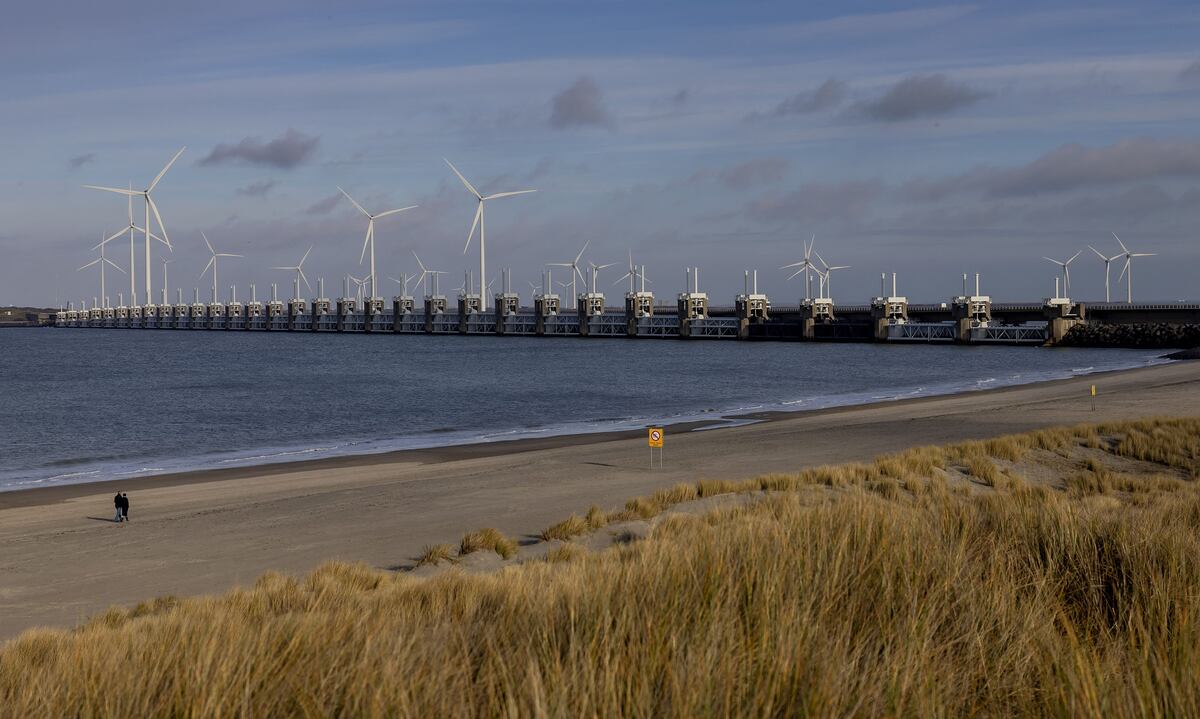
The Defence Ministry will mount cameras, radar systems and automatic identification system trackers on drilling platforms and offshore wind turbines, as well as buy satellite capacity to observe ship movements, Defence Minister Kajsa Ollongren and State Defence Secretary Christophe van der Maat wrote in a Dec. 19 letter to lawmakers .
The Netherlands also plans to buy two vessels with underwater monitoring technology.
“This capability helps deter potential perpetrators of sabotage and espionage,” Ollongren and Van der Maat wrote. “Improving the protection of the vital infrastructure on the North Sea has the full attention of the cabinet.”
Seabed warfare has become a hot topic for European nations ever since last year’s attack on the Nord Stream gas pipeline in the Baltic Sea. On the Dutch continental shelf, there are about 2,796 miles of pipeline and 3,728 miles of cable. The government considers offshore infrastructure essential to the Dutch economy and national security.
The current threats are primarily surface vessels carrying out “undesirable underwater activities,” according to the two officials. The government has assessed that there are presently no unmanned underwater vessels that can conduct sabotage operations in the Dutch-controlled area of the North Sea without the support of a surface vessel.
The ministry plans to buy commercial satellite capacity to track ship movements, including so-called dark vessels that turn off their automatic identification system transponders, until the Netherlands can build up its own satellite assets starting in 2027. The military will also monitor sea areas adjacent to the country’s area of responsibility in the North Sea to detect vessels that may pose a threat.
The costs of boosting the Dutch ISR capability in the North Sea will be between €50 million and €250 million, according to the letter.
The government in June announced a plan to develop its independent military satellite capacity through a constellation of satellites, within a spending bracket of €100 million to €250 million.
The Netherlands’ plan to acquire two “relatively simple” ships for a small crew would help monitor underwater activities, according to the ministers. Those ships will also serve as anti-air missile carriers for Dutch air defense frigates.
The Netherlands has 4.7 gigawatts of installed offshore wind power, enough to supply about 16% of the country’s current electricity demand. The government anticipates offshore wind will become the largest source of sustainable energy for Europe. Nine European countries, including the Netherlands, in April declared their aim of turning the North Sea into “Europe’s green power plant,” with combined targets for at least 120 gigawatts of offshore wind power by 2030.
Rudy Ruitenberg is a Europe correspondent for Defense News. He started his career at Bloomberg News and has experience reporting on technology, commodity markets and politics.
巴黎——荷兰计划在北海投入高达 2.5 亿欧元(2.74 亿美元)用于情报、监视和侦察能力,以保护纵横交错于其海岸附近海底的电缆和管道。
国防部将在钻井平台和海上风力涡轮机上安装摄像头、雷达系统和自动识别系统跟踪器,并购买卫星容量来观察船舶的动向。国防部长卡伊萨·奥隆格伦和国防国务秘书克里斯托夫·范德马特在 12 月 19 日致议员的信中写道。
荷兰还计划购买两艘配备水下监测技术的船只。
奥隆格伦和范德马特写道:“这种能力有助于震慑潜在的破坏和间谍活动实施者。加强对北海重要基础设施的保护已引起内阁的全力关注。”
自去年波罗的海北溪天然气管道遇袭事件以来,海底战已成为欧洲各国关注的热点话题。荷兰大陆架上分布着约2796英里的管道和3728英里的电缆。荷兰政府认为近海基础设施对荷兰经济和国家安全至关重要。
据两位官员称,目前的主要威胁来自进行“不必要水下活动的”水面舰艇。政府评估认为,目前在荷兰控制的北海海域,没有无人水下航行器能够在没有水面舰艇支援的情况下进行破坏行动。
该部计划购买商用卫星容量来追踪船舶动向,包括那些关闭自动识别系统应答器的所谓“暗船”,直到荷兰从2027年开始建立自己的卫星资产。军方还将监控北海国家责任区附近的海域,以探测可能构成威胁的船只。
信中指出,提升荷兰在北海的情报、监视与侦察(ISR)能力所需的费用将在 5000 万欧元至 2.5 亿欧元之间。
政府在 6 月份宣布了一项计划,旨在通过卫星星座发展其独立的军事卫星能力,预算为 1 亿欧元至 2.5 亿欧元。
据荷兰部长们称,荷兰计划采购两艘“相对简单”的小型舰艇,用于监测水下活动。这两艘舰艇还将作为荷兰防空护卫舰的防空导弹载机。
荷兰已安装4.7吉瓦海上风电,足以满足该国目前约16%的电力需求。荷兰政府预计海上风电将成为欧洲最大的可持续能源来源。包括荷兰在内的九个欧洲国家于今年4月宣布,他们的目标是将北海打造成为“欧洲绿色发电厂”,并设定了到2030年海上风电装机容量至少达到120吉瓦的总体目标。
鲁迪·鲁伊滕贝格是《防务新闻》的欧洲记者。他的职业生涯始于彭博新闻社,拥有报道科技、大宗商品市场和政治方面的经验。