Is the FY24 NDAA a missed opportunity for AUKUS technology sharing?2024财年国防授权法案是否错失了AUKUS技术共享的机会?
Opinion: There are two things the administration should do to keep the process on track and produce usable ITAR exemptions with greater technology sharing.
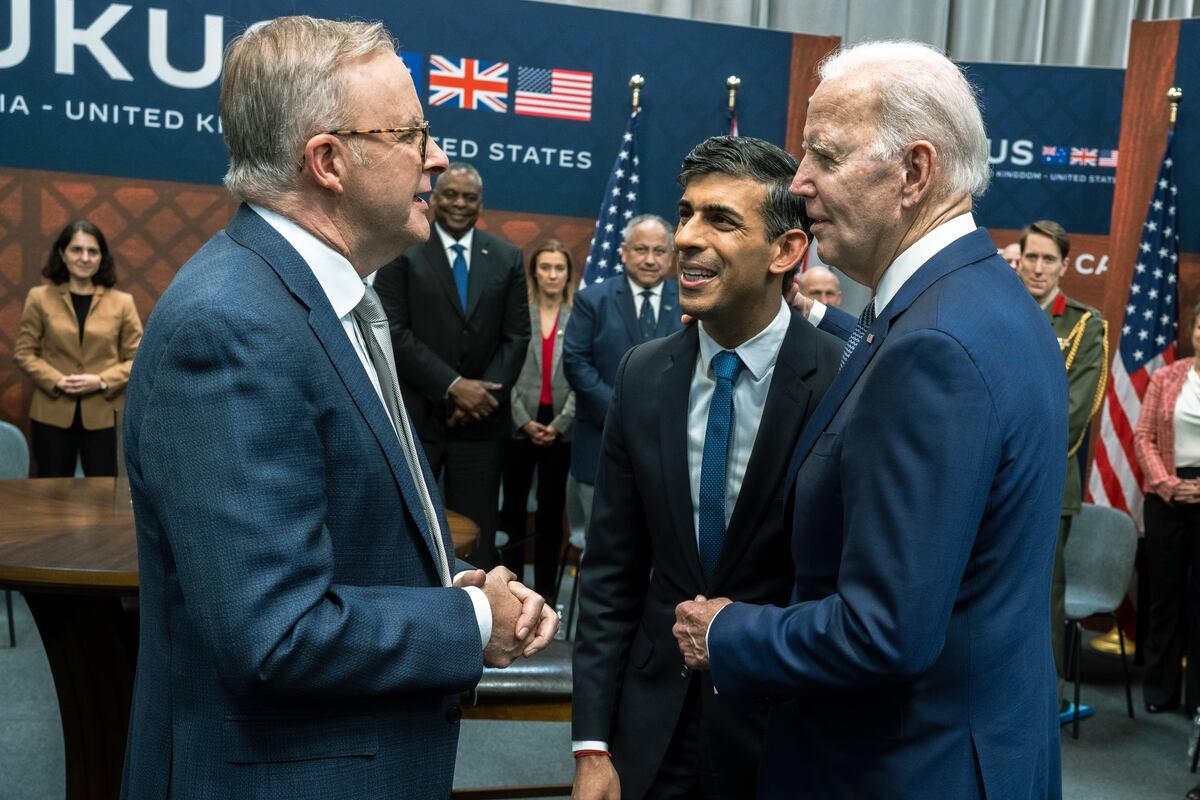
The fiscal 2024 National Defense Authorization Act , soon to be signed into law, should be applauded for including important provisions that enable the trilateral security partnership known as AUKUS between Australia, the United Kingdom and the United States. Unfortunately, however, Congress missed a generational opportunity to ensure enhanced technology cooperation between the United States and its AUKUS partners.
While a new quarterly review process in the NDAA offers some hope, the law nevertheless leaves the outcome on this key issue very much in doubt and subject to the vicissitudes of a historically reluctant export control bureaucracy .
Specifically, the final NDAA text restates a long-standing requirement in existing law that the United States must make a determination of the “comparability” of Australian and U.K. export control systems to the U.S. system as a condition precedent to the establishment of paradigm-changing, country-specific exemptions from the International Traffic in Arms Regulations, or ITAR. This provision was put in place in 2000 by Congress, working closely with allies in the State Department’s Bureau of Political-Military Affairs, precisely to defeat ITAR exemptions that the Clinton administration sought to establish for Australia and the U.K. Over the 20-plus years since its enactment, this comparability standard, administered by the bureau, has in fact served as a “poison” pill to deeper technology sharing.
As a workaround, the Bush administration eventually negotiated — and the Senate ratified — treaties to create the very same ITAR exemptions that would be available to a “trusted community” of private sector entities. However, Congress and its allies struck again and adopted the Security Cooperation Act of 2010, which rendered the treaty exemptions unusable.
Why the resistance to change? Fundamentally, opponents of ITAR exemptions believe that efforts to move away from the traditional case-by-case export licenses, with provisos and exclusions that limit their scope, would open the tech transfer floodgates and put U.S. technology-based military dominance at risk. In effect, the Bureau of Political-Military Affairs and its allies have assigned more value to preserving our antiquated and cumbersome export control system than broadening coalition cooperation and bringing more commercial innovation into defense systems.
Thus, in this historical context, Congress missed a generational opportunity in the FY24 NDAA to adopt the exemptions without requiring that the onerous standards in existing law be met. In short, its Groundhog Day again.
Opponents of the ITAR exemptions no doubt will applaud this outcome and instead point to NDAA provisions that, in their view, enhance the ability of AUKUS participants to export products and technology through traditional means and outside the scope of any new ITAR exemption. Unfortunately, however, these mechanisms, while useful at the margin, do not eliminate the inherent limitations of technology sharing under case-by-case, narrow licenses.
The NDAA does offer some hope on this critical issue, however, by establishing a mandatory process: quarterly determinations by the president of whether Australia and the U.K. meet the export control comparability standards and, if not, what steps are needed to meet it.
This process, if reasonably managed with a “get to yes” rather than “get to no” attitude, could cement AUKUS as an important Biden administration accomplishment. However, the reality is that the Bureau of Political-Military Affairs, which administers ITAR, will be at the center of the comparability determination. In practice, the question is whether, as some have suggested, the bureau has changed its attitude and now is supportive of, rather than resistant to, establishing the exemptions.
The burden, thus, is on the administration to put into place guide posts and safety rails to ensure that the exemptions get done and are not, yet again, doomed to failure by the opponents of serious export control reform.
Specifically, in this uncertain context, there are two things the Biden administration should do to keep the process on track and produce usable ITAR exemptions with greater technology sharing with close allies.
First, the Biden administration should establish a rigorous internal process to ensure that the bureau is using reasonable, reachable standards of “comparability” rather than standards designed to “get to no.” This means clear timelines and deadlines, with at least weekly meetings between the administration’s senior leadership team and the bureau, during which progress is reviewed — with ultimate judgments made by the overall U.S. AUKUS coordinator in consultation with the State Department’s AUKUS adviser and the Defense Department’s policy arm.
Further, any bilateral or trilateral meetings with Australia and the U.K. should include other administration officials — not only the bureau. In essence, a bureaucratic “supervise and surround” approach should be used, under which officials with a broader perspective, more willing to make trade-offs in favor of AUKUS collaboration, would be in charge.
Second, the administration should in parallel work to ensure the standards enabling businesses to qualify for the ITAR exemptions are reasonable. While the “trusted community” concept of eligibility (i.e., a set of vetted enterprises) makes sense, the U.S. AUKUS coordinator as well as counterparts from the State and Defense departments again must ensure the details are workable for traditional defense contractors and commercial firms alike. Technology-based exceptions to the ITAR exemptions should also be kept to a minimum to ensure the deep technology sharing anticipated under the second pillar of AUKUS can proceed in advanced areas like unmanned systems.
In summary, while the FY24 NDAA didn’t rise to the occasion on AUKUS collaboration, the process it established, combined with good will and a strong administration push, can become a tool to achieve what long has alluded us.
Jeffrey P. Bialos is a partner with the Eversheds Sutherland law firm, where he also serves as co-head of the Aerospace, Defense and Security Group. He previously served as deputy undersecretary of defense for industrial affairs during the Clinton administration.
即将签署生效的2024财年国防授权法案,其包含的重要条款促成了澳大利亚、英国和美国之间的三边安全伙伴关系——AUKUS,值得称赞。然而,令人遗憾的是,国会错失了一次千载难逢的机会,未能确保美国与其AUKUS伙伴国之间加强技术合作。
虽然《国防授权法案》中新的季度审查程序带来了一些希望,但该法案仍然使这一关键问题的结果充满不确定性,并且会受到历史上不情愿的出口管制官僚机构的反复无常的影响。
具体而言,最终的《国防授权法案》(NDAA)文本重申了现行法律中一项长期存在的要求,即美国必须先确定澳大利亚和英国的出口管制体系与美国体系的“可比性”,才能对《国际武器贸易条例》(ITAR)做出具有变革意义的、针对特定国家的豁免。这项规定是国会在2000年与国务院政治军事事务局的盟友密切合作制定的,其目的正是为了阻止克林顿政府试图为澳大利亚和英国设立的ITAR豁免。自该规定颁布以来的20多年里,由该局负责执行的这项可比性标准实际上已成为阻碍更深层次技术共享的“毒丸”。
作为权宜之计,布什政府最终通过谈判达成了一系列条约,并经参议院批准,为“可信赖的”私营部门实体设立了与《国际武器贸易条例》(ITAR)相同的豁免条款。然而,国会及其盟友再次采取行动,通过了2010年《安全合作法》,使这些条约豁免条款失效。
为何抵制变革?从根本上讲,反对《国际武器贸易条例》(ITAR)豁免的人士认为,如果放弃传统的逐案出口许可证制度(该制度附加诸多限制性条款和例外),将会打开技术转让的闸门,危及美国基于技术的军事优势。实际上,政治军事事务局及其盟友更重视维护我们陈旧繁琐的出口管制体系,而不是扩大联盟合作,将更多商业创新引入国防系统。
因此,在这样的历史背景下,国会在2024财年国防授权法案中错失了一次千载难逢的机会,未能采纳豁免条款而无需满足现行法律中繁琐的标准。简而言之,一切又回到了原点。
反对ITAR豁免的人士无疑会对这一结果表示欢迎,并会指出《国防授权法案》(NDAA)中的相关条款,他们认为这些条款增强了AUKUS参与者通过传统途径出口产品和技术的能力,使其不受任何新的ITAR豁免的影响。然而,令人遗憾的是,这些机制虽然在一定程度上有所帮助,但并不能消除在个案审批和范围狭窄的许可制度下技术共享固有的局限性。
然而,《国防授权法案》确实在这个关键问题上带来了一些希望,它建立了一个强制性程序:总统每季度决定澳大利亚和英国是否符合出口管制可比性标准,如果不符合,则确定需要采取哪些措施才能符合标准。
如果这一过程能够以“争取同意”而非“拒绝”的态度进行合理管理,那么AUKUS项目有望成为拜登政府的一项重要成就。然而,现实情况是,负责管理《国际武器贸易条例》(ITAR)的政治军事事务局(PMA)将是可比性判定的核心。实际上,问题在于,正如一些人所言,该局是否已经改变了态度,转而支持而非抵制设立豁免条款。
因此,政府有责任设立指导方针和安全措施,以确保豁免措施得以实施,并且不会再次因为反对严肃的出口管制改革而注定失败。
具体而言,在这种不确定的背景下,拜登政府应该做两件事来保持这一进程的顺利进行,并通过与亲密盟友加强技术共享,产生可用的 ITAR 豁免。
首先,拜登政府应建立一套严格的内部流程,以确保该局采用合理、可实现的“可比性”标准,而不是旨在“否决”的标准。这意味着要有明确的时间表和截止日期,政府高级领导团队与该局至少每周举行一次会议,审查进展情况——最终的判断由美国AUKUS项目总协调员与国务院AUKUS顾问和国防部政策部门协商后做出。
此外,任何与澳大利亚和英国的双边或三边会议都应包括其他政府官员,而不仅仅是该局官员。本质上,应采用一种官僚式的“监督与包围”方法,由那些视野更开阔、更愿意为澳英合作做出权衡取舍的官员负责。
其次,政府应同时努力确保企业获得ITAR豁免的标准合理。虽然“可信群体”资格概念(即经过审查的企业集合)具有合理性,但美国AUKUS协调员以及国务院和国防部的对口官员必须再次确保具体细节对传统国防承包商和商业公司都切实可行。此外,应尽可能减少基于技术的ITAR豁免例外情况,以确保AUKUS第二支柱下预期的深度技术共享能够在无人系统等先进领域顺利进行。
总而言之,虽然 2024 财年国防授权法案在 AUKUS 合作方面未能达到预期目标,但它所建立的流程,加上善意和政府的大力推动,可以成为实现我们长期以来未能实现的目标的工具。
杰弗里·P·比亚洛斯是艾弗谢德·萨瑟兰律师事务所的合伙人,同时也是该事务所航空航天、国防和安全业务组的联席主管。他曾在克林顿政府时期担任国防部负责工业事务的副部长。