Estonian spies believe Europe’s collective deterrence push is working爱沙尼亚间谍认为欧洲的集体威慑行动正在奏效。
Russia’s military-industrial complex, even if strained by sanctions, has continued to grow significantly, the Estonian intelligence assessment notes.
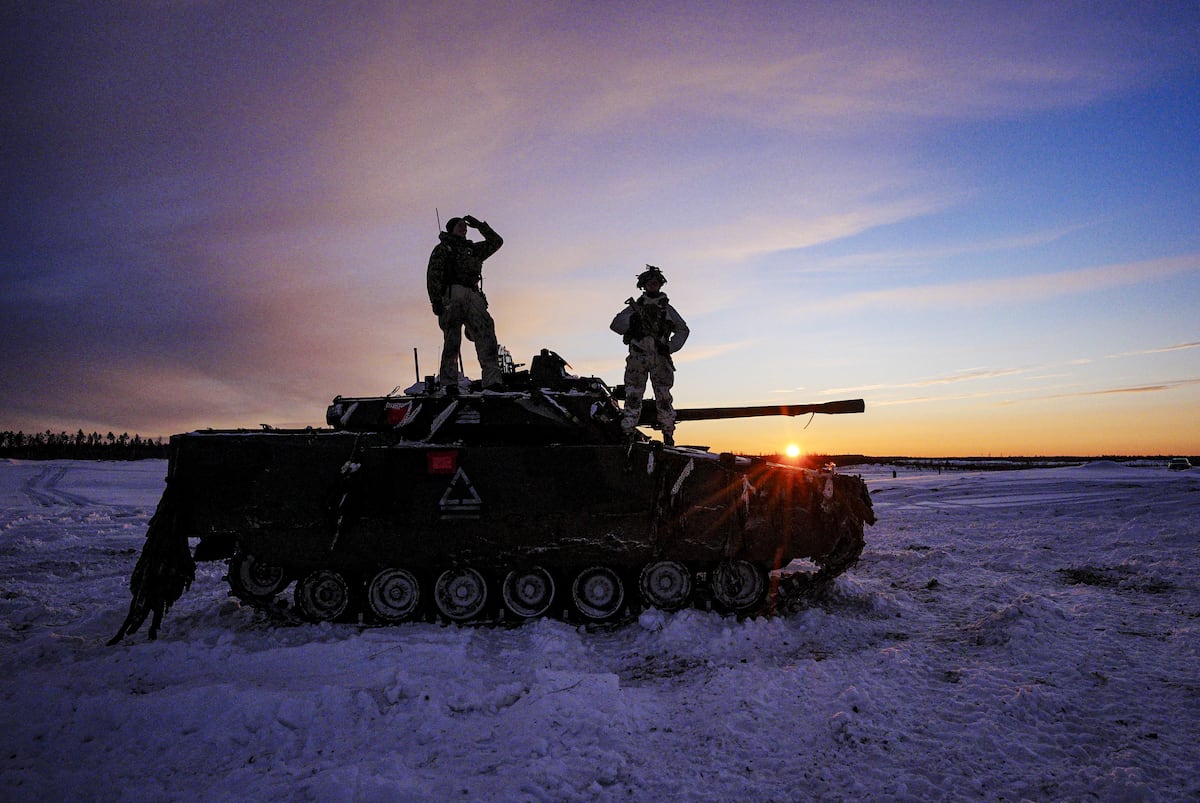
MILAN — Russia is not expected to attack any NATO member states in the next two years, a testament, in part, to European efforts to quickly boost their defenses in the last few years, the Estonian Foreign Intelligence Service concluded in a report this week.
But Moscow’s re-organization of its military around drones and significant ammunition production signals that the regime is preparing for future large-scale conflicts, according to Estonian analysts.
The annual assessment highlighted that while there is no cause for panic, Moscow is rapidly building its military capabilities to counter European security improvements.
“Russia has no intention of militarily attacking Estonia or any other NATO state in 2026 – we are likely to reach a similar assessment next year, because Tallinn and Europe have taken steps to compel the Kremlin to calculate very carefully what, if anything, it can risk, attempting,” the report said.
The Baltic state’s risk analysis was less alarming than warnings issued by NATO chief Mark Rutte and other European leaders in 2025 about a possible Russian attack in the near future.
Russia’s military-industrial complex, even if strained by sanctions, has continued to grow significantly, the Estonian report notes. Since 2021, the country’s artillery ammunition production has increased seventeen-fold, from a total output of 400,000 to seven million shells, mortar rounds, and rockets.
Companies in 2025 cranked out an estimated 3.4 million artillery projectiles, 800,000 tank and infantry fighting vehicle ammunition, 2.3 million mortar rounds, and 500,000 rockets for multiple-launch rocket systems.
Estonia’s intelligence branch estimated that the procurement cost was approximately 1 trillion rubles ($12.6 billion) last year, which remains low in comparison to ammunition production in Western nations.
“For example, an older 152mm shell model costs less (about €1,050, or $1,300) in state procurement, which is several times cheaper than similar 155mm rounds produced in Western countries,” the report noted.
In addition, since 2023, Moscow has bought up to 7 million shells from its proxies, including Iran and North Korea.
One trend highlighted in the Estonian report is how Russia is increasingly adapting its armed forces for unmanned warfare. Based on the insertion of drone capabilities across all military branches, Estonian intelligence warned that countries should expect an opponent mass-deploying these weapons in the air, at sea, and on land.
“In the event of a conflict, the state must be prepared to fight an adversary using large numbers of unmanned systems at strategic, operational, and tactical levels across all domains, simultaneously across Estonia’s entire territory,” the report said.
Estonian analysts singled out the Russian Navy’s newly created units of surface strike drones, planned to be integrated across all of its fleets, including the Baltic Fleet and Caspian Flotilla.
“These [unmanned naval strike vehicle] units will augment Russia’s existing intelligence, naval-strike, indirect-fire and precision-strike capabilities in Estonia’s immediate vicinity,” the assessment concluded.
Against this backdrop, the Baltic state is strengthening its unmanned systems capabilities with plans to roll out a major integration across their defense forces over the next few years.
Earlier this month, the country announced that the NIB, a bank that finances projects benefiting the Nordic-Baltic region, was contributing a €11.4 million loan to fund a new drone technology unit within the Applied Research Centre in Tallinn.
The purpose of the new department will be to provide laboratories to test and manufacture aerial, land, and naval drones.
Elisabeth Gosselin-Malo was a Europe correspondent for Defense News. She covers a wide range of topics related to military procurement and international security, and specializes in reporting on the aviation sector. She is based in Milan, Italy.
米兰——爱沙尼亚对外情报局本周在一份报告中得出结论:未来两年内,俄罗斯预计不会攻击任何北约成员国,这在一定程度上证明了欧洲在过去几年中迅速加强防御的努力。
但爱沙尼亚分析人士认为,莫斯科围绕无人机和大量弹药生产重组军队,表明该政权正在为未来的大规模冲突做准备。
年度评估报告强调,虽然没有理由恐慌,但莫斯科正在迅速增强其军事能力,以应对欧洲安全形势的改善。
报告称:“俄罗斯无意在 2026 年对爱沙尼亚或任何其他北约国家发动军事攻击——我们明年可能会得出类似的评估,因为塔林和欧洲已经采取措施,迫使克里姆林宫非常仔细地计算它尝试任何行动可能承担的风险。”
波罗的海国家的风险分析不如北约秘书长马克·吕特和其他欧洲领导人在 2025 年发出的关于俄罗斯可能在不久的将来发动袭击的警告那样令人担忧。
爱沙尼亚的报告指出,尽管受到制裁的影响,俄罗斯的军工复合体仍然持续显著增长。自2021年以来,该国的炮弹产量增长了17倍,从总产量40万发增至700万发炮弹、迫击炮弹和火箭弹。
预计到 2025 年,各公司将生产 340 万枚炮弹、80 万枚坦克和步兵战车弹药、230 万枚迫击炮弹以及 50 万枚多管火箭炮系统火箭弹。
爱沙尼亚情报部门估计,去年的采购成本约为 1 万亿卢布(126 亿美元),与西方国家的弹药生产相比仍然很低。
报告指出:“例如,较老的 152 毫米炮弹型号在国家采购中价格较低(约 1050 欧元,或 1300 美元),比西方国家生产的类似 155 毫米炮弹便宜好几倍。”
此外,自 2023 年以来,莫斯科已从其代理人(包括伊朗和朝鲜)手中购买了多达 700 万枚炮弹。
爱沙尼亚的报告强调了一个趋势,即俄罗斯正日益调整其武装力量以适应无人作战。鉴于无人机能力已渗透到所有军种,爱沙尼亚情报部门警告称,各国应预料到对手会在空中、海上和陆地大规模部署这些武器。
报告称:“一旦发生冲突,爱沙尼亚必须做好准备,在战略、作战和战术层面,在所有领域,同时在爱沙尼亚全境,使用大量无人系统与敌人作战。”
爱沙尼亚分析人士特别指出,俄罗斯海军新组建的水面打击无人机部队计划整合到其所有舰队中,包括波罗的海舰队和里海舰队。
评估报告总结道:“这些(无人海军打击车辆)部队将增强俄罗斯在爱沙尼亚附近地区的现有情报、海军打击、间接火力打击和精确打击能力。”
在此背景下,波罗的海国家正在加强其无人系统能力,计划在未来几年内对其国防部队进行大规模整合。
本月初,该国宣布,为惠及北欧-波罗的海地区的项目提供融资的银行 NIB 将提供 1140 万欧元的贷款,用于资助塔林应用研究中心内一个新的无人机技术部门。
新部门的目的是提供实验室,用于测试和制造空中、陆地和海上无人机。
伊丽莎白·戈斯林-马洛曾任《防务新闻》欧洲通讯员。她的报道涵盖军事采购和国际安全等广泛领域,尤其擅长航空领域的报道。她常驻意大利米兰。