Erdoğan pitches KAAN fighter jet as an alternative to Western warplanes埃尔多安力推KAAN战斗机作为西方战机的替代品
He described KAAN as a symbol of Turkey’s strategic autonomy, noting that discussions with Saudi Arabia included the possibility of shared investment.
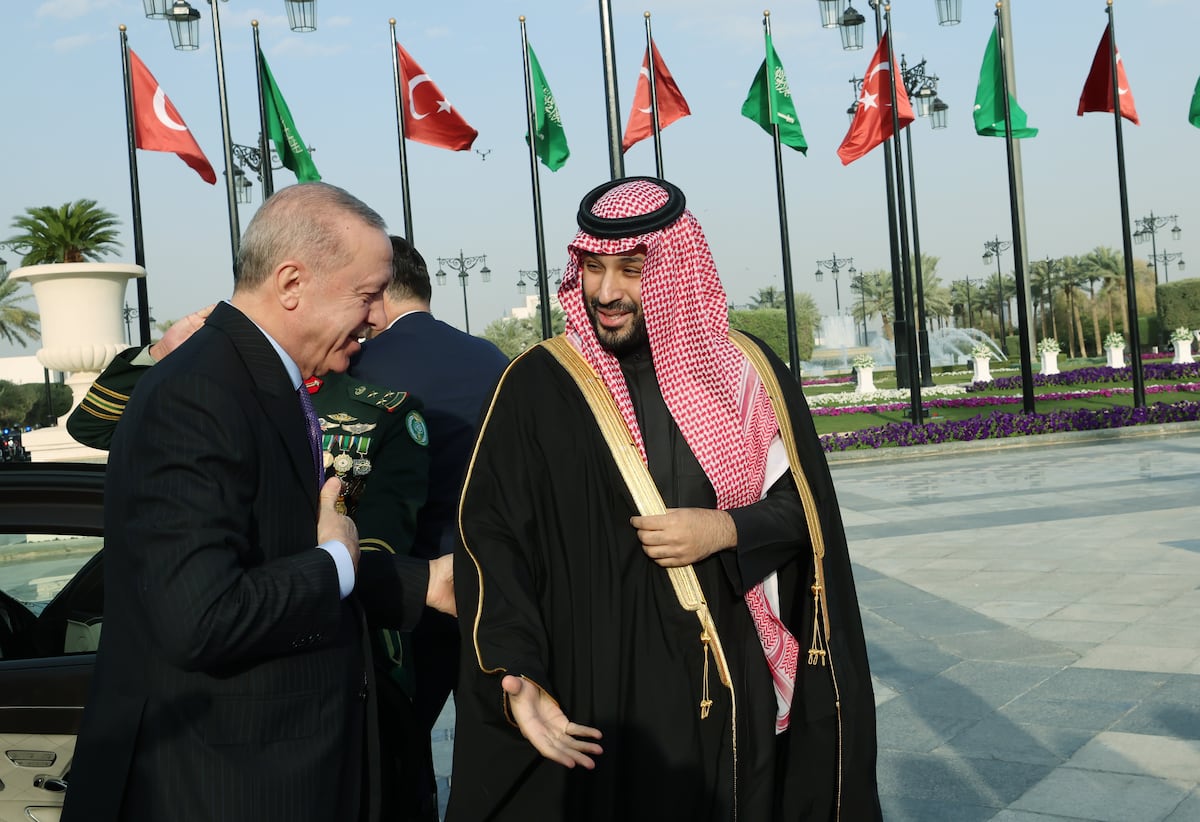
İZMİR — Turkish President Recep Tayyip Erdoğan visited Saudi Arabia and Egypt earlier this month, marking fresh steps in the normalization of relations with key regional powers and opening the door to new defense deals.
The first stop of the two-day tour was Riyadh, where Erdoğan met with Crown Prince Mohammed bin Salman. According to official statements, both sides emphasized the need to activate existing defense cooperation agreements and expressed a shared intention to deepen military and security ties.
Speaking to reporters during his return to Turkey, Erdoğan highlighted growing defense-industrial cooperation between Ankara and Riyadh, including potential joint investment in Turkey’s fifth-generation fighter program, KAAN.
He described KAAN as a symbol of Turkey’s strategic autonomy, noting that discussions with Saudi Arabia included the possibility of shared investment in the program.
Cooperation on a fifth-generation fighter plane like KAAN fits into the broad agendas of both countries and would be financially, strategically, and industrially transformative for both sides, according to retired Turkish Air Force Brig. Gen. Hüseyin Fazla , president of the Center for Strategic Research and Analysis (STRASAM), an Ankara based think tank.
According to Fazla, Saudi participation could fundamentally reshape the KAAN project’s economics and export prospects.
“A large Saudi order would slash unit costs, accelerate production, and turn KAAN into a serious global competitor,” Fazla said.
For Riyadh, the appeal goes beyond acquiring a new aircraft.
“KAAN offers Saudi Arabia a strategic escape from over-reliance on Western arms suppliers and technology transfer built into the partnership, it directly supports Vision 2030 and Riyadh’s ambition to build a domestic defense industry.” Fazla stated.
Following his Saudi visit, Erdoğan travelled to Cairo to attend the second meeting of the High-Level Strategic Cooperation Council, co-chaired with Egyptian President Abdel Fattah El-Sisi.
During the meeting, the two countries signed a Military Framework Agreement, formalizing expanded cooperation in defense and security.
The agreement was signed by Turkish Defense Minister Yaşar Güler and his Egyptian counterpart, Gen. Abdel Megeed Saqr.
“This is not a strategic realignment — it is strategic-economic normalization driven by pragmatism on both sides,” sad Serhat Süha Çubukçuoğlu, a senior fellow at the Abu Dhabi-based TRENDS Research and Advisory consultancy.
“Cairo and Ankara are deepening ties horizontally across trade, defense, and diplomacy without redrawing their strategic red lines,” he added.
Alongside the political and military dialogue, Turkey’s state-owned defense manufacturer Makine ve Kimya Endüstrisi (MKE) concluded a $350 million defense export and industrial cooperation package with the Egyptian Ministry of Defense.
Under the agreement, Egypt will acquire the MKE TOLGA Close-In Air Defense System to counter low-altitude threats such as unmanned aerial vehicles, loitering munitions, precision-guided weapons, and cruise missiles, in a deal valued at approximately $130 million, marking the system’s second international export following its earlier sale to Qatar.
Beyond the air defense procurement, the broader package includes the construction of a 155mm long-range artillery ammunition production plant in Egypt, as well as a facility for the local manufacture of 7.62mm and 12.7mm small-caliber ammunition.
MKE and Egyptian authorities also agreed to establish a joint company to manage the new production facilities and support defense exports from Egypt to regional markets, signaling a shift toward long-term industrial cooperation rather than one-off arms sales.
“While Egypt is deliberately diversifying away from Western arms suppliers constrained by political conditions, Turkey is strengthening its role as a regional defense exporter and technology partner, said Çubukçuoğlu.
Cem Devrim Yaylali is a Turkey correspondent for Defense News. He is a keen photographer of military ships and has a passion for writing about naval and defense issues. He was born in Paris, France, and resides in Istanbul, Turkey. He is married with one son.
伊兹密尔——土耳其总统雷杰普·塔伊普·埃尔多安本月初访问了沙特阿拉伯和埃及,标志着土耳其与主要地区大国关系正常化迈出了新的一步,并为新的国防协议打开了大门。
为期两天的访问首站是利雅得,埃尔多安在那里会见了王储穆罕默德·本·萨勒曼。官方声明称,双方强调有必要激活现有的防务合作协议,并表达了深化军事和安全关系的共同意愿。
埃尔多安在返回土耳其期间对记者发表讲话时,重点强调了安卡拉和利雅得之间日益增长的国防工业合作,包括对土耳其第五代战斗机项目 KAAN 的潜在联合投资。
他将 KAAN 描述为土耳其战略自主的象征,并指出与沙特阿拉伯的讨论包括共同投资该项目的可能性。
据土耳其空军退役准将、安卡拉智库战略研究与分析中心(STRASAM)主席侯赛因·法兹拉称,在像KAAN这样的第五代战斗机上开展合作符合两国的广泛议程,并将对双方在经济、战略和工业方面产生变革性影响。
法兹拉表示,沙特阿拉伯的参与可能会从根本上改变KAAN项目的经济效益和出口前景。
“沙特阿拉伯的大订单将大幅降低单位成本,加快生产速度,并使KAAN成为全球真正的竞争者,”法兹拉说。
对利雅得而言,此次吸引力不仅仅在于获得一架新飞机。
法兹拉表示:“KAAN为沙特阿拉伯提供了一条摆脱过度依赖西方武器供应商的战略途径,并且合作中融入了技术转让,这直接支持了‘2030愿景’和利雅得建立本土国防工业的雄心壮志。”
结束对沙特阿拉伯的访问后,埃尔多安前往开罗参加由他与埃及总统阿卜杜勒·法塔赫·塞西共同主持的高级别战略合作委员会第二次会议。
会晤期间,两国签署了军事框架协议,正式扩大了在国防和安全领域的合作。
该协议由土耳其国防部长亚沙尔·居莱尔和埃及国防部长阿卜杜勒·米吉德·萨克尔将军签署。
“这不是战略调整,而是双方出于务实主义而推动的战略经济正常化,”总部位于阿布扎比的 TRENDS 研究咨询公司的高级研究员 Serhat Süha Çubukçuoğlu 表示。
他补充说:“开罗和安卡拉正在贸易、国防和外交等领域加深横向联系,但并未重新划定其战略红线。”
在进行政治和军事对话的同时,土耳其国有国防制造商Makine ve Kimya Endüstrisi (MKE) 与埃及国防部签署了一项价值3.5亿美元的国防出口和工业合作协议。
根据协议,埃及将购买MKE TOLGA近程防空系统,以应对无人机、巡飞弹、精确制导武器和巡航导弹等低空威胁。该交易价值约1.3亿美元,这是该系统继此前出售给卡塔尔之后的第二次国际出口。
除了防空采购之外,更广泛的方案还包括在埃及建造一座 155 毫米远程炮弹生产厂,以及一座用于本地生产 7.62 毫米和 12.7 毫米小口径弹药的设施。
MKE和埃及当局还同意成立一家合资公司来管理新的生产设施,并支持埃及向区域市场出口国防产品,这标志着双方正从一次性武器销售转向长期的工业合作。
Çubukçuoğlu 表示:“埃及正刻意摆脱对西方武器供应商的依赖,因为西方武器供应商受到政治环境的限制;而土耳其则正在加强其作为地区国防出口国和技术合作伙伴的作用。”
杰姆·德夫里姆·亚伊拉利是《防务新闻》驻土耳其记者。他热衷于拍摄军舰,并对海军和国防议题充满热情。他出生于法国巴黎,现居土耳其伊斯坦布尔。他已婚,育有一子。