Leaving Nuclear Weapons In Turkey Is Just Poor Strategy在土耳其保留核武器纯属糟糕的策略。
Better safe than sorry when it comes to America's nuclear arsenal.
Updated Jul 2, 2020 3:15 PM EDT
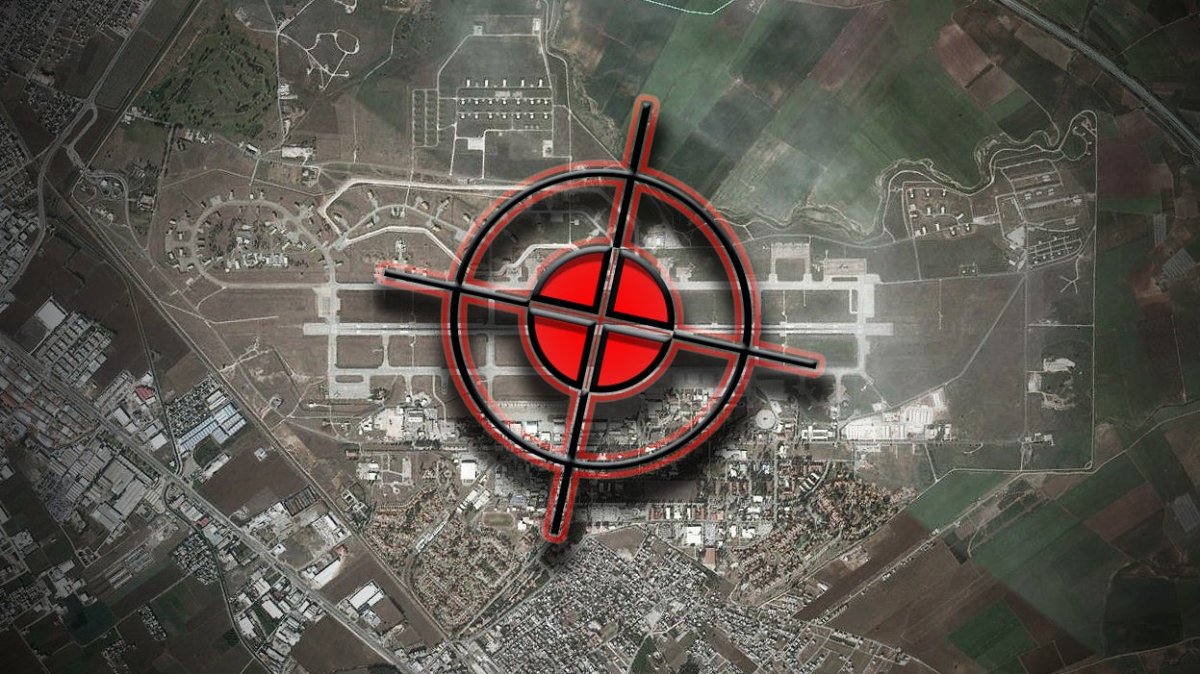
Dating back to the Cuban Missile Crisis, when the US agreed to Russia’s demand to withdraw its Jupiter nuclear-tipped missiles from Turkish soil, American nuclear weapons in Turkey has been a hot-button issue. Today, around 50 tactical nuclear weapons are thought to remain at a highly guarded facility inside the perimeter of Incirlik Air Base located in southwest Turkey. Considering the recent headlines , continuing to forward deploy them at the base may not be the brightest idea.
An F-15C on temporary duty from RAK Lakenheath blasts out of Incirlik Air Base., AP
Incirlik Air Base has long been a remote operating location for the United States’ air arms, but the Turkish Government has been increasingly more aggressive in dictating how the US uses it. The base was barred from use during Operation Iraqi Freedom in 2003, and it took the US nearly a year to persuade Turkey to allow anti-ISIS strike missions . Yet all the while, the base held a pocket force of America’s most destructive weapons, even though no aircraft are permanently stationed there to deploy them. The truth is, the nuclear weapons at Incirlik Air Base are largely symbolic.
America currently has 180-200 tactical nukes deployed among four European host countries: Belgium, Germany, Italy, and the Netherlands. Yet this number represents just a tiny fraction of the warheads deployed to Europe during the height of the Cold War —around 7,300 in total.
American nukes’ continuous deployment to the continent is one that supposedly anchors America’s commitment to NATO and deters Russian aggression. Their presence, at least at one time, was also meant to keep host countries from developing their own nuclear arsenals. Yet following the violent coup attempt on the sitting Turkish government in July, and President Erdogan’s extreme response to it, ousting 82,000 government workers and arresting 23,000 supposed coup supporters , along with Turkey’s sudden cozying up to Moscow , this strategy now looks murky and convoluted at best. President Erdogan has even blamed his NATO allies, including the US, at least partially, for instigating the coup, adding to an increasing rift between the US, NATO and Turkey.
Dramatic footage of Turkish aircraft being used to attack their own countrymen during the coup on July 15th, 2016:
What’s most alarming is that Icirlik Air Base had power cut to it for nearly a week following the events of July 15th, the airspace around the base was also closed, halting anti-ISIS missions and curtailing any potential air-bridge access from the base to the outside world. Meanwhile, large anti-US protests were building along the base’s front gate and perimeter fencing. Not only that, but Turkish aircraft and personnel based at Incirlik took part in the coup, including flying sorties in support of it. Even the base’s commander was arrested for taking part in the operation , after he crossed the ramp to beg for asylum from the US.
Does this seem like a foreign base that should be safeguarding nuclear arms?
The fact that there is a civil war and an established terror state operating within a country located just 70 miles from Incirlik Air Base should also be factored into America’s nuclear weapons risk equation.
B61 tactical nuclear gravity bombs., USAF
Still, it is unlikely that the 700-pound B61 nuclear bombs would be stolen from the facility. The storage area is made up of underground vaults, and its perimeter is ringed with two security fences and loads of surveillance, not to mention the compliment of soldiers there to protect the weapons. The facility has also received recent upgrades to make it more hardened against intrusion. However, if Turkey’s increasingly totalitarian political leadership were to take a vehemently anti-American stance, the security that protects the nukes would amount to a speed-bump for Turkey’s armed forces. Even a very well-orchestrated and large-scale terrorist attack on the compound could lead to a disastrous situation, even if only geopolitically.
On the other hand, you can’t simply steal a B61 nuclear bomb and use it as you wish. The fusing system is protected by a code mechanism called a Permissive Action Link (PAL). The codes needed to authorize their activation have to be provided by the National Command Authority. The weapons also must be continuously maintained to be combat effective.
An airman showing off the B61’s PAL system., USAF
These nuclear gravity bombs also feature a command disable mode which allows handlers to disable the weapon in fairly quick order. This is done by entering the right code to activate the bomb’s thermal battery, which also detaches the bomb’s control handle in the process. The battery overheats and fries the weapons electronics, thus making the weapon incapable of triggering its nuclear warhead.
The parts that make up a B61 tactical nuke., DOE
Supposedly, the B-61 must be sent back to depot for a complete overhaul in order for it to be capable of functioning normally once again after a command disable action, although there are differing theories as to just how hard it would be for a very dedicated entity, especially a state actor, to get the weapon in working order once again. Some say it is quite possible.
If under an imminent threat of seizure, the facility’s security teams and the vaults that the bombs are held in could give technicians time to attempt to disable the weapons via the command disable function. If executed, and all the weapons were rendered useless, at least temporarily, even threatening the technicians directly to bring them back online would be a useless exercise.
The value of the actual warhead’s nuclear material is also debatable, as designing a weapon around it would require great know-how and testing would likely be required. Regardless, the weapons could be fashioned into crude but potentially very deadly dirty bombs.
Security forces train at Incirlik Air Base., USAF
The truth is, that if the base were seized, the US would likely attempt to flatten it before the weapons were able to be dispersed, but doing so would be unprecedented on a massive scale and it would take time to accomplish. A mission would likely have to originate out of the Middle East, the continental US, or using tactical aircraft out of Europe, although they would have to be able to carry sufficient “bunker busters” (BLU-109 equipped JDAMs, GBU-24/27) to strike all 21 storage vaults located at Incirlik. As we saw in Benghazi, tactical aircraft are not held at a high-readiness for strike operations in the region, and especially not equipped at the ready with bunker busters.
The idea of a country stealing nuclear weapons from the US has long been a staple of pop culture fascination, but the reality is far less sensational. Still, an incident where American nuclear weapons security was directly threatened could be a massive geopolitical failure for the United States, and if they were to fall into someone else’s hands, even those of a close former ally, it would be devastating to American credibility abroad, regardless of if they can actually be used or not.
On the other hand, if their withdrawal were made public, some say it would set a bad precedent and offer disturbing symbolism for NATO. Then again, if the alliance is that weak, than we have much bigger problems, especially considering that there would still be around 150 American nuclear bombs deployed to four other NATO countries. Will 50 less make that big of a difference? No it won’t. That is unless the US plans to leave a standing contingent of fighters at Incirlik Air Base with crews trained and ready to fly these weapons into combat at a moment’s notice, which it doesn’t.
C-17 takes off from Incirlik Air Base., AP
There is actually fairly recent precedent for a similar withdrawal. In 2001, the US quietly removed its forward deployed nuclear weapons from Turkey’s neighbor across the Aegean Sea, Greece. Multiple factors played into the decision, but security was one of the prominent ones.
There is also nothing to say that the US cannot redeploy these weapons if the security situation improves in Turkey. But really, this may be the perfect time for the US to reevaluate its nuclear arsenal and the strategy that defines it as a whole.
This is already happening to some degree due to a much needed upgrade of many of the weapons and delivery systems that remain outdated technological relics of the Cold War. Even the B61 is getting a smart-bomb makeover. These measures, along with a new nuclear-capable stealth bomber, new nuclear ballistic missile submarines, possibly a new nuclear-capable cruise missile, and at least a major overhaul of land-based Minutemen ICBMs, are one hell of a lot of ways to destroy the planet many times over. It also comes at one massive price tag — $348 billion over the next decade alone alone.
Minuteman III launching. , USAF
Could at least a portion of this money be spent on conventional defense capabilities? Is the nuclear triad as relevant as it once was? Could America enhance certain aspects of its nuclear capabilities and save money by converting to a two-prong nuclear strategy? These are all larger questions that need to be addressed, but in the meantime, 50 tactical nuclear weapons sit at an air base that took part in a military coup, and whose leader is increasingly looking like a paranoid dictator with morphing geopolitical priorities.
A Turkish F-4 Phantom recovering at Incirlik Air Base., USAF
With all this in mind, and weighing the potentially great costs against the scant benefits, it is time to pull these weapons out of Turkey, even if it is done clandestinely. Right now the perception of a nuclear capability is more what America’s nuclear weapons deployment to Incirlik Air Base is all about, and they don’t actually have to be there in full operational form to provide that. This can even be a temporary decision, and the strategy can be reevaluated once things have stabilized and Erdogan’s agenda is better defined. Although, the whole idea of having nuclear bombs forward deployed without aircraft on alert and crews trained to deliver them seems absurd in the first place.
When it comes to America’s nuclear arsenal, the old rule “better safe than sorry” should apply.
Contact the author Tyler@thedrive.com
Comments couldn’t be loaded. Please refresh the page.
更新于美国东部时间2020年7月2日下午3:15
自古巴导弹危机以来,美国在土耳其的核武器问题一直备受争议。当时,美国同意俄罗斯的要求,从土耳其境内撤回其“朱庇特”核导弹。如今,据信约有50枚战术核武器仍存放在位于土耳其西南部因吉尔利克空军基地内一处戒备森严的设施中。鉴于近期的新闻报道,继续在基地前沿部署这些核武器或许并非明智之举。
一架从莱肯希思皇家阿尔弗雷德王子国际机场临时调派的F-15C战斗机从因吉尔利克空军基地起飞。(美联社)
因吉尔利克空军基地长期以来一直是美国空军的远程作战基地,但土耳其政府对美国如何使用该基地施加的影响日益强硬。2003年“伊拉克自由行动”期间,该基地被禁止使用,美国花了近一年时间才说服土耳其允许其执行打击“伊斯兰国”的空袭任务。然而,在此期间,该基地却部署着一支美国最具破坏性的核武器小分队,尽管没有飞机常驻于此。事实上,因吉尔利克空军基地的核武器在很大程度上只是象征性的。
美国目前在比利时、德国、意大利和荷兰这四个欧洲国家部署了180至200枚战术核武器。然而,这个数字仅占冷战高峰时期部署到欧洲的核弹头总数(约7300枚)的一小部分。
美国持续向欧洲大陆部署核武器,原本被认为能够巩固美国对北约的承诺,并遏制俄罗斯的侵略。至少在一段时间内,这些核武器的存在也是为了阻止东道国发展自己的核武库。然而,在7月土耳其发生针对现任政府的暴力政变未遂事件,以及埃尔多安总统对此采取的极端应对措施——罢免8.2万名政府工作人员并逮捕2.3万名所谓的政变支持者——再加上土耳其突然与莫斯科走近,这一战略如今看来充其量也只能说是模糊不清、错综复杂。埃尔多安总统甚至指责包括美国在内的北约盟国至少在一定程度上煽动了政变,这进一步加剧了美国、北约和土耳其之间日益扩大的裂痕。
2016年7月15日政变期间,土耳其飞机袭击本国公民的画面令人震惊:
最令人震惊的是,7月15日事件发生后,伊吉尔利克空军基地断电近一周,基地周围空域也被关闭,导致打击ISIS的行动中止,并切断了基地与外界任何可能的空中通道。与此同时,大规模的反美抗议活动在基地大门和周边围栏附近不断聚集。不仅如此,驻扎在伊吉尔利克的土耳其飞机和人员还参与了政变,包括执行支援飞行任务。甚至连基地指挥官也因参与政变而被捕,此前他曾穿过停机坪向美国寻求庇护。
这看起来像是应该负责保卫核武器的外国基地吗?
距离因吉尔利克空军基地仅 70 英里处,该国正处于内战状态,并且存在一个已建立的恐怖主义国家,这一事实也应该纳入美国的核武器风险考量之中。
B61战术核重力炸弹,美国空军
尽管如此,700磅重的B61核弹不太可能从该设施被盗。储存区由地下金库组成,周围环绕着两道安全围栏和大量的监控设备,更不用说还有大量士兵驻守在那里保护武器。该设施最近也进行了升级改造,以增强其防入侵能力。然而,如果土耳其日益专制的政治领导层采取强烈的反美立场,那么保护核武器的安全措施对土耳其军队来说将形同虚设。即使是精心策划的大规模恐怖袭击,也可能造成灾难性的后果,即便只是地缘政治上的后果。
另一方面,你不能随意窃取一枚B61核弹并随意使用。它的引信系统受到一种名为“授权行动链接”(PAL)的密码机制保护。激活所需的授权代码必须由国家指挥机构提供。此外,这些武器还必须持续维护才能保持作战效能。
一名空军士兵正在展示B61轰炸机的PAL系统。(美国空军)
这些核重力炸弹还配备了指令失效模式,操作人员可以迅速禁用该武器。具体操作方法是输入正确的代码激活炸弹的热能电池,该电池在激活过程中也会断开炸弹的控制手柄。电池过热后会烧毁武器的电子元件,从而使武器无法引爆核弹头。
构成B61战术核弹的部件。(美国能源部)
据说,B-61轰炸机在被强制停用后,必须送回仓库进行全面检修才能恢复正常使用。然而,对于一个非常有决心的机构,尤其是一个国家行为体,要让这门武器重新投入使用究竟有多难,众说纷纭。有人认为这完全有可能。
如果面临迫在眉睫的查封威胁,设施安保团队和存放炸弹的保险库可以为技术人员争取时间,尝试通过指令禁用功能使武器失效。如果该功能被执行,所有武器至少暂时失效,那么即使直接威胁技术人员重新启动武器也是徒劳的。
实际弹头所含核材料的价值也存在争议,因为围绕它设计武器需要高超的技术,而且很可能需要进行测试。无论如何,这些武器可以被制成简陋但潜在杀伤力极强的脏弹。
美国空军因吉尔利克空军基地,安全部队正在接受训练。
事实上,如果美军占领了该基地,他们很可能会试图在武器分散之前将其夷为平地,但这种大规模行动史无前例,而且需要时间才能完成。行动很可能需要从中东、美国本土或欧洲的战术飞机发起,但这些飞机必须能够携带足够的“掩体克星”(配备BLU-109炸药的JDAM,或GBU-24/27),才能打击位于因吉尔利克空军基地的全部21个武器库。正如我们在班加西事件中所看到的,该地区的战术飞机并未处于高度戒备状态,更遑论随时准备执行打击行动,更遑论配备掩体克星。
某个国家窃取美国核武器的想法长期以来一直是流行文化中引人入胜的话题,但现实远没有那么耸人听闻。尽管如此,一旦美国核武器安全受到直接威胁,对美国而言仍可能是一次巨大的地缘政治失败。如果这些核武器落入他国之手,即使是曾经的亲密盟友,无论它们是否真的能够使用,都将对美国的国际信誉造成毁灭性打击。
另一方面,如果撤军的消息公开,有人认为这将开创一个不良先例,并对北约造成令人不安的象征意义。然而,如果北约真的如此脆弱,那么我们面临的问题就大得多,尤其考虑到仍有大约150枚美国核弹部署在其他四个北约国家。少50枚核弹真的会有那么大的影响吗?不会。除非美国计划在因吉尔利克空军基地保留一支常备战斗机部队,并配备训练有素、随时准备将这些武器投入战斗的机组人员,而美国显然没有这样的计划。
美联社报道,一架C-17运输机从因吉尔利克空军基地起飞。
事实上,类似的撤军行动并非史无前例。2001年,美国悄然从土耳其隔爱琴海相望的邻国希腊撤走了前沿部署的核武器。促成这一决定的因素有很多,但安全是其中一个重要因素。
当然,也不能说如果土耳其的安全局势好转,美国就不能重新部署这些武器。但实际上,这或许正是美国重新评估其核武库及其整体战略的最佳时机。
由于许多武器和运载系统亟需升级,这种情况已经在一定程度上发生。这些武器和运载系统仍然是冷战时期遗留下来的过时技术。就连B61轰炸机也在进行智能炸弹改造。这些措施,再加上新型核动力隐形轰炸机、新型核弹道导弹潜艇、可能还有新型核动力巡航导弹,以及至少对陆基“民兵”洲际弹道导弹进行一次重大升级,这些手段加起来足以毁灭地球无数次。而这一切的代价也极其高昂——仅未来十年就将耗资3480亿美元。
美国空军民兵III型导弹发射。
这笔钱至少可以有一部分用于常规防御能力吗?核三位一体是否还像以前那样重要?美国能否通过转向双管齐下的核战略来增强其核能力的某些方面并节省开支?这些都是需要解决的更宏大的问题,但与此同时,50枚战术核武器却部署在一个曾参与军事政变的空军基地,而该基地的领导人越来越像一个地缘政治优先事项不断变化、疑神疑鬼的独裁者。
一架土耳其F-4“鬼怪”战斗机正在因吉尔利克空军基地进行回收作业。(美国空军)
考虑到所有这些因素,并权衡潜在的巨大成本与微薄收益,现在是时候将这些武器从土耳其撤出,即便需要秘密进行。目前,美国向因吉尔利克空军基地部署核武器的目的更多在于营造一种核能力的假象,而这些武器实际上并不需要完全处于作战状态才能达到这一目的。这甚至可以是一个临时决定,一旦局势稳定,埃尔多安的意图更加明确,就可以重新评估这一战略。然而,在没有战备飞机和训练有素的机组人员的情况下,将核弹前沿部署到位的想法本身就显得荒谬可笑。
就美国的核武库而言,应该遵循“宁可谨慎有余,不可后悔”这条古老的原则。
联系作者:Tyler@thedrive.com
评论加载失败,请刷新页面。