Meloni presses Leonardo, Fincantieri on spending EU defense cash梅洛尼向莱昂纳多和芬坎蒂尼施压,要求其支出欧盟国防资金
Italian government and industry leaders are rushing this week to figure out how to spend a EU-backed windfall of billions of euros in defense cash.
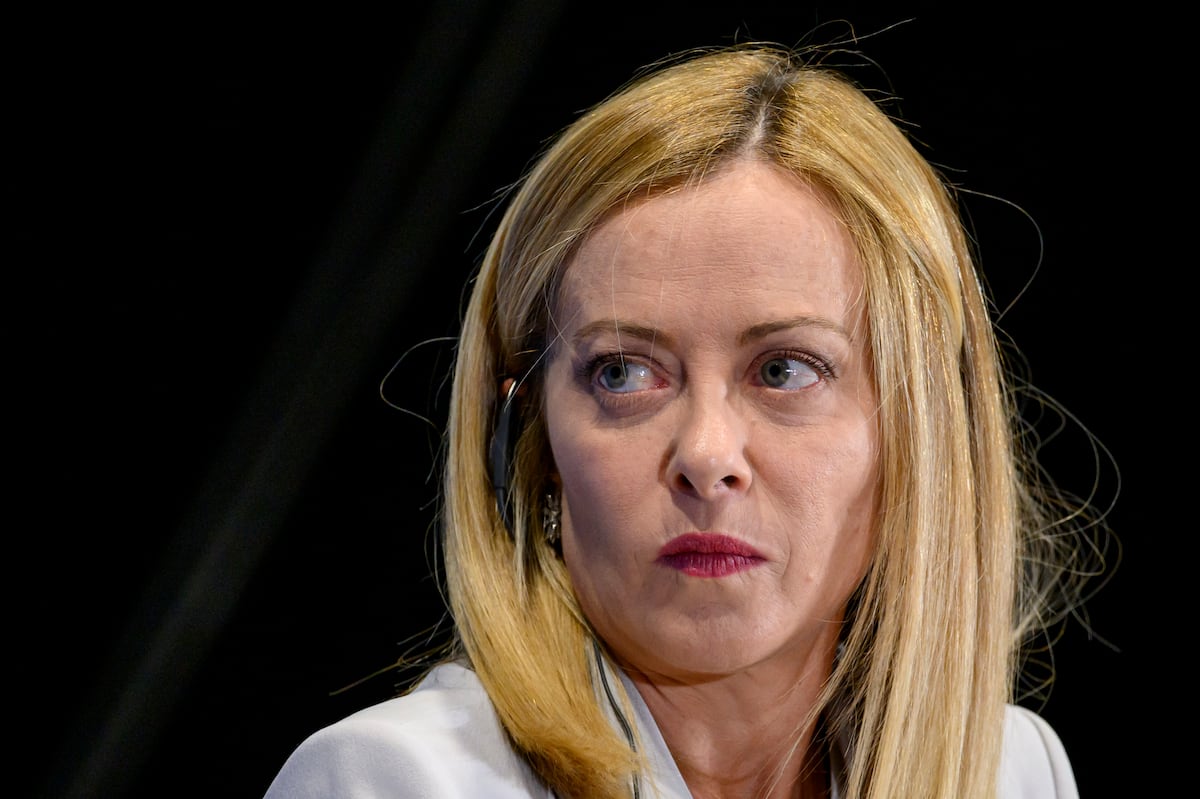
Italian government and industry leaders are rushing this week to figure out how to spend a European Union-backed windfall of billions of euros in defense cash as Italy seeks to reach new NATO spending targets.
In a week when most Italian politicians were heading for the beach, Italian Prime Minister Giorgia Meloni summoned the CEOs of state-controlled defense firms Leonardo and Fincantieri on Tuesday to discuss how to spend the cash.
The talks followed Italy’s decision to apply for low-cost loans to be issued by the EU under its new SAFE, or Security Action for Europe, plan , which will see the creation of a €150 billion ($174.2 billion) pot to be used for defense spending loans.
A source at Italy’s finance ministry told Defense News that Italy may procure loans worth €5 billion over five years to beef up defense spending and help push it towards the 5% of GDP spending that NATO members committed to in June.
At the meeting, which was also attended by Italian Defense Minister Guido Crosetto and Italy’s finance and foreign ministers, Meloni asked the CEOs to “create a strategy to identify the principal ways to invest.”
She asked them to “maximize dual-use investments” that provide benefits both inside and outside the defense industry, and “seek compatibility between our investments and those made by our European partners,” suggesting a focus on joint EU defense programs.
The EU has already specified that spending based on SAFE loans should invest in fields including air and missile defense, artillery, missiles, drones and cyber warfare.
As well as discussing the possibility of Italy signing up to the SAFE scheme, Meloni cited a second EU-backed plan launched this year to allow member states to ramp up defense spending even if it drives their national deficit spending over the EU limit of 3%.
The government source told Defense News that Italy would not take advantage of the plan immediately since its overall spending has already pushed its deficit over 3%.
“Italy may drop under 3% in 2026 and could at that point take advantage of the EU plan on deficit defense spending,” said the source, who spoke on condition of anonymity.
Leonardo, meanwhile, is already planning how to deal with the massive influx of revenue coming its way when Italy takes the SAFE loans. In a presentation to analysts on July 30, CEO Roberto Cingolani said Italy’s finance ministry had told him the loans could total €18-20 billion, more than the €15 billion suggested by the government source.
He said the result could be a €4 billion top-up to Italy’s defense spending budget every year for five years, helping push Italy from its current 2% of GDP spending towards NATO’s new 5% target.
With every percentage point hike in Italy’s defense budget, Leonardo would see extra revenue of €2-2.5 billion, he said.
In his presentation, Cingolani said new orders already meant that Leonardo’s 2024 revenue of €17.8 billion was due to rise to €24 billion by 2029. Adding in the extra revenue thanks to the EU loans could boost revenue by another €4-6 billion, he added.
To get ready for the sudden growth, Leonardo had already created a panel of seven industry experts to manage a “Capacity Boost” program covering engineering, manufacturing, procurement, supply chain, human resources and project management issues.
The key, Cingolani said, was flexibility rather than focusing on just new hires and building new facilities.
“We don’t want to find out in five years that we have gigantic installations and don’t have demand anymore,” he said.
Tom Kington is the Italy correspondent for Defense News.
本周,意大利政府和行业领袖正争分夺秒地商讨如何使用欧盟支持的数十亿欧元国防资金,因为意大利正努力达到新的北约支出目标。
在大多数意大利政客都前往海滩度假的这一周,意大利总理乔治亚·梅洛尼周二召集了国有国防企业莱昂纳多和芬坎蒂尼的首席执行官,讨论如何使用这笔资金。
此前,意大利决定申请欧盟根据其新的“欧洲安全行动”(SAFE)计划发放的低成本贷款,该计划将设立一个1500亿欧元(1742亿美元)的资金池,用于国防开支贷款。
意大利财政部的一位消息人士告诉《防务新闻》,意大利可能会在五年内获得价值 50 亿欧元的贷款,以增加国防开支,并帮助其达到北约成员国在 6 月份承诺的占 GDP 5% 的国防开支目标。
在这次会议上,意大利国防部长圭多·克罗塞托以及意大利财政部长和外交部长也出席了会议。梅洛尼要求首席执行官们“制定一项战略,以确定主要的投资方式”。
她要求他们“最大限度地进行两用投资”,以期在国防工业内外都能带来利益,并“寻求我们的投资与欧洲伙伴的投资之间的兼容性”,这表明应重点关注欧盟联合国防计划。
欧盟已经明确规定,基于 SAFE 贷款的支出应该投资于防空和导弹防御、火炮、导弹、无人机和网络战等领域。
除了讨论意大利加入 SAFE 计划的可能性之外,梅洛尼还提到了今年启动的第二个欧盟支持的计划,该计划允许成员国增加国防开支,即使这会导致其国家赤字支出超过欧盟 3% 的上限。
政府消息人士告诉《防务新闻》,意大利不会立即利用该计划,因为其整体支出已经使其赤字超过 3%。
“意大利的通货膨胀率可能会在 2026 年降至 3% 以下,届时可能会利用欧盟关于国防开支赤字的计划,”一位不愿透露姓名的消息人士表示。
与此同时,莱昂纳多集团已在筹划如何应对意大利获得SAFE贷款后即将到来的巨额收入。7月30日,首席执行官罗伯托·辛戈拉尼在向分析师作报告时表示,意大利财政部告知他,贷款总额可能达到180亿至200亿欧元,高于政府方面此前透露的150亿欧元。
他表示,此举可能使意大利的国防预算在未来五年内每年增加 40 亿欧元,帮助意大利从目前占 GDP 2% 的国防开支迈向北约新的 5% 的目标。
他表示,意大利国防预算每增加一个百分点,莱昂纳多公司就能获得 20 亿至 25 亿欧元的额外收入。
辛戈拉尼在报告中表示,新订单已经意味着莱昂纳多公司2024年的营收将从178亿欧元增至2029年的240亿欧元。他还补充说,加上欧盟贷款带来的额外收入,营收可能还会再增加40亿至60亿欧元。
为了应对突如其来的增长,莱昂纳多公司已经组建了一个由七位行业专家组成的小组,负责管理一项“产能提升”计划,该计划涵盖工程、制造、采购、供应链、人力资源和项目管理等问题。
Cingolani表示,关键在于灵活性,而不是仅仅关注招聘新员工和建设新设施。
“我们不想五年后发现我们建了规模庞大的设施,却没有市场需求了,”他说。
汤姆·金顿是《防务新闻》驻意大利记者。