Japanese destroyer can now fire Tomahawk missiles, extending nation’s combat punch日本驱逐舰现在可以发射战斧导弹,增强了该国的作战能力。
Japan’s Tomahawk orders are unlikely to be affected immediately, but longer military campaigns in the Middle East could cause setbacks, one analyst said.
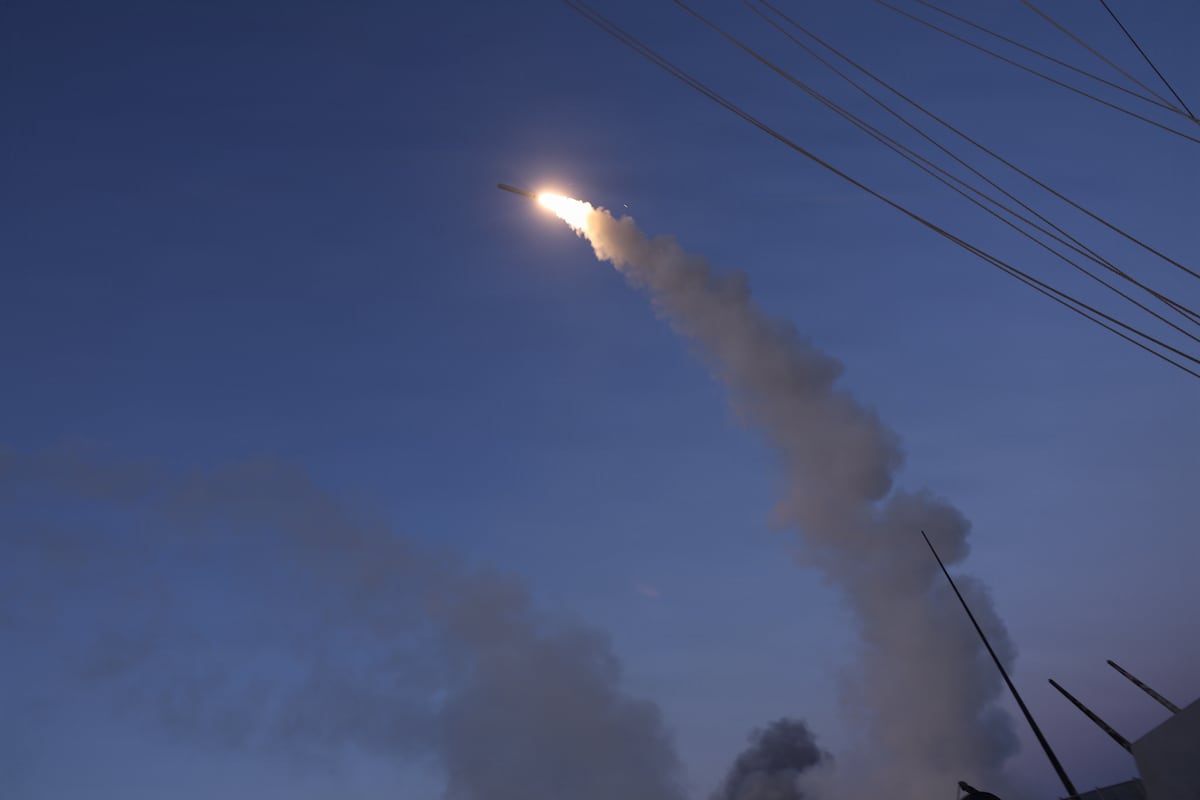
MANILA, Philippines — The Japanese destroyer JS Chokai is now capable of launching U.S. Tomahawk cruise missiles, making it the first Japanese warship that can strike targets beyond 1,000 kilometers.
This development marks a key shift in the country’s defense strategy. Japan committed to acquiring 400 Tomahawks last year to equip its eight Aegis destroyers as part of a larger standoff capability, which includes fielding upgraded Type 12 missiles in the southwest and deploying hyper velocity gliding projectile systems across the country.
The existing missile defense network may not be fully capable of responding to threats, Defense Minister Shinjiro Koizumi told reporters in a briefing on Friday.
“To prevent missiles flying through the missile defense network and to prevent further armed attacks, it is necessary to … have the ability to counterattack. Stand-off missiles can also be used for this counterattack ability,” Koizumi said.
The destroyer’s launcher modification marks a landmark milestone in the country’s efforts to rapidly deploy stand-off capabilities and bolster deterrence measures, he added.
Stand-off weaponry describes a class of arms with ranges so long that operators can fire them from a safe distance, without fearing countermeasures capable of reaching them.
The defense ministry introduced stand-off capabilities in 2017, and it formed the core of the security strategy shift in 2020, which later expanded to additional policy documents, including a detailed buildup plan in the country’s southwest in 2022.
The Tomahawk cruise missiles can be launched from ships or submarines with a range of over 1,600km. The Japanese variant can be rerouted during flight, and advanced versions are capable of hitting moving targets.
The refitted JS Chokai can load and fire both the Block IV and V variants of the cruise missiles.
JS Chokai arrived at Naval Base San Diego, California, in October 2025 for renovations and crew training with the U.S. Third Fleet. Live-fire training is scheduled for August, before JS Chokai returns to its home port in Sasebo Naval Base in the southwestern Kyushu Island in September.
Japan is moving toward a “denial and limited strike” model by fast-tracking the implementation of its 2022 strategy, maritime security expert Benjamin Blandin told Defense News. Blandin is a research fellow at the Institute for National Defense and Security Research in Taiwan.
This picture taken on Dec. 6, 2012, shows Japanese destroyer Chokai at Sasebo in Nagasaki prefecture, Japan's southern island of Kyushu. (AFP Photo / Jiji Press)
“Japan is operationalizing a long overdue counterstrike capability, shifting from strict homeland defense to semi-regional deterrence by being able to strike ground and naval targets at up to 1000 km,” Blandin said.
Japan’s existing defense force, including its stand-off missile capability, is the “minimum necessary for self-defense,” Koizumi said, adding that these would only be used “in the event of an armed attack from another country … and it does not pose a threat to other countries.”
Analysts have raised worries that the U.S. Tomahawk stockpile may be strained after reports indicated that over 800 missiles were used in four weeks during Operation Epic Fury against Iran, and this might impact missile orders for allies, including Japan.
Blandin said Japan’s Tomahawk orders are unlikely to be affected immediately, but prolonged military campaigns in the Middle East could cause minor to moderate setbacks.
American manufacturer RTX, in a Feb. 4 press release, said it had signed five agreements with the U.S. Department of Defense to boost production and expedite deliveries of Land Attack and Maritime Strike variants of the Tomahawk cruise missiles, with annual production expected to increase to more than 1,000.
“No major impact expected in regards to Iran, as deliveries will not take place all at once but probably over the course of a few years,” Blandin said. “In any case, the U.S. will likely prioritize Japan as a key Indo-Pacific ally.”
Leilani Chavez is an Asia correspondent for Defense News. Her reporting expertise is in East Asian politics, development projects, environmental issues and security.
菲律宾马尼拉——日本驱逐舰“鸟海”号现在能够发射美国“战斧”巡航导弹,使其成为第一艘能够打击1000公里以外目标的日本军舰。
这一进展标志着日本国防战略的关键转变。去年,日本承诺采购400枚战斧导弹,用于装备其8艘宙斯盾驱逐舰,作为其更大规模的远程打击能力的一部分,该能力还包括在西南部部署升级后的12型导弹,以及在全国范围内部署超高速滑翔弹系统。
日本防卫大臣小泉进次郎周五在新闻发布会上告诉记者,现有的导弹防御网络可能还不足以应对威胁。
小泉表示:“为了防止导弹突破导弹防御系统,防止进一步的武装袭击,必须具备反击能力。防区外导弹也可以用于这种反击能力。”
他补充说,驱逐舰的发射器改装标志着该国在快速部署远程打击能力和加强威慑措施方面取得了里程碑式的进展。
远程武器是指射程非常远的一类武器,操作人员可以在安全距离外进行射击,而不用担心遭到能够击中的反制措施。
国防部于 2017 年引入了远程打击能力,这成为 2020 年安全战略转变的核心,后来又扩展到其他政策文件,包括 2022 年在该国西南部制定的详细建设计划。
战斧巡航导弹可从舰艇或潜艇发射,射程超过1600公里。日本研制的战斧导弹可在飞行过程中改变航线,先进型号甚至能够打击移动目标。
改装后的日本战列舰“鸟海”号可以装载和发射Block IV和Block V两种型号的巡航导弹。
2025年10月,日本海上自卫队“鸟海”号抵达加利福尼亚州圣地亚哥海军基地,进行改装和与美国第三舰队的船员训练。实弹射击训练计划于8月进行,之后“鸟海”号将于9月返回位于九州岛西南部佐世保海军基地的母港。
海洋安全专家本杰明·布兰丁告诉《防务新闻》,日本正加快推进其2022年战略的实施,朝着“拒止与有限打击”模式迈进。布兰丁是台湾国防安全研究院的研究员。
这张照片拍摄于2012年12月6日,照片显示日本驱逐舰“鸟海”号停泊在日本九州岛南部长崎县佐世保市。(法新社/时事通讯社照片)
布兰丁说:“日本正在将一项期待已久的反击能力投入使用,通过能够打击1000公里外的地面和海上目标,从严格的国土防御转向半区域威慑。”
小泉表示,日本现有的防卫力量,包括其远程导弹能力,是“自卫所需的最低限度”,并补充说,这些力量只会在“受到他国武装攻击的情况下使用……而且不会对其他国家构成威胁”。
分析人士担心,在有报道称美国在对伊朗的“史诗狂怒行动”中,四周内使用了 800 多枚“战斧”导弹后,美国的“战斧”导弹库存可能已经紧张,这可能会影响包括日本在内的盟友的导弹订单。
布兰丁表示,日本的战斧导弹订单不太可能立即受到影响,但中东地区旷日持久的军事行动可能会造成轻微到中度的挫折。
美国制造商RTX在2月4日的新闻稿中表示,该公司已与美国国防部签署了五项协议,以提高战斧巡航导弹陆攻型和海上打击型的产量并加快交付速度,预计年产量将增加到1000多枚。
布兰丁表示:“预计不会对伊朗造成重大影响,因为交付不会一次性完成,而是可能在几年内分阶段进行。无论如何,美国可能会优先考虑日本,将其视为印太地区的重要盟友。”
莱拉尼·查韦斯是《防务新闻》的亚洲记者。她的报道专长是东亚政治、发展项目、环境问题和安全。