Ukraine’s drone masters eye Iran war to kickstart export ambitions乌克兰无人机专家觊觎伊朗战争,意图借此启动出口计划
Ukraine’s war has forced the country to become a trailblazer in drone interception.
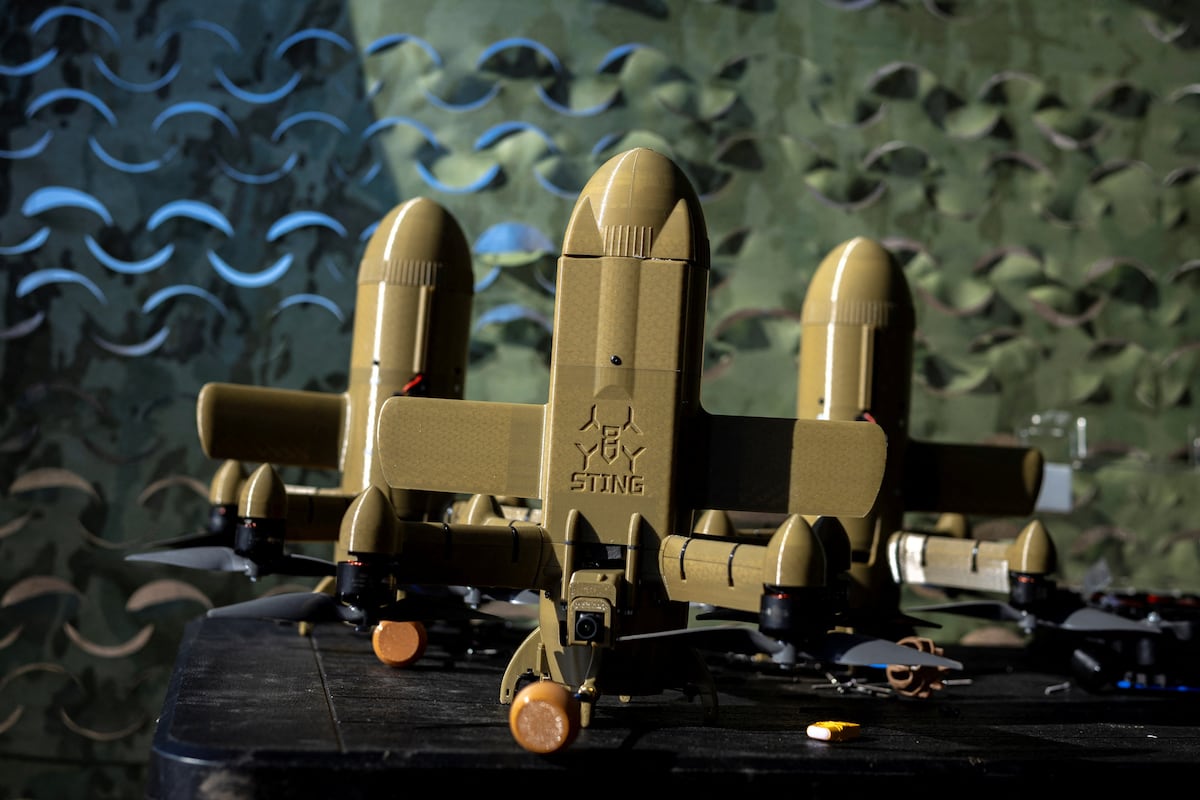
Ukraine’s war has forced the country to become a trailblazer in drone interception. The conflict in the Middle East could be its make-or-break moment to take the technology global.
In an effort to export Ukrainian systems and know-how, President Volodymyr Zelenskyy has criss-crossed the Gulf region this weekend to hash out deals with countries that have been targeted by waves of Iranian drone attacks this month.
“Ukraine is sharing expertise that is not available in the Middle East,” Zelenskyy told Reuters in an interview last week. “Expertise is not a drone, but a skill, a strategy, a system where a drone is one part of the defense.”
Indeed, Ukraine has signed framework cooperation deals with Saudi Arabia and Qatar in recent days, and has said one is in the works with the United Arab Emirates. Zelenskyy has stressed that arms sales must be decided at the government level, warning businesses against engaging with clients directly.
Ukraine’s drone sector is chomping at the bit.
“Everybody is sitting and waiting,” said Oleg Rogynskyy, CEO of UForce, a UK-headquartered Ukrainian military tech company which says its Magura sea drone has been the subject of intense commercial interest from the Middle East.
Several industry figures said the U.S.-Israeli war with Iran had underlined the potency of attack drones in modern warfare and exposed many countries’ vulnerabilities to their threat.
Ukrainian Foreign Minister Andrii Sybiha shows Israeli Foreign Minister Gideon Saar a Russian kamikaze drone Geran, a copy of an Iranian-made Shahed-136, July 2025. (Valentyn Ogirenko/Reuters)
The conflict, some added, presented Ukraine with a unique opportunity to jumpstart exports and create a world-leading industry that could provide the backbone for post-war reconstruction and prosperity.
Wild Hornets and SkyFall, two other top Ukrainian interceptor drone makers, said they too had received inquiries from Middle Eastern countries but like UForce were not directly negotiating contracts before getting a green light from Kyiv.
Anastasiia Mishkina, executive director at Tech Force in UA, an association of nearly 100 Ukrainian defense companies, said some members had asked the government for permission to export and were waiting for a response.
“There is a risk of losing the moment because the international market does not wait,” she said.
The government did not immediately respond to a request for comment on whether it risked moving too slowly on defense cooperation at a time of opportunity.
SEA DRONES MOUNTED WITH INTERCEPTORS
Ukraine has developed its technology and expertise over years of countering Russia’s drone attacks - a threat that Gulf states now face from Iran’s relatively cheap Shahed drones.
Hundreds of Russian drones are often fired at Ukraine in a single night, spurring an innovation race with the military and private firms developing interceptor drones to bring enemy craft down before they hit their targets.
These interceptors cost a few thousand dollars each, although they do not always succeed and Russia is constantly coming up with ways to get past them.
Ihor Fedirko, CEO of the Ukrainian Council of Defence Industry, a manufacturers’ association, estimated that Ukraine could export about $2 billion worth of weapons as a whole this year, excluding joint production ventures with allies.
He predicted that in a best-case scenario, annual defense exports could reach as much as $10 billion in five years.
Ukraine produced 40,000 interceptor drones in January, according to the government, which has made it clear the country will not export any weapons it needs to defend itself. Zelenskyy says that provided enough financing, Ukraine has the capacity to up its production to 2,000 interceptor drones a day and would only need 1,000 for itself, leaving plenty for export.
Service members of an air defense unit of the 420th Khort Separate Unmanned Systems Battalion fly with a P1-Sun FPV interceptor drone during their combat shift, Kharkiv region, Ukraine, March 18, 2026. (Valentyn Ogirenko/Reuters)
Rogynskyy, the UForce CEO, said the Magura sea drone produced by his company had obvious allure in the Gulf.
Ukraine initially used sea drones to attack and harry Russian warships in the Black Sea as an asymmetrical weapon to take on the dominant naval force. They have since become more sophisticated, with Rogynskyy saying they could be mounted with interceptor drones to combat aerial drones over water.
Ukraine’s military, he added, was already using the Magura off its southern coast to intercept Russian drones that pour into the port city of Odesa from across the Black Sea at night.
“It’s fully live, it’s tested,” he said.
Rogynskyy said stations equipped with Maguras carrying interceptors could be sited along the Gulf’s shoreline, operating on software that reduced the need for many personnel.
‘BETTER TO LEARN LATE THAN TOO LATE’
Zelenskyy has previously berated an unnamed Ukrainian-American company for selling interceptor drones without the government’s involvement.
That, he said, had ultimately tainted Ukraine’s reputation because the soldiers needed to train the clients to use the drones had not been available as that could only happen with government backing.
Halyna Yanchenko, a lawmaker close to Ukrainian defense manufacturers, told Reuters the government had moved very slowly to open up weapons exports, and manufacturers were still in dire need of capital to grow their operations.
She said state policy governing how weapons exports would function was still being formed. Like Mishkina at Tech Force in UA, she believed there was a major risk that Ukraine could miss the moment provided by the Iran war if it did not move quickly.
Even if agreements are struck, officials and drone operators said it could take months to set up drone-based air defenses and provide training.
Taras Tymochko, head of the interceptor drone program at Come Back Alive, a charitable foundation that has bought tens of thousands of interceptor drones for Ukraine’s military, said the sophisticated systems required a range of specialisms, from pilot training, combat experience and the know-how to safely arming warheads and fix technical malfunctions.
More important still, he said, was installing, configuring and correctly positioning radars to detect and track incoming drones and then to coordinate that work across different units.
He predicted the learning curve would be quicker for the Gulf states than for Ukraine, which had to forge ahead on its own while fighting for its survival.
“I’m confident that within a few months, some Gulf countries could form their own interceptor units and, a little later, begin demonstrating results,” Tymochko said.
“Unfortunately, in today’s reality, that time does not exist. But it is better to learn late than too late.”
乌克兰的战争迫使该国成为无人机拦截领域的先行者。这场中东冲突可能是乌克兰将这项技术推向全球的关键时刻。
为了出口乌克兰的系统和技术,弗拉基米尔·泽连斯基总统本周末奔走于海湾地区,与本月遭受伊朗无人机袭击的国家商讨交易。
泽连斯基上周接受路透社采访时表示:“乌克兰正在分享中东地区所不具备的专业知识。这种专业知识并非指无人机本身,而是一种技能、一种战略、一套体系,无人机只是防御体系的一部分。”
事实上,乌克兰近日已与沙特阿拉伯和卡塔尔签署了框架合作协议,并表示正在与阿联酋洽谈合作事宜。泽连斯基强调,武器销售必须由政府层面决定,并警告企业不要直接与客户接洽。
乌克兰的无人机行业正摩拳擦掌,跃跃欲试。
“大家都在坐等结果,”总部位于英国的乌克兰军事技术公司 UForce 的首席执行官 Oleg Rogynskyy 说。该公司表示,其 Magura 海上无人机已引起中东地区浓厚的商业兴趣。
多位业内人士表示,美以对伊战争凸显了攻击型无人机在现代战争中的威力,并暴露了许多国家在面对无人机威胁时的脆弱性。
2025年7月,乌克兰外交部长安德烈·西比哈向以色列外交部长吉迪恩·萨尔展示了一架俄罗斯制造的“杰兰”自杀式无人机,该无人机仿制自伊朗制造的“沙赫德-136”型无人机。(瓦伦丁·奥吉连科/路透社)
一些人补充说,这场冲突为乌克兰提供了一个独特的机会,可以迅速启动出口,并创建一个世界领先的产业,为战后重建和繁荣提供支柱。
另外两家乌克兰顶级拦截无人机制造商 Wild Hornets 和 SkyFall 表示,他们也收到了来自中东国家的询价,但与 UForce 一样,在获得基辅的批准之前,他们不会直接进行合同谈判。
乌克兰近百家国防企业协会“乌克兰科技力量”的执行董事阿纳斯塔西娅·米什金娜表示,一些成员企业已向政府申请出口许可,目前正在等待回复。
“我们有可能错失良机,因为国际市场不会等待,”她说。
对于在当前形势下开展国防合作是否可能因行动过于缓慢而造成风险,政府尚未立即回应置评请求。
搭载拦截器的海上无人机
多年来,乌克兰在应对俄罗斯无人机袭击方面积累了丰富的技术和专业知识——而海湾国家现在面临着来自伊朗相对廉价的“沙赫德”无人机的威胁。
俄罗斯经常一夜之间向乌克兰发射数百架无人机,这引发了一场创新竞赛,军方和私营企业都在开发拦截无人机,以便在敌机击中目标之前将其击落。
这些拦截器每台造价数千美元,但它们并非总能成功拦截,而且俄罗斯一直在想方设法绕过它们。
乌克兰国防工业委员会(一家制造商协会)首席执行官伊戈尔·费迪尔科估计,今年乌克兰武器出口总额可能达到约 20 亿美元,这还不包括与盟友的合资生产项目。
他预测,在最理想的情况下,五年内国防出口额每年可达到 100 亿美元。
乌克兰政府称,该国1月份生产了4万架拦截无人机。政府已明确表示,乌克兰不会出口任何用于自卫的武器。泽连斯基表示,如果资金充足,乌克兰有能力将拦截无人机的日产量提高到2000架,而乌克兰自身只需要1000架,剩余的则足以出口。
2026年3月18日,乌克兰哈尔科夫州,第420“霍尔特”独立无人系统营防空部队的官兵在作战执勤期间驾驶P1-Sun FPV拦截无人机。(Valentyn Ogirenko/路透社)
UForce 首席执行官罗金斯基表示,他公司生产的 Magura 海上无人机在海湾地区具有明显的吸引力。
乌克兰最初使用海上无人机在黑海攻击和骚扰俄罗斯军舰,以此作为一种不对称武器来对抗俄罗斯强大的海军力量。此后,这些无人机变得更加先进,罗金斯基表示,它们可以搭载拦截无人机,用于对抗水上无人机。
他还补充说,乌克兰军方已经在南部海岸使用“马古拉”号拦截夜间从黑海对岸涌入港口城市敖德萨的俄罗斯无人机。
“它已经全面上线,经过测试了,”他说。
罗金斯基表示,可以沿海湾海岸线部署配备有携带拦截器的马古拉导弹的站点,这些站点使用可减少对大量人员需求的软件运行。
“亡羊补牢,为时未晚”
泽连斯基此前曾斥责一家未具名的乌克兰裔美国公司在未征得政府同意的情况下出售拦截无人机。
他说,这最终损害了乌克兰的声誉,因为训练客户使用无人机所需的士兵无法到位,而这只能在政府的支持下才能实现。
与乌克兰国防制造商关系密切的议员哈莉娜·扬琴科告诉路透社,政府在开放武器出口方面行动非常缓慢,制造商仍然急需资金来扩大业务。
她表示,有关武器出口运作方式的国家政策仍在制定中。与乌克兰科技力量组织的米什金娜一样,她认为,如果乌克兰不迅速采取行动,就极有可能错失伊朗战争带来的良机。
即使达成协议,官员和无人机操作员也表示,建立基于无人机的防空系统和提供培训可能需要数月时间。
“重返家园”慈善基金会拦截无人机项目负责人塔拉斯·季莫奇科表示,这些复杂的系统需要一系列专业知识,从飞行员培训、作战经验到安全地装填弹头和修复技术故障的诀窍。“重返家园”基金会已为乌克兰军方购买了数万架拦截无人机。
他表示,更重要的是安装、配置和正确定位雷达,以探测和跟踪来袭无人机,然后协调不同单位之间的这项工作。
他预测,海湾国家的学习曲线会比乌克兰更快,因为乌克兰不得不独自摸索前进,同时还要为生存而战。
“我相信,几个月内,一些海湾国家就能组建自己的拦截器部队,过一段时间后,就能开始展示成果,”季莫奇科说。
“可惜的是,在当今的现实中,这样的时间并不存在。但亡羊补牢,为时已晚。”