How a US-led peace plan in Ukraine is reshaping global alliances美国主导的乌克兰和平计划如何重塑全球联盟
The latest on U.S.-led Ukraine peace talks — and how leaks, deadlines and shifting drafts are already reshaping battlefield planning.
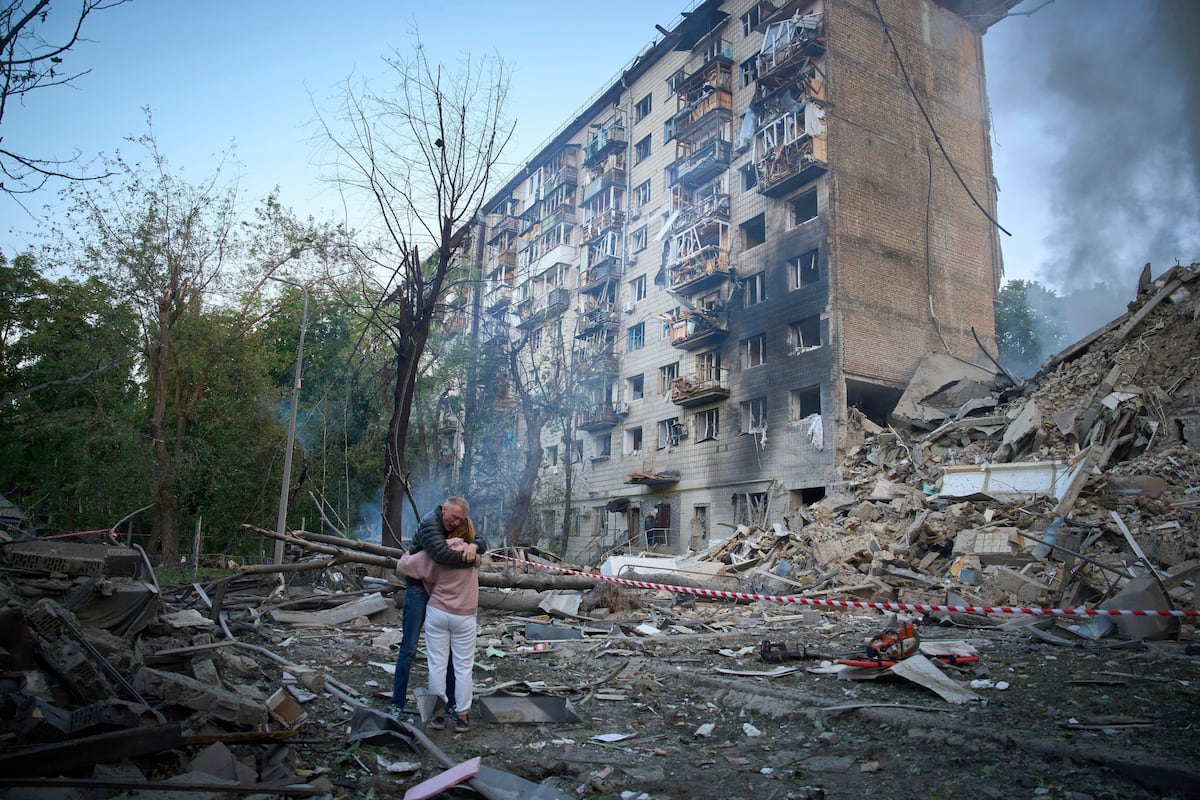
KYIV, Ukraine — “The problem with this round of negotiations is that they lack all credibility,” one senior European diplomat with knowledge of the peace process told Military Times this week. “It’s just stupid.”
The exasperation of the official, who was granted anonymity to discuss negotiations that are sensitive and ongoing, comes after weeks of what he described as an “endlessly frustrating” peace push — built around damage control, public pressure and shifting drafts — that has forced Ukraine and its European backers to “pretend to play along” even as demands circulated that are “impossible for Ukraine to accept.”
“There is no art to this deal-making,” he added.
It started with a leak. On Nov. 20, just as President Donald Trump began floating a Thanksgiving countdown for a deal, a 28-point peace framework was made public by Axios . Within hours, the same set of points was being described in different rooms as an opening bid, a near-finished agreement or an instrument of pressure so one-sided that critics compared it to information warfare.
Kyiv’s posture through that early confusion was restrained. It stayed publicly disciplined, offered little detail and declined to engage the leak-driven blow-by-blow, while allies tried to work out what the process actually meant in real-time.
By Dec. 4, the anxiety had broken the surface. Der Spiegel published a leaked transcript of a private European call that sounded less like allied coordination than emergency self-defense.
French President Emmanuel Macron warned the U.S. might “betray Ukraine on the issue of territory,” a phrasing the Élysée later disputed. German Chancellor Friedrich Merz said Washington was “playing games — both with you and with us.”
Finnish President Alexander Stubb said it most strikingly: “We cannot leave Ukraine and Volodymyr [Zelenskyy] alone with these guys.”
Two days later, the timeline snapped into place. After several days of U.S.-Ukraine talks in Miami, Washington formalized its new posture in the National Security Strategy — including language about “strategic stability with Russia” and “ending the perception, and preventing the reality, of NATO as a perpetually expanding alliance.”
Moscow welcomed the framing while rejecting key elements of the peace track.
For those in uniform, the unpredictability goes beyond politics: Russia followed the Miami talks with one of its largest combined attacks on Ukraine, sending 653 drones and 51 missiles aimed largely at Ukraine’s energy infrastructure, according to officials in Kyiv.
People hide in a metro station, being used as a bomb shelter, during a Russian drones attack in Kyiv, Ukraine, Nov. 14, 2025. (Dan Bashakov/AP)
The so-called peace negotiations are driving real decisions about war posturing and capabilities as Russia’s full-scale invasion trudges into its fourth year.
By Dec. 7, the messaging shifted decisively from pressure to strategic uncertainty. At the Doha Forum, Donald Trump Jr. was asked if his father might walk away.
“I think he may,” he said . “What’s good about my father, and what’s unique about my father, is you don’t know what he’s going to do. … The fact that he’s not predictable … forces everyone to actually deal in an intellectually honest capacity.”
As drafts leak and deadlines slide, the uncertainty is now showing up in major battlefield calculations.
The likely product, the official says, is a messy ceasefire that freezes lines, buys Russia time and forces Europe to plan for the war’s next phase — less peace through strength than war through instability — with U.S. support treated as a variable, not a guarantee.
Peace through strength or war through uncertainty?
The volatility hits where it always hits first: logistics and posture. Ship now or hold. Plan for a pause or plan for another winter of strikes.
“It’s a pinball machine inside the head of our president, because he keeps bouncing off the walls of the pinball machine, and you just don’t know where he’s going to go next,” Ian Kelly, a former head of the State Department’s Office of Russian Affairs and U.S. ambassador to Georgia and the Organization for Security and Cooperation in Europe (OSCE), told Military Times.
The Miami talks offer the clearest example of what Kelly meant. The public story of “progress” has moved faster than officials across the Atlantic could keep pace, leaving them questioning what the Americans are actually proposing, what Moscow is actually prepared to concede and what Washington is willing to guarantee.
Zelenskyy’s language has stayed deliberately narrow. Over the weekend, he described the discussions with Trump’s envoys as “constructive, though not easy,” stressing that “the American envoys are aware of Ukraine’s core positions,” but that “some issues can only be discussed in person.”
Defense Minister Rustem Umerov reinforced the same reality in plainer terms.
In a Dec. 8 post on X, Umerov wrote, “We have worked for several days in the United States together with Andrii Hnatov with representatives of President Trump. I am grateful for the constructive work.”
Umerov added that “the primary task of the Ukrainian team was to obtain from the American side complete information about their conversation in Moscow and all drafts of current proposals in order to discuss them in detail with the President of Ukraine.”
Kyiv’s diplomats have also been trying to rein in the chaos.
“Being in the same negotiation room with [Kushner] and [Witkoff] for the second day in a row, I’d say conspiracies spread in media are false,” wrote First Deputy Foreign Minister Serhiy Kyslytsya on Monday. “I’m positively impressed with the level of understanding of Ukrainian interests and position by the American partners.”
“It’s important that the American side remains fully engaged in the peace process,” he said in an earlier post the same day. “Every team listens carefully to each other. The Ukrainian position is very clear,” noting that it was “unfair to mischaracterize [the] approach of the American team while they [are] investing time, efforts, and resources into” a path to “just and sustainable end of the war.”
From left, British Prime Minister Keir Starmer, President Volodymyr Zelenskyy, French President Emmanuel Macron, Polish Prime Minister Donald Tusk and German Chancellor Friedrich Merz make a call to U.S. President Donald Trump from Kyiv, Ukraine, May 2025. (Mstyslav Chernov/AP)
The Kremlin’s public posture has offered its own version of forward motion.
Last month, Moscow envoy Kirill Dmitriev hailed the talks as expert-level diplomacy that was highly “productive” — even as he remained steadfast that key elements still needed work, according to Reuters .
Putin attempted to clarify the Kremlin’s position on Wednesday at an annual meeting with the defense ministry, where he called European leaders “little pigs” and blamed its invasion of Ukraine on mismanagement by the previous U.S. administration of President Joe Biden, according to a report by The Guardian .
Putin’s comments came just hours after U.S. officials told reporters in Berlin that the negotiators had resolved about “90%” of their differences, including agreement among Ukraine’s partners on “NATO-like” security guarantees, per The New York Times .
The mixed signals and shifting drafts have turned the peace process itself into leverage, Kelly said, by determining who gets consulted early, who gets read in late and who thinks they can wait the other side out.
“Europe has to basically operate on the assumption that they cannot count on the United States when it comes to Ukraine,” Kelly said.
He could not recall a comparable moment of discord and miscommunication in modern transatlantic security.
“I can’t think of a single document that impacts European security, especially vis-à-vis Russia, that hasn’t been previewed with the Europeans,” he said. “That’s unprecedented … since World War II.”
For military planners, that kind of uncertainty doesn’t stay in the diplomatic lane. When the negotiating text is still moving, and the U.S. signal can shift from one week to the next, it lands immediately in force-planning decisions impacting what allies schedule to ship, what they delay, what they assume about sustainment and how they message deterrence while Russia keeps probing for weakness.
“The negotiations are a strategic tug-of-war,” the diplomat told Military Times, “between Ukraine and Europe on one hand, and the Russians on the other,” with the decisive variable being “where the U.S. will be.”
Kelly is blunt about how he believes the Kremlin is seeing the situation today.
“He’s … riding high,” he said, convinced Putin thinks his military is winning — despite their slow rate of advance, soaring casualty rates and meteoric costs to the Russian economy — while the West looks “ineffectual and unable to … stop him.”
“There’s no point in negotiating with Putin until you get him off of that calculation.”
A Russian military vehicle moves along the Garden Ring prior to the Victory Day military parade in Moscow on May 7, 2025. (Angelos Tzortzinis/AFP via Getty Images)
The current diplomatic math signals Western hesitation, which numerous officials argue gives Moscow an incentive to sit tight — not to end its invasion.
“If something comes out of this, at most it will be a messy ceasefire that is likely to be relatively short-lived,” the European official said. “And the benefits are questionable.”
But a freeze doesn’t end the planning burden. It shifts it into enforcement, into resupply and regeneration and into deterrence messaging about what the coalition is actually prepared to do when the terms get tested.
For Europe, “post-ceasefire” becomes the next phase of the war plan — not an off-ramp.
A new diplomacy of instability
The peace plan documents are still multiplying as talks continue this week.
On Thursday, a Ukrainian official close to the peace talks said Kyiv had handed Washington a revised 20-point proposal, “slightly rethought,” not a new version, alongside separate documents covering security guarantees and economic reconstruction.
“Right now, there are three documents,” the official told ABC . “The basic 20 points, the security guarantees and the document on the economy and reconstruction. Yesterday, we discussed the economy. Today, the guarantees.”
U.S. officials, meanwhile, have floated “Article 5-like” security guarantees, the so-called “platinum standard,” short of NATO membership, even as officials have acknowledged privately that the details are hard to define and enforcement would be politically constrained.
The sequencing matters: as public talk leans toward closure, negotiators are still trading paper and trying to pin down what, exactly, sits inside the guarantees.
That moving-target problem is showing up inside Washington as well.
Secretary of State Marco Rubio has described the proposal as a “living, breathing document,” saying, “Every day, with input, it changes.”
On the Hill, the argument has been sharper about what was changing and what earlier drafts appeared to mirror.
Sen. Angus King, an independent from Maine, said Rubio told senators the proposal that surfaced publicly was “essentially a wish list for the Russians,” language repeated by the European diplomat speaking anonymously.
U.S. Secretary of State Marco Rubio looks on as President Donald Trump speaks during a cabinet meeting. (Mandel NGAN / AFP via Getty Images)
For Kyiv, the sticking point isn’t just semantic. Maksym Vishchyk, a Kyiv-based international law expert advising the Ukrainian government on the negotiations, put it in black-and-white terms during an interview with Military Times earlier this year.
“Any agreement concluded or procured through the use of force or threat to use of force is a void agreement,” he said, adding that states have an obligation “not to recognize an unlawful situation, meaning first of all, territorial concessions.”
The negotiations become a question of what Ukraine can sign without locking in legal recognition that Kyiv has spent nearly a decade insisting cannot be normalized.
“There is no way they’re going to be able to agree to anything that constitutes a legal, a de jure recognition of transfer of land to the Russians. It’s not going to happen,” the diplomat said.
Vishchyk agreed, noting the dangers of recognizing a coerced agreement that is null and void from the outset.
“Even if Ukraine puts a signature on the paper — which is a peace deal in name only — such consent will not matter because it won’t be consent,” he said, due to Russia’s current occupation of Ukrainian lands creating a scenario where true legal consent is impossible.
Consequently, existing rules of international law would mean that “Ukraine, as a victim without free will, will be entitled to liberate its previously occupied territory at any point in the future, regardless of the passage of time.
“If the peace deal contains any provision on territorial concessions, then such provisions will be void, too,” he added.
Negotiators on all sides understand that reality, which is why the squabble over language in the drafts is doubling as a fight over political and military leverage today and in the future.
The impact is already visible in two arenas — Kyiv’s domestic credibility and Washington’s assessment of the battlefield.
Ukraine’s government is still reeling from its most serious corruption scandal in years, dubbed “Operation Midas,” which found several links between officials and an illegal kickback scheme tied to the energy sector and worth over $100 million, according to the Organized Crime and Corruption Reporting Project .
News from the front is equally chaotic. U.S. Army Secretary Dan Driscoll warned his Ukrainian counterparts in Kyiv last month that their forces faced an “imminent defeat,” and argued it was better to negotiate now than later, according to two anonymous sources speaking to NBC .
But on Monday, Ukraine’s Security Service claimed that it used an underwater drone to strike a Russian submarine in Novorossiysk in what they have called a world first. And despite almost four years of full-scale war, Russia has managed to hold on to about 20% of Ukrainian territory, according to the Institute for the Study of War , down from over 25% that it temporarily occupied at the start of 2022.
Moscow has pushed its own narratives of success around the eastern strongholds of Pokrovsk and Kupiansk at the same time, claiming in late November that Russian forces had surrounded the cities, but a well-timed trip by Zelenskyy to the Kupiansk front squashed the worst of the rumors quickly.
Taken together, there still appears to be no real deal settling into place. It is a power redistribution occurring through peace drafts, security “guarantees” and political pressure, while Kyiv and Europe appear to argue with Washington and Moscow over what the latest and most acceptable version of both the draft and the world’s next security framework will look like.
That’s why the credibility problem of these talks isn’t about rhetoric, the diplomat said. If the security guarantees are still being defined while “progress” is being declared, the real-life consequences on the battlefield and diplomacy start piling up before any decisions are even made.
Such a ceasefire built on a house of cards won’t bring the war to an end for Ukraine or its coalition of allies, he added, but it would broaden the front line from a regional fight into a contest over military dominance and endurance globally, across a shifting balance of power among Russia, China, Europe and the United States.
It then becomes a battle over who carries the burden of deterrence, the diplomat said, and whether the Kremlin believes the Western coalition, whichever allies it may include, will actually enforce its own red lines.
乌克兰基辅——一位了解和平进程的欧洲高级外交官本周告诉《军事时报》:“这一轮谈判的问题在于它完全缺乏可信度。这简直太愚蠢了。”
这位官员因谈判敏感且仍在进行中而获得匿名许可,他对此感到十分恼火。此前数周,他形容和平进程“令人无比沮丧”,围绕着损害控制、公众压力和不断变化的草案展开,迫使乌克兰及其欧洲支持者“假装配合”,即便流传的要求是“乌克兰不可能接受的”。
“这种交易没有什么技巧可言,”他补充道。
一切始于泄密。11月20日,就在唐纳德·特朗普总统开始暗示感恩节前达成协议之际,Axios新闻网公开了一份包含28项内容的和平框架。短短几个小时内,这份框架就被各方解读为不同的内容:有人说是初步方案,有人说是即将完成的协议,还有人说是单方面施压的工具,以至于批评人士将其比作信息战。
在最初的混乱时期,基辅的态度较为克制。它保持了公开的冷静,很少透露细节,也拒绝参与到泄密事件引发的实时报道中,而盟友们则试图实时弄清这一进程的真正含义。
12月4日,焦虑情绪终于爆发。《明镜周刊》公布了一份泄露的欧洲私人电话会议记录,听起来与其说是盟军协调,不如说是紧急自卫。
法国总统马克龙警告称,美国可能会“在领土问题上背叛乌克兰”,但爱丽舍宫后来对此措辞提出异议。德国总理默茨表示,华盛顿“既在和你们玩弄权术,也在和我们玩弄权术”。
芬兰总统亚历山大·斯图布的说法最为引人注目:“我们不能让乌克兰和弗拉基米尔·泽连斯基独自面对这些人。”
两天后,时间线就此确定。在迈阿密举行了数天的美乌会谈后,华盛顿在《国家安全战略》中正式确立了其新的立场——其中包括关于“与俄罗斯保持战略稳定”以及“结束北约作为永久扩张联盟的认知,并阻止其成为现实”的措辞。
莫斯科对这一框架表示欢迎,但拒绝接受和平进程中的关键要素。
对于身穿制服的人来说,不可预测性不仅仅体现在政治方面:据基辅官员称,在迈阿密会谈之后,俄罗斯对乌克兰发动了规模最大的联合袭击之一,派出 653 架无人机和 51 枚导弹,主要目标是乌克兰的能源基础设施。
2025年11月14日,在乌克兰基辅,人们躲在被用作防空洞的地铁站内,当时俄罗斯无人机正在发动袭击。(丹·巴沙科夫/美联社)
所谓的和平谈判正在推动有关战争姿态和能力的真正决策,而俄罗斯的全面入侵已经进入第四年。
到12月7日,舆论风向发生了决定性的转变,从施压转向了战略不确定性。在多哈论坛上,有人问小唐纳德·特朗普,他的父亲是否会退出竞选。
“我觉得他可能会,”他说。“我父亲的优点,也是他独特之处,就是你不知道他下一步会做什么……正是因为他的不可预测性……才迫使每个人都必须以诚实理智的态度去对待他。”
随着草案泄露和截止日期一再推迟,这种不确定性现在已经体现在重大战场计算中。
这位官员表示,可能的结果是一个混乱的停火协议,它冻结了战线,为俄罗斯争取了时间,并迫使欧洲为战争的下一阶段做准备——与其说是通过实力实现和平,不如说是通过动荡实现战争——而美国的支持将被视为一个变量,而不是一个保证。
以实力求和平,还是以不确定性求战争?
市场波动总是最先冲击物流和市场态势。现在发货还是按兵不动?要么做好暂停发货的准备,要么做好迎接又一个罢工寒冬的准备。
“我们总统的脑袋里就像一台弹珠机,因为他不断地在弹珠机的墙壁上弹来弹去,你根本不知道他下一步会去哪里,”美国国务院俄罗斯事务办公室前主任、美国驻格鲁吉亚和欧洲安全与合作组织(欧安组织)大使伊恩·凯利告诉《军事时报》。
迈阿密会谈最能体现凯利所言。公开宣称的“进展”速度远超大西洋彼岸官员的预期,令他们质疑美国人究竟提出了什么方案,莫斯科究竟准备做出哪些让步,以及华盛顿又愿意做出哪些保证。
泽连斯基的措辞一直刻意保持谨慎。周末,他将与特朗普特使的会谈描述为“建设性的,但并不轻松”,并强调“美国特使了解乌克兰的核心立场”,但“有些问题只能当面讨论”。
国防部长鲁斯捷姆·乌梅罗夫用更直白的语言强调了同样的事实。
乌梅罗夫在12月8日发表于X论坛的一篇文章中写道:“我们与安德烈·赫纳托夫在美国与特朗普总统的代表们一起工作了几天。我对这项富有建设性的工作表示感谢。”
乌梅罗夫补充说,“乌克兰团队的首要任务是从美方获取有关他们在莫斯科会谈的全部信息以及所有当前提案的草案,以便与乌克兰总统详细讨论这些提案。”
基辅的外交官们也一直在努力控制混乱局面。
“连续第二天与库什纳和维特科夫在同一个谈判室里,我认为媒体散布的阴谋论都是不实的,”乌克兰第一副外长谢尔盖·基斯利察周一写道。“我对美国伙伴对乌克兰利益和立场的理解程度印象深刻。”
他在当天早些时候的另一篇帖子中表示:“美方继续全面参与和平进程至关重要。各方都在认真倾听彼此的意见。乌克兰的立场非常明确。”他还指出,“在美方投入时间、精力和资源寻求公正、可持续地结束战争的途径之际,歪曲美方的做法是不公平的。”
2025年5月,英国首相基尔·斯塔默、乌克兰总统弗拉基米尔·泽连斯基、法国总统埃马纽埃尔·马克龙、波兰总理唐纳德·图斯克和德国总理弗里德里希·默茨在乌克兰基辅与美国总统唐纳德·特朗普通电话。(Mstyslav Chernov/AP)
克里姆林宫的公开姿态也展现了其自身的前进姿态。
据路透社报道,上个月,莫斯科特使基里尔·德米特里耶夫称赞会谈是专家级的外交,非常“富有成效”——尽管他仍然坚持认为关键要素仍需改进。
据《卫报》报道,普京周三在与国防部举行的年度会议上试图澄清克里姆林宫的立场,他在会上称欧洲领导人为“小猪”,并将入侵乌克兰归咎于前任美国总统乔·拜登政府的管理不善。
据《纽约时报》报道,就在普京发表上述言论的几个小时前,美国官员在柏林告诉记者,谈判代表已经解决了大约“90%”的分歧,包括乌克兰伙伴就“类似北约”的安全保障达成一致。
凯利表示,混乱的信号和不断变化的草案已经将和平进程本身变成了一种筹码,因为它决定了谁能尽早被咨询,谁会晚些被告知,以及谁认为他们可以等待对方先行动。
凯利说:“欧洲基本上必须假设,在乌克兰问题上,他们不能指望美国。”
他想不起现代跨大西洋安全领域曾有过类似的冲突和沟通不畅的时刻。
他说:“我想不出有哪份影响欧洲安全,特别是对俄关系的文件,没有事先征求过欧洲人的意见。这自二战以来是前所未有的。”
对于军事策划者而言,这种不确定性并非仅限于外交层面。当谈判文本仍在不断变化,而美国的信号又可能每周都在转变时,这种不确定性会立即影响到部队计划决策,进而影响盟友的运输安排、推迟交付、对后勤保障的预期以及如何传递威慑信息,而俄罗斯则持续试探盟友的弱点。
这位外交官告诉《军事时报》:“谈判是一场战略上的拉锯战,一方是乌克兰和欧洲,另一方是俄罗斯”,而决定性的因素是“美国的立场”。
凯利直言不讳地表达了他认为克里姆林宫如何看待当今局势的看法。
“他……现在得意洋洋,”他说,并确信普京认为他的军队正在取得胜利——尽管他们的推进速度缓慢,伤亡率飙升,并且给俄罗斯经济造成了巨大的损失——而西方看起来“无能为力,无法……阻止他”。
“除非你能让普京放弃这种考量,否则与他谈判毫无意义。”
2025年5月7日,在莫斯科胜利日阅兵式前夕,一辆俄罗斯军车沿着花园环路行驶。(Angelos Tzortzinis/AFP via Getty Images)
目前的外交形势表明西方犹豫不决,许多官员认为这给了莫斯科一个按兵不动——而不是结束入侵的动机。
这位欧洲官员表示:“即便最终能达成什么结果,充其量也只是一项混乱的停火协议,而且很可能不会长久。至于好处如何,则令人怀疑。”
但冻结并不能消除规划负担。它只是将负担转移到了执行、物资补给和重建,以及发出威慑信息,表明当这些条款受到考验时,联盟究竟准备采取什么行动。
对欧洲而言,“停火后”是战争计划的下一阶段,而不是一个出口。
一种不稳定的新外交
随着本周谈判的继续,和平计划文件仍在不断增加。
周四,一位接近和平谈判的乌克兰官员表示,基辅方面向华盛顿提交了一份修订后的 20 点提案,该提案“略作修改”,而非全新版本,同时还提交了涵盖安全保障和经济重建的单独文件。
这位官员告诉美国广播公司(ABC):“目前有三份文件。分别是基本的20点纲领、安全保障文件以及经济和重建文件。昨天我们讨论了经济问题,今天讨论的是安全保障问题。”
与此同时,美国官员提出了类似《欧盟条约》第五条的安全保障方案,即所谓的“白金标准”,以取代加入北约。尽管官员们私下承认,这些方案的细节很难界定,而且执行起来也会受到政治上的限制。
顺序很重要:尽管公开讨论倾向于达成协议,但谈判者仍在交换文件,试图确定保证的具体内容。
这种目标不断变化的问题也出现在华盛顿内部。
国务卿马可·卢比奥将该提案描述为一份“鲜活的、不断发展的文件”,并表示:“每天都会根据意见进行修改。”
在国会山,关于哪些内容发生了变化以及早期草案似乎反映了哪些内容的争论更加激烈。
来自缅因州的独立参议员安格斯·金表示,卢比奥告诉参议员们,公开出现的提案“本质上是给俄罗斯人的愿望清单”,一位匿名欧洲外交官也重复了这种说法。
美国国务卿马可·卢比奥在总统唐纳德·特朗普于内阁会议上发言时注视着他。(Mandel NGAN / AFP via Getty Images)
对基辅而言,症结不仅仅在于语义上的分歧。常驻基辅的国际法专家马克西姆·维什奇克(Maksym Vishchyk)为乌克兰政府的谈判提供咨询,他在今年早些时候接受《军事时报》采访时,对此做了明确的表述。
“任何通过武力或以武力相威胁而缔结或取得的协议都是无效的协议,”他说道,并补充说,各国有义务“不承认非法情况,这意味着首先是领土让步”。
谈判的关键在于,乌克兰可以在不锁定法律承认的情况下签署什么协议,而基辅近十年来一直坚持认为这种法律承认不能正常化。
这位外交官说:“他们绝不可能同意任何构成法律上、正式承认将土地移交给俄罗斯的事情。这不可能发生。”
维什奇克表示同意,并指出承认一项从一开始就无效的胁迫协议的危险性。
“即使乌克兰在文件上签字——这只是名义上的和平协议——这样的同意也无关紧要,因为它并非真正的同意,”他说道,因为俄罗斯目前占领了乌克兰的领土,造成了一种不可能达成真正法律意义上的同意的局面。
因此,根据现行的国际法规则,“乌克兰作为没有自由意志的受害者,有权在未来的任何时候解放其先前被占领的领土,而不管时间过去多久。
“如果和平协议中包含任何关于领土让步的条款,那么这些条款也将无效,”他补充道。
各方谈判人员都明白这一现实,因此,围绕草案措辞的争论实际上也演变成一场争夺当下和未来政治及军事影响力的斗争。
其影响已经在两个方面显现出来——基辅的国内信誉和华盛顿对战场局势的评估。
据有组织犯罪和腐败报告项目称,乌克兰政府仍在努力摆脱多年来最严重的腐败丑闻,该丑闻被称为“迈达斯行动”,该行动发现官员与一个与能源部门有关的非法回扣计划之间存在多项联系,涉案金额超过 1 亿美元。
前线的消息同样混乱。据两名匿名消息人士向NBC透露,美国陆军部长丹·德里斯科尔上个月警告基辅的乌克兰同行,他们的部队面临“迫在眉睫的失败”,并认为现在谈判比以后谈判更好。
但周一,乌克兰安全局声称,他们使用水下无人机在诺沃罗西斯克击中了一艘俄罗斯潜艇,并称这是世界首例。尽管已持续近四年的全面战争,但据战争研究所的数据,俄罗斯仍控制着约20%的乌克兰领土,低于2022年初其临时占领的超过25%的领土。
与此同时,莫斯科也大力宣传其在东部据点波克罗夫斯克和库皮扬斯克取得胜利的叙事,并在 11 月下旬声称俄军已经包围了这些城市,但泽连斯基适时前往库皮扬斯克前线视察,迅速粉碎了最糟糕的谣言。
综上所述,目前似乎仍未达成任何实质性协议。权力重新分配是通过和平草案、安全“保证”和政治施压进行的,而基辅和欧洲似乎正与华盛顿和莫斯科就最新且最可接受的草案版本以及世界下一个安全框架的具体内容争论不休。
这位外交官表示,这就是为什么这些会谈的可信度问题不在于言辞。如果安全保障措施仍在界定之中,而“进展”却被大肆宣扬,那么在做出任何决定之前,战场和外交上的实际后果就已经开始累积。
他补充说,这种建立在纸牌屋上的停火协议不会结束乌克兰或其盟国的战争,反而会将战线从地区性冲突扩大到全球军事主导权和持久力的争夺,而俄罗斯、中国、欧洲和美国之间的力量平衡也在不断变化。
这位外交官说,接下来的争论就变成了谁来承担威慑的责任,以及克里姆林宫是否相信西方联盟(无论其盟友是谁)会真正执行自己的红线。